


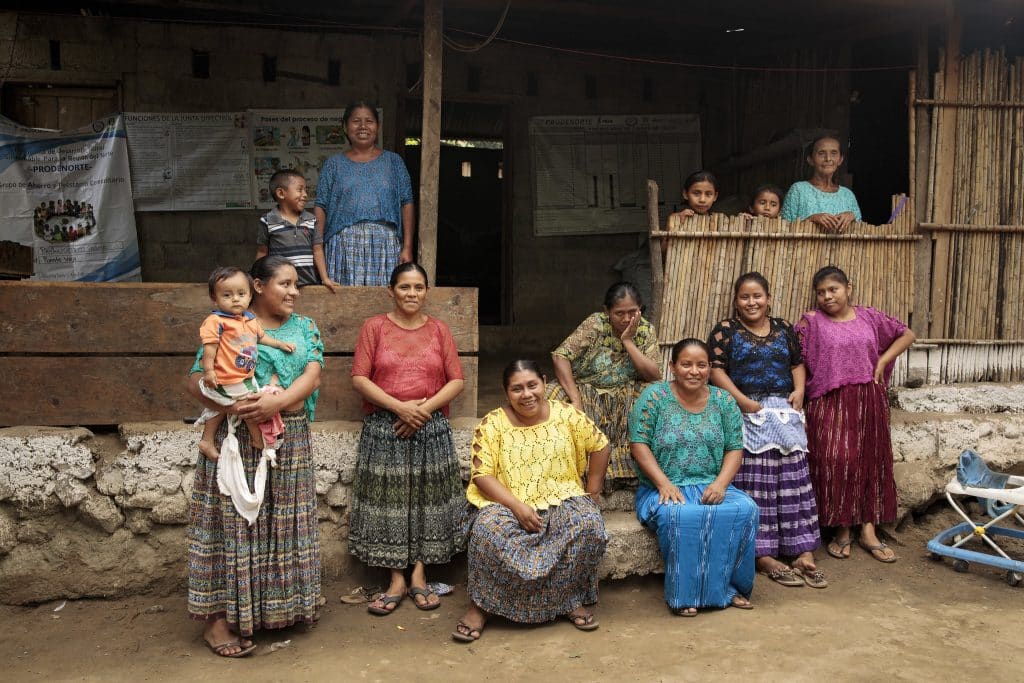
Women in STEM will be highly influential in our fight for climate justice, yet they are systematically sidelined from shaping a more sustainable future.
—
By Ava Abreu for the Green Women Festival 2026
Women are disproportionately affected by climate change, yet they are systematically excluded from shaping a more sustainable future. Only 6% of women working in advanced economies have green jobs, compared to 20% of working men, despite research showing that climate policies are more effective when women are involved. In other words, the gender gap in green careers is directly inhibiting green solutions and advancements. But why is there such a gap?
Disproportionate Damage
Women constitute 80% of those displaced by climate change, and as refugees, they are also at a higher risk of gender-based and sexual violence. Women are also less likely to master survival skills like swimming and climbing trees compared to men, the lack of which can be fatal in natural disasters like floods. Moreover, evidence suggests that climate change increases maternal mortality and stillbirths.
Regionally, the Asia-Pacific (APAC) region accounts for 70% of global internal displacements from climate change. This article focuses on women in this region and their involvement in climate leadership.

Discrimination and Societal Conditioning
The systemic inequities in STEM – an educational approach and curriculum focused on integrating Science, Technology, Engineering, and Mathematics – start long before girls choose what major to pursue at university. In fact, stereotypes about men being better at maths and science start circulating in schools when children are as young as five. The stereotype threat is a phenomenon where people fear they may confirm negative stereotypes about their social group, and this heightened anxiety leads to worse performance. Many young girls are affected by this, as proved in a study that showed that when naming a test for 12-year-old children “drawing” instead of “geometry,” girls outperformed boys.
In Japan, studies have found that teachers and counselors hold biases against their students and are more likely to recommend physics classes to boys than girls. In Hong Kong, girls invest significantly more money and time in tutorial classes for math and STEM electives, than their male peers – 77% compared to 63% for boys. Yet, girls are more likely to be unhappy with their performance. When compared to boys who took the same STEM electives, girls are also 54% less likely to study STEM in tertiary education. The lack of confidence in themselves and the lack of role models in these fields directly contribute to their low likelihood of pursuing the sciences further. Girls who once showed great interest in the sciences feel discouraged and leave STEM careers and academia despite their interest and ability to succeed – a phenomenon known as the leaky pipeline effect.
Despite these challenges in girlhood, some women stay the course and pursue STEM careers and academia. Unfortunately, their challenges do not end there, as academia is also plagued by strong gender-favoritism. Data from the Chinese Academy of Sciences (CAS) and the Chinese Academy of Engineering reveals that approximately 11% of male candidates were elected for fellowships, compared to only 6% of female candidates. The female candidates who did apply also needed to present higher achievements to be considered. Data from the China Association for Science and Technology revealed that although women make up 21% of their academic societies, they account for only 8% of presidents and vice presidents. Even then, women are still less likely to be credited in articles or patents than their male peers, and their contributions are more likely to go unrecognized.
This gross underrepresentation of women and the systematic barriers they must operate under can affect their decision to stay in STEM-designated spaces, especially as they must often take on the majority of the domestic work. In mainland China and Hong Kong, women work two-and-a-half to four times longer than men on household labor, respectively. This added labor at home contributes to the stress of women at work. The imbalance with women taking primary responsibility for caretaking of children and the household can impact their reputation in their career and affect their trajectory if they are not supported. Nonetheless, 87.5% of women scientists would recommend fellow women to pursue a career in STEM.
More on the topic: Why We Need More Women in Leadership in Hong Kong
Building a Better Future
STEM skills are crucial for sustainable development as they equip people with strategies to solve complex problems and interconnected relationships. These skills are going to be in higher demand as climate change worsens, and society needs more people innovating green solutions. Women currently make up just 33% of the global green talent pool, yet having more women in business leadership is directly correlated with better ESG standards. In fact, companies with three or more female directors have 55% higher ESG ratings. Women are leading the fight for climate change, from famous activists like Jane Goodall to grassroots movement organizers like the Indigenous women of Standing Rock.
Women in STEM will be highly influential in our fight for climate justice. But how can we concretely support them?

On a societal level, we must analyze internal biases and fight the stereotypes about women in STEM as early as possible, and we cannot ignore the intersectionality between gender equality and environmentalism. We must celebrate female scientists in schools to give young girls more role models. Governments and businesses must provide scholarships for girls exploring STEM as well as increase funding for women-led research and mentorship programs that help women in STEM connect and support one another. On a corporate level, there must be more upskilling opportunities for women who want to transition into green careers as well.
It sounds like a lot, but blueprints from around the world can inform change elsewhere. Vietnam, for example, has passed policies meant to empower female researchers and entrepreneurs. In China, the Chinese Academy of Sciences has piloted the Keyan Return Plan, meant to support researchers after maternity leave. The policy has a double goal of fostering a “birth-friendly society” and bolstering its scientific talent pool. Hong Kong offers adult mentorship programs through The Women’s Foundation and community gatherings like the Green Women Festival.
Asia can be a pioneer in both climate justice and gender equality, simply by acknowledging the nexus of the two and leading by example. There has already been progress as shown above, but the pace must be accelerated. Systematically reducing the barriers for women to get into the sciences will pave the way to new innovations. Not only will there be more innovation, but there will be more efficiencies, as women prove to perform better than men in sustainably themed jobs.
Featured image: UN Women/Flickr.
—
Earth.Org is Media Sponsor of the Green Women Festival 2026, Hong Kong’s leading event to celebrate sustainability, gender equality, and women’s leadership. The festival returns this spring at Eaton HK on April 18-19. Join powerful talks, dialogues and hands-on workshops, and immersive spaces that celebrate community and climate action. Get your tickets here.
About the author: Ava Abreu is a fourth-year university student in the esteemed World Bachelor in Business Program, earning degrees from the University of Southern California, the Hong Kong University of Science and Technology, and Bocconi University. She is also a sustainability intern at Encompass HK. Ava aims to illuminate the intersectional nature of being an environmentalist and encourage and empower others and organizations to make more sustainable choices.
One-time
Show your support.
A one-time donation is a powerful way to show your appreciation for our work and commitment to protecting the planet. Every contribution helps us continue raising awareness and inspiring change.
Monthly
Make a lasting impact.
Monthly donations sustain and expand our efforts. By becoming a recurring supporter, you help us grow our website, reach more people, and amplify our mission for a better planet.