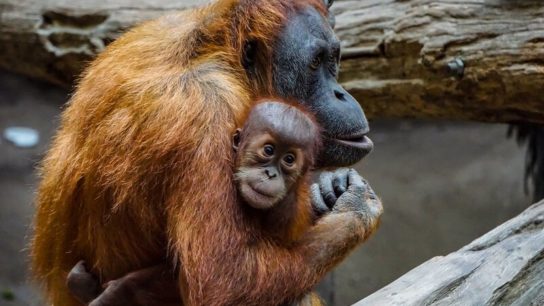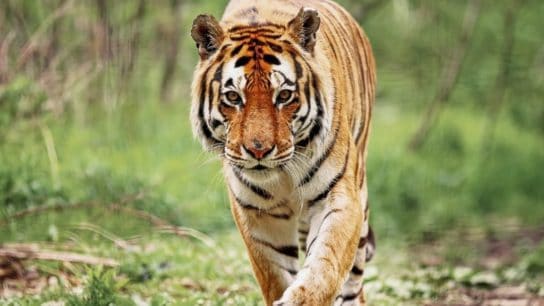



The Tasmanian Tiger, Pyrenean Ibex, and the Western Black Rhinoceros. These familiar names heard on the nightly news and seen on animal t-shirts, social media, and blog headlines are all high-profile extinct animals lost to our planet in less than a century. The reasons behind their disappearance are complex, and solutions seem elusive, as we navigate the challenge of meeting the needs of a growing world population while maintaining critical habitats and preserving the delicate balance of our biodiverse planet. Although often considered an issue reserved for developing economies, even the US, by most measures the wealthiest country globally, has not escaped this truly complex challenge.
—
A Global Issue
The ongoing loss of habitats in the Amazon and Africa remain high-profile daily news events, typically associated with the economic needs of lesser-developed states. Similarly, the 2022 World Wildlife Fund (WWF) Living Planet Report notes that the dramatic decline across Latin America and the Caribbean is notably greater than in any other region, with a 94% decrease between 1970 and 2018.
These issues rightfully deserve attention and merit local and global resource allocation. Yet, it is startling to discover that the US, a wealthy and industrialized corner of our planet, lost over 50 species in the last century, as reported by its own Environmental Protection Agency (EPA).
Historic Rates of Decline
In the 20th century, an estimated 500 animal species went extinct, and today’s rate of extinction, according to the UN, is “at least tens to hundreds of times higher” than extinctions that occurred over the past 10 million years.
The WWF reports that North America lost over 20% of its species in the past century, with the US EPA noting over 1,000 additional species in endangered or threatened status in the States alone. This represents a tragedy for such a wealthy and industrialized corner of our planet.
Species Loss in the US
- Animal populations worldwide have declined by 70% in just 50 years, according to the aforementioned WWF report.
- In 2023, US scientists declared 21 species officially extinct, including mammals, birds, mussels, and fish, with destroyed habitats identified as a key factor.
- According to an April 2023 EPA report, there are currently 1,300 US animals in endangered or threatened status.
Habitat Loss Contributes Heavily
The primary culprit is habitat loss, driven by the incessant needs of modern society that push wild residents into smaller and smaller patches of real estate, creating inevitable conflict as civilization and wild America merge.
- Ongoing pressure exists to repurpose conservation lands for profitable crops.
- Urbanization persists, transforming essential wildlife habitats into housing developments, roads, and industrial sites, even amid economic challenges.
- Water development disrupts natural flows; for instance, the Colorado River experiences depletion during dry seasons.
- Pollution disproportionately impacts freshwater ecosystems, with untreated sewage, mining waste, and chemicals concentrating in rivers and lakes.
- Climate change emerges as a growing contributor to habitat loss, affecting species in high-elevation environments and threatening coastal wildlife with rising sea levels.
You might also like: 10 of the Most Endangered Species in the US in 2024
The Economics of Habitat Loss
Habitat destruction presents a nuanced set of economic trade-offs. In the short term, activities like land clearing for agriculture and urban development yield immediate economic benefits, generating jobs, resource extraction opportunities, and infrastructure development. This can contribute to economic growth and improved living standards. Additionally, agricultural expansion addresses short-term food production needs. However, these gains come at the expense of long-term consequences.
The long-term economic trade-offs of habitat destruction include the loss of essential ecosystem services, decline in biodiversity, and increased vulnerability to climate change. The depletion of natural resources and the degradation of ecosystems pose risks to industries relying on diverse genetic resources.
Habitat destruction may also impact tourism, and the associated health risks from zoonotic diseases can lead to substantial economic costs. Striking a balance between short-term gains and long-term sustainability is essential for mitigating these economic trade-offs and ensuring a resilient and ecologically sound future.
What’s Next?
The future is not entirely doom and gloom, but scientists agree that the time to act is now. High-level resource allocation, typically only achieved with government funding and regulation, is key.
Landmark programs such as the watershed 50-year-old Endangered Species Act and more recent legislation are providing needed boosts to resources to turn the tide of habitat destruction.
- 2023 America the Beautiful Initiative: Recent legislation with a goal to restore, connect, and conserve 30 percent of lands and waters by 2030.
- Land and Water Conservation Und (LWCF): The fund helps strengthen communities, preserve history, and protect the national endowment of lands and waters. Since its inception in 1965, LWCF has funded $5.2 billion to support more than 45,000 projects in every county in the country. In 2020, this program received a permanent commitment of $900 milliom annually to fund conservation programs.
Accept the Challenge – Get Involved
Saving our species for future generations requires focus and a sense of urgency. We must tackle many challenges, including loss and degradation of critical habitats, over-exploitation (hunting, overfishing), introduction of invasive species, climate change, and pollution. Remember, demand accountability of those who control resources on our behalf, challenge conventional thinking on short-term economics, and most importantly, get involved – this is our challenge, together.
Featured image: USFWS Endangered Species/Flickr
You might also like: What the Updated Endangered Species Act Tells Us About the Future of Biodiversity