

Rising ocean temperatures and unprecedented marine heatwaves in the Gulf of Guinea are quietly decimating fish stocks, compounding local ecological pressures and threatening the food security of millions.
—
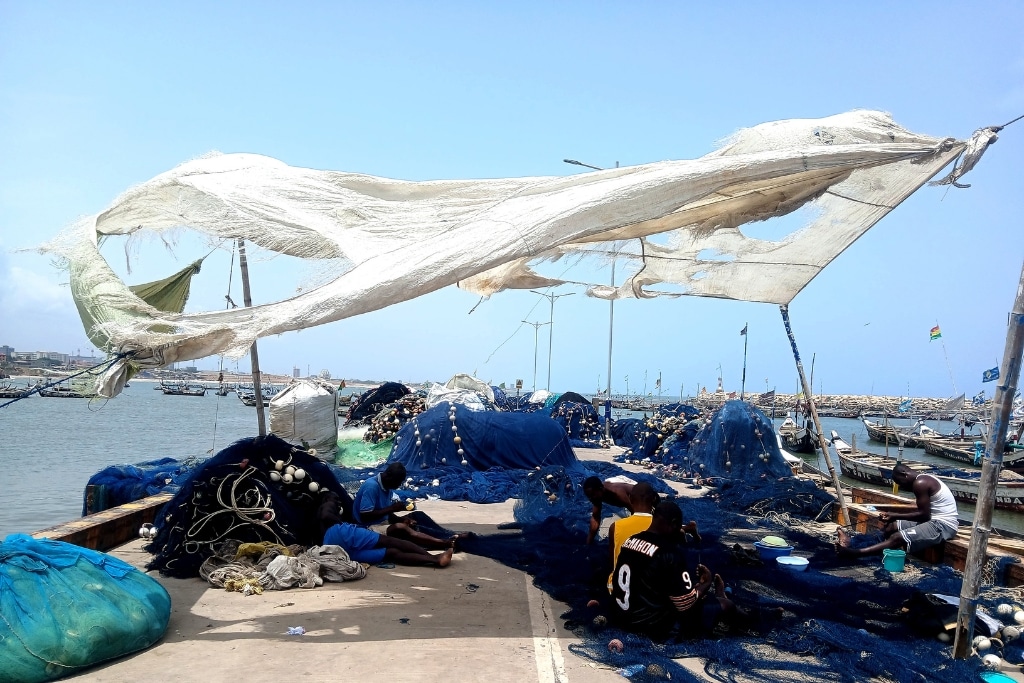
On a sunny April weekday at Jamestown Fishing Harbour in Ghana’s capital, Accra, fishermen work along the shore as the mercury hits 31C. Their chests glistening with sweat beneath low tarps that provide partial relief from the intense heat.
The work of repairing nets feels every bit as strenuous as the early morning fishing expeditions at sea. This is a familiar heat for them – one that scorches the skin and frequently forces them to end their shifts earlier than planned.
Okai Addo has just returned from a trip offshore. When the heat aboard the boat becomes too much to bear, he reaches for seawater and pours it over his body to lower his temperature. On particularly hot days, his only immediate option is to jump into the water for a brief moment of cooling before climbing back aboard to resume his duties.
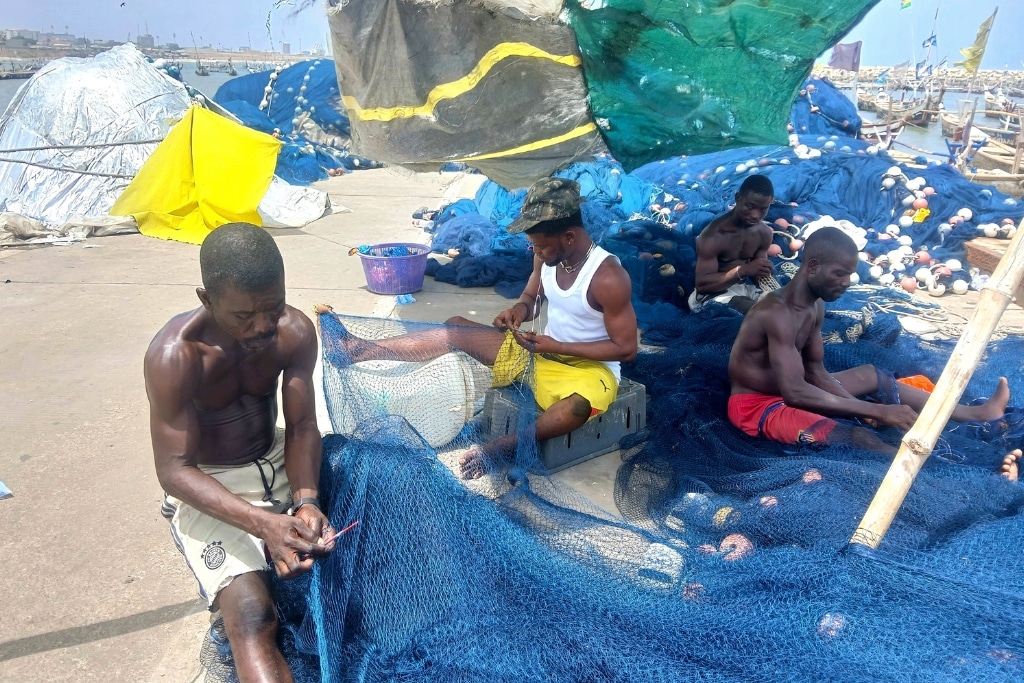
Nii Atimkpa, another fisherman, shares his own approach to keeping cool. “On the boat, there is no shade, so the sun is directly on us. On days when it is too hot, I take off my shirt and cover my head with it,” he tells Earth.Org.
For Ankamah Abola, heat takes a physical toll. “It is constant headaches from direct exposure to the sun, but I have to feed my family.”
These individual strategies, from using seawater for relief to improvising shade with clothing, reflect the everyday adaptations that fishermen in Jamestown rely upon to cope with the relentless coastal sun.
The Unique Intensity of Coastal Heat
The experience of heat along Ghana’s coastline often differs markedly from conditions further inland. Yaw Agyeman Boafo, Associate Professor at the Centre for Climate Change and Sustainability Studies at the University of Ghana, pointed to the combination of strong sunshine, elevated humidity levels, and the immediate marine environment as factors that amplify the perception of heat.
“In coastal areas, people are exposed to direct sunlight for long hours, while the humid air makes the heat feel even more uncomfortable,” Boafo told Earth.Org.
This humidity plays a critical role in how the human body manages external temperatures. The body depends on sweat evaporation to cool itself, yet when the surrounding air contains significant moisture, that evaporation slows considerably. As a result, people remain hotter for longer periods, increasing overall discomfort and physical strain.
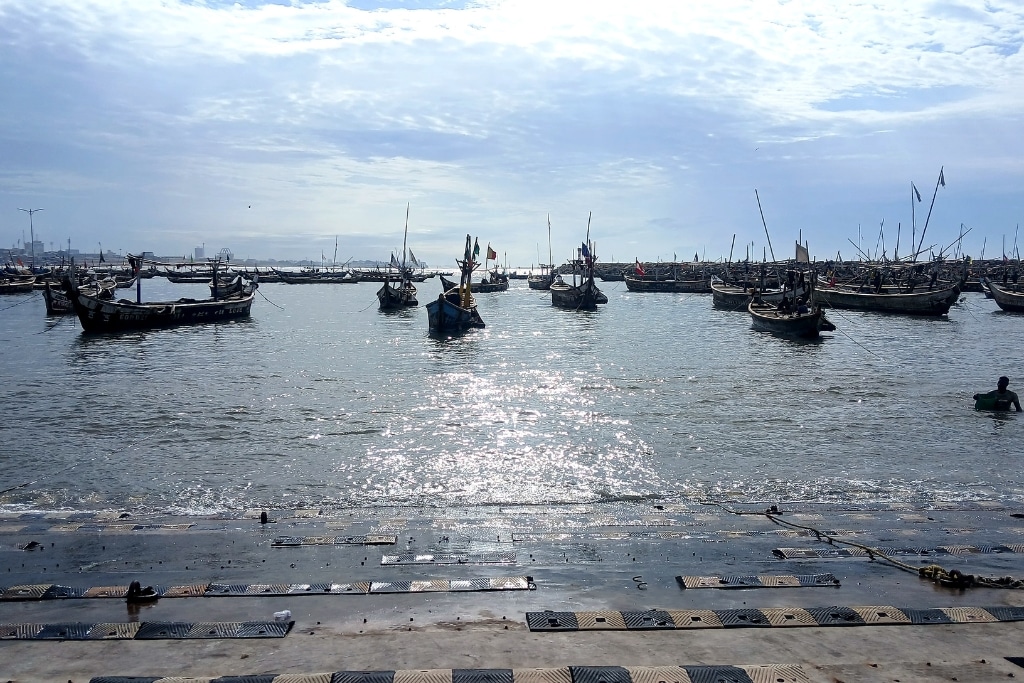
Fisherfolk are particularly vulnerable, according to Boafo. Many spend hours working under open skies, whether at sea or along the shoreline, with limited access to shade or protective coverings. The sunlight reflecting off the water surface adds another layer of intensity, increasing the risk of exhaustion, dehydration, and other heat-related health conditions.
In this context, natural features such as vegetation and mangroves offer potential benefits. They can provide shade, moderate local air temperatures, and help maintain the broader coastal ecosystems that support the livelihoods of communities like Jamestown.
More on the topic: Why Is Extreme Heat So Deadly?
The Hidden Heat Beneath the Waves
Beyond the visible challenges faced by fishermen under the sun, another form of heat operates largely out of sight in the waters of the Gulf of Guinea.
Marine heatwaves are extended periods during which ocean temperatures in a given area rise well above the historical seasonal average, specifically above the 90th percentile of the climatological baseline for at least five consecutive days. These events carry significant consequences for marine life and the human activities that depend upon it.
Such phenomena can lead to coral bleaching, fish die-offs, shifts in migration patterns, increased stress on fisheries, greater humidity in coastal zones, and more energy availability to fuel storms.
The ocean, which covers 71% of the planet and absorbs approximately 30% of all anthropogenic carbon dioxide emissions, also absorbs about 90% of the excess heat generated by global warming. This absorption contributes directly to the increasing frequency and severity of marine heatwaves.
Marine heatwaves doubled in frequency between 1982 and 2016. They have also become more intense and longer-lasting since the 1980s.
While fishermen in Jamestown focus on immediate surface conditions, these underwater temperature spikes quietly alter the marine environment, influencing fish distribution and availability in ways that affect daily catches and long-term sustainability.
Warming Trends and Local Observations
Research provides a clearer picture of how these changes are unfolding in West Africa.
A 2022 study of marine heatwaves along the coast of the Gulf of Guinea found that such events have increased in frequency since 2015. Researchers identified recurring patterns with cycles spanning three, six, and eight years, linked to broader fluctuations in tropical Atlantic temperatures. Warming trends have progressed more rapidly near Cape Palmas in the west before extending eastward toward Cape Three Points.

In this region, the Guinea Current, which transports warm water close to the shore, has shown signs of reduced effectiveness in supporting the cooling processes historically driven by upwelling.
Within Ghana, additional seasonal variations compound these pressures. An aquaculture practitioner, who did not want to be named, described how periods of unusually low water temperatures, or cold stress, sometimes occurring in August, can result in substantial fish losses.
“Both low temperature, or cold stress, and high temperature, or thermal stress, can lead to the prevalence of diseases such as Streptococcus, Strep for short, which affects the eyes, internal organs, and brain of the fish, and ISKNV, Infectious Spleen and Kidney Necrosis Virus, which causes kidney and spleen failure in fish. These organisms can be deadly for fish and may result in the loss of an entire investment,” the practitioner said.
In response to disease outbreaks, fisheries officers and environmental sanitation officers typically oversee the proper burial of affected fish to avoid any entry into local markets.
Compounding Threats to Fisheries
The effects of marine heatwaves do not occur in isolation. Kwesi B. Randolph Johnson, an environmental and fisheries consultant, said rising ocean temperatures often intensify other longstanding challenges facing Ghana’s fisheries sector, such as illegal, unreported and unregulated fishing; overfishing; marine pollution; and the degradation of critical habitats.
“Climate stress weakens marine ecosystems, and destructive fishing practices make it harder for fish populations to recover,” Johnson said.
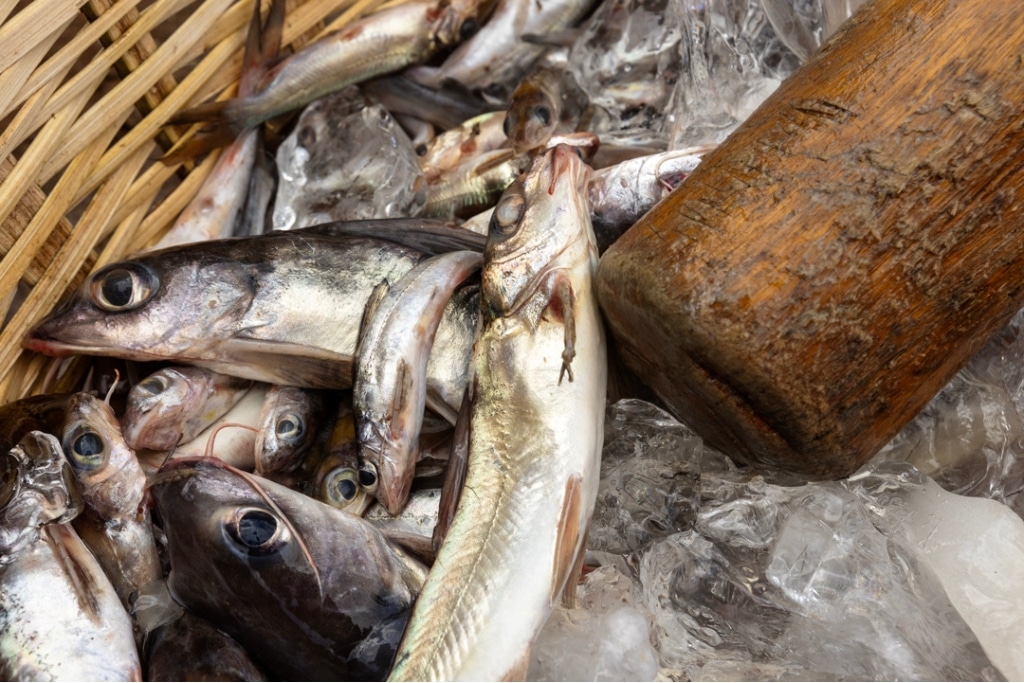
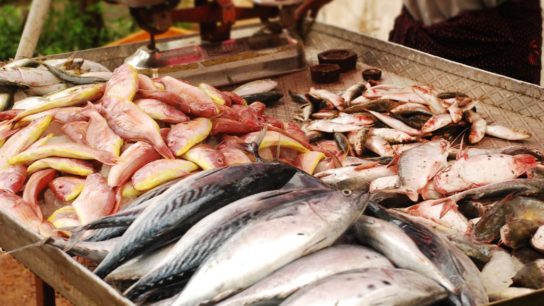
The repercussions also extend inland, influencing national food security. Fish remains one of the most accessible and important sources of protein in Ghana. Marine heatwaves can alter ocean conditions and disrupt the distribution of key fish species, including small pelagic stocks such as sardinella and anchovies that support the livelihoods of many coastal communities. As fish move to cooler waters or become less abundant in traditional fishing grounds, catches decline. Reduced catches have the potential to increase prices, contribute to job losses, encourage migration, and create broader instability in communities that depend heavily on marine resources.
At Jamestown Fishing Harbour, fishermen say they have not observed the complete disappearance of species they once commonly encountered, although catches have become increasingly unpredictable. According to Addo, each fishing season tends to bring its own mix of species.
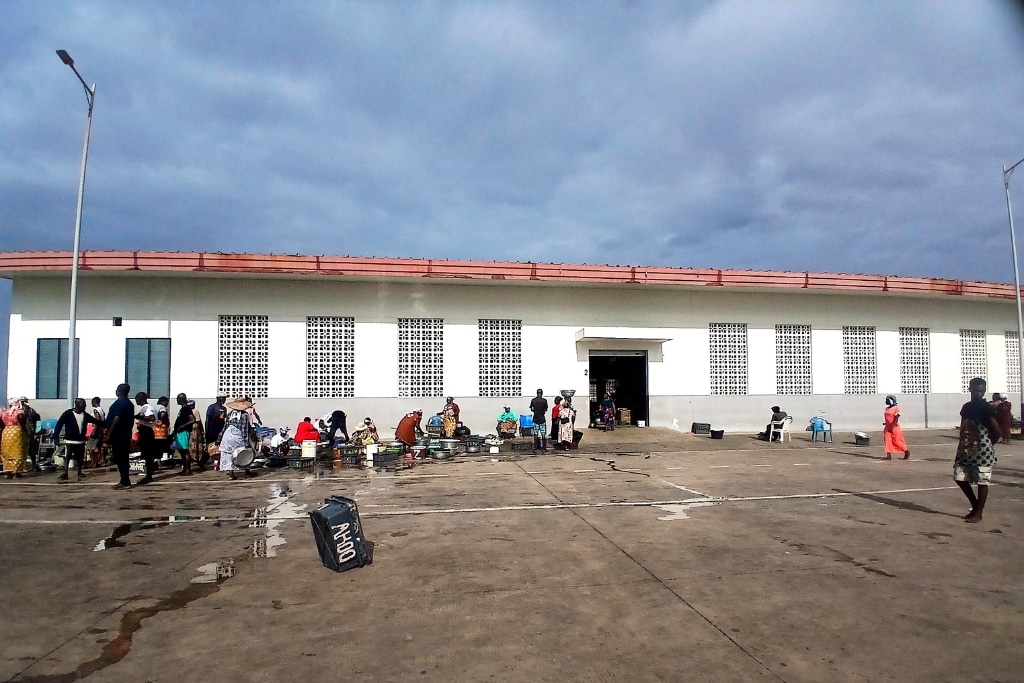
Maame Fante, a fish seller, accepts whatever the boats deliver each day. In earlier years, sellers like her worked under direct sun exposure, but infrastructure improvements have brought change. A cold storage facility now allows them to rely on refrigeration, helping to preserve fish quality, shielding sellers from prolonged heat, and reducing spoilage risks.
“A lot of destructive practices are occurring within Ghana’s fisheries sector and need to be addressed locally,” Fante told Earth.Org. “Beyond overfishing, there is juvenile fishing, pollution, and the use of destructive methods. The closed fishing season is only one piece of the puzzle for reversing declining catches in Ghana. We use it to protect fish stocks so they can reproduce and rebuild. But once the season ends, the other issues remain, including unsustainable practices such as the use of undersized nets to catch fish.”
In an effort to address some of these pressures, Ghana declared its first Marine Protected Area (MPA) this April. The protected zone covers approximately 700 square kilometers in the Greater Cape Three Points region, stretching from Ampatano to Domunli in the Western Region. The initiative seeks to conserve marine biodiversity and support fish stock recovery.
Godfred Sowah Khartey, Founder and Consulting Executive Director at the Centre for Environmental Sustainability, Marine and Maritime Affairs, places marine heatwaves within a broader context.
“MPAs regulate specific areas within ocean spaces because of their rich biodiversity. You do not want certain human activities, such as fishing or oil drilling, taking place close to those areas,” he said. “As for marine heatwaves, this is not just a Ghana issue, an Ivory Coast issue, or a Gulf of Guinea issue. It requires both global climate action and local ocean management. Marine heatwaves are largely driven by rising ocean temperatures.”
The Road Ahead
Technological and scientific innovations are emerging to address these complex challenges.
Oceanographer Peter Teye Busumprah and his team developed the African Ocean Biodiversity Atlas. The application uses GPS-enabled technologies beneath the sea surface to create a detailed and secure repository of information on marine species, including fish, mangroves, algae, and seaweeds.
“We ensure that all collected data are securely protected to prevent breaches. Our goal is to share this information with the appropriate stakeholders to support marine policymaking. This data will serve as a reliable source of information,” Busumprah told Earth.Org.
Aquaculture Researcher Jedida Osei Bediako, meanwhile, has developed a solar-powered oxygen delivery system for fish farms. Equipped with smart sensors, the system continuously monitors water quality. When oxygen levels fall to critical thresholds, it activates mechanisms that circulate water and introduce air, helping to restore balance within fish ponds. Such innovations can help reduce heat stress, lower fish mortality rates, and strengthen resilience against fluctuating environmental conditions.
Marine heatwaves have shifted from being a future concern to a present and growing reality in the Gulf of Guinea. Prolonged increases in ocean temperatures affect critical habitats, encourage harmful algal blooms, reduce dissolved oxygen levels, and push fish stocks into deeper waters beyond the reach of many artisanal fishers. These disruptions affect both wild fisheries and aquaculture operations, sometimes resulting in sudden disease outbreaks and large-scale fish mortalities.
Achieving the targets under UN Sustainable Development Goal 14, as well as advancing Ghana’s blue economy, will depend on closing gaps in monitoring, research, and response systems. As one aquaculture practitioner observed, dedicated laboratories capable of conducting rapid fish health assessments and continuous disease surveillance are essential for responding effectively to heatwave-related emergencies.
By treating marine heatwaves as a central consideration in planning rather than isolated events and by combining global efforts to reduce greenhouse gas emissions with strong local ocean governance and ecosystem restoration, Ghana can work toward securing a sustainable marine future for its coastal communities and the millions who depend on these waters.
Featured image: David Stanley/Flickr.
This story is funded by readers like you
Our non-profit newsroom provides climate coverage free of charge and advertising. Your one-off or monthly donations play a crucial role in supporting our operations, expanding our reach, and maintaining our editorial independence.
About EO | Mission Statement | Impact & Reach | Write for us