

Brazil, the host country of COP30, is looking to integrate ocean-based measures into the heart of the global climate negotiations. This requires building institutions and finding the financing needed to turn promises into real-world impact.
—
One of the topics poised to define the COP30 summit is the ocean. Brazil, which is hosting this year’s UN climate negotiations, has acknowledged that we cannot mitigate climate change without recognizing the key role oceans play in the scene alongside the other great lung of the planet: forests.
The ocean focus at COP30 is justified by science and urgent by necessity. Yet the real question, which will define whether this conference will succeed, is whether the aftermath of it will build the institutions, financing mechanisms, and accountability structures that turn visibility into implementation.
Like several other COPs have shown in the past, this is no guarantee. But it matters far too much for us to pretend otherwise.
More on COP30 from Earth.Org (click to view)
News
- Did COP30 Succeed or Fail?
- COP30 Week 2: Recap
- COP30 Week 1: Recap
- Reactions Pour in After Weak COP30 Agreement
- No Mention of Planet-Warming Fossil Fuels in COP30 Agreement
- Misinformation Becomes a Political Weapon Over Fire at COP30
- Business Coalition at COP30 Urges Transition Away From Fossil Fuels
- 83 Countries Join Call to End Fossil Fuels at COP30
- ‘People’s COP’ Marked By Civil Society Protests and Direct Action Events
- American States, Institutions Scramble to Fill Gap Left by US Absence at COP30
- Disability Activists Seek Official Recognition at COP30
- Brazilian Government Announces Ordinances to Recognize 10 Indigenous Lands
- Six Countries Pledge $58.5 Million to Adaptation Fund As UN Warns of $310 Billion Deficit
- Pope Leo Upholds Environmental Legacy of ‘Green’ Pope Francis, Urging Concrete Action on Climate at COP30
- Brazil to Demarcate Indigenous Territories Following Munduruku Protest at COP30
- COP30 Launches Global Declaration to Combat Climate Misinformation, Fake News
- Brazilian Government Seeks to Advance Discussion on Ending Fossil Fuels at COP30
- COP30: Fossil Fuel Lobbyists Outnumber Every Country Delegation Except Brazil
- COP30: Brazilian Government Puts Owners of the World’s Largest Beef Producer on ‘VIP List’
- Despite Record Turnout, Only 14% of Indigenous Brazilians Are Expected to Access Decision-Making Spaces at COP30
- Countries’ Climate Pledges Put World on Track for 12% Reduction in Emissions, UN Says
- Current National Climate Pledges Fall Far Short of What Is Needed to Limit Warming to 1.5C, Report Shows
Explainers
- COP30 Glossary: What You Need to Know About This Year’s UN Climate Summit in Brazil
- COP30 Volunteers Make World’s Biggest Climate Event Possible
- Navigating COP: A Deep Dive into the UN Climate Conference Process
- Oceans at COP30: Moving Beyond Pledges to Build an Architecture for Change
- Climate Adaptation at COP30: What to Expect
- Climate Finance at COP30: What to Expect
- Explainer: Why Gender Will Be High on the Agenda at COP30
- COP30 Volunteers Make World’s Biggest Climate Event Possible
- COP30 Youth ‘Go Bananas’ for Nuclear
Opinion
- Why COP30’s Success Depends on Comprehensive Food System Action
- Why COP30 Needs Indigenous Voices
- At COP30, Wealthy Nations Must Close the Adaptation Gap – My Home of Bangladesh Depends on It
Pre-COP30
- US Will Not Send High-Level Representatives to COP30, White House Says
- EU Agrees on Weakened Emissions Reduction Target Ahead of COP30
- 40 Elite Athletes Call for Urgent Adaptation Finance at COP30 Amid Climate Threat
- UN Climate Chief Urges Countries to Step Up Climate Action, Finance Ahead of COP30
- COP30 Host Brazil Calls For Bold National Emissions Reduction Plans Ahead of September Deadline
- COP30 Presidency Calls For Initiatives to Promote Information Integrity Amid Rampant Climate Disinformation
- Local Leaders to Tackle Climate Issues in Brazil Prior to COP30
- UN Climate Chief Says Energy Transition ‘Unstoppable’ Despite US Exit From Paris Accord, Urges Countries to Deliver on Climate Finance at COP30
What Has Happened at COP30
COP30 has done several things worth understanding. Brazil has framed the ocean and forests as the planet’s twin priorities, signaling climate change as a multi-sectoral and largely systemic issue. For decades, we have compartmentalized mitigation sources, placing forests over the ocean and turning a blind eye to science. That was a mistake. And Belém is correcting it.
Equally important, Brazil is explicitly placing the ocean resource in its climate impact plan – known as Nationally Determined Contribution (NDC) – for the first time, while pushing other countries to follow the precedent. This may sound procedural, but it is not. It signals that the nation is willing to make the ocean central to how it measures and pursues climate progress.

So far, we know that the COP30’s actual work will revolve around six pillars and 30 key objectives that Brazil calls the Action Agenda, framed as a mutirão, an Indigenous word for “collective task.” Within this framework, the ocean is highlighted as an emerging priority.
The COP30 presidency, in close collaboration with Climate Champions, a mandate within the UNFCCC process, and the Ocean Climate Platform, a multi-stakeholder coalition, has also advanced a Blue Package roadmap to accelerate the implementation of ocean-climate solutions by 2028. The Ocean Breakthroughs, a set of science-based targets across five key areas, will serve as the initiative’s foundation, addressing marine conservation, maritime transport, coastal tourism, marine renewable energy, and aquatic food systems. An online platform will track progress. This is meaningful since it signals commitment to action and accountability.
Beyond plans and roadmaps, the High Seas Treaty, colloquially known as the BBNJ Agreement, is the most concrete ocean-related item on the table, which Brazil has committed to ratifying by the end of this year. This is a matter of great importance, as some two-thirds of the world’s ocean currently lacks a governance framework. The High Seas Treaty creates the legal architecture to establish Marine Protected Areas (MPAs) in those waters, finally bringing governance to the global commons.
Despite the optimism, the COP30 agenda is still dominated by the same tensions that have stalled progress in previous years.
The $1.3 trillion Baku-to-Belém Roadmap is essential as it calls for mobilizing annual climate finance by 2035, but the ocean is not specified as a priority sector within it. The Global Goal on Adaptation is being negotiated, with promises that nature-based solutions that could include coastal and marine ecosystems will feature prominently. But “could” is not the same as “will.”
Four Steps to Change the Course
First, major maritime nations must rapidly ratify the High Seas Treaty and come up with resources for implementation. Ratification alone does not change anything. Many developing nations lack the technical expertise and dedicated institutional capacity, such as permanent ocean affairs units, marine research infrastructure, and effective enforcement systems, needed to meaningfully participate in BBNJ negotiations, negotiate benefit-sharing arrangements, or implement MPA management plans.
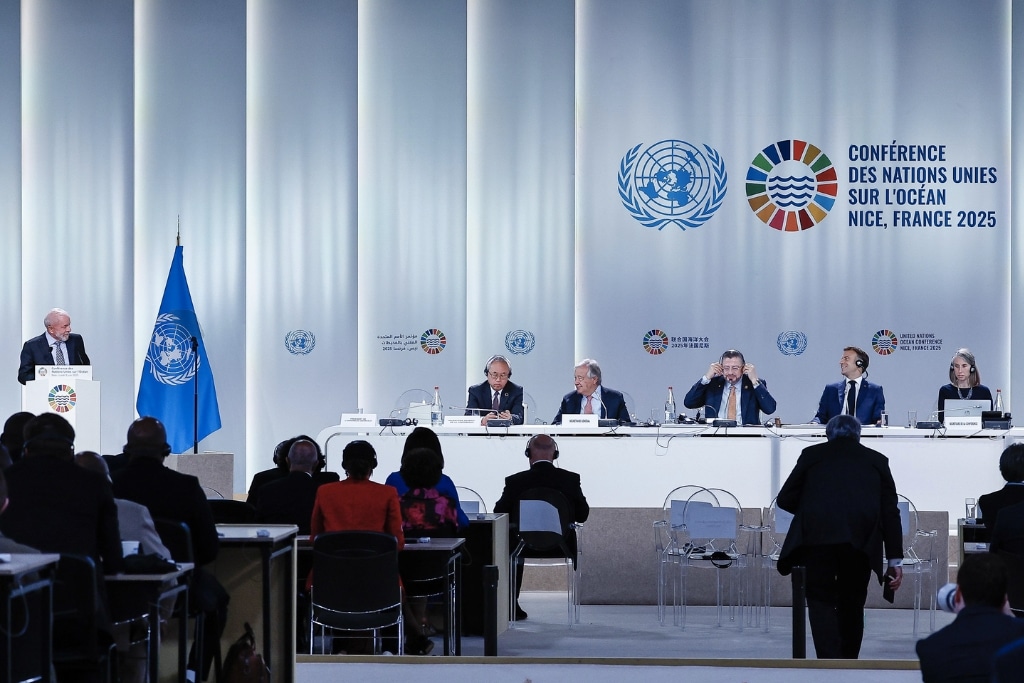
The BBNJ’s capacity-building provisions are ambitious, but they depend on the special fund actually receiving adequate resources – something that won’t be determined until BBNJ COP1. The meeting is expected to take place after the treaty has entered into force, likely in late 2026. In the interim, developing countries are relying on the $40 million the European Union committed and fragmented support from other donors. This is woefully inadequate for a treaty claiming to serve 193 UN member states.
Therefore, a dedicated global fund to support developing country participation and implementation before and immediately after BBNJ COP1 should be established through voluntary contributions from wealthy nations and philanthropic sources.
More on the topic: ‘Historic’ UN-Led High Seas Treaty to Take Effect in 2026 as Ratification Threshold Cleared
Second, we must stop treating climate and biodiversity as separate challenges. For instance, ecosystem protection should be considered from lenses beyond carbon sequestration, which may be in terms of coastal defence, fisheries support, and biodiversity conservation. We need integrated frameworks, i.e. shared monitoring systems, joint targets, and aligned incentives that reward governments for delivering across multiple goals simultaneously. The ideal architecture will be where climate commitments and biodiversity commitments are mutually reinforcing.
Third, countries updating their NDCs must include ocean-based climate solutions with measurable targets. Specific goals, such as reducing overfishing pressure, protecting coastal wetlands, and establishing timelines for marine area protection, should be established, and these must be linked to finance, so that commitments come with resources.
Finally, we need to be honest about finance. Pledging money and delivering money are not the same thing. Wealthy nations must commit concrete, auditable shares of their climate finance budgets specifically for ocean-based solutions and refrain from setting aspirational targets. We have the tools to do this, such as blue bonds, carbon credit markets, blended finance, but they will function only if governments make the ocean their clear priority. Right now, we are sending a signal, but this signal must also reflect in budgets.

The Baku-to-Belém Roadmap must have a floor, and not a ceiling, dedicated explicitly to ocean solutions. MPAs, coastal resilience, sustainable aquaculture, and ocean acidification monitoring are essential components of infrastructure for climate stability.
Right now, a nearly $149 billion annual gap is projected to persist through 2030 to achieve goals towards SDG 14 (“Life Below Water”). This is a disconnect between what countries commit to, and what they actually do.
Final Thoughts
Taken together, these actions could turn a promising agenda into measurable progress. COP30’s elevation of the ocean from the margins to the mainstream represents a pivotal moment, but words must become institutional reality.
The High Seas Treaty, the Blue Package, and Brazil’s ocean-inclusive NDC signal genuine intent. Yet history warns us that pledges tend to fade without the architecture to deliver them. Our governments must fast-track ratifications, integrate climate and biodiversity frameworks, and direct measurable finance toward ocean solutions.
The nearly $149 billion annual gap to achieve SDG 14 cannot persist. We have built the intellectual consensus; we must develop the mechanisms for checking funding streams and political accountability, which can transform COP30’s ocean spotlight into lasting, transformative change.
This story is funded by readers like you
Our non-profit newsroom provides climate coverage free of charge and advertising. Your one-off or monthly donations play a crucial role in supporting our operations, expanding our reach, and maintaining our editorial independence.
About EO | Mission Statement | Impact & Reach | Write for us