


The Gulf of Maine’s beloved wildlife, from North Atlantic right whales and seabirds to iconic fish stocks and lobsters, is threatened by ocean warming. The area is warming at a rate faster than nearly any other ocean surface on the planet.
—
The Gulf of Maine, often referred to as a sea within a sea, extends along the eastern seaboard from Cape Cod, Massachusetts, to New Brunswick, Canada. Teeming with a bounty of fish and lobsters, the watershed serves as a recipe for abundance. Nutrients from the warm Gulf Stream, the cool Labrador Current, and counterclockwise coastal currents gush into the bay, stratifying into varying temperate zones. But things have changed.
The Gulf of Maine is warming at a rate faster than nearly any other ocean surface on the planet, leading to shifts in the distribution of marine species and contributing to sea level rise. Think of it like a bathtub with hot and cold taps. As the Labrador Current weakens, accelerated warming has increasingly been impacting marine life and economic activities on Maine’s working waterfront.
According to the Gulf of Maine Research Institute’s (GMRI) latest report, the watershed experienced its twelfth-warmest year in 2024. Climbing temperatures, though incremental, are poised to have drastic impacts on fisheries and New England communities.
In Hot Water
Maine is combating the effects of global warming in real time and, in doing so, helping researchers better understand the global ocean.
The Gulf of Maine is home to beloved wildlife, from North Atlantic right whales and seabirds to iconic fish stocks and lobsters, all of which are threatened. Warming waters have already affected cold-water species, like herring, which are declining, and warm-water species, like butterfish.
Shifts in the food web have a ripple effect. Puffins are in limbo, forced to change what they feed to their chicks. And invasive species like green crabs have settled in, killing essential eelgrass beds that juvenile crustaceans rely on for protective habitat.
The impact rising tides have on coastal infrastructure are not less noteworthy. In 2020, Maine published its climate action plan, dedicating an entire section to better understand how a warming, rising Gulf will impact marine resources and communities. There’s great emotional value in both sectors, not to mention $528 million in yearly revenue from the state’s lobster industry and $9 billion in tourist revenue.
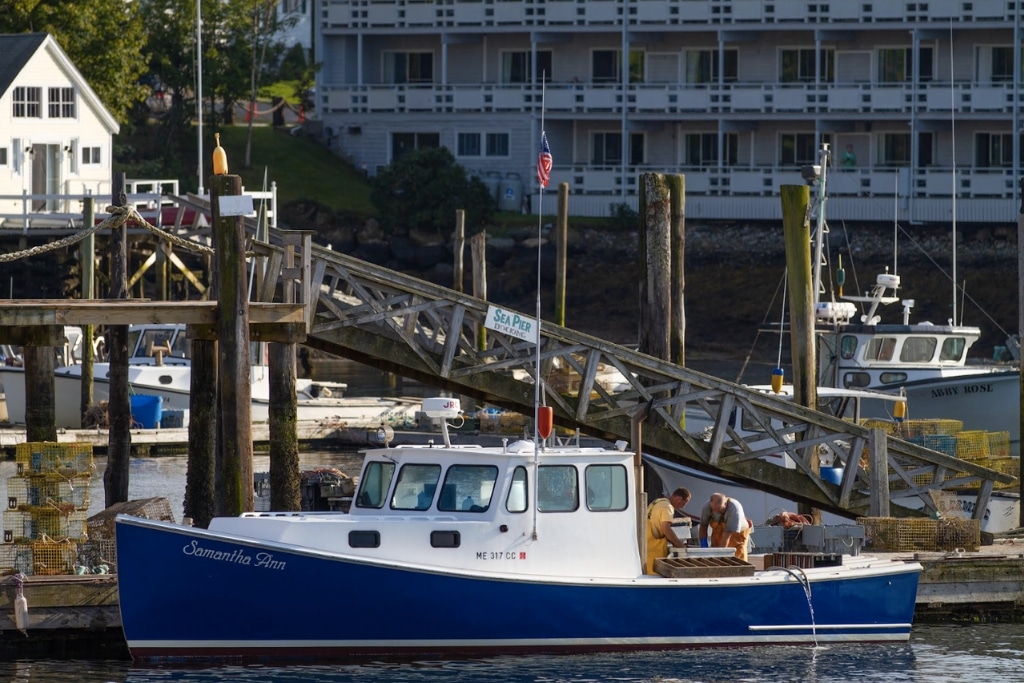
GMRI Senior Scientist Katherine Mills, whose work focuses on how physical changes affect ecological patterns, and Hannah Baranes, whose research supports the translation of flood hazard science into coastal management, shed light on how the warming Gulf is affecting ecosystems and coastal communities – and how science can inform a response.
Lobsters at Risk
Warming waters impact a slate of species. Take, for instance, the endangered North Atlantic right whales, which feed primarily on tiny creatures called copepods. As temperatures rise, zooplankton have become leaner, imperiling the whales that depend on them for food.
And lobsters? They, too, rely on Calanus copepods for nutrition, and the warming waters have shifted the species’ migration period, putting it out of sync with the release of larval shellfish.
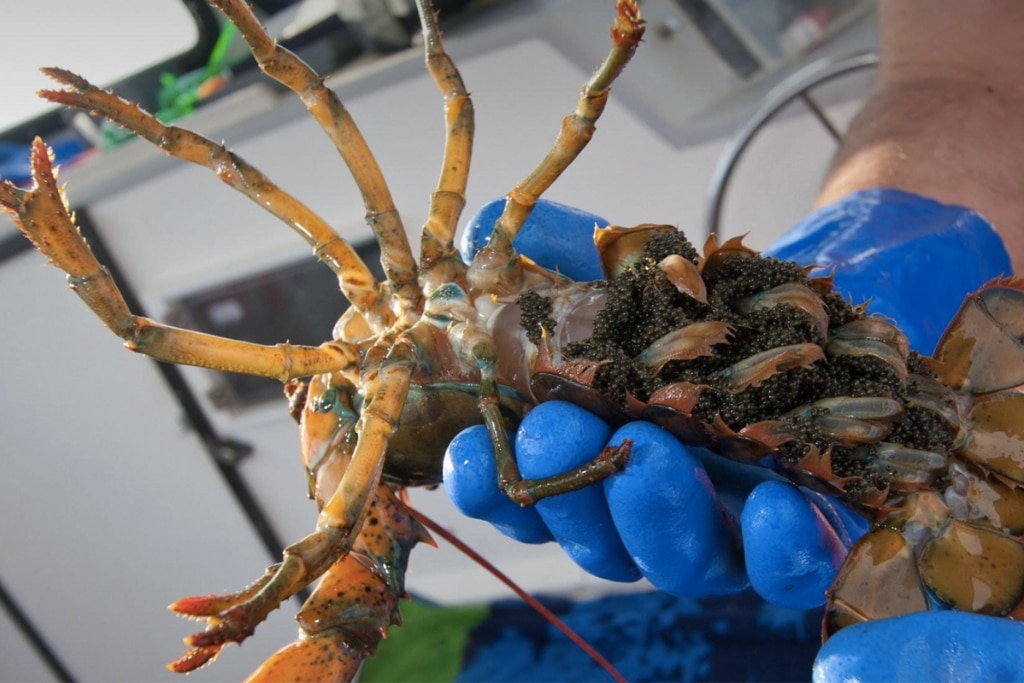
So far, temperatures in the Gulf of Maine have remained suitable for lobster reproduction, but scientists have identified some troubling changes. Even though female lobsters are producing the same number of eggs as before, fewer are surviving into adulthood.
Warmer waters in the early 1980s led to an increase in lobster populations, but predicted conditions for 2050 could threaten the species’ survival. Sustained high temperatures weaken their respiratory and immune systems, and will make it increasingly difficult to find nutritional prey.
Marine Species Distribution
The warming Gulf has also been associated with various ecosystem changes, notably shifts in species distribution, though regional fisheries are already adapting.
Leading the Integrated Systems Ecology Lab, Mills seeks to understand the connections between climate, ocean conditions, and fisheries and, in doing so, improve adaptation measures for coastal communities. She has already seen micro-pivots – fishermen targeting different species at different locations, depending on the time of the year and, more recently, delving into side hustles, like kelp aquaculture.
When it comes to physical changes, her team relies on several sources to monitor temperature and salinity in the Gulf of Maine. They use statistical models to test relationships between environmental changes and fisheries, assess population health, and identify potential factors that hinder their success.
As the labs’ work continues, it becomes more refined. Time series that span decades, though expensive, are better at detecting ecosystem changes. That is the goal.
Documenting Change in Real Time
According to Mills, the main takeaway from GMRI’s 2024 warming update is that although sea surface temperatures cooled in 2023 and 2024, the Gulf of Maine, on average, is still warming.
“The most significant change I remember was the 2012 marine heatwave,” said Mills. “We saw squid coming to nearshore waters, staying the whole summer, the loss of species like Northern shrimp, and not to mention the lobsters. There were so many.”
During that time, Mills recalled a notable change in seasonality: summer species arrived earlier and stayed later, and the uptick in lobster landings led to a severe supply chain backlog; the product couldn’t be processed as quickly as it was coming in, resulting in a market glut.
Since 2012, Mills feels there has been “remarkable adaptation” within the industry, making it better equipped for future heatwaves.
She highlighted the interconnectedness of species within the Gulf of Maine food web. Her team has observed direct responses to warming in species such as cod. At the southern extent of their geographic range in Maine, they are declining as temperatures exceed their suitable thermal range.
“We’re seeing some new species like black sea bass, menhaden, and blue crabs,” said Mills. “Historically, these have been more prevalent in the Mid-Atlantic. Warm temperatures are also luring in invasive species, like green grabs, which prey on softshell clams and destroy eelgrass beds.”
Hope Prevails
Although many species have been lost over the centuries, Mills still finds magic in the Gulf of Maine and hopes that, armed with knowledge of the past and science of today, what remains will not just prevail but eventually rebound.
“When we imagine marine fisheries, we have to think about people,” she said. “Harvesters are very sensitive to ecosystem changes. They function within larger social networks and market systems. When the waters change, their whole lives do. It’s equally as important to achieve stock sustainability goals while allowing those who work on the waterfront to adapt to changing conditions.”
‘It’s Happening’
Unlike Mills, Baranes’s work focuses more on community projects. Studying water levels and intertidal environments, her team develops tools that support decision-making.
She seeks to answer questions like: “How does sea level rise, tide variability, and freshwater floods affect the coastline and Gulf of Maine estuaries?” and “How will flood risk evolve in the future?”
On the applied side of her research, Baranes has worked on near-term flood forecasting and collaborated with state agencies to develop technical guidance for lawmakers. “Maine has been planning for climate change for a long time,” she said, noting the coastal floods in December 2022, and the back-to-back extratropical cyclones in January 2024. “Lately, we’ve gone from ‘will this happen’ to ‘it’s happening’ and now, ‘what do we do about it?’”.
Maine led the way as the first state to assemble a bipartisan group of experts to set specific targets for sea level rise. Today, its climate action plan is committed to managing sea levels at 1.5 feet by 2050 and 4 feet by the century’s end.
“These numbers are still uncertain and may evolve,” said Baranes. “But to see a state empower its citizens to take action and start planning, I think, is fantastic.”
She noted the role local knowledge plays in developing tools like Flood Insurance Rate Maps (FIRMS), and informing projects like Maine DOT’s soon-to-be statewide coastal flood risk model, which will provide communities with the localized, future-planning information they need.
While species distribution is a concern, with the lobster industry in flux, she also acknowledged additional costs due to global warming.
Storms during the winter of 2024 alone caused an estimated $90 million in damage to public infrastructure, not to mention damage to private homes or insurance claims. “Insurance often doesn’t fully cover flood damage,” said Baranes. “And if you live by the coast, repeat repairs are expensive. That’s why we need to consider ways to relocate or live with water – transformational projects, like raising bridges and road segments or installing tide gates.”
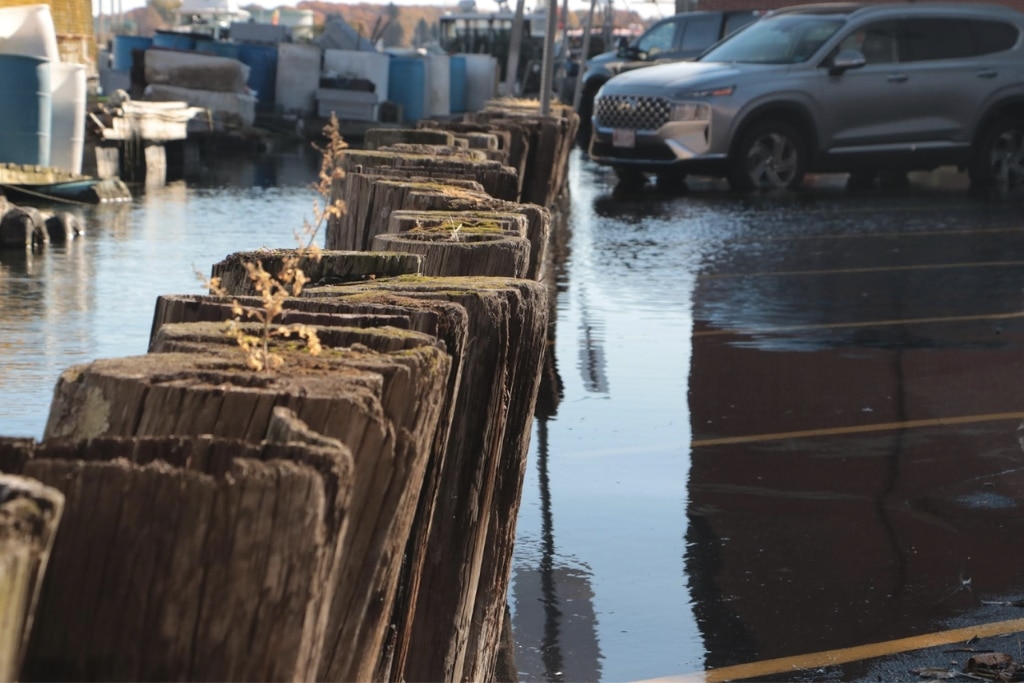
Currently, Maine is at an advantage. The most extreme storm surges tend to be three to five feet, whereas tidal range varies between nine and twenty feet. This means that when there are floods at high tide, the water will eventually recede as the tide drops.
This may not always be the case, though. “Raising a billion dollars for a project may seem unachievable,” said Baranes. “But if we start planning early and use strategies that work, we can make a real difference.”
Coastal Resilience At Its Finest
Baranes touted Portland as a “climate-ready city”. Combining public investment and municipal action to strengthen its working waterfront, electrify transportation, and build resilient infrastructure, it has steadily adapted to warming waters and rising seas while supporting jobs and long-term vitality.
She pointed to a few local projects that keep her hopeful that change is not just possible – it is already happening.
ReCode Portland is a more recent effort to update the city’s land-use code to include flood zones. As is the Maine Climate Council, a legislative body that has played a key role in planning for future sea-level rise, resulting in the passage of bills like LD 1572, which directs agencies to incorporate considerations of 1.5-foot sea-level rise by 2050 and 4-foot rise by 2100 into regulations and development.
“The ReCode project addresses other important issues residents have,” Baranes continued. “Like walkability, more green spaces, and multi-family housing units. It’s a great example of how planning for climate change can also improve community living.”
Provided that sea levels will continue to rise – minor high-tide flooding is projected to increase over the next decade – a 2024 report suggests that Maine extend its planning horizons beyond 2100, shifting targets two decades later as impacts may outpace adaptation efforts toward the end of the century.
“While the Jan. 10 and 13 (2024) storms felt extreme, such events will become routine,” said Baranes, who co-authored the report. “These storms raised water to half of what we expect from sea level rise in 2050.”
The bottom line: a slow, steady rise in sea level, as scientists predict, will still result in significant flooding along the way.
“I often use this metaphor: imagine heights distributed in a classic bell curve. Most people are average height, some are outliers. Short or tall, but only the tall people bump their heads on doors as they enter. Now, say everyone has to walk on six-inch stilts. Even average-sized people would start bumping their heads,” said Baranes.
You add additional storm surge to an already rising sea level, and voila.
Our Biggest Hope Is Agency
When it comes to hope, Baranes clings to the notion of agency. In her opinion, no action is too small. We do not need to come up with a giant policy solution or a coastal relocation plan to be part of a movement that’s kinder to the planet.
“Every action counts,” she said. “From calling your local Rep. to support a bill that leads to emission reductions, or having a conversation with your neighbor about gardening, to encouraging a young person to pursue a career in climate policy. Seemingly small steps like these transform fear into action and, eventually, hope.”
What is happening in Maine will eventually happen everywhere. In the meantime, may this easternmost state’s approach to climate change act as a guide. Perhaps the best response is rooted in science-backed policy change and spirited grassroots campaigns.
Featured image: Courtesy of Elijah Miller/The Gulf of Maine Research Institute.
This story is funded by readers like you
Our non-profit newsroom provides climate coverage free of charge and advertising. Your one-off or monthly donations play a crucial role in supporting our operations, expanding our reach, and maintaining our editorial independence.
About EO | Mission Statement | Impact & Reach | Write for us