


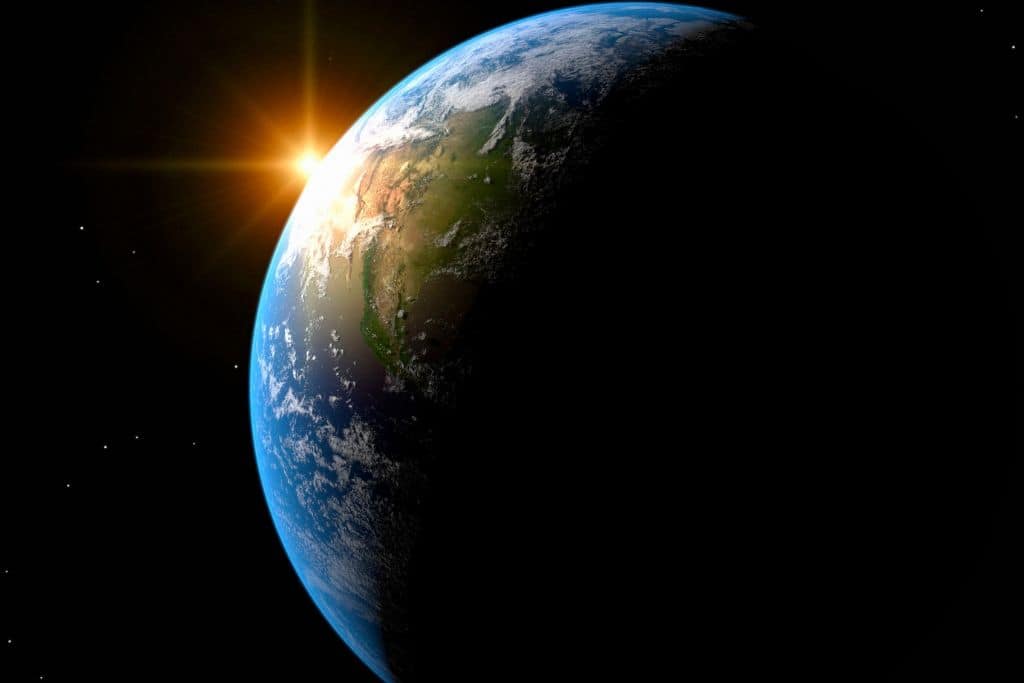
Science-driven healing of the ozone layer is proof that “progress is possible,” UN Secretary-General António Guterres said on Tuesday, which is the International Day for the Preservation of the Ozone Layer.
—
The ozone layer, Earth’s protective shield against the sun’s ultraviolet radiation, continued to heal in 2024, putting it on track for full recovery by mid-century, the UN said on Tuesday.
Released on the International Day for the Preservation of the Ozone Layer, the latest bulletin from the World Meteorological Organization (WMO) showed that the ozone hole last year was smaller than in recent years. While naturally occurring atmospheric factors were responsible for low level of depletion, the long-term trend is positive, the UN body said.
The layer’s loss was once regarded as humanity’s most pressing environmental challenge. The ozone layer, a region of the earth’s stratosphere, serves as a protective shield against the sun’s ultraviolet radiation, exposure to which can result in increased risks of skin cancer, cataracts and ecosystem damage.
In the 1970s, scientific breakthroughs led to the discovery that hydrochlorofluorocarbons (HCFCs) and chlorofluorocarbons (CFCs), substances once widely used as refrigerants in refrigerators, air conditioners, firefighting foam, aerosol cans and hairspray, could react with atmospheric ozone, producing oxygen and depleting the protective ozone layer.
The discovery led to a global campaign to combat the use of HCFCs in household applications. This culminated in the 1985 Vienna Convention for the Protection of the Ozone Layer, and its Montreal Protocol, adopted in 1987, represented the first global effort to combat human-driven climatological effects. Over 99% of the production and consumption of controlled ozone-depleting substances was successfully phased out globally as a result.
“Forty years ago, nations came together to take the first step in protecting the ozone layer — guided by science, united in action,” said UN Secretary-General António Guterres.
“The Vienna Convention and its Montreal Protocol became a landmark of multilateral success. Today, the ozone layer is healing. This achievement reminds us that when nations heed the warnings of science, progress is possible,” he added.

Full Recovery By Mid-Century
The hole in the ozone layer is on track to fully recover to 1980s levels by mid-century across the world. The Antarctic ozone hole also showed “initial recovery” last year, with its depth below the 1990-2020 average, according to the bulletin.
In 2022, the UN said that it will take slightly longer in polar regions, with the hole over the Arctic expected to be fully healed by 2045 and that over the Antarctic by 2066.
Changes in policies and climate change-related events such as wildfires, however, could delay the recovery. A 2022 assessment found that wildfire smoke from Australia’s 2019-2020 Black Summer destroyed 1% of the ozone layer circling above the Southern Hemisphere.
2016 Amendment
In 2016, the Kigali Amendment to the Montreal Protocol was adopted, targeting hydrofluorocarbons (HFCs), which are used as replacements for HCFCs and CFCs.
Although HFCs do not deplete the ozone layer, they are still potent greenhouse gases that contribute significantly to global warming. The global warming potentials for the most abundant HFCs are as large as 14,800 – meaning that 1 tonne of an HFC would trap 14,800 times more heat than 1 tonne of CO2. The Kigali Amendment aims to reduce HFC production and consumption by over 80% over the next three decades and is expected to avoid up to 0.5C of global warming by the end of the century.
More on the topic: Research in Reducing Ozone-Depleting Substances Suggests Positive Trend for Climate Change Mitigation and Ozone Recovery
This story is funded by readers like you
Our non-profit newsroom provides climate coverage free of charge and advertising. Your one-off or monthly donations play a crucial role in supporting our operations, expanding our reach, and maintaining our editorial independence.
About EO | Mission Statement | Impact & Reach | Write for us