


The world’s topsoils store 45% more carbon than previously estimated, making them a powerful, largely untapped carbon sink, according to a new report.
—
A new report issued on “Agriculture Day” of COP30 found that soils store about 2,822 gigatons of carbon in the top one meter, up from earlier estimates of around 1,500 gigatons. It also concluded that 27% of carbon emissions needed to keep global warming below 2C can be sequestered in soils in good condition, the equivalent of about 3.38 gigatons of carbon dioxide (Gt CO2) per year.
This carbon sink is in danger: the report explains that at current rates, soil degradation could release 4.81 billion metric tons of CO2 per year into the atmosphere, if allowed to continue. Current CO2 emissions from degrading US soils alone equate to approximately 75 million cars, while that if 1% of the carbon in Europe’s soils were to be released, it would equate to the annual emissions of 1 billion cars.
Meanwhile, the economic value of soil’s ecosystem services are estimated at over $11 trillion annually, with every $1 of investment in soil regeneration leading to as much as $30 in economic returns, according to the report.
Despite this, only 30% of nations include soil restoration as a climate mitigation solution in their COP30 National Determined Contributions (NDCs), national climate plans mandated under the Paris Agreement.
The report was compiled by the Aroura Soil Security Think Tank, the IUCN World Commission on Environmental Law (WCEL), and the Save Soil campaign.
“The third round of NDCs speaks about agriculture as part of the solution,” said Praveena Sridhar, Chief Science and Policy Officer of Save Soil, told Earth.Org. “But it doesn’t mention organic carbon. EU mentions it in the text of their NDC, but it’s not a commitment – only a potential. All energy and transportation commitments are quantified, but nothing is quantified with regard to soil. And if you don’t get soil into quantifiable targets, it’s all talk.”
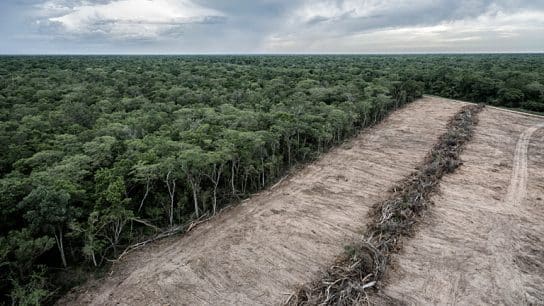
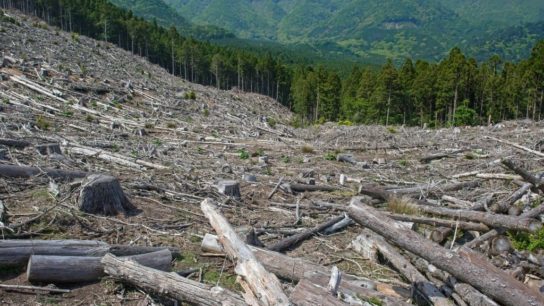
Soil health has come into increasing focus over the past several years, as 40% of Earth’s land is now already degraded and 90% could be degraded by 2050, according to the UN Food and Agriculture Organization.
However, this has not translated into concrete action at the policy level. “This has been going on for a decade,” said Sridhar. “There is no clear outcome from the Sharm el-Sheikh joint working group [on agriculture and food security]. There is no clarity on the plan, no clarity on the money, no clarity on the MRV [monitoring, reporting, and verification]. Everyone talks about how agriculture has huge potential [as a carbon sink], but nobody helps realize the potential.”
MRV can be a serious barrier to realizing the carbon sink potential of topsoil, especially when it comes to establishing a baseline. “You need clear, accurate measurability,” said Sridhar. “It’s not like a factory, where you can switch on to determine the baseline – that’s not how land works. And with agrifood systems, that baseline of soils changes every few meters. But if you get the baseline right, you can outsource the MRV to machines.”
One EU project seeks to address this. A Soil Deal for Europe has an estimated investment of around 1 billion euros (US$1.15 billion) up to 2028, which involves establishing 100 Living Labs, research, innovation, and developing the monitoring framework, includes mapping. While other EU funding, like the Common Agricultural Policy (CAP), also contributes to soil management, the 1 billion euros is the most direct figure associated with the Soil Mission that underpins the new EU-wide soil health monitoring framework. Its goal is to develop a robust, harmonized EU-wide soil monitoring framework, which will contribute to assessing and achieving healthy soils by 2030 in line with the EU Green Deal’s long-term vision of healthy soils by 2050.
Unlike the UN Convention on the Law of the Sea (UNCLOS) for oceans and the Paris Agreement for the climate, soil lacks a global legal protection framework. However, the EU, the Pan-African Parliament and the International Union for Conservation of Nature (IUCN) last month took steps mandating the development of a Global Legal Instrument for Soil Security.
At a COP30 High-Level Ministerial Event on Wednesday, Brazil’s Minister of Agriculture and Livestock Carlos Fávaro launched the Resilient Agriculture Investment for Net-Zero Land Degradation as a legacy effort to restore degraded farmland and promote sustainable agriculture.
The report introduces the Soil Security Framework, a practical model for protecting and restoring the world’s soils across five dimensions: capacity, condition, connectivity (how people value soil), capital, and codification (legal protection). This approach reframes soil from an agricultural variable to a strategic resource underpinning food, water security, climate resilience and economic stability.
Soil health is fundamental not only as a carbon sink, but also for climate adaptation. “Living soils are fundamental to agriculture,” said Sridhar. “They support you when you go through climate shocks. Healthy, living soils can absorb flood waters, and in drought they hold water like sponges. The crops are not successful because of the inputs you put on top like chemicals and pesticides – the security lies below the surface.”
More on COP30 from Earth.Org (click to view)
News
- Did COP30 Succeed or Fail?
- COP30 Week 2: Recap
- COP30 Week 1: Recap
- Reactions Pour in After Weak COP30 Agreement
- No Mention of Planet-Warming Fossil Fuels in COP30 Agreement
- Misinformation Becomes a Political Weapon Over Fire at COP30
- Business Coalition at COP30 Urges Transition Away From Fossil Fuels
- 83 Countries Join Call to End Fossil Fuels at COP30
- ‘People’s COP’ Marked By Civil Society Protests and Direct Action Events
- American States, Institutions Scramble to Fill Gap Left by US Absence at COP30
- Disability Activists Seek Official Recognition at COP30
- Brazilian Government Announces Ordinances to Recognize 10 Indigenous Lands
- Six Countries Pledge $58.5 Million to Adaptation Fund As UN Warns of $310 Billion Deficit
- Pope Leo Upholds Environmental Legacy of ‘Green’ Pope Francis, Urging Concrete Action on Climate at COP30
- Brazil to Demarcate Indigenous Territories Following Munduruku Protest at COP30
- COP30 Launches Global Declaration to Combat Climate Misinformation, Fake News
- Brazilian Government Seeks to Advance Discussion on Ending Fossil Fuels at COP30
- COP30: Fossil Fuel Lobbyists Outnumber Every Country Delegation Except Brazil
- COP30: Brazilian Government Puts Owners of the World’s Largest Beef Producer on ‘VIP List’
- Despite Record Turnout, Only 14% of Indigenous Brazilians Are Expected to Access Decision-Making Spaces at COP30
- Countries’ Climate Pledges Put World on Track for 12% Reduction in Emissions, UN Says
- Current National Climate Pledges Fall Far Short of What Is Needed to Limit Warming to 1.5C, Report Shows
Explainers
- COP30 Glossary: What You Need to Know About This Year’s UN Climate Summit in Brazil
- COP30 Volunteers Make World’s Biggest Climate Event Possible
- Navigating COP: A Deep Dive into the UN Climate Conference Process
- Oceans at COP30: Moving Beyond Pledges to Build an Architecture for Change
- Climate Adaptation at COP30: What to Expect
- Climate Finance at COP30: What to Expect
- Explainer: Why Gender Will Be High on the Agenda at COP30
- COP30 Volunteers Make World’s Biggest Climate Event Possible
- COP30 Youth ‘Go Bananas’ for Nuclear
Opinion
- Why COP30’s Success Depends on Comprehensive Food System Action
- Why COP30 Needs Indigenous Voices
- At COP30, Wealthy Nations Must Close the Adaptation Gap – My Home of Bangladesh Depends on It
Pre-COP30
- US Will Not Send High-Level Representatives to COP30, White House Says
- EU Agrees on Weakened Emissions Reduction Target Ahead of COP30
- 40 Elite Athletes Call for Urgent Adaptation Finance at COP30 Amid Climate Threat
- UN Climate Chief Urges Countries to Step Up Climate Action, Finance Ahead of COP30
- COP30 Host Brazil Calls For Bold National Emissions Reduction Plans Ahead of September Deadline
- COP30 Presidency Calls For Initiatives to Promote Information Integrity Amid Rampant Climate Disinformation
- Local Leaders to Tackle Climate Issues in Brazil Prior to COP30
- UN Climate Chief Says Energy Transition ‘Unstoppable’ Despite US Exit From Paris Accord, Urges Countries to Deliver on Climate Finance at COP30
This story is funded by readers like you
Our non-profit newsroom provides climate coverage free of charge and advertising. Your one-off or monthly donations play a crucial role in supporting our operations, expanding our reach, and maintaining our editorial independence.
About EO | Mission Statement | Impact & Reach | Write for us