


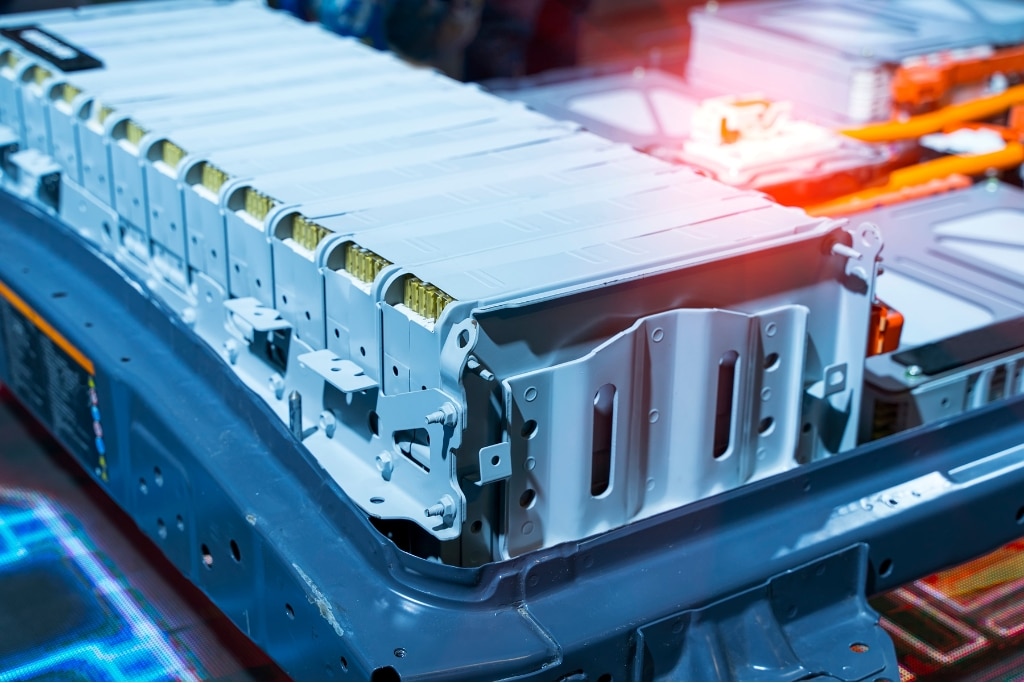
In 2010, lithium-ion batteries were a laboratory success and a commercial dead end. A decade later, they became the backbone of the global electric vehicle industry. This is one of the clearest examples of how investment drives technological viability. But is investment the only key to success?
—
Clean technology discussions often focus on innovation. New materials, better chemistries and engineering breakthroughs are usually seen as the key drivers of the energy transition, but innovation alone rarely determines whether a technology succeeds. A critical factor is the availability of substantial financial investment, particularly early and large-scale capital that enables technologies to move from laboratories into real-world deployment.
Technologies like hydrogen production, carbon capture, and synthetic fuels show technical competence and have demonstrated success in research settings and pilot projects. However, a technology must also be economically viable – something that depends on three main factors: cost, scalability and reliability. Technologies must be affordable, produced at large volumes and able to operate consistently in real-world conditions.
Investment plays a significant role in enabling these conditions.
How Investment Turns Technology Into a Product
Investment plays a crucial role in bridging the gap between invention and commercial viability. Large, early investments help with scaling manufacturing and building supply chains. As demand for a technology grows and production increases, companies gain operational experience and manufacturing processes become more efficient. This leads to learning-by-doing, where costs gradually decline as production expands and processes improve.
Investment also helps absorb early risks that are associated with emerging technology. New technologies often face uncertainty around performance, demand, and financing. Access to capital allows governments and companies to tolerate these risks while the technology matures.
Importantly, cost reductions in many energy technologies occur once deployment has begun, not before. As production scales and experience increases, improvements in manufacturing, supply chains and system integration contribute to lower costs. As a result, delaying investment until technologies become inexpensive can prevent them from reaching the scale required for those cost reductions to occur.
Lithium-Ion Batteries: A Case of Capital-Led Scale
Lithium-ion batteries provide one of the clearest examples of how investment drives technological viability. The core chemistry behind lithium-ion batteries was developed decades ago. By the 1990s, the technology was already being used in consumer electronics such as laptops and mobile phones. However, batteries were still far too expensive for large-scale applications like electric vehicles or grid storage.
A significant change came in 2010, when China heavily invested in battery manufacturing capacity, supply chains for critical minerals and domestic demand through electric vehicles policies. These investments enabled rapid expansion of battery production. The expansion of large battery manufacturing facilities, along with the development of integrated supply chains, enabled rapid growth in battery production.
As factories scaled and manufacturers gained experience, costs fell dramatically. Between 2010 and 2023, lithium-ion battery costs declined by nearly 90%.
As global investment in lithium-ion battery manufacturing increased, primarily driven by China, battery prices declined substantially, making the technology popular. Large-scale capital deployment in China, and continued investments elsewhere, supported the expansion of production capacity and the development of battery supply chains. As a result, the decline in battery costs was largely driven by industrial scale and manufacturing improvements.
Technology Choices, Not Just Scale
China’s cost reductions were not driven solely by the volume of investment. They were also shaped by a deliberate bet on a specific battery chemistry. Chinese producers prioritized lithium iron phosphate, or LFP, a formulation that uses cheaper and more abundant materials than the nickel- and cobalt-heavy chemistries favored elsewhere. LFP was initially considered unsuitable for electric vehicles due to its lower energy density, but years of focused R&D by Chinese manufacturers improved the technology substantially. LFP batteries now account for nearly half of the global electric vehicle market.
This matters because it shows that investment alone does not lead to cost reductions – the direction of that investment and the specific technical choices made alongside it also matter. A country that invested the same capital in a more expensive chemistry would not have achieved the same price trajectory.
Raw Material Prices
The cost of battery-grade lithium and other critical minerals is a major determinant of battery pricing. Lithium prices rose sharply between 2021 and 2022 as demand outpaced supply, and fell by more than 85% from their 2022 peak as new supply came online. These price swings affect battery economics independently of manufacturing scale or investment levels.
This introduces a degree of volatility that the investment narrative tends to understate. The downward cost trajectory of batteries is real, but it has not been smooth or purely driven by learning curves. Commodity markets, geopolitics and mining investment cycles all leave their mark on final battery prices.
The Risks of Overcapacity
Rapid, state-directed investment at scale can also generate problems of its own. By 2024, China held nearly 85% of global battery cell production capacity, a concentration that raised growing concerns among policymakers about supply chain resilience and market balance. This level of overcapacity has triggered aggressive price competition among Chinese manufacturers, put pressure on producers in other countries, and raised concerns among trading partners about market distortion.
The result has been a wave of tariffs, trade investigations and policy responses from the United States, the European Union, and others seeking to protect their own emerging battery industries. These tensions complicate the picture of investment-led scale as a straightforwardly positive force. Large capital deployment can accelerate a technology and destabilize the broader market at the same time.

Global Impact and What It Teaches Us
The impact of falling battery costs has been significant. Cheaper batteries made electric vehicles more competitive, accelerating their adoption globally. At the same time, battery storage became increasingly viable for grid balancing, renewable integration, and energy reliability. Technologies that once seemed impractical became central to the global energy transition.
But the lesson is more nuanced than it first appears. Investment was necessary but not sufficient. It worked in combination with smart technology choices, supportive commodity conditions, and years of incremental R&D. It also produced side effects like overcapacity, trade conflict, and a concentration of supply chains in a small number of countries, which policymakers are still working to address. What investment did do was compress the timeline, changes that might have taken half a century arrived in a decade.
The honest takeaway is that early, large-scale investment can be a powerful accelerant for clean technology. It compresses timelines, enables learning-by-doing and builds the industrial infrastructure needed for widespread deployment. But it does not operate in isolation, and it does not guarantee smooth or equitable outcomes.
Looking Ahead
The same dynamics are likely to shape the next generation of clean technologies. Hydrogen production, long-duration energy storage and clean fuels already work technically but remain expensive and limited in deployment. Investment will be essential to scaling these technologies, as it was for batteries.
But the battery story also suggests that how capital is deployed matters as much as how much is deployed. Technology choices, supply chain geography, policy design, and commodity market conditions will all shape outcomes alongside the volume of investment.
The question is therefore not simply whether governments, investors, and industry are willing to invest at the required scale. It is also whether they can deploy that capital intelligently. Targeting the right chemistries, building resilient supply chains, and designing policies that avoid the overcapacity and trade tensions that large-scale, state-directed investment can produce.
The energy transition will require large amounts of capital. The lithium-ion battery case shows that when deployed well, investment can be transformative. It also shows that deploying it well is harder than it looks.
This story is funded by readers like you
Our non-profit newsroom provides climate coverage free of charge and advertising. Your one-off or monthly donations play a crucial role in supporting our operations, expanding our reach, and maintaining our editorial independence.
About EO | Mission Statement | Impact & Reach | Write for us
Earth.Org
Free, non-profit and independent environmental journalism.