


This weekly round-up brings you key climate news from the past seven days, including a new report uncovering the full environmental impact of data centers as AI booms and the Trump administration’s decision to dismantle a decade-old, deep-ocean observation network.
—
1. UN Report Exposes Unfathomable Footprint of Data Centers as AI Booms
Artificial intelligence (AI) is expanding at breakneck speed, used by hundreds of millions of users and processing billions of queries each day. AI is now one of the most significant drivers of that data center growth. But this growth comes at an unfathomable environmental toll that is at the center of a new United Nations report.
The report estimates that global data centers consumed some 448 terawatt-hours of electricity in 2025. This would make them the world’s 11th largest electricity consumer, if they were a country. This amount of electricity would also be enough to supply the annual residential electricity needs of the 1.3 billion people living in Sub-Saharan Africa for 2.6 years.
This amount of electricity consumption carries an enormous carbon footprint – 189 million tonnes of CO2 equivalent, which only 3.2 billion tree seedlings grown over 10 years would be able to offset.
In terms of water, data centers last year consumed enough to fill 1.8 million Olympic-sized pools – enough to cover the annual basic domestic water needs of over 600 million people in Sub-Saharan Africa. In terms of land, data centers’ electricity demand covered an area nearly 4.5 times the size of Greater London.
The AI market is expected to grow 25-fold in the coming decade, from $189 billion in 2023 to nearly $5 trillion by 2033. Generative AI – the subfield of AI that autonomously generates text, images, video, audio and code in response to user prompts – already accounts for about 20% of the global market share; by 2030, it is expected to reach 40%.
Full story here.
2. Trump Dismantles Ocean Observation Network Used to Monitor Marine Heatwaves, Coastal Flooding
The Trump administration is dismantling a decade-old, deep-ocean observation network that scientists have used to track changes in the ocean and monitor marine heatwaves and coastal flooding.
On May 21, the Ocean Observatories Initiative (OOI) announced that the recovery of over 900 in-water instruments at four of five operating arrays – the Irminger Sea, Station Papa, Endurance and Pioneer Arrays – has already begun and will take approximately 15 months. All previously collected data will remain accessible through the OOI Data Center while the Regional Cabled Array will continue operating, it added.
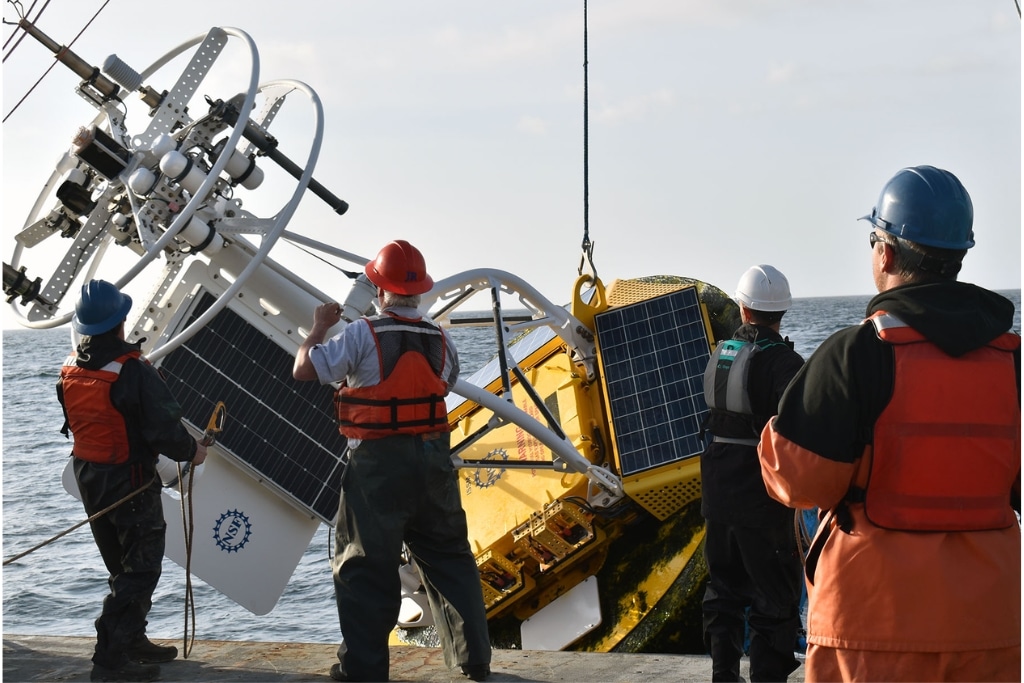
Funded by the National Science Foundation, the network was designed to collect physical, chemical, geological, and biological ocean data for up to 30 years. Scientists used the data collected by more than 900 instruments at five arrays in the Pacific and Atlantic Oceans to monitor and understand marine heatwaves and coastal flooding, assess ocean acidification, measuring carbon sequestration and studying deep-ocean ecosystems
The data also helped monitor changes in the Atlantic Meridional Overturning Circulation, better known as AMOC, a key component in global climate regulation. Scientists have repeatedly warned that the AMOC is nearing a tipping point as the planet heats up. Without this constant flow of current circulation, regional temperatures would become more extreme – intense heat near the equator and freezing in the poles – making less land on Earth habitable.
Full story here.
3. Looming El Niño Will ‘Pour Fuel on the Fire of a Warming World’, Says UN Chief
A weather pattern fueled by warming ocean waters and typically associated with increased global temperatures and erratic weather patterns could arrive as early as this month, the World Meteorological Organization (WMO) has warned.
The UN agency is now forecasting an 80% likelihood of an El Niño event developing between now and August, with a 90% likelihood that it will persist until at least November.
The past two such events – in 2014-16 and 2023-24 – brought record heat around the world that fueled further global temperature increase. 2024 went down as the hottest year on record due to a combination of long-term human-caused climate change and a strong El Niño weather pattern. Now, its return increases the chances of another record warm year – likely to be 2027.
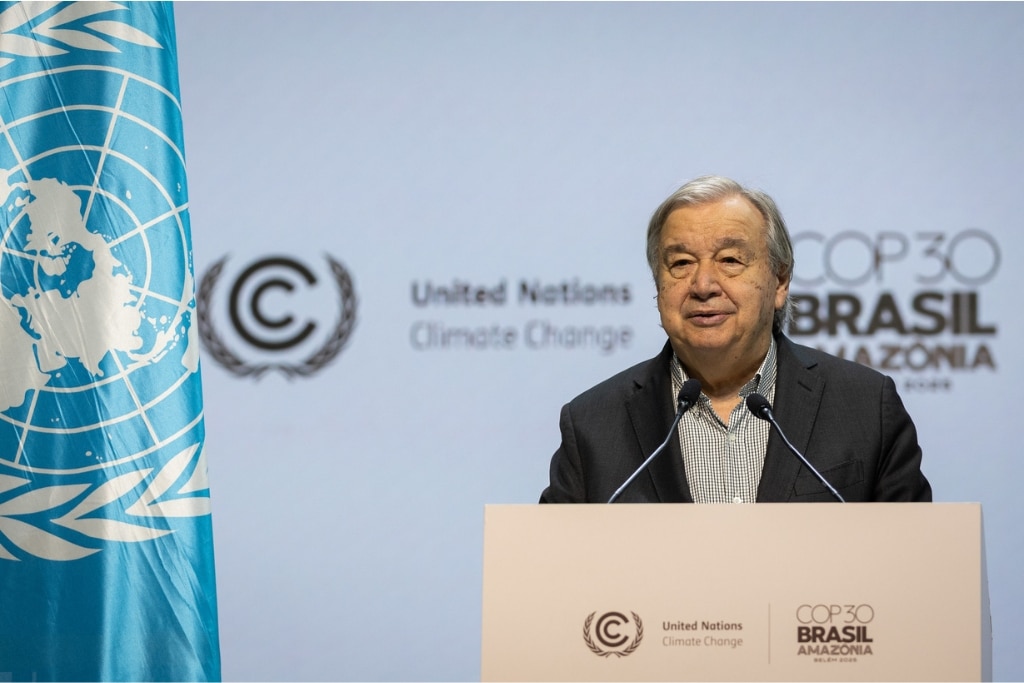
In a video statement published Tuesday, UN Secretary-General António Guterres urged the world to treat El Niño “as the urgent climate warning it is.”
“Impacts will hit even harder, travel even farther, and cross borders with devastating speed,” Guterres said as he called on countries to accelerate the shift toward clean energy sources, protect the most vulnerable, and deliver early warning systems for all.
Full story here.
4. Democratic-Led States Sue Trump Over $1 Billion Deal to End TotalEnergies Offshore Wind Project
Seven Democratic-led US states are suing the Trump administration over its $1 billion deal with a French oil giant to end an offshore wind project.
Under the deal announced in March, the Interior Department would reimburse TotalEnergies $928 million, the sum the multinational paid the Biden administration for leases in federal waters to build offshore wind farms off New York and North Carolina. TotalEnergies, one of the world’s top six “supermajor” oil companies and one of the 20 largest historical emitters of planet-warming greenhouse gases, promised in turn to reinvest that money in oil and gas projects in the Texas and elsewhere in the US.

New York Attorney General Letitia James was joined by state attorneys general from Connecticut, Maine, Massachusetts, New Jersey, Rhode Island and Vermont in challenging the cancellation of the New York offshort farm, the largest of the two. They argue the deal is “illegal” and would result in higher energy costs for their states.
“This administration cooked up a sham deal to pay a foreign energy company hundreds of millions of taxpayer dollars to abandon offshore wind and invest in oil and gas instead,” James said in a statement. “We are fighting back to stop this illegal agreement that threatens to erase over a thousand union jobs and cheat millions of New Yorkers out of clean, affordable energy.”
Full story here.
One-time
Show your support.
A one-time donation is a powerful way to show your appreciation for our work and commitment to protecting the planet. Every contribution helps us continue raising awareness and inspiring change.
Monthly
Make a lasting impact.
Monthly donations sustain and expand our efforts. By becoming a recurring supporter, you help us grow our website, reach more people, and amplify our mission for a better planet.