


This weekly round-up brings you key climate news from the past seven days, including protests in Albania against the construction of a luxury resort backed by investor Jared Kushner in a protected area and new, worrying data on the state of the global climate.
—
Listen to Earth.Org’s new podcast, Earth Radio. Join our host Rebekah Hendricks every week for a 5-minute, ad-free roundup of the world’s most important climate stories. New episodes available every Sunday. Subscribe here or find us wherever you get your podcasts.
1. Protesters Call on Albanian Government to Halt Construction of Luxury Resort in Protected Wetlands
Protests continued in Albania on Monday against an elite tourism project backed by US President Donald Trump’s son-in-law, Jared Kushner, in a protected wildlide zone.
Every day for more than a week, thousands of people took to the streets of the capital Tirana and on the southern coast, where the resort has been proposed. Protesters are calling on the government to halt work on the $1.6 billion government-approved development project, which incorporates protected wetlands and coastal habitats as well as the uninhabited island of Sazan in the Mediterranean, opposite the heel of Italy.
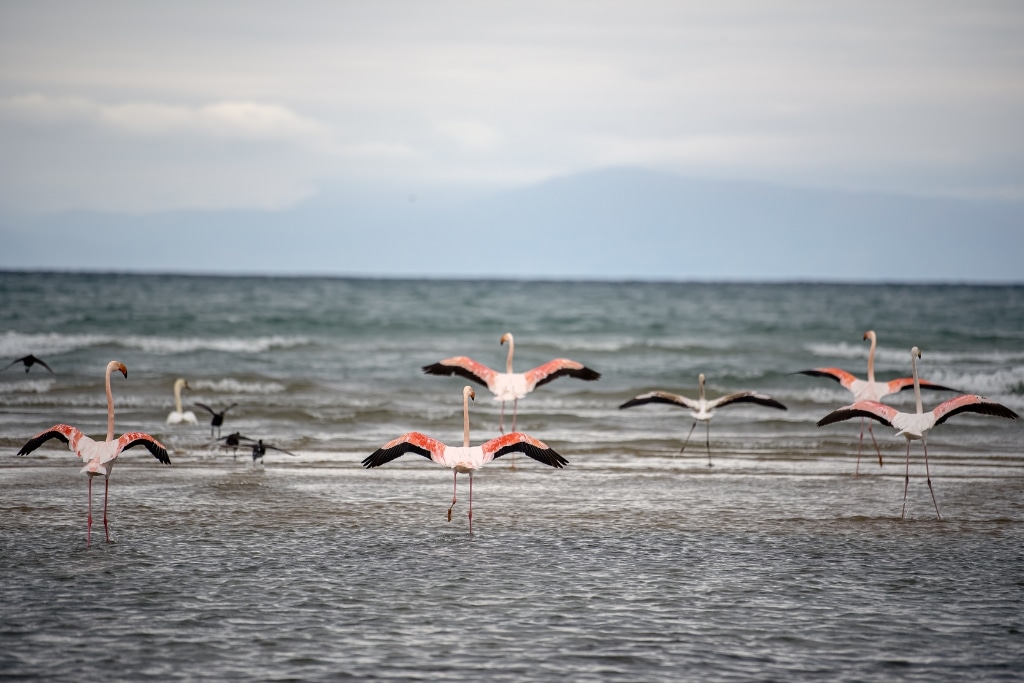
The coastal area and surrounding waters provide crucial habitats to over 200 bird species and over 70 endangered species such as the Mediterranean monk seal – one of the world’s most endangered marine mammals, the sea turtle, and the flamingo. Pink flamingos have become the symbol of the protests, leading some to nickname it the “Flamingo Revolution.” The area also sits on the Adriatic Flyway, making it a crucial stopover site for millions of migrating birds between Europe and Africa each year.
“Yet, forests, dunes, and coastal habitats are being cleared by heavy machinery—without transparency, proper consultation, or accessible environmental permits,” WWF said in a statement.
Full story here.
2. Human Activities Pushed Global Warming to 1.37C in 2025: Study
Human activities pushed global warming to 1.37C in 2025 as the entire climate system is continuing to heat at an accelerating rate, a new study has found.
The study also confirmed that 2025 was the third warmest year on record, and that natural variability in the climate system – that is fluctuations in weather and climate conditions driven by internal Earth processes and natural external forces – had a limited effect on global mean temperatures last year. Observed warming during the 2016-2025 decade relative to the pre-industrial period was 1.26C, of which 1.24C was human-induced.
“Our study demonstrates that nearly all of the warming over the last decade is driven by human activities. The impacts on livelihoods and ecosystems are already being felt worldwide, and will accelerate as temperatures continue to increase,” said Samantha Burgess, Strategic Lead for Climate in the European Union’s Copernicus Climate Change Service, which produced the study.
Full story here.
3. Global Atmosphere and Ocean Temperatures Hovered Near Record Levels in May
Last month was the joint second-warmest May on record, with temperatures 1.42C above pre-industrial levels, the European Union’s Earth Observation program Copernicus has said.
An exceptionally strong heatwave scorched much of Western Europe in the second half of May after cooler-than-average conditions affected the continent in the middle of the month. It was “one of the most intense heatwaves ever observed this early in the year” in the region, the forecaster said in its monthly bulletin.
A ClimaMeter study attributed the unusual heat baking Western Europe to human-driven climate change. Researchers described the meteorological conditions behind the heatwave as a “rare” occurrence once mainly associated with autumn months but now also occurring in late spring.
May continued the streak of extreme global warmth seen in recent months, with December, January, and February each ranking as the fifth-warmest for their respective months, March as the fourth-warmest March globally, and April as the third-warmest April on record. Amid this sustained global heat, scientists say it is “virtually certain” that 2026 will rank among the 10 warmest years ever recorded, with the year also on pace to finish among the top five warmest on record.
Full story here.