


This weekly round-up brings you key climate news from the past seven days, including promising news for coral reefs and what we can expect from El Niño.
—
1. Scientists Identify Three Times More Climate-Resilient Coral Reefs Than Previously Estimated
Scientists have mapped the “widespread” distribution of coral reefs believed to be capable of surviving and even recovering from climate change – an amount three times higher than previous estimates.
Wildlife Conservation Society and and Macquarie University scientists analyzed over 45,000 coral surveys alongside decades of climate and ocean data. They identified climate-resilient reefs spanning 165,922 square kilometers (64,000 square miles) across 71 countries and 100 territories and jurisdictions, many of which had not been previously assessed. 61% of these resilient habitats are located within five countries that host extensive reef systems: the Bahamas, Cuba, Australia, Indonesia, and the Philippines.

In recent years, corals globally have suffered greatly from the impacts of climate change. Between 2023 and 2025, coinciding with a historically strong El Niño event that brought record atmosphere and ocean temperatures, bleaching-level heat stress impacted nearly 84% of the world’s coral reef area across at least 83 countries and territories. It was the fourth mass coral bleaching event ever recorded and the second to occur in the last 10 years.
Full story here.
2. El Niño Has Arrived. Here’s What You Need to Know
El Niño has developed in the tropical Pacific and it is predicted to intensify to a “moderate or strong level” this fall, the National Oceanic and Atmospheric Administration (NOAA) said on Thursday.
The US agency declares an El Niño when temperatures in the equatorial Pacific are 0.5C above average for several consecutive months, according to its press release. If sea surface temperatures in the Nino-monitored region of the Pacific exceed 2C, then the event is considered “very strong.” Currently, NOAA predicts a 63% chance of that happening.
The global climatic phenomenon, which occurs every two to seven years on average, is associated with the warming of sea surface temperatures in the central and eastern tropical Pacific Ocean. When this happens, the east-to-west trade winds die, keeping warmer than the normal air in the eastern and central parts of the tropical Pacific, which temporarily raises global average temperatures. When combined with long-term human-caused climate change, these weather patterns frequently push global temperatures to record-breaking highs.
The powerful shifts in Pacific winds and water temperatures typically also bring erratic weather patterns globally, such as increased likelihood of severe droughts in places like Australia, sub-Saharan Africa and Southeast Asia and heavy floods in parts of the southern US, South America, the Horn of Africa and central Asia.
Full story here.
3. Trump Administration Seeks Dismissal of Lawsuit Against Elon Musk’s AI Data Center Near Memphis
The Trump administration is intervening in a lawsuit over claims that Elon Musk’s AI company is polluting neighborhoods in South Memphis, Mississippi.
The National Association for the Advancement of Colored People (NAACP), the nation’s oldest and largest grassroots-based civil rights organization, filed a lawsuit against xAI in April. It is accusing the company of violating the Clean Air Act in relation to its Colossus 2 data center in Southaven, a city 14 miles south of downtown Memphis. It alleges that the company installed dozens of methane gas turbines to power its AI data center but failed to obtain the legally required federal air permits.

In a 33-page memo filed on Monday, the Department of Justice (DOJ) asked the Mississippi federal court to dismiss the case. The DOJ argued that the citizen suit – a type of lawsuit filed by private citizens to enforce a statute – “threatens American national, economic, and energy security by seeking to shut off the power supply for artificial-intelligence innovation that supports the Department of War’s military operations.” It did not directly dispute claims that the facility is generating harmful pollution.
The lawsuit demands daily fines of roughly $124,000 for xAI’s alleged pollution violations, alongside an injunction to halt the turbines until proper permits are obtained. xAI has previously countered that permits are not required for temporary turbine operations.
Full story here.
4. US Lawmakers Call on National Science Foundation to Stop ‘Illegal’ Dismantling of Ocean Observation Network
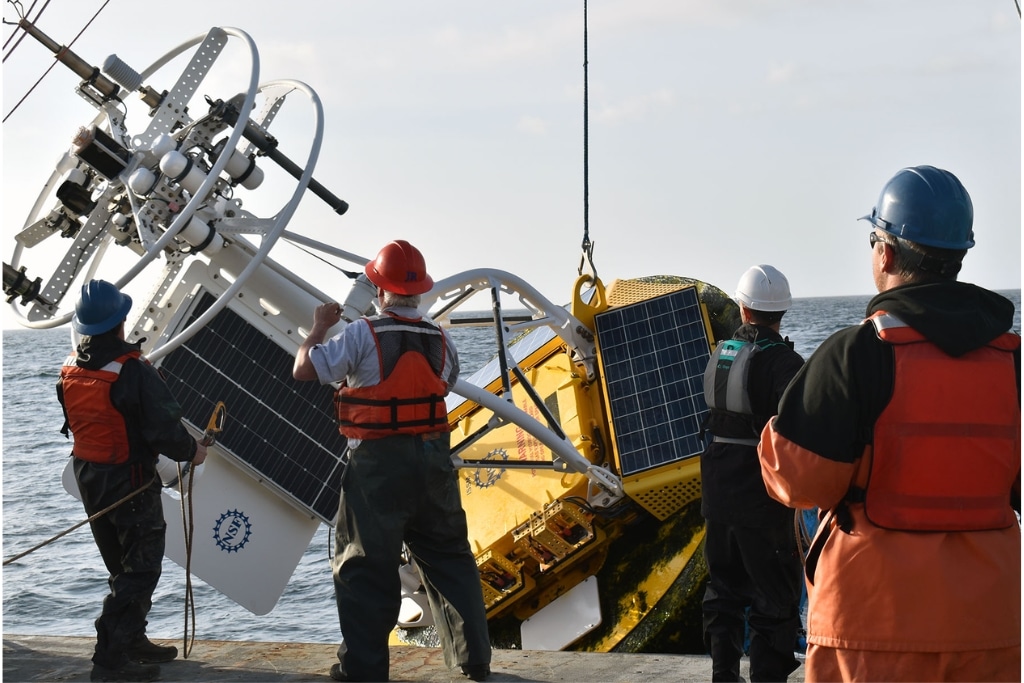
Dozens of Democratic Senators and one Republican sent letters to the National Science Foundation (NSF) on Monday, urging it to “reverse course” on its dismantling of a decade-old, deep-ocean observation network that scientists have used to track changes in the ocean and monitor marine heatwaves and coastal flooding.
On May 21, the Ocean Observatories Initiative (OOI) announced that the recovery of over 900 in-water instruments at four of five operating arrays – the Irminger Sea, Station Papa, Endurance and Pioneer Arrays – has already begun and will take approximately 15 months.
In a strongly-worded letter addressed to NSF’s Acting Director Brian Stone, Democrats from the House Science, Space and Technology Committee and the House Natural Resources Committee, led by Reps. Zoe Lofgren and Jared Huffman of California, criticized the agency for bowing to the Trump administration and “[tearing] itself apart at his whim.”
“This is a startling use of resources in a resource-strapped time for the agency,” the senators wrote, referring to the recent budget cuts to the agency. The Trump administration’s proposed 2026 budget includes a 55% reduction to the NSF budget, from $9 billion to $4 billion, as well as the cancelation of $1.5 billion in active research grants.
Full story here.