

Despite widespread participation in Hong Kong’s voluntary Energy Saving Charter, overcooling remains prevalent across major commercial shopping malls, raising questions about energy waste, climate accountability, and regulatory oversight. However, as extreme heat events intensify across the city, these excessively cooled spaces increasingly serve a dual purpose as essential cooling shelters for vulnerable populations.
—

By Chen Yinuo, Hu Jinxiu, Yang Xingao, Zhou Chiyu
Wu Yanlei, a 26-year-old tourist from mainland China, stepped into the Times Square shopping mall in Hong Kong on a hot May weekday, seeking relief from the summer heat. But within 10 minutes, she was rubbing her arms and shivering.
Her friend Zhou Yibing unzipped her backpack and pulled out a jacket she always carried with her. After years studying in Hong Kong, she had learned to prepare for the indoor chill, even if she never got used to it. “It’s too cold. I’m even shivering,” Zhou told Earth.Org, zipping up her jacket. “It’s 32C outside, but inside it feels like 18C.”
Hongkongers have been dependent on air conditioning for a long time. Air conditioning accounts for 29% of the city’s commercial electricity consumption, followed by lighting and refrigeration. Electricity generation is Hong Kong’s primary source of greenhouse gas emissions, accounting for roughly 60% of total emissions. Because air conditioning drives a major share of electricity demand, overcooling directly inflates the city’s overall carbon footprint.
To reduce energy waste, the government launched the city’s first annual voluntary Energy Saving Charter in 2012, encouraging shopping malls to maintain indoor temperatures between 24C and 26C during the summer months from June to September. In 2026, over 3,500 premises signed up to the Charter, including 247 malls. According to CLP Power Hong Kong, the city’s largest power company, electricity consumption can be reduced by 3% for every 1C increase.
A 2016 survey by local green group Green Sense covering 10 Hong Kong shopping malls that signed the Charter found that nine did not conform to the recommended range.
More recently in 2024, a survey released by local charity The Green Earth found that only seven of Hong Kong’s 10 largest shopping malls had signed the Charter. However, four of the signatories recorded average temperatures below the recommended minimum, violating their commitments and raising doubts about whether voluntary agreements can deliver meaningful energy savings. West Kowloon’s Elements, which had signed the Charter each year since it was first launched, recorded a temperature of 21.7C – the lowest minimum indoor temperature among the 10 shopping malls surveyed.
“Many malls continue to maintain unnecessarily low temperatures despite the charter,” said Steven Chan, Assistant Environmental Affairs Manager at The Green Earth. “Our 2024 measurements show that overcooling remains widespread across major Hong Kong shopping malls.”
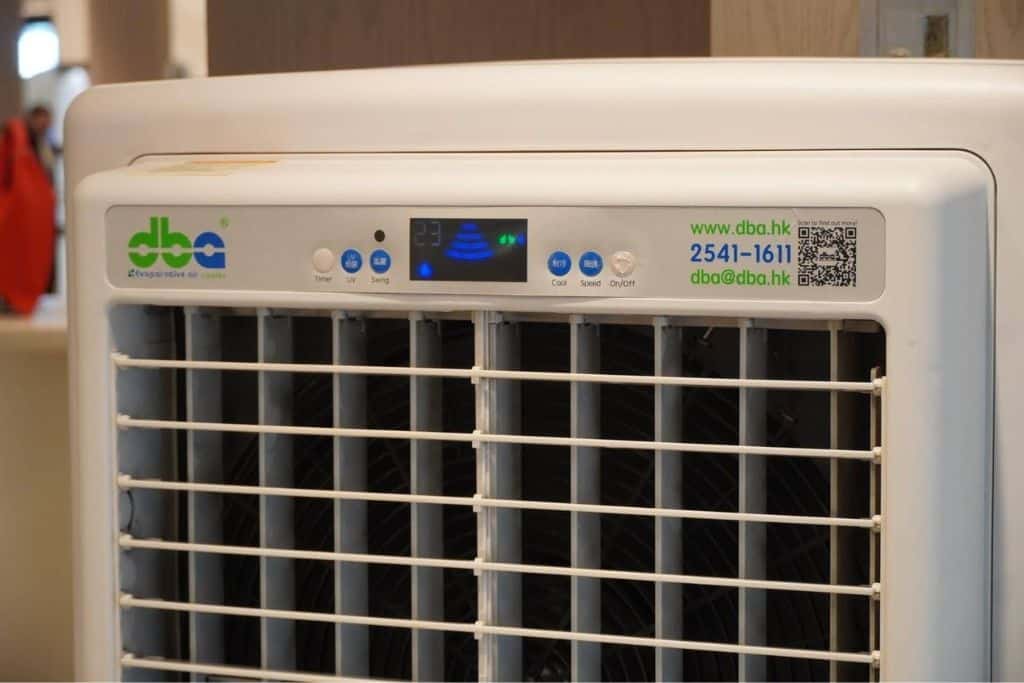
Earth.Org’s own on-site measurements at Elements this June revealed that the mall’s temperature was still consistently below 24C, even dropping below 22C in some areas, such as under air-conditioning vents and inside the supermarket.
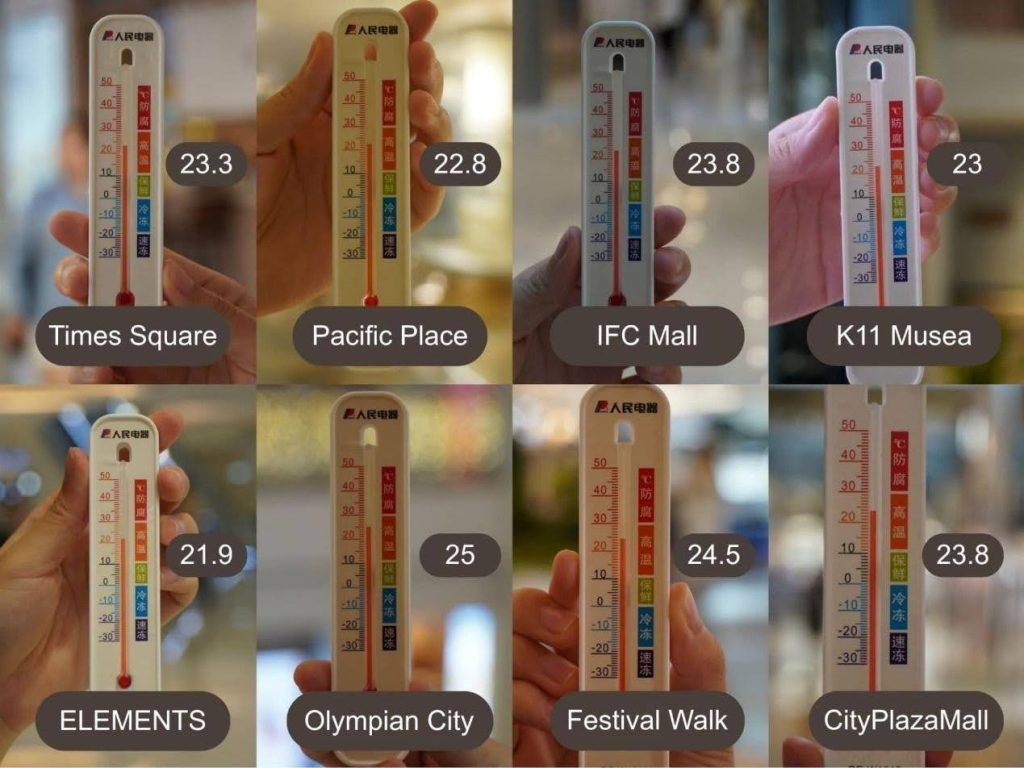
Besides Elements, Earth.Org reporters also visited eight other shopping malls on Hong Kong Island and in Kowloon that had signed the 2025 Energy Saving Charter to conduct on-site indoor temperature measurements. Using liquid-in-glass thermometers on May 28 and June 6, they took multiple readings in various public areas within each mall at 1.1 meters above floor level. Except for Olympian City and Festival Walk in Kowloon, all other malls’ temperatures were consistently below 24C.
Chan Suk-fong, who has worked as a cleaner for a decade at Olympian City in Kowloon, said the mall’s temperature feels comfortable. “It’s just right, and it’s always been like this.” Terrence Tam, a Uniqlo employee who spends most of his working day inside the mall, shared a similar view. “Compared with other malls I’ve worked in, this one has the most comfortable temperature. It doesn’t get warmer when there are more customers,” he told Earth.Org.
Why Overcooling?
A 2017 study found that Hong Kong’s Energy Saving Charter was unlikely to significantly change cooling practices in shopping malls because premises are not obliged to participate.
Xu Yuan, co-author of the study and Associate Professor at the Department of Geography and Resource Management at the Chinese University of Hong Kong, told Earth.Org that overcooling is ultimately “a rational decision to maximize profit,” as most malls fear that higher temperatures during peak foot-traffic hours would make customers uncomfortable and drive them away. His research indeed identified what he described as customers’ “preference for cold”: an overly warm environment is more likely to drive shoppers away, while an overly cold one rarely has the same effect.
Alan Lam, Deputy Principal of the Asian Institute of Built Environment, said Hong Kong’s humid climate reinforces that preference. “Hong Kong is a tropical city, humid, not dry. When you raise the temperature inside, the humidity will rise,” Lam said. Warmer air indeed holds more moisture, so a higher indoor temperature increases the amount of water vapour in the air, making the environment feel more humid.
Arguments about technical limits such as smart, dynamic temperature-control systems are often overstated, Xu added. “All these technical reasons could be fixed if economic incentives were there.”
At the policy level, Chan from The Green Earth argued that reliance on voluntary measures further weakens efforts to reduce overcooling: “One possible reason for overcooling includes lacking enforcement or monitoring of the voluntary Charter.”
In response to an Earth.Org enquiry, the Environment and Ecology Bureau and the Electrical and Mechanical Services Department said participating premises are regularly reviewed. Venues that fail to meet the Charter’s requirements may be asked to make improvements and could ultimately be removed from it, it also said, adding that all premises had “responded positively” to previous recommendations.
More than Energy Waste
Overcooling is often framed as an energy issue. But as extreme heat becomes more frequent, malls are increasingly serving as cooling shelters.
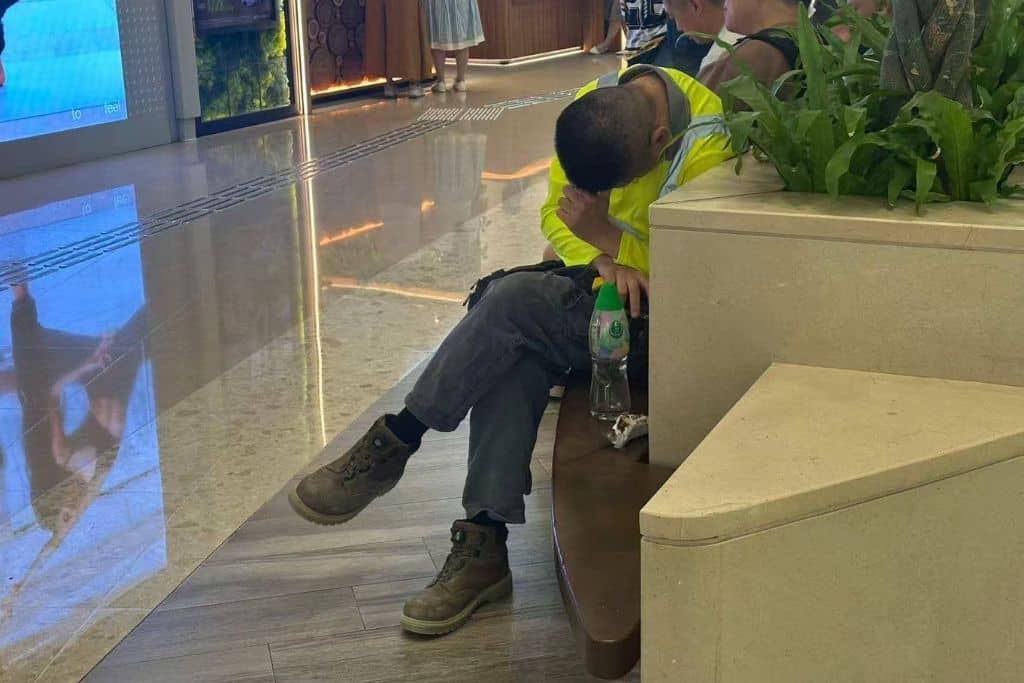
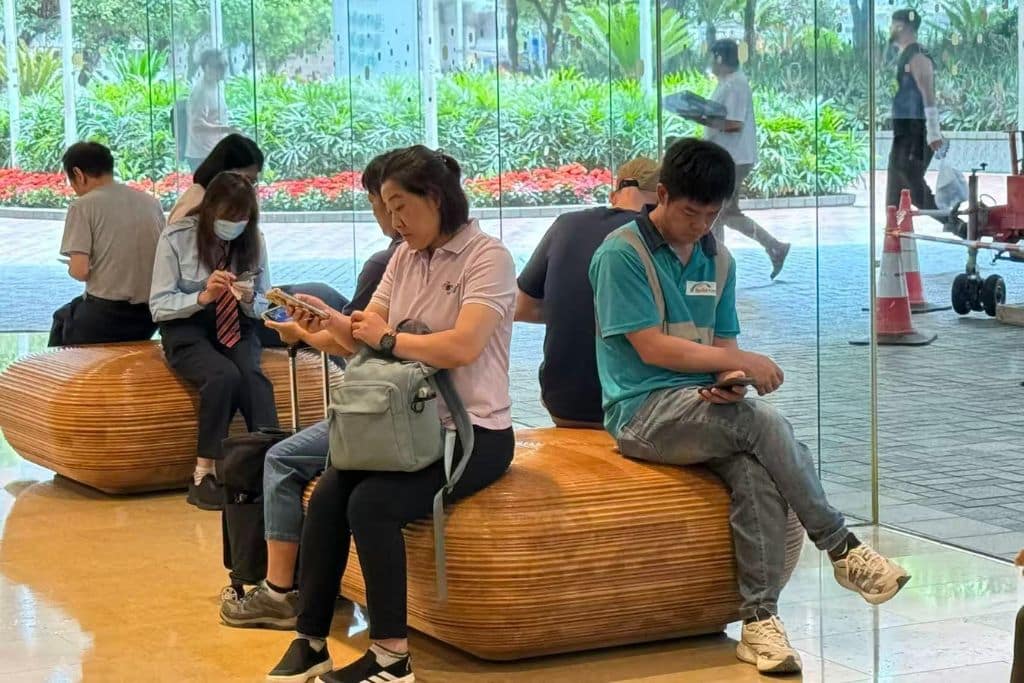
For people without air conditioning, those unable to afford rising electricity bills, or outdoor workers exposed to prolonged heat, shopping malls may be among the few easily accessible places to cool down.
You might also like: Vulnerable Groups Disproportionately Affected By Extreme Heat in Hong Kong, Green Groups Warn
On a scorching May afternoon, when heat typically peaks in Hong Kong, 73-year-old Wong Tai-ming sat resting on a bench inside Pacific Place in Admiralty. The septuagenarian works in a nearby park and typically spends his one-hour lunch break inside the mall.
“It’s too hot outside,” he told Earth.Org, as the temperature that day reached 32.8C.
David Bishai, Professor of the University of Hong Kong’s School of Public Health, said cooling has become a public health issue in an era of intensifying heatwaves:“If we turned off all of our air conditioners because we wanted to save carbon, the death rate would go up much higher.”
Reducing emissions remains important, he said, but for the elderly, people with chronic illnesses and outdoor workers, access to cooled indoor spaces can be a matter of health and survival rather than comfort.
Hiuching Chan, a member of the local Community Climate Resilience Concern Group, said she frequently observed public seating areas in shopping malls occupied by people seeking relief from the heat. “Those benches are always filled, and you can tell they’re not the people who would actually shop in those malls,” she said.
Rather than treating malls solely as commercial spaces, Chan suggested malls could take on a social role by opening their facilities to vulnerable groups during periods of extreme heat.
From a climate perspective, Hong Kong’s overcooling challenge may no longer be simply how cold shopping malls should be, but how cities can balance energy efficiency, equity and public health in a warming world.
A Patchwork of Solutions
Shopping mall microclimates vary across different zones. The atrium, food court, and corridors offer distinct levels of thermal comfort. “The food court feels warmer and more comfortable,” Zhou said.
Although different areas have different cooling requirements, most malls’ air conditioning systems treat the whole building as one area, maintaining the same temperature.
“Zone-specific cooling is the solution,” said Lam from the Asian Institute of Built Environment. “Shops generate their own heat, from spotlights, customers, even product displays. Without proper zoning control, malls have no choice but to overcool. That’s wasteful.”

Steven Chan’s team also found that corridor lighting levels in seven malls exceeded the Building Council’s recommended maximum of 300 lux – a measure of illuminance based on how much light falls on a surface. This extra heat forces the air conditioning system to work harder to maintain an optimal temperature.
According to Xu’s study, providing economic subsidies to high-end shopping malls would be more effective than a voluntary charter. “It’s like the Fair Wind Charter,” Xu said – Asia’s first voluntary initiative led by the shipping industry requiring ocean-going vessels to switch to a less polluting fuel while at berth. Launched in 2010 by the Hong Kong Liner Shipping Association and Hong Kong Shipowners Association, it received partial government incentive backing starting in 2012 and paved the way for mandatory government regulations, culminating in statutory requirements for ships in the Pearl River Delta/Hong Kong waters to use low-sulfur fuel.
“Enough high-end shopping malls might have a voluntary agreement to set up a standard for themselves. Then they could push for a mandatory minimum temperature for all malls,” Xu said.
Steven Chan also suggested improving the design and visibility of the Energy Utilisation Index (EUI) reports, which measure a building’s energy consumption per square meter of floor area. This could be done by using clear color-coded labels, similar to energy efficiency labels on household appliances, and displaying them prominently in lobbies and high-traffic areas for better public supervision.
Both Xu and Chan agreed that mandatory energy-saving action plans or legislation on indoor temperatures are necessary. “It is never too late,” said Xu.
Featured image: Chen Yinuo.
This story is funded by readers like you
Our non-profit newsroom provides climate coverage free of charge and advertising. Your one-off or monthly donations play a crucial role in supporting our operations, expanding our reach, and maintaining our editorial independence.
About EO | Mission Statement | Impact & Reach | Write for us