


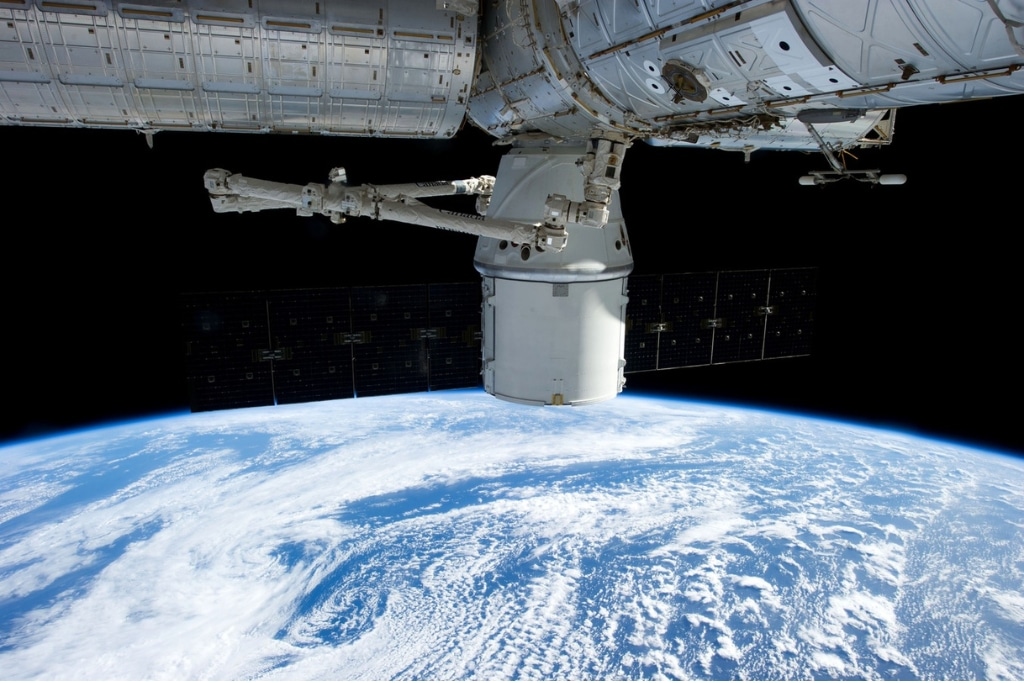
Despite its vastness, Earth’s orbital environment is increasingly congested with debris – particularly within the heavily trafficked low-Earth orbit. The volume of space junk is expanding at an alarming rate, creating a hazardous landscape that makes a coordinated cleanup not only necessary but long overdue. Until now, this has been considered impossible due to lack of technology, lack of regulations, and lack of funding. But a recent proposal by the 695th Lord Mayor of London could change this.
—
Experts at the Washington DC-based Center for Security and Emergency Technology have mapped over 34,000 pieces of space debris larger than 10 centimeters – about the size of a grapefruit. This represents an increase of more than a third compared to just three years previously, and the number could double by 2075.
Space junk, which can travel at speeds of 29,000 kilometers per hour, poses different problems compared to earthbound debris, but the financial impact in particular is massive. Last November, the Chinese spacecraft Shenzhou-21 was struck by a tiny particle, stranding three spacefarers. While the taikonauts in this case were able to return in an existing capsule, sending up a new one at short notice was estimated at anywhere between US$100 million and $250 million. In January, a Spanish military satellite sustained “non-recoverable damage” when it was struck by a piece of space junk. The insurance claim for the satellite is also estimated in the hundreds of millions of dollars.
Beyond the financial impact, space junk affects human lives, in areas as diverse as climate modeling and reduction of human trafficking. “The safe, peaceful, and sustainable use of outer space is vital for sustainable development here on Earth,” Aarti Holla-Maini, Director of the United Nations Office for Outer Space Affairs, said on the organization’s website.
A proposal by the 695th Lord Mayor of London, Michael Mainelli, seeks to change this – with a combination of new regulations, recent innovations, and the power of the finance industry.
“Space junk has been largely ignored until now. It’s considered theoretical, a bit like climate change [was]. But the importance has been growing in financial markets in the far east. We propose that space debris can be kept from increasing through the introduction of Space Debris Removal Insurance Bonds,” Mainelli told Earth.Org. Nicknamed SPADRIBs, these “surety bonds” (or “performance bonds”) would ensure that financial resources are available for the de-orbiting of failed satellites and spent launch vehicle materials, even if satellite operators go out of business.
The aim of the Space Protection Initiative launched by Mainelli is to make SPADRIBs a mandatory condition for spacecraft launches around the world. “Insurance operates on the principle that the premiums of many policyholders cover the losses of a few. Underwriters assess the risk presented by prospective insureds, determine the probability of loss, and set premiums accordingly, aiming to collect enough premiums to cover claims and generate a profit over a typical 12-month policy period,” Mainelli explained. “In the case of SPADRIBs, underwriters evaluate the financial strength of space operators, charging lower premiums to more solvent operators to ensure that collected premiums exceed the cost of de-orbiting spacecraft that operators fail to retire.”
Similar insurance products exist in other industries, such as marine insurance for shipping, aviation insurance for airlines, and crop insurance for agriculture, where premiums are determined based on the risk assessment of the insured entity and aim to cover potential losses.
“The comparison is the International Maritime Organization,” said Mainelli. “It has no navy, no coast guard. But a harbourmaster won’t let you in a port without an insurance certificate, so it’s useless to you to go to the high seas unless you get insurance.”
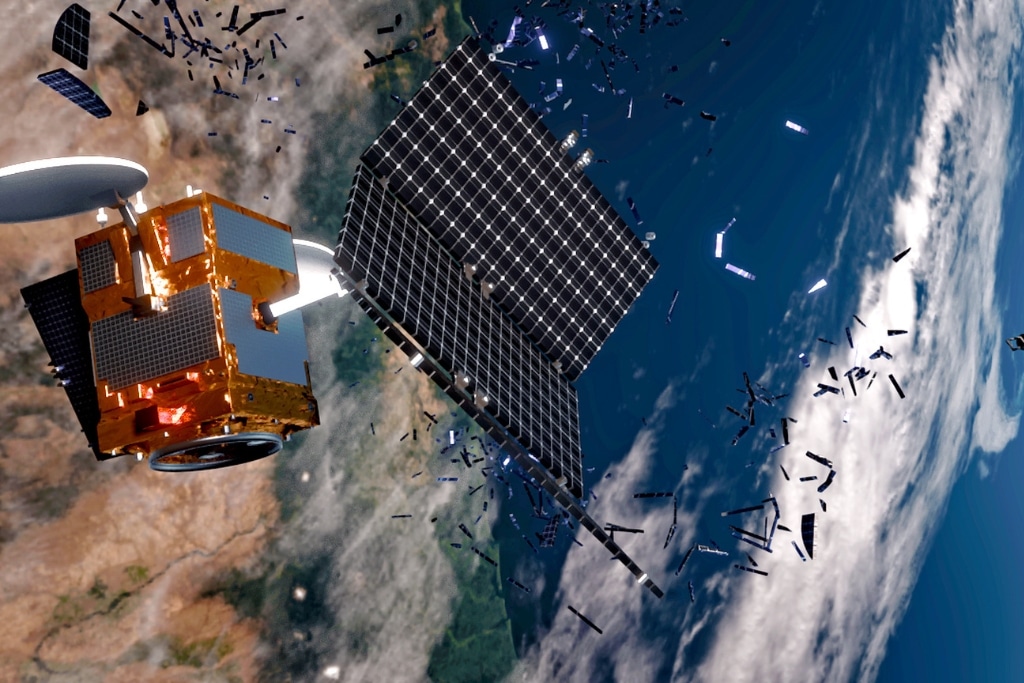
An important milestone was reached with an “invitation to treat” letter – a preliminary statement that invited other parties to make an offer – issued in 2024 by six global insurance underwriters represented by AHJ Miller, for up to $500 million per operator. However, it contained two important stipulations: “A spacecraft company clearly demonstrates it can de-orbit third party space debris” and “The agencies regulating space launch make Spadribs mandatory.”
The first of these conditions is now close to becoming reality. Japanese Astroscale is carrying out its first missions to capture and deorbit satellites and spacecraft using its Rendezvous and Proximity Operations technology. The European Space Agency and the Surrey Space Centre have also conducted tests of various technologies.
On the regulatory front, progress is slower. 56 nations signed the Commonwealth Space Collaboration in 2024, with the provision to “Work with the Commonwealth countries to agree a key achievable aim by 2030, for example: ‘By 2030, the Commonwealth will have supported the development of a fully scaled and deployable debris removal capability.’”
National laws do not yet require insurance for space launches, although regulatory action is starting to appear. The US Federal Communications Commission (FCC), which regulates communications satellites, took its first space debris enforcement action in 2023 against the DISH satellite network for “failure to properly deorbit its EchoStar-7 satellite.” While it fined the company just $150,000, Enforcement Bureau Chief Loyaan A. Egal called the settlement a “breakthrough” that makes it “very clear the FCC has strong enforcement authority and capability to enforce its vitally important space debris rules.”
While innovations such as SPADRIBs are needed to control the increase of space junk, little can be done to clean up the debris that already clutters Earth’s orbit.
“It is not addressing the existing problem – it’s a preventive measure to prevent the problem getting worse,” Iain Reynolds, Director of third party capital at Peak Re, a reinsurance firm, told Earth.Org. “The first jurisdiction to stipulate this will help.”
This story is funded by readers like you
Our non-profit newsroom provides climate coverage free of charge and advertising. Your one-off or monthly donations play a crucial role in supporting our operations, expanding our reach, and maintaining our editorial independence.
About EO | Mission Statement | Impact & Reach | Write for us