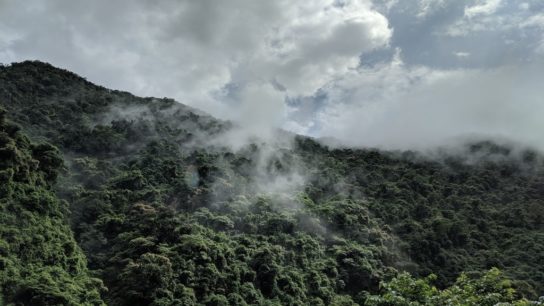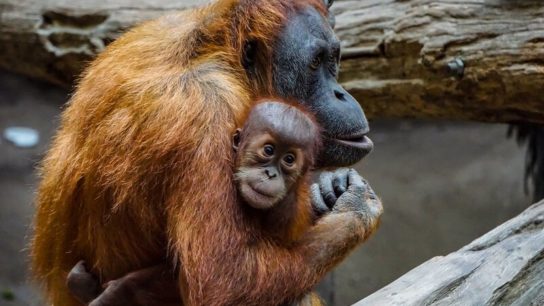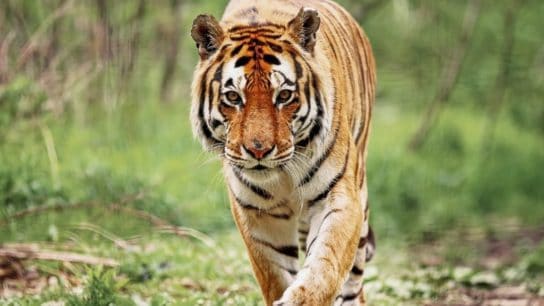



The once-rich biodiversity of Hong Kong is threatened by habitat loss, climate change, and urban development. Now, scientists predict a future where nearly 30% of species – including the Chinese white dolphin and the black-faced spoonbill – will have no place to forage or rest.
—
Despite its compact size, Hong Kong encompasses a remarkably diverse range of terrestrial and marine ecosystems. However, due to the impact of global warming and the urbanization of Hong Kong, the habitats of living creatures have been damaged, either becoming extinct or on the verge of extinction.
Biodiversity Loss
According to The State of Hong Kong Biodiversity 2025 report, compiled by WWF Hong Kong, the city’s biodiversity is dwindling at a significant rate. Conservationists assessed 886 of 1,197 species in Hong Kong, finding that 21 have already become extinct, and 26% – more than one in four – are at risk of local extinction.
The assessment included eight major animal groups: mammals, birds, reptiles, amphibians, freshwater fish, butterflies, dragonflies, and freshwater crustaceans. Among them, birds and freshwater fish are the most threatened, with 50% of visiting bird populations (116 species) and 46% of freshwater fishes (28 species) at moderate to high risk of extinction. Breeding bird populations and mammals follow, with 29% and 22% of species threatened, respectively.
Among locally extinct species are the black-headed ibis, once a regular winter visitor in Hong Kong and last recorded in the city in 1999, and the ayu sweetfish, last recorded in 1993 in Tai Ho on Lantau island. Meanwhile, the globally endangered black-faced spoonbill is at high risk of local extinction, with the proportion of Deep Bay in the global population reaching 5.4% in 2024, the second-lowest level ever recorded.
Other than birds and fish, many medium to large non-volant mammals have also gone extinct in Hong Kong, with one in every four species—including the tiger, leopard, and red fox—extirpated following centuries of deforestation and hunting. A further 22% of species (4 species), including the Eurasian otter and the Chinese pangolin, are at high risk.

Furthermore, 14% of dragonflies face extinction, with 4% already locally extinct; 22% of shrimp and prawns are at risk due to the aquarium trade. About 21% of amphibians face extinction, with the Chinese Floating Frog already locally extinct. 20% of reptiles are threatened, including all six native turtles, such as the Chinese Three-banded Box Turtle, half of which are at high risk from poaching. As of butterflies, 6% are threatened, with two species – Castalius rosimon and Flos asoka – locally extinct.
Habitat Loss
Based on the Hong Kong Terrestrial Biodiversity Hotspot Map 2025, published alongside the biodiversity report, Hong Kong’s 27 biodiversity hotspots outside of protected areas are home to some 95% of the city’s at-risk species. According to WWF, these hotspots, which cover just 6% of the territory’s land, should be designated as “no-go” areas where no large-scale development is permitted.
Alarmingly, nearly 80% of these vital areas have suffered environmental damage, and almost half coincide with the government’s planned or committed development projects, like the Hong Kong-Zhuhai-Macao Bridge in 2018 and the San Tin Technopole project, part of the government’s broader Northern Metropolis development plan.
According to Greenpeace, 78.7 hectares of protected wetland in Hong Kong’s New Territories have been lost since the government announced the Northern Metropolis development plan more than two years ago, with a further 587 hectares at risk under current development plans. The plan aims to develop a large area in northern Hong Kong into a new metropolitan area. The San Tin Technopole project alone represents the city’s largest wetland loss in three decades, Greenpeace also said.
For the Hong Kong Bird Watching Society (HKBWS), filling the wetlands will destroy crucial foraging and roosting habitats for wildlife, including the endangered Black-faced Spoonbill population in Deep Bay in northwestern Hong Kong.
“The loss of lowland wetlands and farmland, along with habitat changes resulting from vegetation succession, significantly impacts both breeding and visiting birds,” said Yu Yat-tung, HKBWS’s Director.
Global Warming
Besides ecosystem degradation, human-made climate change is also affecting Hong Kong’s biodiversity.
Rising temperatures are linked to more frequent and intense extreme weather events with changes in precipitation patterns leading to shifts in seasonality and plant phenology across Hong Kong, according to the report. These changes affect the reproductive cycles of local species and degrade critical habitats.
Simultaneously, rising temperatures force species unable to adapt to new conditions to move to new areas. Some endemic high-altitude species like the Giant Spiny Frog in Hong Kong are becoming particularly vulnerable. Confined to local hilltops and unable to migrate upwards, they are already at their altitudinal limit.
“[F]or high altitude species like some birds, the vegetation they depend on may disappear, so once they have reached the top of hills, they can only move up to heaven,” said Lam Chiu-ying, the former director of Hong Kong Observatory.
2024 was the city’s warmest year on record, with an average annual temperature of 24.8C, 1.3C higher than the normal value from 1991 to 2020. Hong Kong broke 35 high temperature records last year, including the warmest April, hottest first half-year, and August’s highest number of “hot nights”, according to the Observatory.

Interestingly, some species have learned to adapt to a warmer world.
Matthew Sin, Chief Environmental Affairs Manager at local environmental NGO Green Power, noted that tropical butterfly species like the Common Archduke, Tailless Line Blue , Common Line Blue, and Fluffy Tit have been consistently recorded since their first appearance.
According to Sin, the number of butterfly species has increased by an average of 0.6 species each year over the past two decades, from 110 to 128, with the total number of butterflies ranging from 3,900 to 7,800, increasing by an average of 70 each year.
He attributed the growth to the rising temperatures and the presence of suitable larval food plants in country parks, which have enabled them to adapt to the local ecosystem. A University of Cambridge study published in 2023 also showed that tropical butterflies with bigger bodies and darker colours are better at adapting to heat.
Urbanization Controversy
Habitat loss and degradation pose the most critical threat to Hong Kong’s biodiversity, according to WWF, disproportionately impacting specialized species with limited ranges and mobility, such as amphibians, freshwater fish, butterflies, and dragonflies.
Key drivers of such threats include the disappearance of natural lowland rivers due to flood control, degradation of freshwater habitats from land-use changes and natural succession, abandonment or conversion of wet farmlands, urban encroachment on Deep Bay wetlands, and water pollution within the Deep Bay catchment.
According to the Hong Kong Bird Watching Society (HKBWS), approximately 175 hectares of the planned project are in the Inner Deep Bay and Shenzhen River catchment area, which is internationally recognized as an Important Bird and Biodiversity Area supporting bird populations, particularly those that are rare, threatened, or experiencing large seasonal migrations.

The project is poised to destroy 150 hectares of the wetland conservation area and 97 hectares of the wetland buffer zone, rendering the wetland planning and conservation principles that have been in place for 30 years virtually meaningless, according to HKBWS.
About 1,500 hectares of wetland in the Mai Po and Inner Deep Bay region are listed as the only Ramsar Site in Hong Kong. A Ramsar Site is a wetland designated under the Convention on Wetlands of International Importance, commonly known as the Ramsar Convention. This international treaty, which Hong Kong joined in 1995, promotes the conservation and wise use of wetlands worldwide.
While the WWF report mostly focused on terrestrial animals, large-scale urbanization projects are also affecting Hong Kong’s marine life. A 2025 study by the Chinese University of Hong Kong indicates that the population of Chinese white dolphins in Hong Kong has declined from 158 in 2003 to 37 in 2020.
According to the study, dolphins in the North Lantau area have been most severely affected by reclamation, high-speed ferry, and water pollution. The construction of a third runway at the Hong Kong International Airport, the artificial island for the Hong Kong-Zhuhai-Macao Bridge, and land reclamation in the Dong River have led to a significant reduction in the habitat of Chinese white dolphins.
The research team also said that rising sea temperatures have had an adverse impact on dolphin populations. In addition, over the past few decades, eutrophication in the Pearl River Delta has led to algae blooms that consume excessive amounts of oxygen from the sea surface, damaging the original marine ecosystem and making it less suitable for Chinese white dolphins than in the past.
“This research reveals the devastating effects of habitat loss, pollution and unsustainable marine activities on dolphins, while also exposing the limitations of current conservation measures, such as marine protected areas, in addressing these complex challenges,” said Leung Pui-kin, Honorary Research Fellow at the Institute of Environment, Energy and Sustainability at Chinese University of Hong Kong.
What’s Next?
WWF recommended that the Planning Department and the Town Planning Board collaborate with the Agriculture, Fisheries and Conservation Department (AFCD) to conduct mandatory ecological surveys prior to zoning and ensure that land use decisions do not damage these areas in order to protect Hong Kong’s rural and lowland habitats.
All planned Wetland Conservation Parks (WCP) in the Northern Metropolis should be built as soon as possible to prevent further degradation by vegetation succession in abandoned fishponds, WWF also said.
“The government has prioritized development over conservation in the Northern Metropolis, home to internationally important wetlands, while reneging on its original plan to recognize the boundaries of the wetland conservation park, reducing its area for development and delaying the establishment of a conservation plan,” said Chow Oi-chuen, the former Public Affairs Manager of The Conservation Association, the oldest environmental organization in Hong Kong.
Lam Chiu-ying also suggested creating a Hong Kong Ecology Building Department, in order to promote area-based conservation measures and better monitor, expand and manage protected areas in Hong Kong. In a blog post, he also went on to suggest increasing resources to the AFCD to form an expert team and supporting personnel to plan, establish, supervise and/or operate protected areas and conservation areas under the guidance of the committee.
To conserve endangered species in Hong Kong, priority should be given to protecting habitats, updating laws, and boosting public involvement in conservation, the WWF report concluded.
“The last comprehensive species status assessment and biodiversity hotspot map for Hong Kong was produced over two decades ago. It is high time for us to reassess the state of biodiversity in Hong Kong to reflect changes in the environment and ensure our conservation actions align with species and habitats in the most urgent needs,” said Carmen Ka Man Or, the Manager of Wetlands Research of WWF-Hong Kong.
This story is funded by readers like you
Our non-profit newsroom provides climate coverage free of charge and advertising. Your one-off or monthly donations play a crucial role in supporting our operations, expanding our reach, and maintaining our editorial independence.
About EO | Mission Statement | Impact & Reach | Write for us