

From mass firings and climate research funding cuts to the rollback of environmental protections and a retreat from international pledges, Earth.Org examines some of US President Donald Trump’s most consequential actions since his inauguration on January 20, 2025, and what they mean for Americans and the world.
—
2025 was a pivotal year for US climate policy. Since assuming office for his second term, Donald Trump has taken sweeping actions to reverse America’s environmental agenda and withdraw from international commitments. These moves have fundamentally altered the nation’s role in the global fight against climate change, a crisis the President has dismissed as a “con job”.
Unleashing Fossil Fuels
A long-time defender of planet-warming fossil fuels, Trump’s focus has been focused on strengthening ties with the industry in spite of the countless climate commitments the US has made at home and on an international level. From a former fracking executive taking the reins of the Energy Department to an Environmental Protection Agency (EPA) packed with political appointees who formerly lobbied for the chemical and fossil fuel sectors, Trump has surrounded himself with the right people to execute his anti-climate agenda.
More on the topic: Meet Trump’s Anti-Climate Cabinet
On day one, Trump declared a “national energy emergency”. It came despite the fact that the US had hit record production levels under the previous administration and was currently producing more oil than any other nation in history. The move allowed the administration to reverse many of the Biden-era environmental regulations and open up more areas to oil and gas exploration. And that is exactly what followed.
The Trump administration has moved to maximize oil and gas development in Alaska, reversing Biden-era restrictions on the 23-million-acre National Petroleum Reserve-Alaska and reopening the Arctic National Wildlife Refuge for drilling. He is now looking to take his “drill, baby drill” mantra abroad, having recently unveiled plans to extend his reach to Venezuela’s vast oil reserves.
In April, Trump signed a series of executive orders aimed at reviving a dying coal industry by expediting leases and streamlining permitting for coal mining on federal land. This contradicts global trends, with nearly 60 countries having drastically scaled back their plans for building coal-fired power plants since the Paris Agreement was passed in 2015. The US itself retired or announced the retirement of hundreds of coal plants. Aside from being the dirtiest type of fossil fuel, coal is widely seen as an uncompetitive and unsuitable energy source, costing significantly more than renewables like wind and solar.
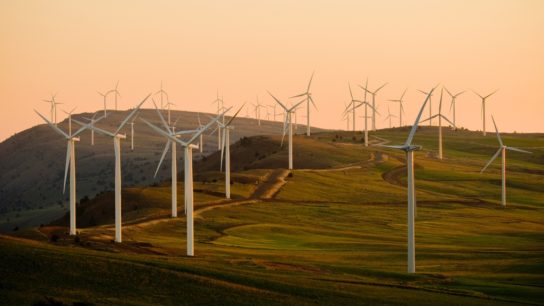
Trump has frequently targeted those renewable sources, missing no opportunity to spread falsities about clean energy. He has called wind turbines “pathetic and so bad” and falsely claimed they are killing people. He also frequently asserts that wind is “the most expensive form of energy,” ignoring data showing it is significantly cheaper than fossil fuels in both manufacturing and electricity generation.

As part of the plan to prioritize fossil fuels, the administration has blocked billions of dollars in funding earmarked for clean energy projects across the US. Several lawsuits were filed in response; many are still ongoing, leaving affected organizations in limbo and unable to carry out their work.
The Trump administration is also going after state laws addressing polluting forms of energy, like California’s cap-and-trade system and climate superfund laws in New York and Vermont.
More on the topic: Two Courts Block Trump Administration’s Attempt to Halt Clean Energy Projects
Lowering Accountability for Polluters
Trump has also rolled back dozens of environmental rules, including national air quality standards for particulate matter, limits on wastewater discharges for oil and gas extraction facilities, and regulations on power plant emissions and vehicle pollution. He also took aim at electric vehicles, halting the distribution of unspent government funds intended for vehicle charging stations under the $5-billion National Electric Vehicle Infrastructure Fund.
This month, the EPA announced it will no longer calculate the monetary benefits of air pollution rules in terms of healthcare savings or avoided deaths. Going forward, rules for fine particulate matter, or PM2.5, and ozone will exclusively prioritize the costs to industry. In a statement reported by media, the agency said it “absolutely remains committed to our core mission of protecting human health and the environment” but “will not be monetizing the impacts at this time.” The decision has drawn sharp criticism from environmental and public health advocates.
“The idea that EPA would not consider the public health benefits of its regulations is anathema to the very mission of EPA,” said Richard Revesz, the Faculty Director of the Institute for Policy Integrity at New York University School of Law.
Suppressing Climate Research
Trump’s aggressive rollback of climate action took direct aim at science. In the past year, his administration has erased scientific data and slashed billions of dollars in funding for climate research.
In the early months of 2025, tens of thousands of federal workers were abruptly fired from agencies such as the US Agency for International Development (USAID), the EPA, the National Science Foundation, the Forest Service, and the National Oceanic and Atmospheric Administration (NOAA). Many of these employees were engaged in vital climate-related research and conservation work, as well as providing essential services like weather forecasting and wildlife monitoring.
The administration has also signaled intentions to dismantle key research centers, including the Colorado-headquartered National Center for Atmospheric Research, which provides critical data on air quality, tools to improve aircraft safety, wildfire mitigation strategies, and forecasts for droughts, extreme precipitation events, and tropical cyclones. Another target is NOAA’s Mauna Loa Observatory, which has been collecting essential data on climate change, atmospheric composition, and air quality since the 1950s.

The White House also terminated funding for the US Global Change Research Program, the federal body responsible for producing the nation’s most comprehensive climate reports on the impacts of rising global temperatures. It also shut down climate.gov, NOAA’s primary public-facing website for climate science, and axed NOAA’s Billion Dollar Weather and Climate Disaster dataset, which has provided vital information for first responders, the insurance industry, and researchers to plan recovery efforts and assess weather-related risks.
More on the topic: Climate Group Brings Back Billion-Dollar Disaster Database Axed By Trump Administration
The cuts extended to international climate efforts as well. In February, the administration pulled the US out of global discussions regarding an upcoming global climate change assessment carried out by the Intergovernmental Panel on Climate Change (IPCC). President Trump also ordered federal scientists at NOAA and the US Global Change Research Program to cease all work related to IPCC climate assessments, effectively ending US involvement in one of the world’s most critical climate evaluation efforts.
Retreating From the International Stage
Earlier this month, the White House announced that the US will withdraw from 66 international bodies, conventions and treaties, including key climate treaties, deemed “contrary to the interests” of the country. The list comprises 35 non-United Nations organizations and 31 United Nations organizations – many of which conduct pivotal work on climate change. These include the Intergovernmental Panel on Climate Change, the world’s most authoritative scientific body on climate change, the International Union for Conservation of Nature, the global authority providing technical and policy advice to drive conservation, and the UN Framework Convention on Climate Change (UFCCC), the primary global treaty for coordinating international climate action.
The announcement drew strong criticism from experts, world leaders, and the scientific community, who warned that the US will be left behind as the rest of the world embraces the energy transition, shifting away from costly and polluting fossil fuels to cleaner and more affordable renewables like solar and wind. The decision was just the latest in a series of moves aimed at retreating the US from international climate commitments.
Over the past year, the US has exited the Paris Agreement, withdrawn from the board of the Loss and Damage fund for developing nations, and abandoned the Just Energy Transition Partnership, a flagship global climate financing program by rich nations to help developing countries quit coal. It also derailed international negotiations for a global shipping carbon levy and actively obstructed talks for a global plastic treaty, which ultimately collapsed in August after the US and several petrostate allies opposed mandatory caps on plastic production. For the first time, the US also did not send any representatives to the COP30 climate talks in Brazil.

Domestic climate financing efforts have also been gutted. Contributions to the Biden-era US International Climate Finance Plan, which leveraged multilateral and bilateral institutions to assist developing countries with climate mitigation and adaptation, were abruptly halted. Similarly, $4 billion in US pledges to the Green Climate Fund – the world’s largest fund dedicated to global climate action –were rescinded under Trump’s administration, further weakening the nation’s role in addressing the global climate crisis.
You might also like: These Companies Are Backtracking on Climate in Bow to Conservatives
Dismantling Environmental Justice Programs
The Trump administration dismantled federal environmental justice initiatives, prioritizing economic deregulation over investments aimed at addressing pollution and inequality in underserved communities. One of its most significant actions was the termination of the Justice40 program. The program was designed to direct federal investments to disadvantaged communities disproportionately affected by pollution hazards, wastewater, climate change impacts, and high energy costs.
The EPA also shut down all 10 of its regional environmental justice offices, which had been instrumental in addressing pollution issues in low-income, historically marginalized, and disadvantaged communities. Experts warned that the move would leave “those living, working, studying, and playing near polluting industries, smog-forming traffic, and contaminated waterways and soil, with little support from the very agency they rely on to enforce protective laws.”
The administration also engaged in a widespread campaign to remove, edit, and restrict access to critical data tools used for monitoring environmental, climate, public health, and demographic information. These tools were essential for identifying and addressing the needs of marginalized communities, leaving advocates and researchers with limited resources to track and address systemic environmental injustices.
Rolling Back Animal and Nature Protections
The Trump administration moved to roll back key protections under the Endangered Species Act, which has safeguarded plants and animals since the 1970s and is credited with preventing the extinction of hundreds of species. One significant change was the elimination of the US Fish and Wildlife Service’s “blanket rule”, which automatically provided protections for species listed as “threatened.” The law has been credited with preventing the extinction of hundreds of species.
Trump also ordered the removal of key protections to allow commercial fishing in parts of the nearly 500,000-square-mile Pacific Island Heritage National Marine Monument, located about 750 miles west of Hawaii. Home to protected and endangered species, including turtles, whales and Hawaiian monk seals, the area has long been off-limits due to its ecological significance. The administration argued that marine protected areas put American commercial fishermen at a disadvantage, despite evidence from studies showing that these areas benefit both marine ecosystems and fishermen by allowing overfished species to recover.

It wasn’t a good year for national parks either. Since Trump took office, the National Park Service has lost 24% percent of its permanent workforce. According to the New York Times, over 90 national parks reported problems between April and July, stemming from staff cuts and a hiring freeze that affected roles ranging from cleaners to rangers and visitor center staff. The cuts undermined essential park services and maintenance during a time of increased visitation.
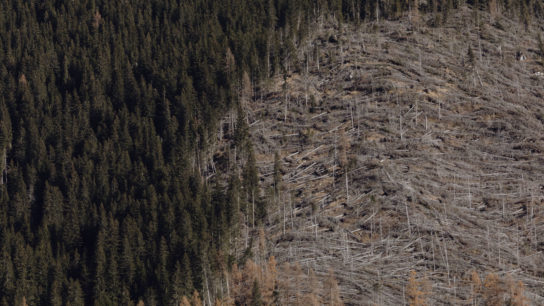
In June, Agriculture Secretary Brooke Rollins announced plans to rescind a Clinton-era rule that prohibits road construction, reconstruction, and timber harvest on nearly 59 million acres of the National Forest System. It followed a March executive order and a memo issued by Rollins in April, which laid the groundwork for a major increase in industrial logging across federal forests. Green groups warned that timber and mining activities would pollute air and drinking water and strip away essential habitats for wildlife such as California condors, grizzly bears and wolves of the Yellowstone area, native salmon and trout in the Pacific Northwest, migratory songbirds of the Appalachian hardwoods.
Featured image: Daniel Torok via The White House/Flickr.
You might also like: Meet Trump’s Anti-Climate Cabinet
This story is funded by readers like you
Our non-profit newsroom provides climate coverage free of charge and advertising. Your one-off or monthly donations play a crucial role in supporting our operations, expanding our reach, and maintaining our editorial independence.
About EO | Mission Statement | Impact & Reach | Write for us