


As COP30 approaches, world leaders are preparing to debate how to accelerate decarbonization while adapting to worsening droughts, heat, and water scarcity. But one critical piece of the resilience puzzle still receives too little attention: the connection between how we use water and energy.
—
By Michael Bjorn
Every stage of our water system – from extraction, treatment and pumping to heating and distribution – requires energy. Likewise, the energy sector depends on water for cooling, processing and production. By treating water and energy as a single, integrated system, efficiency efforts create a powerful synergy, reducing resource waste and strengthening overall resilience.
The COP30’s Action Agenda lays out “Building Resilience for Cities, Infrastructure and Water” as a key theme. Energy efficiency is the common thread between the three. Without integrating water and energy management, cities will struggle to adapt, infrastructure will remain inefficient, and resilience goals out of reach.
As countries prepare to submit their updated National Adaptation Plans, water–energy planning must be treated as a central pillar to these resilience strategies. Because what we use water for, how we move it, and how much energy it takes are deeply interdependent factors.
By 2030, global water demand will outpace supply by 40%. The water sector already accounts for 4% of global electricity use, while the energy sector accounts for around 10% of global water withdrawals. By 2040, the water sector’s energy consumption will more than double. With demand for both water and energy increasing, and driving each other, now is the time to improve efficiency on both fronts.
3.6 billion people face water scarcity for at least one month per year, and over 2 billion – some one in four people – live without access to safe drinking water. As freshwater reserves decline, many regions are turning to desalination. But the increased use of desalination comes with a cost. As a highly energy-intensive process, it already accounts for around 26% of all energy used in the global water sector.
This is where efficiency matters. Technologies that can drive efficiency gains in this historically energy-intensive sector exist.

For example, the Canary Islands Institute of Technology set a new world record for seawater reverse osmosis efficiency: 25% less than conventional plants. If all existing desalination plants globally were retrofitted to that standard, our estimates put total savings at US$39.7 billion, 111 million tons of CO2, and 247 TWh of energy – nearly as much as Spain’s total electricity use in 2020.
This proves that with the right technology and efficiency standard policies, we can lessen the energy stress driven by the need for desalination plants. With a focus on efficiency, we can make sure they become a sustainable component of our water-energy system.
This principle extends beyond desalination. A systems-level approach, where energy and water use are planned and managed together, allows us to use exactly the right amount of each resource – no more, no less. We must apply this thinking across the entire water cycle.
In many countries, some 30% of treated water on average is lost before reaching consumers, amounting to hundreds of billion cubic meters each year, worth billions of dollars. Every liter lost represents not just wasted water, but wasted energy from pumping and treatment. It doesn’t have to be this way.
The same logic applies to how we treat water at the end of its cycle. Wastewater facilities are often seen as energy sinks, but with the right technologies, they can become energy producers.
Between 2016 and 2021, Denmark’s Marselisborg Wastewater Treatment Plant produced 100% more energy than it consumed. Likewise, waste heat from treated wastewater can be recovered for district heating networks, contributing to covering a share of global residential heat demand. If scaled globally, one analysis estimates that this approach could save up to 300 million tons of CO2 equivalent annually by 2030, roughly 10% of the European Union’s total emissions in 2023.
A Chance to Get It Right
At COP30, countries have a chance to redefine resilience, and recognize that every liter of water saved is energy saved and every kilowatt saved is emissions avoided. High-income countries risk losing up to 8% of GDP by 2050 if water and energy inefficiencies persist. This could be as much as 10-15% for lower-income countries. Therefore the water–energy nexus should be treated as a core pillar of both mitigation and adaptation agendas.
Governments preparing their National Adaptation Plans should ensure that water and energy resilience represent the core of their strategies. This means setting Minimum Efficiency Performance Standards for desalination, pumping, and wastewater systems, and supporting the digitalization of water networks through sensors, smart metering, and variable-speed drives. Western nations, meanwhile, must ensure that efficiency technologies and financing flow equitably to regions most vulnerable to water and energy insecurity.
At COP30, we cannot afford to treat the water–energy nexus as a side issue. Managing these resources together efficiently and intelligently is how we adapt to the climate crisis while building a future that endures.
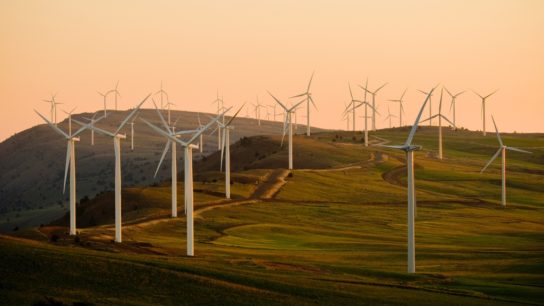
Featured image: Vugar Ibadov via Flickr.
—
About the author: Michael Bjorn is Vice President & Head of Danfoss High‑Pressure Pumps, a business unit focusing on high‑quality, energy‑efficient pumps and energy recovery solutions for the global water sector. He has 25+ years of international leadership experience in petrochemicals and water industries
This story is funded by readers like you
Our non-profit newsroom provides climate coverage free of charge and advertising. Your one-off or monthly donations play a crucial role in supporting our operations, expanding our reach, and maintaining our editorial independence.
About EO | Mission Statement | Impact & Reach | Write for us