

“Nairobi is about to host a meeting that flies under the radar for most people, yet its recommendations could shape how the world treats wild animals for years to come,” writes Jewel Omollo, Environmental Policy Officer, World Federation for Animals.
—
By Jewel Omollo
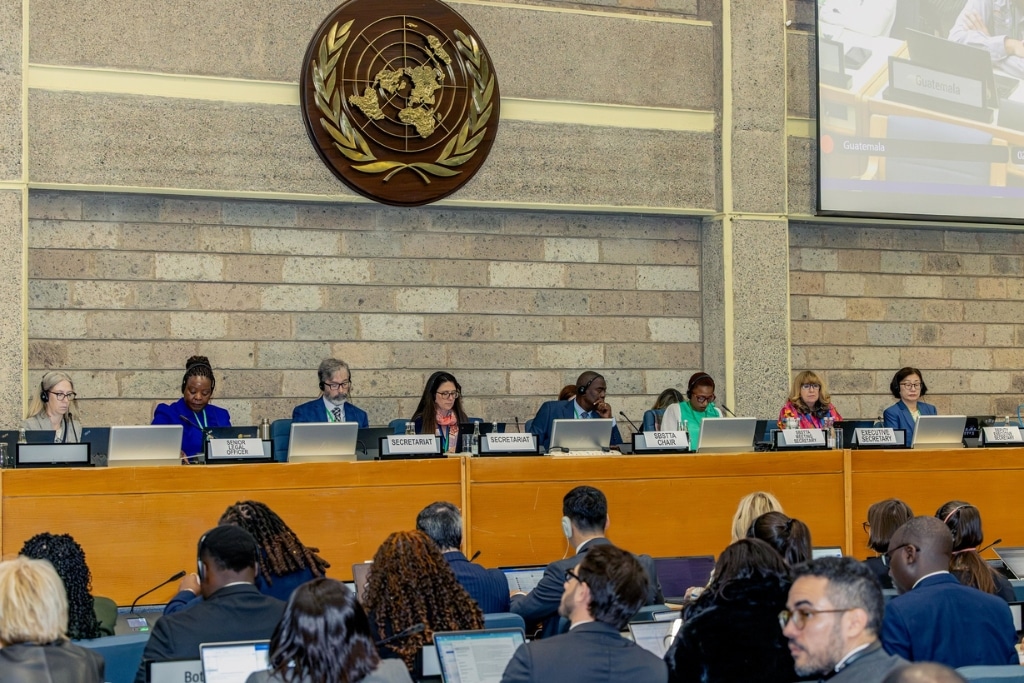
This week, governments, scientists, and observers are gathering in Nairobi for the 28th meeting of the Subsidiary Body on Scientific, Technical and Technological Advice (SBSTTA-28) – a technical, scientific, and technological body of the Convention on Biological Diversity (CBD). In policy circles, this is where the “expert” recommendations get refined before being sent onward to the political stage at the Conference of the Parties (COP), the decision-making body of the CBD. In practice, however, what is agreed at SBSTTA can quietly become the blueprint for laws, funding, and programs far beyond the conference room.
One of the central issues on the agenda is the development of the first CBD-wide global guidance on the sustainable management of wildlife across multiple species and practices. It is being developed by the CBD, in collaboration with the Convention on International Trade in Endangered Species of Wild Fauna and Flora (CITES), the Convention on the Conservation of Migratory Species of Wild Animals (CMS), and key partners. Its purpose? To strengthen wildlife governance – that is the laws, policies and processes overseeing how we manage and conserve wildlife – and support implementation of the Kunming-Montreal Global Biodiversity Framework.
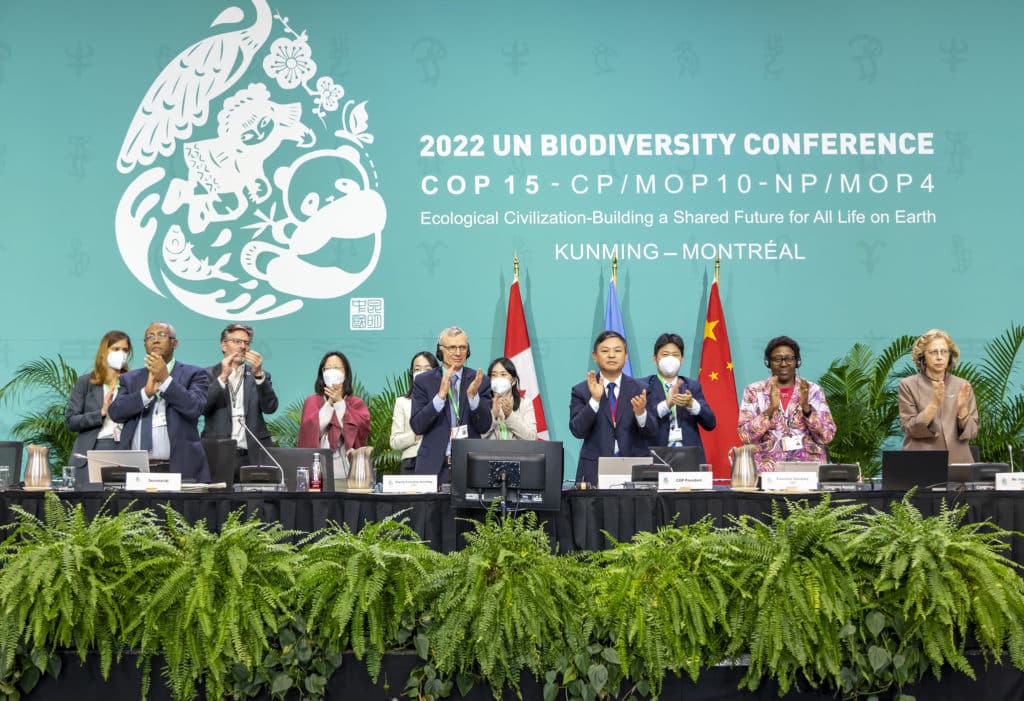
SBSTTA-28 is reviewing the draft global guidance and will prepare a recommendation for the next Conference of the Parties (COP17) in Armenia, where it is expected to be formally adopted. Its stated focus is progressive: inclusive decision-making, respect for diverse knowledge systems, and equitable benefit-sharing. Were it to end up helping move wildlife governance toward fairness, legitimacy, and accountability, that would be a real step forward.
But “sustainable” is a loaded word. “Sustainable wildlife management” and, even more so, “sustainable use”, can either set a higher standard or become a label that makes harmful practices easier to defend. What does “sustainable use” even mean if it fails to include ethical limits and clear safeguards for animal welfare and health risk?
The CBD’s working definition of sustainable wildlife management has long centered on sustaining populations and habitats over time, while considering socio-economic needs. In many policy discussions, sustainable use is assessed mainly through ecological indicators (population trends, quotas, habitat impacts) and economic ones (income, jobs, trade value). This creates a gap. If sustainability is defined primarily as an ecological and economic calculation, it becomes easy to declare a practice acceptable simply because it is profitable, regulated on paper, or not immediately linked to the collapse of a population.
A wildlife system can look sustainable on paper while still normalizing severe suffering, high mortality, and unacceptable risk. If the guidance treats sustainability as compatible with wildlife “use” (including trade) without firm welfare and enforcement thresholds, it risks creating a loophole of business-as-usual exploitation rebranded as “regulated,” “legal,” or “sustainable.”
We already see how labels can sanitize reality. A product marketed as “legal” or “regulated” doesn’t guarantee traceability or transparency – especially where demand is global, margins are high, and oversight is fragmented across international borders. If global guidance is vague, it will be interpreted in the most convenient way to justify expansion rather than restraint, especially by those pursuing financial gain.

One area where this ambiguity is especially dangerous is the exotic pet trade. If global guidance implies that live wildlife trade can be sustainable without strict welfare, health, and enforceability thresholds, it can legitimize expanded trade of wild animals under a reassuring label. Research shows that even legal wildlife trade can cause significant harm, including high mortality in captivity, and can increase pressure on wild populations when animals are wild-caught or traceability systems are weak. A peer‑reviewed study on pet reptiles reported an overall 3.6% mortality within the first year of acquisition, with strong variation by taxon reaching 28.2% for chameleons in the surveyed sample.
The loophole risk is not abstract. The CBD’s “best practices” submissions show that many different, competing stakeholders are trying to shape what counts as good wildlife management in the draft global guidance. Some push for coexistence and non-lethal approaches. Others support a use-first approach that keeps extraction politically acceptable. The guidance was developed through a mandated multi-stakeholder consultative process, and it is therefore being shaped in a space where priorities, interests, and incentives do not always align. When key terms like “sustainable use” are left broad, the wording can later be used to justify expansion of wildlife use and trade. This is why the guidance needs clearer thresholds and no-go conditions, not just broad principles.
SBSTTA-28 is also taking place in a world still marked by the social and economic trauma of Covid-19. Yet we continue to debate wildlife trade and use as if pandemic risk is optional.
Live wild animal trade increases opportunities for pathogens to jump across species and geographies. UNEP-WCMC and the UK’s Joint Nature Conservation Committee assessed legal CITES trade data and found that more than 575,000 live animals traded under CITES between 2011 and 2020 were species that could potentially carry one or more major zoonotic diseases, including Rift Valley fever, Crimean-Congo hemorrhagic fever and Ebola. Welfare is inseparable from this. Poor welfare conditions including stress, overcrowding, injury, and unsanitary confinement are not only an ethical issue. They also increase vulnerability to disease and undermine biosecurity.
Wildlife use must not normalize high-volume, low-welfare movement of live wild animals through capture, holding, transport, sale, and captivity under the comfort of “regulated trade” and healthy population numbers as this increases the chances of spillover events and amplifies outbreak potential. “Legal” is not the same as “acceptable,” and “sustainable” cannot become a marketing term.
So What Should ‘Sustainable’ Look Like In Practice?
First, sustainable wildlife management and use must be based on ecological limits and recovery. A single population number does not tell you whether a species can survive long term and bounce back after shocks. The 1992 Atlantic cod collapse is a warning example. Managers relied on stock estimates and missed other signs of trouble, and the ecosystem and the livelihoods tied to it crashed fast. The CBD guidance should clearly state that wildlife use is only acceptable when ecosystems are healthy, populations are above safe minimum threshold levels, and depleted species are clearly recovering.

Second, precaution must guide decisions. When we don’t have enough information about ecological impacts, animal welfare, disease risk, or combined pressures such as habitat loss, climate change, pollution, invasive species, and trade, wildlife use should not go ahead unless risks can be properly assessed and managed, without undermining recovery.
Third, the guidance needs stronger rules on traceability, welfare, and health safeguards. “Legal” or “regulated” does not always mean “sustainable” when tracking is weak, enforcement is uneven, or supply chains allow wild-caught animals to be passed off as captive-bred. Animal welfare also cannot be treated as optional. Harm and suffering during capture, transport, confinement, and killing is ethically wrong, and it can also increase disease risk and drive replacement demand that puts more pressure on wild populations.
Finally, sustainability should be judged by whether we are reducing harm and conflict, not just managing extraction. That means prioritizing coexistence and non-lethal, community-led approaches to human-wildlife conflict, and supporting a shift toward non-extractive wildlife economies whenever possible. In practice, this can include well-managed wildlife tourism that funds conservation and community benefits, payments for ecosystem services, and community-led conflict prevention measures such as early warning systems, better livestock protection, and rapid-response support. Without these guardrails, sustainable use can become a label that excuses expansion instead of a framework that limits harm.
This approach does not pretend wildlife use is simple, or that every context is the same. Livelihoods, culture, food security, and governance realities differ widely, and some communities have long managed wildlife in ways that are responsible and locally legitimate. The point is that sustainable use must have clear limits and safeguards, so that real needs are met without turning exploitation and high-risk trade into business as usual.
The Critical Turning Point
SBSTTA-28 is not the final word. But it is a critical turning point. Once language is refined and forwarded to COP17, it becomes harder to change.
Global guidance on wildlife management should help governments understand how to protect ecosystems, reduce disease risk to people and animals, share benefits fairly, and respect animals as sentient beings with intrinsic value. But it must also be honest about limits, about what cannot be justified, what cannot be safely managed, and what must be phased out. Otherwise, we risk legitimizing practices that are not only cruel and environmentally damaging but also increase the chance of future health crises.
This is why the guidance must go beyond general commitments and clearly specify enforceable prevention, monitoring, and welfare safeguards so that “sustainable use” cannot be used as a stamp of approval for actions that systematically harm animals.
On 29 July at 6.15 p.m. (Nairobi time), the World Federation for Animals is coordinating a panel discussion during SBSTTA – ‘From Use to Sustainability: Rethinking the Management of Wild Animals’ – to explore how we can reach true sustainability. Media representatives are welcome to attend (registration for CBD SBSTTA-28 is required).
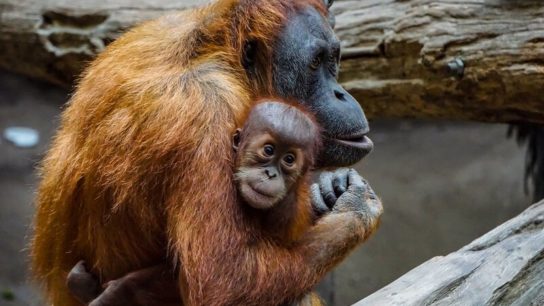
Featured image: The Orangutan Project.
—
About the author: Jewel Omollo is the Environmental Policy Officer at the World Federation for Animals, where she works to advance the integration of animal welfare within international environmental governance through her focus on engagement with the UN Environment Programme and engagement on global biodiversity policy, leading both of these working groups and supporting strategy development and common positions.
This story is funded by readers like you
Our non-profit newsroom provides climate coverage free of charge and advertising. Your one-off or monthly donations play a crucial role in supporting our operations, expanding our reach, and maintaining our editorial independence.
About EO | Mission Statement | Impact & Reach | Write for us