

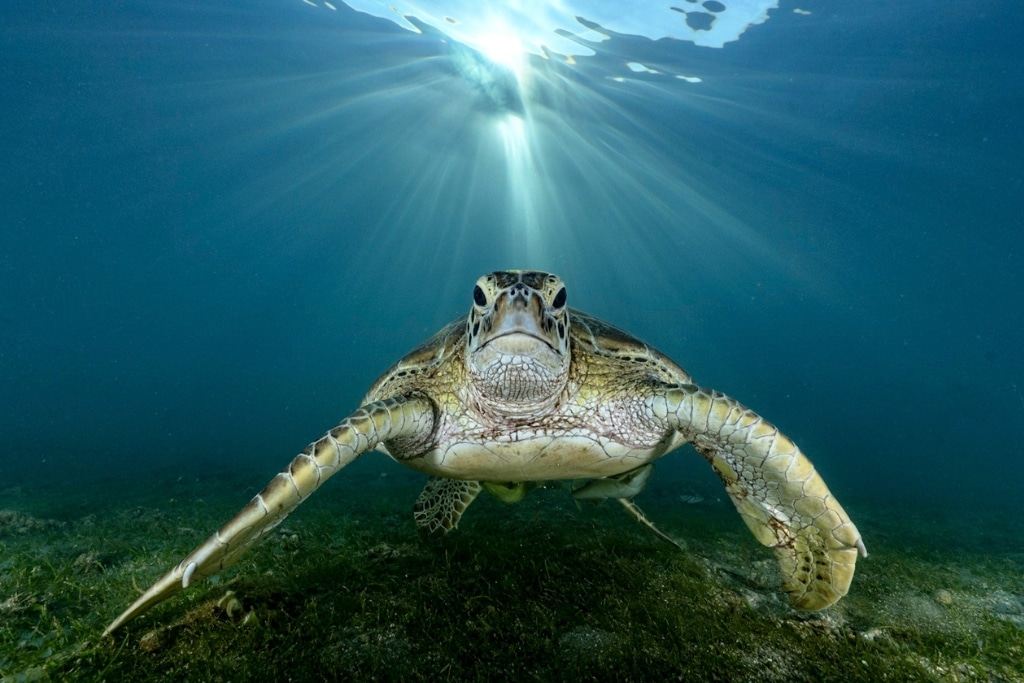
Mayotte is one of the last true sanctuaries where green turtles (Chelonia mydas) can still graze freely in abundant seagrass meadows. Here, the relationship between animal and ecosystem is intact. But for how long?
—
Green turtles are more than graceful silhouettes in turquoise waters – they are ecological engineers. By grazing seagrass beds, they alter structure, prevent invasive species, and promote new growth. This, in turn, shapes entire networks of life: juvenile fish, invertebrates, microalgae.
Where turtles are present, seagrass is healthier, more dynamic and more resilient. They are both gardeners and sentinels – yet their role remains largely unknown to the wider public.
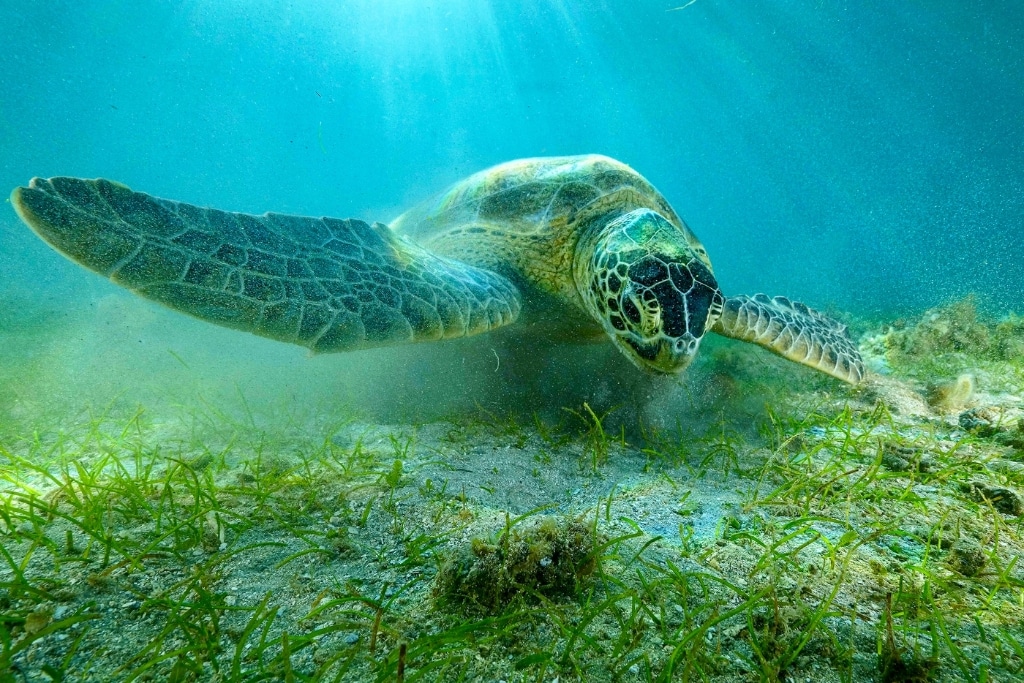
Their impact extends beyond seagrass. Some visit coral reefs, indirectly helping maintain balance between algae and coral. Others come ashore to nest, forging a direct link between land and sea, between marine cycles and sand that carries life.
A Fragile Peace
Mayotte gives the illusion of a refuge: vast meadows, wide beaches, turtles still abundant. But behind this wealth lies fragility.
Each year, between 3,000 and 5,000 green turtles nest on the island’s beaches. Yet up to 10% fall victim to poaching, with as many as 350 females killed annually. Their meat is still consumed locally, despite legal bans.
Females are most vulnerable when they come ashore to lay eggs.
Climate change compounds the threat. The sex of turtle hatchlings depends on sand temperature. Warmer sand produces more females. In parts of the Indian Ocean, researchers have recorded up to 99% female hatchlings. Over time, this imbalance could jeopardize the species’ survival.

Other pressures add up: degraded seagrass, plastic pollution, abandoned fishing gear, anchor damage. Together, they weaken the already precarious stability of the lagoon.
Not long ago, it was said that you could hardly swim in Mayotte without crossing turtles at every stroke. Today, they are still here, but in fewer numbers. And often, when I watch a turtle grazing peacefully a few meters away, I find myself asking, “For how much longer?”

What the Sea Has Taught Me
Over the years, I learned not only to observe, but to listen. Turtles might not speak – but they are great teachers.
To those who accept to slow down, they reveal another way of being in the world: without noise, without conquest, without violence.
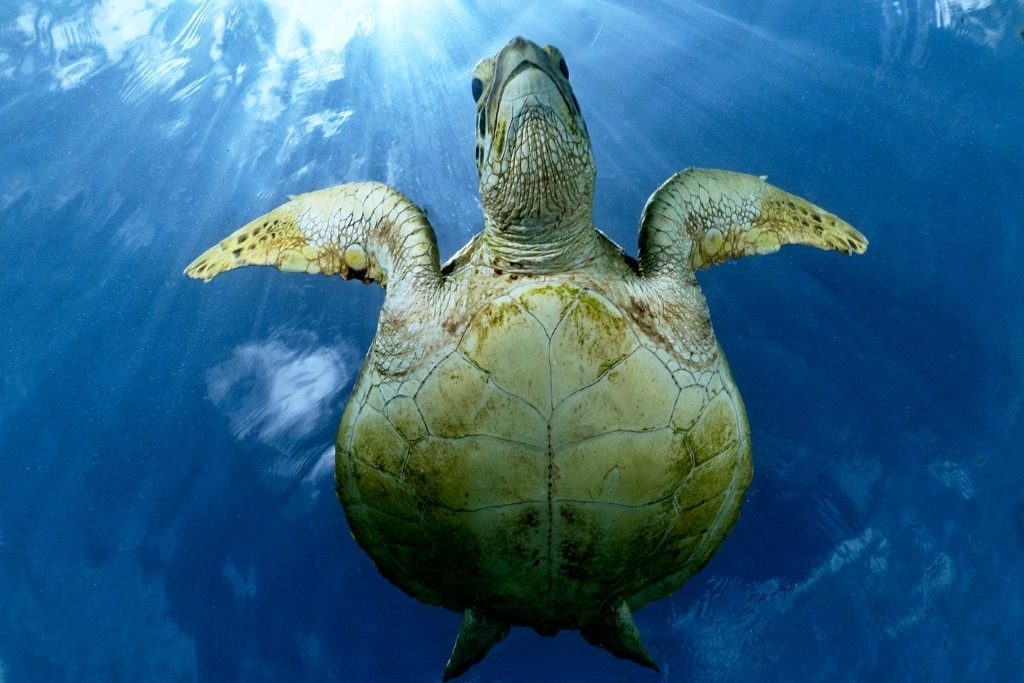
Mayotte is far from perfect. But each turtle encounter is a reminder of what still exists – fragile, but real.
Photography will not save turtles. But it can awaken wonder. And wonder can open the way to awareness. Perhaps, awareness is the only true beginning of conservation.
Featured image: Serge Melesan.
—
Check out other Earth.Org’s photostories here.
This story is funded by readers like you
Our non-profit newsroom provides climate coverage free of charge and advertising. Your one-off or monthly donations play a crucial role in supporting our operations, expanding our reach, and maintaining our editorial independence.
About EO | Mission Statement | Impact & Reach | Write for us