

President Prabowo Subianto’s waste-to-energy initiative aims to solve Indonesia’s plastic crisis by converting landfill waste into electricity, yet critics warn the project bypasses crucial environmental safeguards. Evidence from pilot plants in Solo and Surabaya suggests these incinerators jeopardize public health and entrench plastic production rather than addressing the root causes of pollution.
—
By Syahriza Alkohir Anggoro
Shortly after Prabowo Subianto’s victory in the 2024 presidential election, the leader of the world’s third-largest contributor of plastic waste was immediately faced with demands to address a crisis that has long plagued the daily lives of Indonesians. Less than a year after taking office, he offered a solution built around the narrative of clean energy and the modernization of waste management.
Presidential Regulation 109/2025 contains Prabowo’s ambitious vision to build waste-to-energy (WtE) power plants across the country as a solution to the increasingly disproportionate burden faced by landfills in several major Indonesian cities. This program, the government says, reflects the principles of a circular economy by transforming the plastic pollution curse into fuel for power plants for economic gain.
However, in a country vulnerable to anthropogenic climate change and with weak rule of law, this initiative is feared to deepen existing environmental injustices by shifting the burden of ecological and health risks onto disadvantaged communities who do not contribute to plastic pollution. This is inseparable from the dangers posed at every stage of the plastic lifecycle, including in the final phase of its disposal, with consequences that sacrifice the enjoyment of human rights and the interests of nature itself.
The Long Legal Battle Against Power Plants
WtE power plants are not a new proposal – they were part of the national development plan launched during former president Joko Widodo’s first term. Presidential Regulation 18/2016 brought this pilot project – classified as a “national strategic project” – to seven major Indonesian cities. The classification means the project can override existing regulations, including environmental protection standards.
Six non-profit organizations and 15 individuals submitted a judicial review lawsuit against Widodo’s regulation to the Supreme Court on the grounds that this project contradicts higher laws and potentially violates human rights. It was the country’s first lawsuit challenging a WtE plant project.
In one of the legal provisions, for instance, power plant installations can be built in parallel with permit applications and the process of preparing environmental impact assessment documents. For environmental lawyers, this defies common sense, clearly demonstrating how the project was designed without due consideration and without scientific consensus.
In November 2016, the court agreed with the claims articulated by the plaintiff, and ordered the regulation’s cancellation. They went on to say that this technology would worsen air quality and thus affect Indonesians’ right to a clean and healthy environment. For the Supreme Court, the threat of air pollution and health hazards is real and has the potential to directly affect residents in the cities targeted by the regulation.
But two years after the Supreme Court’s ruling was read out in the courtroom, then-president Widodo tabled a regulation substantially similar to the regulation that the court had overturned. The plan was, in fact, expanded to 12 cities.
Civil society organizations criticized the new policy, arguing that Widodo had acted unlawfully by ignoring the judicial order. They also argued that this initiative contradicted the Paris Agreement’s goal to limit global temperature rise to 1.5C, to which the country committed under the Widodo administration.
The project’s business viability was also questioned. According to the Corruption Eradication Commission, an independent state commission, state-owned electricity companies and local governments are required to sign long-term contracts to pay service fees to WtE project developers for more than 20 years. This long-term payment obligation has the potential to burden the company’s finances and the local government’s fiscal capacity in the long term.
The commission also concluded that the electricity supply generated by these plants is not necessary, given that most of the cities targeted by the project are on the islands of Java and Bali, both of which currently have an excess supply of electricity.
Learning from Solo and Surabaya
Instead of building on the mistakes of the Widodo administration, President Prabowo’s new plan is even more ambitious than that of his predecessors, targeting 33 cities.
As of 2025, two WtE plants have been built, namely Putri Cempo in Solo and Benowo in Surabaya. Although Presidential Regulation 109/2025 now requires an environmental impact assessment before construction begins, this does not necessarily alleviate concerns about the project’s environmental impact, as existing environmental protection standards have been weakened by Widodo’s previous systematic efforts to prioritize economic growth over ecology through the Omnibus Law.
Just like in the US, where WtE installations are often located near disadvantaged communities, such as low-income neighborhoods and communities of color, those in Solo and Surabaya are also built in suburban areas where disadvantaged residents live. A study conducted by WALHI (Wahana Lingkungan Hidup), one of the six non-profit organizations involved in the 2016 judicial review lawsuit, found that local residents are the first to feel the negative impacts when the combustion residues and gas emissions produced do not meet safety standards before being released into the environment.
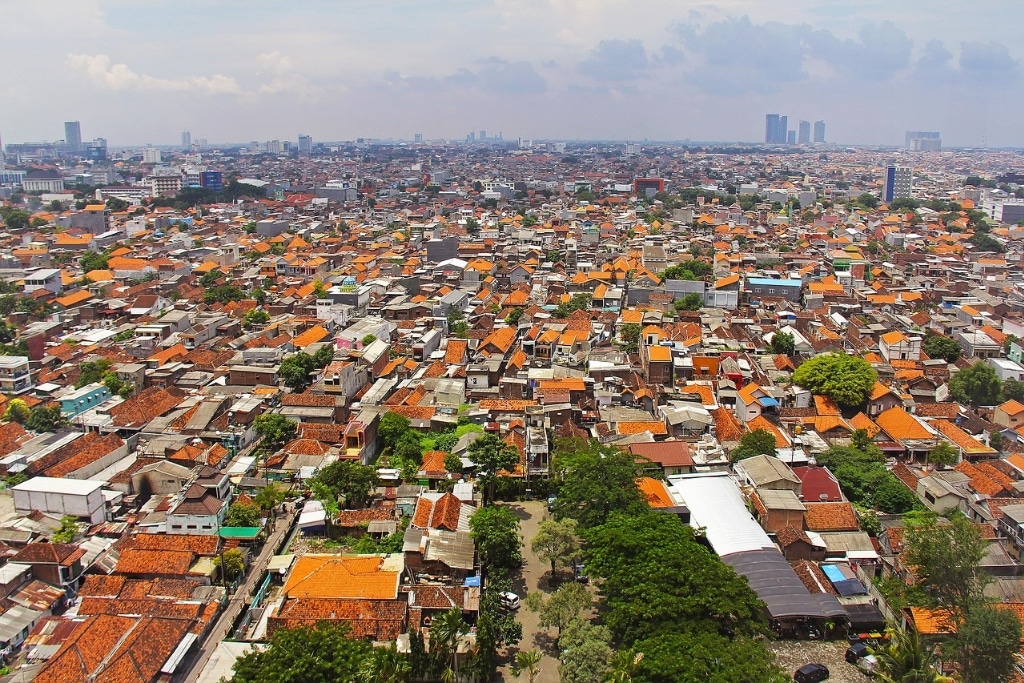
In Solo, communities living within close proximity to the power plant have experienced respiratory problems such as coughing, colds, shortness of breath, and itchy skin. They are also exposed to constant noise and odor pollution that disrupts their daily activities and sleep due to the plant’s 24-hour operation. The same situation is also felt by villagers in the neighboring administrative area – the Karanganyar district: tar waste and leachate from waste processing there are believed to be polluting tributaries connected to the Bengawan Solo river and contributing to the death of vegetation around the riverbanks, according to an investigation by Yayasan Gita Pertiwi, a local non-profit.
Communities around Benowo also face similar disturbances. Research conducted by WALHI and the Global Alliance for Incinerator Alternatives between November 2024 and January 2025 found concentrations of PM 2.5 and PM 10 eight times higher than the safe threshold set by the World Health Organization. Volunteers involved in this investigation also documented evidence of exposure to fine and coarse particles containing microplastics around the installation, especially in nearby settlements, main roads, markets, and schools.
Although these two power plants are part of the government’s efforts to combat plastic pollution while generating clean energy, poor communities living near the plants clearly bear the negative impacts caused by waste processing activities. If there is no further response from the authorities regarding what is actually lurking in the community, it is certain that they will pay more for health and environmental costs in the future, while at the same time those most responsible for the plastic crisis from the early stages of the lifecycle, such as the petrochemical industry and large manufacturers, remain unpunished.
What Is Really Needed
What has happened in Solo and Surabaya reflects the need for the government to act according to principles that prioritize environmental protection and human rights, and consider more sustainable solutions to plastic pollution.
Behind the incineration solution, the government is clearly ignoring one of the most fundamental aspects of tackling plastic pollution: prevention and reduction at the source.
To generate electricity optimally, incinerators require large quantities of high-calorific waste, especially plastic waste, mixed with several other types of waste (food waste, wood, paper, and in some cases coal) that have been treated using various technical processes such as refused-derived fuel or other methods. Building more WtE power plants in cities across this fragile archipelago means that more plastic will have to be supplied as fuel. This will only incentivize more production of single-use plastics and multilayer sachets, instead of incentivizing businesses to explore other solutions and fulfill their recycling obligations.
By allowing plastic waste to be discarded as fuel, we are destroying materials that have the potential to be reused or recycled and, in doing so, we are also negatively impacting the livelihoods of informal workers who depend on this sector. Even when burned, plastic waste does not truly disappear from our sight; it simply transforms into invisible toxic compounds that infringe upon our right to breathe clean air.
Indonesia must invest in sustainable alternatives supported by a zero-waste city orientation through comprehensive intervention at the early stages of the plastic lifecycle, rather than a linear economic approach that directs most resources to waste management. If the government does not consider more ecosystem-friendly and economically affordable alternatives, the sufferings endured by the communities in Solo and Surabaya will only expand to other cities.
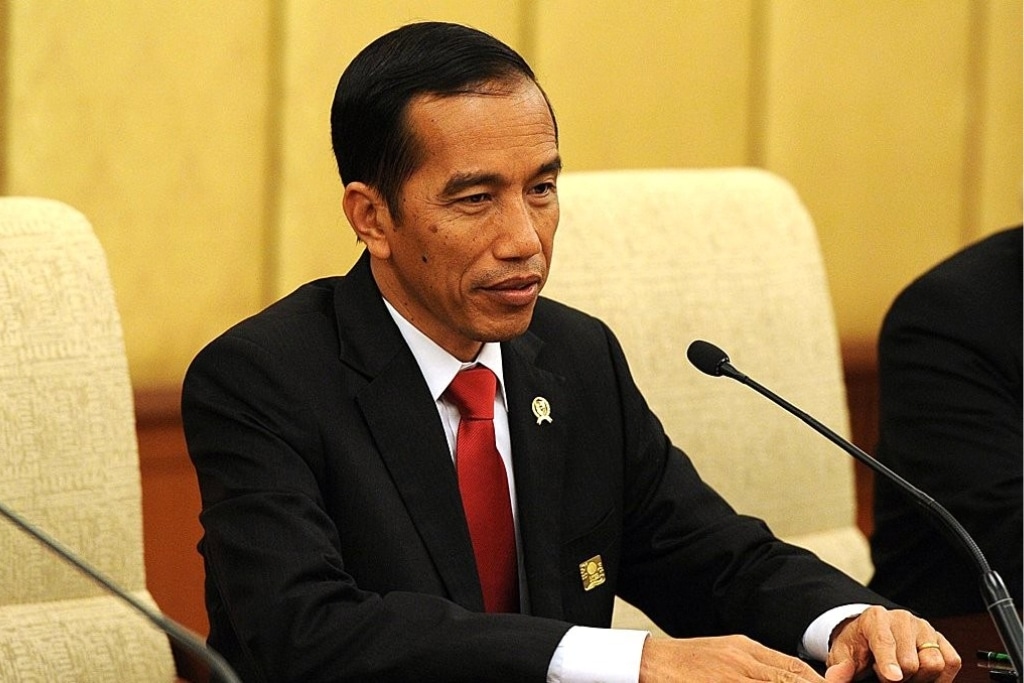
Featured image: Wikimedia Commons.
—
About the author: Syahriza Alkohir Anggoro is a lecturer at the Faculty of Law, Universitas Brawijaya, where he teaches constitutional law and environmental law. His research lies at the intersection of human rights, environmental law, and legal history, with a particular interest in how legal regimes evolve within broader political and socio-ecological transformations. He is currently researching the intellectual history of legal scholars during Indonesia’s Guided Democracy period (1959–1965) as a 2025 Lingling Wiyadharma Fellow at the Scaliger Institute, Leiden University Libraries.
This story is funded by readers like you
Our non-profit newsroom provides climate coverage free of charge and advertising. Your one-off or monthly donations play a crucial role in supporting our operations, expanding our reach, and maintaining our editorial independence.
About EO | Mission Statement | Impact & Reach | Write for us