


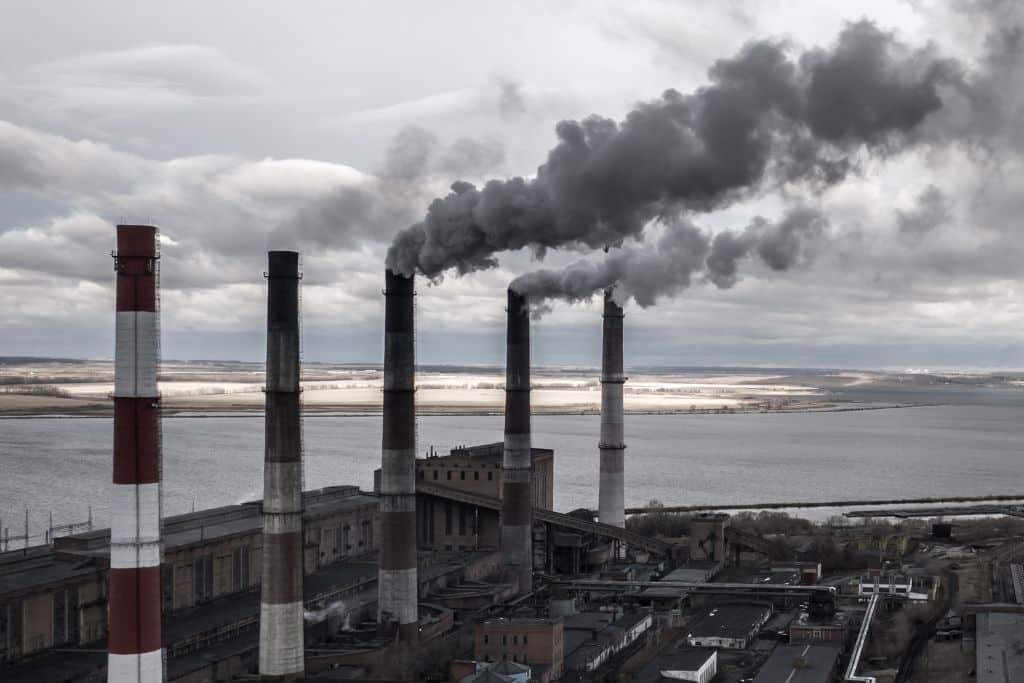
Valorizing CO2 involves turning it into a useful resource instead of just removing it. Although it is chemically stable and hard to transform, advances in chemistry, biology, and energy systems are making more applications possible.
—
Have you ever considered that the future of decarbonization could involve capturing carbon dioxide (CO2) with certain technologies and then using it to create products and materials? As unbelievable as it may seem, it is possible.
Climate change is having dangerous impacts on nature and people in every region of the world, threatening, among others, health, food security, and water supplies. Our planet has already warmed by 1.3C compared to pre-industrial times because of the influence of greenhouse gas emissions from human activities in the atmosphere. While nearly every country in the world has agreed to limit warming to 1.5C, the reality is that we are far off track – and every fraction of additional warming exacerbates the impacts of climate change.
In 2024, CO2 emissions from energy use increased slightly (0.8%) to record levels. This also pushed atmospheric CO2 levels to their highest point ever. Most of the increase came from burning fossil fuels, while emissions from some industrial activities decreased. Despite reductions in advanced economies, the global total of CO2 continues to rise because emissions are increasing in developing countries. The most polluting sectors are energy combustion (electricity and heat), transport, and industrial processes (production of cement, steel or chemicals).
Ecosystems such as forests, soils, wetlands, and oceans act as so-called carbon sinks, continuously absorbing CO2 through biological and physicochemical mechanisms. Scientific reviews underline that protecting and restoring these natural sinks is essential, as their degradation can rapidly turn them from carbon absorbers into carbon sources. While playing a critical role in stabilizing atmospheric CO2 levels, natural systems alone cannot offset all anthropogenic – or human-caused – emissions. That’s where engineered solutions come in.
Carbon Capture Technologies
Carbon capture is not one single solution but a range of different technologies that work at various scales and stages of development. Current research focuses on making these technologies more efficient, using less energy, and adapting them to different types of emissions.
Some carbon capture technologies remove CO2 from industrial sources before it is released. They are primarily deployed at high-emission industrial facilities, such as power plants, cement kilns, refineries, and chemical manufacturing sites. In these settings, the combustion of fossil fuels generates a “flue gas” – a mixture of various gases including nitrogen, water vapor, and carbon dioxide.
To prevent this CO2 from entering the atmosphere, specialized separation techniques are employed. One of the most common methods is chemical absorption. In this process, the flue gas is passed through a solvent containing specific chemical compounds (typically amines) that selectively bind to the CO2 molecules. By forming these temporary chemical bonds, the CO2 is effectively “scrubbed” from the gas stream, allowing the remaining harmless gases to be released while the concentrated carbon is trapped for transport and storage.
Other technologies are designed to extract CO2 directly from the atmosphere. One method uses liquid solvent systems, where air is passed through specialized liquids that absorb CO2. Heat and pressure are then applied to separate the CO2 from the liquid, allowing the liquid to be reused. The cleaned air, now containing less CO2, is released back into the atmosphere.
Another approach involves solid sorbent systems, which use filters to trap CO2 from the air. When these filters are heated or subjected to pressure, they release the CO2 in a concentrated form.
Both systems are capable of working with very low levels of atmospheric CO2. A key advantage is their ability to capture emissions that are widely dispersed or result from past activities, addressing a broader range of sources.
CO2 Valorization Strategies
CO2 valorization involves turning it into a useful resource instead of just removing it. Although it is chemically stable and hard to transform, advances in chemistry, biology, and energy systems are making more applications possible.
Energy
Using chemical, electrical, or biological processes, CO2 can be turned into stored energy, for example into fuels. However, these processes require vast amounts of energy, making them a viable option only if the energy used comes from clean, low-carbon sources like solar or wind power.
Construction
CO2 can also be used in construction materials, reacting with minerals to form stable compounds that lock carbon away for decades. While promising, challenges related to material supply, costs, and industrial integration persist.
Bio-based products
Microorganisms, algae, and enzymes can convert CO2 into useful products through natural biological processes such as photosynthesis or metabolism. By using CO2 to grow, they produce biomass (material from living organisms) that is rich in proteins, fats, carbohydrates, and pigments. This biomass can then be processed into valuable products such as animal feed, biofertilizers, biostimulants that support plant growth, food ingredients, or functional compounds for use in cosmetics and pharmaceuticals.

Plastic alternatives
Among the most promising bioproducts derived from CO2 are biopolymers, which can replace conventional plastics. In this context, polyhydroxyalkanoates (PHAs) – a type of biodegradable plastic – are naturally produced by microorganisms. Under specific conditions, certain bacteria can synthesize PHAs using CO2 as the ultimate carbon source.
PHAs are of great interest because they combine environmental benefits with versatile material properties. They can be used to manufacture packaging, agricultural films (thin plastic sheets to protect plants and improve plant growth), disposable items, and even medical devices, while being fully biodegradable. This makes them a powerful alternative to fossil-based plastics, which persist in ecosystems for centuries.
The BETA Technological Center is actively working on this challenge within the framework of the European project CERNET. The project shows that producing PHAs from CO2 helps close the carbon loop by transforming a greenhouse gas into a long-lasting, value-added material.
Viability and Scalability of PHAs Production from CO2
Certain microorganisms can use CO2, along with gases like hydrogen and oxygen, to grow and store PHAs inside their cells, and this has been shown to work well in laboratory studies. However, turning this process into large-scale production is difficult because these microbes grow slowly on CO2. They also require complex gas systems and huge amounts of energy. Moreover, the process is still more expensive compared to traditional plastics, even though it can be better for the environment when renewable energy is used.
While making PHAs from CO2 shows strong potential, more improvements are needed before it can be widely used.
Final Thoughts
Capturing and valorizing CO2 offers a promising pathway to reducing emissions while creating valuable products like fuels, construction materials, and biodegradable plastics such as PHAs.
However, there are many challenges to overcome particularly in energy use, microbial growth and cost. These technologies, combined with renewable energy, the protection of natural carbon sinks, and everyday actions people can take – from using public transport to conserving energy – could play an important role towards a low-carbon future.
More on the topic: 3 Carbon Capture Technologies We Must Scale Up to Meet Net Zero
This story is funded by readers like you
Our non-profit newsroom provides climate coverage free of charge and advertising. Your one-off or monthly donations play a crucial role in supporting our operations, expanding our reach, and maintaining our editorial independence.
About EO | Mission Statement | Impact & Reach | Write for us
Earth.Org
Free, non-profit and independent environmental journalism.