


The global cruise industry is booming, with passenger numbers expected to reach 33.7 million this year. But this rapid growth comes with serious environmental impacts.
—
Cruise tourism has been booming since the Covid-19 pandemic, sparking concerns surrounding the environmental impact of cruise ships.
Earth.Org looks at how the industry is contributing to emissions and pollution, and what it could do to become more sustainable.
Water Pollution
The US Environmental Protection Agency estimates that a 3,000-person cruise ship generates 176,400 gallons of sewage per week. This adds up to over one billion gallons of sewage a year for the industry – the equivalent of 1,515 Olympic-sized swimming pools.
Most vessels nowadays are equipped with a treatment plant that removes pollutants from the sewage, accelerating the natural process of cleaning the water before it is discharged into the sea. However, pollutants such as heavy metals, nutrients, and non-biodegradable organic chemicals may remain even after secondary treatment.
In a Friends of the Earth’s scorecard published last year, all 21 major cruise lines scored low on sewage treatment because none of them “publicly report on the performance of those advanced systems,” the NGO said.
Marine environments are vulnerable to pollution from onboard sewage, often categorized as blackwater (from toilets) and grey water (from sinks, showers, laundries, and galleys). Further contamination risks emerging from ballast water, used for vessel stabilization, and bilge water, the oily accumulation in the ship hulls’ lowest sections.
Blackwater discharges introduce pollutants into coastal waters, leading to harmful algal blooms and depleting oxygen levels. These blooms consume oxygen as they decompose, creating so-called dead zones where marine life cannot survive. Meanwhile, greywater contains organic residues, oils, and fats that disrupt oxygen exchange. Surfactants – substances commonly found in cleaning products like dish soap and laundry detergent – and oils in greywater also impair vital plankton processes like photosynthesis and metabolism, inhibiting marine organism growth.
According to a study published in May, disinfection by-products from ballast water treatment on board may be more toxic than disinfectants. These by-products can cause cancer, damage DNA, kill cells, and stunt growth in water-dwelling creatures, including tiny organisms like plankton. These chemicals flood the oceans with extra carbon or are decomposed by microorganisms into carbon dioxide. Carbon presence in seawater makes it more acidic, particularly on heavily trafficked routes.
Bilge water also pollutes the marine environment by producing a visible slick that causes biological damage to seabirds and coastal communities through intoxication as well as by coating organisms and preventing respiration, feeding and photosynthesis.
Air Pollution
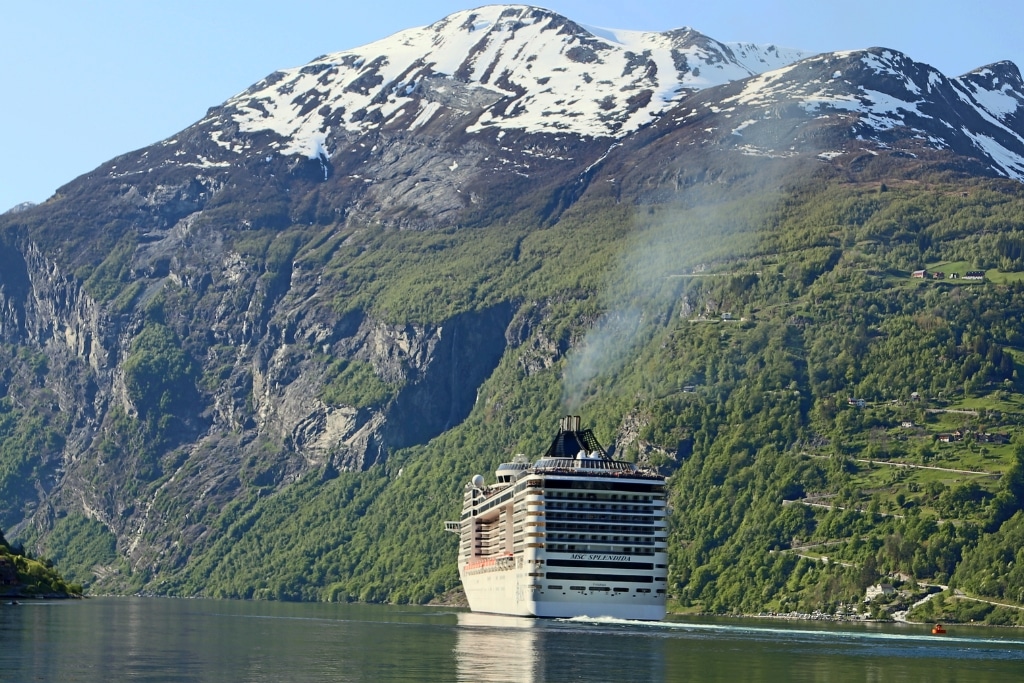
In 2022, 214 cruise ships emitted 509 tonnes of sulfur oxide, 19,125 tonnes of nitrogen oxide, and 448 tonnes of PM2.5 around European ports, according to a study by Transport and Environment.
Although the International Maritime Organization set a global cap on sulfur in ships’ fuel oil in 2020, which it saw would help reduce overall sulfur emissions from ships by 77%, cruise ships still emit huge quantities of this toxic gas into the atmosphere. According to the same Transport and Environment report, Europe’s 214 cruise ships still emitted more sulfur than one billion cars in 2022, or over four times more than all European cars combined.
Both sulfur and nitrogen oxide contribute to the formation of acid rain, acidify surface water, harming marine and riverine organisms, and destroy forests by directly damaging leaves and causing soil acidification and nutrient depletion. In addition, the latter is responsible for regional haze that reduces visibility and accelerates the weathering of monuments, buildings and structures.
Many cruise operators have begun investing in liquefied natural gas (LNG) as an alternative to traditional marine fuels – mostly diesel – in line with international standards and regulations regulating emissions from ships.
More on the topic: High Stakes, Low Ambition: A Look Into IMO’s Fragile Shipping Deal
But while burning LNG generates less carbon dioxide and sulfur dioxide emissions compared to other fossil fuels, it remains a highly polluting source of fuel. Gas is primarily made of methane, a planet-heating greenhouse gas trapping about 80 times as much heat as carbon dioxide over a 20-year period.

“LNG is far from an ideal solution,” said Constance Dijkstra, a shipping campaigner with Transport and Environment.
“Cruise operators are currently claiming they are going greener while still using damaging fossil fuels. To future-proof the sector, we need to move ships towards green-hydrogen based fuels,” he added.
LNG is seen as a transition fuel towards more environmentally friendly energy sources, such as green hydrogen, a clean fuel that eliminates emissions by using renewable energy to electrolyze water. However, producing green hydrogen is still very costly and requires vast amounts of renewable energy.
Most companies received low ratings in the Friends of the Earth’s evaluation for their efforts in reducing air pollution. Among the worst-scoring companies were Disney Cruise Lines, which scored C+, Royal Caribbean, which scored D-, and Cunard Cruise Line, which scored F. Only Norwegian company Hurtigruten and its expedition cruise ship earned an A, while none scored B.
Noise Pollution
Underwater noise pollution generated by cruise ships is another environmental issue associated with the industry.
The Convention on the Conservation of Migratory Species has identified ocean noise as a potential threat to marine life, with some impulsive sounds so loud they can directly kill marine life. A 2019 report found that predators and fish can be displaced by noise. “Underwater noise hotspots in the Mediterranean overlap with areas of importance to noise-sensitive marine mammal species and with several protected regions,” the report stated.
According to International Fund for Animal Welfare Animal Rescue Program Director Katie Moore, sound can affect marine animals in different ways. The increasing ambient noise will disrupt communication and orientation, and feeding among marine creatures that depend on sound in the ocean. “It’s fight or flight,” she said.
The risk to marine mammals from noise depends on the affected area and how much the noise overlaps their hearing and communication ranges. Auditory masking, when noise interferes with biological sounds, degrades their acoustic habitat “much like fog or smoke obscures important visual signals for terrestrial animals,” according to a 2024 study.
It also showed that noise can impair Arctic marine mammals’ ability to detect mates, prey, predators, and navigation cues. Crucially, their hearing frequencies overlap with noise from shipping, sonar, and icebreaking, heightening their vulnerability.
What Else?
Other than water, air, and noise pollution, solid waste generated on cruise – such as plastic, paper, wood, cardboard, food waste, cans and glass – is also problematic. It is estimated that about 50 tons of solid waste are generated during a one-week cruise, and that some 24% of the solid waste generated by vessels worldwide comes from cruise ships.
Plastic is particularly problematic, as it remains in the sea for a long time due to its non-degradable nature, and marine organisms such as sea turtles can see it as food, leading to poisoning, suffocation, and starvation to death.
The global ocean cruise industry experienced an annual passenger growth rate of 6.3% from 1990 to 2025. These vessels are projected to carry a total of 33.7 million passengers by the end of 2025, representing a 4.9% increase over 2024’s 32 million.
“People and communities around the globe are stepping up to demand limits on cruise pollution and protect their health, yet the industry fights them over each new rule. By spending billions on greenwashing customers and opposing environmental regulations, the industry is eroding its own bottom line,” Keever said.
Last year, the Dutch Advertising Board ruled that adverts for MSC Cruises, the world’s fourth-largest cruise line, claiming that LNG is a sustainable alternative to existing marine fuel and that the company is on track to meet the 2050 net zero target were untrue and misleading.
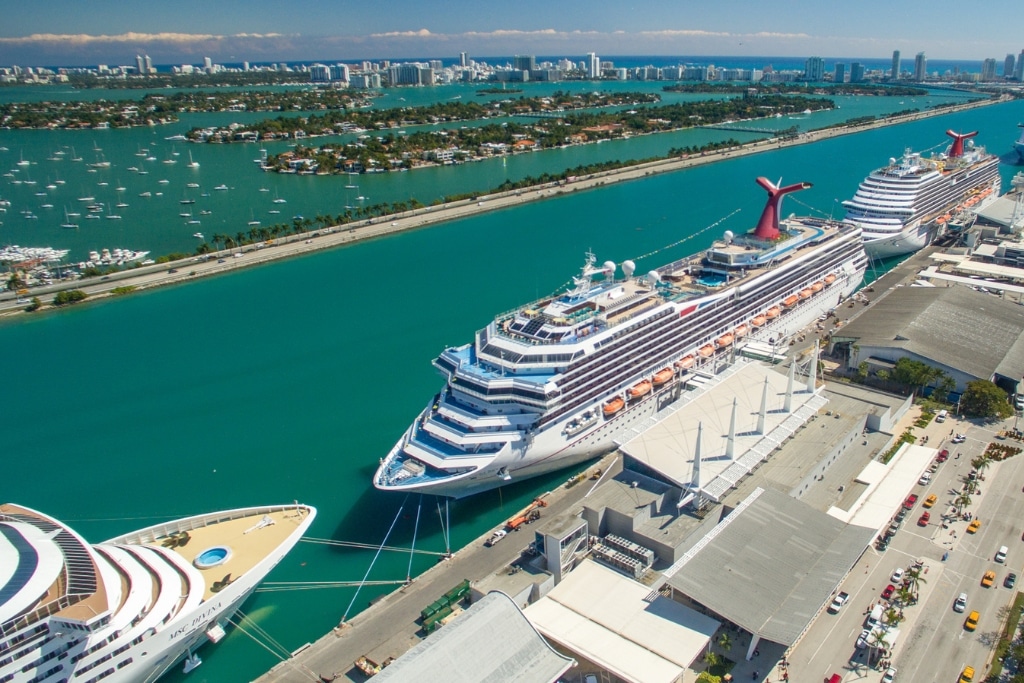
One more point of concern for environmentalists is the industry’s massive use of infrastructure and materials. Building a cruise ship requires a large amount of materials, including steel and aluminium for the hull and structure, as well as wood for interior decoration. According to the Cruise Lines International Association, producing a large cruise ship requires 16 million parts – by contrast, manufacturing a car only requires 18,000 parts. But aside from materials, building and docking these huge ships also requires larger factories and ports.
Marcie Keever, Oceans and Vessels Program Director for Friends of the Earth, said the shipping industry is “moving in the wrong direction.”
“Larger ships require more infrastructure at ports, destroying reefs and ecosystems in order to accommodate them.”
Clean Cruising
According to Friends of the Earth, clean cruising is possible – although it requires implementing more environmentally friendly practices across the board.
The NGO listed measures including setting a net-zero emissions target and strong intermediary targets, halting investments in LNG and shifting these resources to zero-emission strategy and research and development of sustainable fuels like green hydrogen. It also suggests committing to using 100% shore power and finance the entire cost of shore power infrastructure in the long-term.
Installation of additional continuous monitoring equipment to monitor air emissions as well as the track of discharging sewage, grey water and other sewage at the discharge point are also crucial measures, the NGO said. Finally, ships should move away from single-use plastics entirely, and restrict the use of on-board incinerators for plastic disposal.
This story is funded by readers like you
Our non-profit newsroom provides climate coverage free of charge and advertising. Your one-off or monthly donations play a crucial role in supporting our operations, expanding our reach, and maintaining our editorial independence.
About EO | Mission Statement | Impact & Reach | Write for us