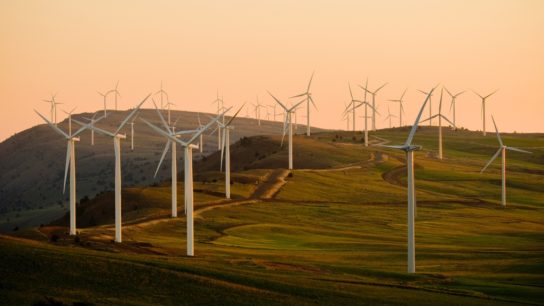


Power plants are responsible for a quarter of the country’s greenhouse gas emissions, making it the second-largest source of greenhouse gases behind vehicles.
—

On the heels of the hottest summer ever recorded in the US, the Trump administration has announced it is repealing emissions standards for coal and gas power plants, which are among the largest sources of planet-warming greenhouse gases in the country.
The Environmental Protection Agency (EPA) under Administrator Lee Zeldin is stripping itself of its ability to regulate pollution from power plants under the Clean Air Act, a move that will also limit future adminitrations from curbing this kind of pollution.
Power plants are responsible for a quarter of the country’s greenhouse gas emissions, making it the second-largest source of greenhouse gases behind vehicles. The Trump administration had already eliminated emissions standards for vehicles earlier this year when it revoked the endangerment finding, the legal underpinning for federal regulation of greenhouse gas emissions. The administration is currently facing legal action over the repeal.

In announcing the move, the EPA falsely claimed that power plants “have no material impact on global climate change.” Zeldin had previously said that greenhouse gas emissions from fossil energy production do not “contribute significantly to air pollution,” and claimed to be “driving a dagger straight into the heart of the climate change religion.”
But decades of scientific consensus affirms that climate change is real and it is driven primarily by human-caused emissions. Globally, these emissions come primarily from the burning of coal, natural gas, and oil for electricity and heat. Coal, the dirtiest fossil fuel, is the single-largest source of fossil fuel carbon emissions (40%), responsible for over 0.3C of the 1.2C increase in global average temperatures since the Industrial Revolution, and a major contributor to air pollution.
Nations worldwide, are turning away from coal for more cost-effective energy sources like gas and renewables. In the US, however, Trump has worked tirelessly to revive the dying industry and allow some older coal-fired power plants scheduled for retirement to keep producing electricity. Without the Biden-era rules regulating power plant emissions, doing so will be much easier.
While global fossil fuel consumption has more than doubled in the last 50 years, as countries around the world aim to improve their standards of living and economic output, scientists have long warned that curbing fossil fuel extraction and consumption is the only way to halt global warming and secure a liveable future. The International Energy Agency (IEA) has urged countries to halt new gas and oil field projects, arguing that this is the only way to keep the 1.5C-compatible net-zero emissions scenario alive.
Not the First Time
In February, the EPA finalized the repeal of the Biden-era amendments to the Mercury and Air Toxics Standards, effectively allowing coal-fired power plants to emit more brain-damaging mercury and other harmful heavy metals such as nickel, arsenic, and lead. The agency also revoked a requirement for power plants to have systems in place to monitor the amount of pollution they emit in accordance with air pollution standards.
The standards, first issued in 2012 by the Obama administration, were strengthened and updated by the Biden administration in April 2024 to reflect the latest advancements in pollution control technologies. Mercury and the other heavy metals targeted by the regulation are highly toxic and dangerous to human health, capable of causing severe damage to the nervous, digestive, and immune systems, as well as the lungs and kidneys. They are also responsible for extensive environmental damage, poisoning fish and wildlife as they deposit in soil and water.
Featured image: Tony Webster via Wikimedia Commons.
This story is funded by readers like you
Our non-profit newsroom provides climate coverage free of charge and advertising. Your one-off or monthly donations play a crucial role in supporting our operations, expanding our reach, and maintaining our editorial independence.
About EO | Mission Statement | Impact & Reach | Write for us