

US Secretary of State Marco Rubio described the organizations as “anti-American, useless, or wasteful,” adding that review of other organizations is still ongoing.
—
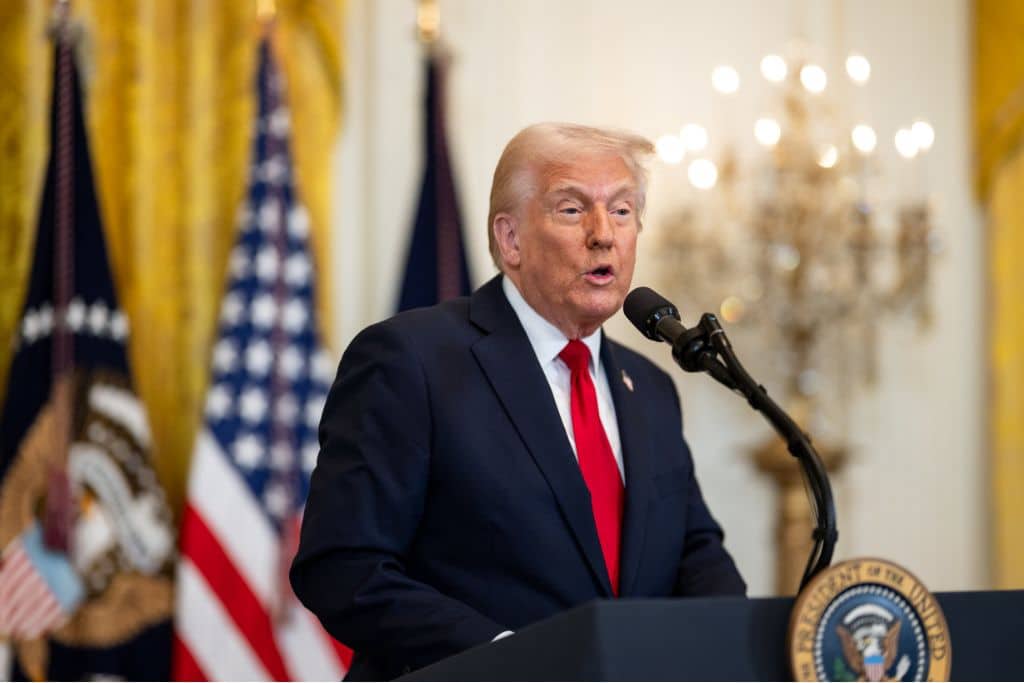
The US is withdrawing from dozens of international bodies, conventions and treaties, including key climate treaties, that are “contrary to the interests” of the country, President Donald Trump announced on Wednesday.
The list comprises 66 organizations – 35 non-United Nations organizations and 31 United Nations organizations – many of which conduct pivotal work on climate change. These include the Intergovernmental Panel on Climate Change, the world’s most authoritative scientific body on climate change, the International Union for Conservation of Nature, the global authority providing technical and policy advice to drive conservation, and the UN Framework Convention on Climate Change (UFCCC), the primary global treaty for coordinating international climate action.
It is the latest effort by the Trump administration to distance the US from international organizations addressing climate change.
Full list of organizations from which the US is withdrawing (click to view)
Non-United Nations Organizations
- 24/7 Carbon-Free Energy Compact;
- Colombo Plan Council;
- Commission for Environmental Cooperation;
- Education Cannot Wait;
- European Centre of Excellence for Countering Hybrid Threats;
- Forum of European National Highway Research Laboratories;
- Freedom Online Coalition;
- Global Community Engagement and Resilience Fund;
- Global Counterterrorism Forum;
- Global Forum on Cyber Expertise;
- Global Forum on Migration and Development;
- Inter-American Institute for Global Change Research;
- Intergovernmental Forum on Mining, Minerals, Metals, and Sustainable Development;
- Intergovernmental Panel on Climate Change;
- Intergovernmental Science-Policy Platform on Biodiversity and Ecosystem Services;
- International Centre for the Study of the Preservation and Restoration of Cultural Property;
- International Cotton Advisory Committee;
- International Development Law Organization;
- International Energy Forum;
- International Federation of Arts Councils and Culture Agencies;
- International Institute for Democracy and Electoral Assistance;
- International Institute for Justice and the Rule of Law;
- International Lead and Zinc Study Group;
- International Renewable Energy Agency;
- International Solar Alliance;
- International Tropical Timber Organization;
- International Union for Conservation of Nature;
- Pan American Institute of Geography and History;
- Partnership for Atlantic Cooperation;
- Regional Cooperation Agreement on Combatting Piracy and Armed Robbery against Ships in Asia;
- Regional Cooperation Council;
- Renewable Energy Policy Network for the 21st Century;
- Science and Technology Center in Ukraine;
- Secretariat of the Pacific Regional Environment Programme; and
- Venice Commission of the Council of Europe.
United Nations (UN) Organizations
- Department of Economic and Social Affairs;
- UN Economic and Social Council (ECOSOC) — Economic Commission for Africa;
- ECOSOC — Economic Commission for Latin America and the Caribbean;
- ECOSOC — Economic and Social Commission for Asia and the Pacific;
- ECOSOC — Economic and Social Commission for Western Asia;
- International Law Commission;
- International Residual Mechanism for Criminal Tribunals;
- International Trade Centre;
- Office of the Special Adviser on Africa;
- Office of the Special Representative of the Secretary General for Children in Armed Conflict;
- Office of the Special Representative of the Secretary-General on Sexual Violence in Conflict;
- Office of the Special Representative of the Secretary-General on Violence Against Children;
- Peacebuilding Commission;
- Peacebuilding Fund;
- Permanent Forum on People of African Descent;
- UN Alliance of Civilizations;
- UN Collaborative Programme on Reducing Emissions from Deforestation and Forest Degradation in Developing Countries;
- UN Conference on Trade and Development;
- UN Democracy Fund;
- UN Energy;
- UN Entity for Gender Equality and the Empowerment of Women;
- UN Framework Convention on Climate Change;
- UN Human Settlements Programme;
- UN Institute for Training and Research;
- UN Oceans;
- UN Population Fund;
- UN Register of Conventional Arms;
- UN System Chief Executives Board for Coordination;
- UN System Staff College;
- UN Water
- UN University
Established in 1992, the UNFCCC serves as the international structure for efforts to slow down climate change, providing the foundations for key treaties including the Paris Agreement, from which Trump has twice withdrawn. It is one of the most widely subscribed international treaties, with 197 States and the European Union having ratified it.
Pulling out of the UNFCCC (the US is the first and only nation to ever do so) is “a strategic blunder that gives away American advantage for nothing in return,” David Widawsky, Director of the World Resources Institute US, said in a statement. “The 30-year-old agreement is the foundation of international climate cooperation. Walking away doesn’t just put America on the sidelines – it takes the US out of the arena entirely.”
Trump said “it is contrary to the interests of the United States to remain a member of, participate in, or otherwise provide support to” these organizations, and instructed all executive departments and agencies “to take immediate steps to effectuate the withdrawal … as soon as possible.” He has used the same argument to justified previous withdrawals from international bodies including the World Health Organization, the UN Relief and Works Agency for Palestine Refugees, known as UNRWA, the UN Human Rights Council and UNESCO.
Secretary of State Marco Rubio described the organizations as “anti-American, useless, or wasteful,” adding that review of other organizations is still ongoing. “We will stop subsidizing globalist bureaucrats who act against our interests,” he said in a social media post.
‘New Low’
Several international organizations have expressed shock and anger at the move. Rachel Cleetus, Policy Director and Lead Economist for the Climate and Energy Program at the Union of Concerned Scientists, called it a “new low” and “another sign that this authoritarian, anti-science administration is determined to sacrifice people’s well-being and destabilize global cooperation.” Gina McCarthy, the White House climate adviser during the Biden administration, described the decision as “shortsighted, embarrassing, and foolish.”
While hurting the US, Widawsky remains optimistic that “global climate diplomacy will not falter.”
“Other nations understand the UNFCCC’s irreplaceable role in driving cooperation and advancing climate solutions the world urgently needs. When countries work together on climate, it saves lives, creates jobs, strengthens economic stability, and builds a more prosperous future,” he said.
Featured image: The White House/Flickr.
This story is funded by readers like you
Our non-profit newsroom provides climate coverage free of charge and advertising. Your one-off or monthly donations play a crucial role in supporting our operations, expanding our reach, and maintaining our editorial independence.
About EO | Mission Statement | Impact & Reach | Write for us