

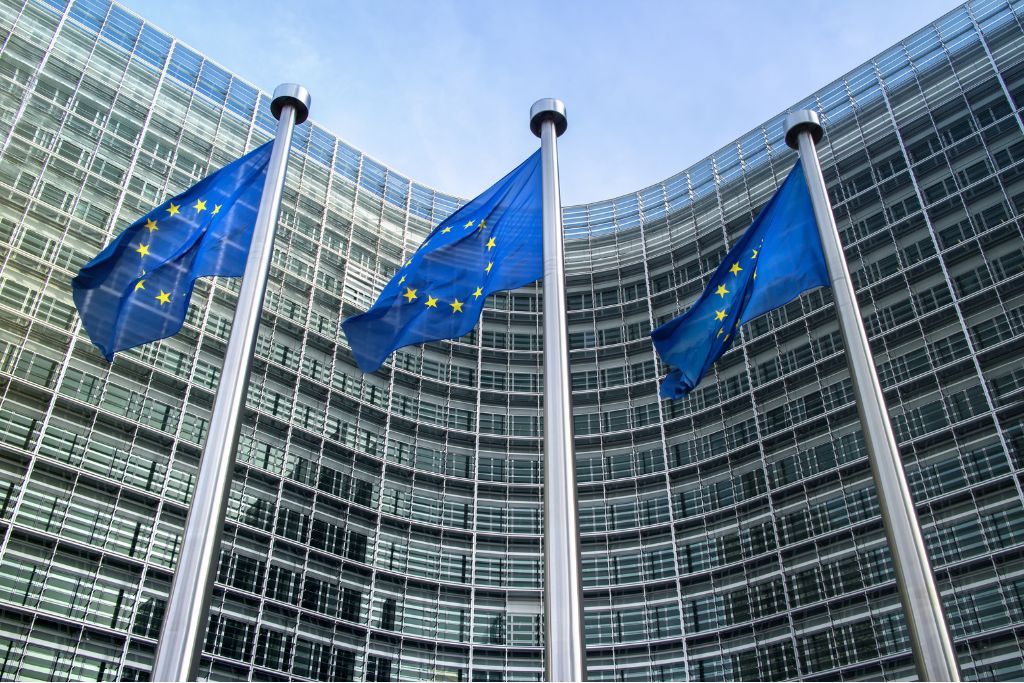
EU climate ministers approved a compromise to cut emissions 90% by 2040 from 1990 levels, albeit with some flexibilities that green groups have called “disappointing”.
—
The European Union managed to strike a last-minute deal for a 2040 emissions reduction target amid mounting pressure to submit a plan ahead of next week’s COP30 climate summit.
EU climate ministers compromised on a 90% emissions reduction target by 2040 from 1990 levels – the bare minimum recommended by scientists for mitigating climate risks and to achieve the objectives of the Paris Agreement. The bloc had already pledged to cut net emissions by 55% by 2030 compared with 1990 levels and to achieve carbon neutrality by mid-century.
But green groups have called the deal, which concludes more than 20 months of negotiations, a “disappointment”. Indeed, while the 90% reduction remains, only 85% of these reductions will be domestic. For the remaining 5%, the EU will rely on international offsets.
“This would divert resources away from domestic decarbonisation and undermine the integrity of the EU’s transition,” Climate Action Network Europe, an NGO coalition with 200 member organizations, said in a statement.
More on COP30 from Earth.Org (click to view)
News
- Did COP30 Succeed or Fail?
- COP30 Week 2: Recap
- COP30 Week 1: Recap
- Reactions Pour in After Weak COP30 Agreement
- No Mention of Planet-Warming Fossil Fuels in COP30 Agreement
- Misinformation Becomes a Political Weapon Over Fire at COP30
- Business Coalition at COP30 Urges Transition Away From Fossil Fuels
- 83 Countries Join Call to End Fossil Fuels at COP30
- ‘People’s COP’ Marked By Civil Society Protests and Direct Action Events
- American States, Institutions Scramble to Fill Gap Left by US Absence at COP30
- Disability Activists Seek Official Recognition at COP30
- Brazilian Government Announces Ordinances to Recognize 10 Indigenous Lands
- Six Countries Pledge $58.5 Million to Adaptation Fund As UN Warns of $310 Billion Deficit
- Pope Leo Upholds Environmental Legacy of ‘Green’ Pope Francis, Urging Concrete Action on Climate at COP30
- Brazil to Demarcate Indigenous Territories Following Munduruku Protest at COP30
- COP30 Launches Global Declaration to Combat Climate Misinformation, Fake News
- Brazilian Government Seeks to Advance Discussion on Ending Fossil Fuels at COP30
- COP30: Fossil Fuel Lobbyists Outnumber Every Country Delegation Except Brazil
- COP30: Brazilian Government Puts Owners of the World’s Largest Beef Producer on ‘VIP List’
- Despite Record Turnout, Only 14% of Indigenous Brazilians Are Expected to Access Decision-Making Spaces at COP30
- Countries’ Climate Pledges Put World on Track for 12% Reduction in Emissions, UN Says
- Current National Climate Pledges Fall Far Short of What Is Needed to Limit Warming to 1.5C, Report Shows
Explainers
- COP30 Glossary: What You Need to Know About This Year’s UN Climate Summit in Brazil
- COP30 Volunteers Make World’s Biggest Climate Event Possible
- Navigating COP: A Deep Dive into the UN Climate Conference Process
- Oceans at COP30: Moving Beyond Pledges to Build an Architecture for Change
- Climate Adaptation at COP30: What to Expect
- Climate Finance at COP30: What to Expect
- Explainer: Why Gender Will Be High on the Agenda at COP30
- COP30 Volunteers Make World’s Biggest Climate Event Possible
- COP30 Youth ‘Go Bananas’ for Nuclear
Opinion
- Why COP30’s Success Depends on Comprehensive Food System Action
- Why COP30 Needs Indigenous Voices
- At COP30, Wealthy Nations Must Close the Adaptation Gap – My Home of Bangladesh Depends on It
Pre-COP30
- US Will Not Send High-Level Representatives to COP30, White House Says
- EU Agrees on Weakened Emissions Reduction Target Ahead of COP30
- 40 Elite Athletes Call for Urgent Adaptation Finance at COP30 Amid Climate Threat
- UN Climate Chief Urges Countries to Step Up Climate Action, Finance Ahead of COP30
- COP30 Host Brazil Calls For Bold National Emissions Reduction Plans Ahead of September Deadline
- COP30 Presidency Calls For Initiatives to Promote Information Integrity Amid Rampant Climate Disinformation
- Local Leaders to Tackle Climate Issues in Brazil Prior to COP30
- UN Climate Chief Says Energy Transition ‘Unstoppable’ Despite US Exit From Paris Accord, Urges Countries to Deliver on Climate Finance at COP30
Countries including France and Portugal had pushed for the 5% carbon credits flexibility, while Poland, Italy and others sought 10%, Bloomberg reported. This is despite scientists a report by European Scientific Advisory Board on Climate Change noting earlier this year that offsets should not be used to achieve domestic target.
The text approved on Wednesday also mentions a potential review of the overall 2040 target if land carbon sinks – like forests and peatlands – underperform. In other words, it allows for the overarching climate target to be adjusted in case carbon sequestration from these natural ecosystems does not meet expectations.
According to WWF EU, this gives member states “a get-out-of-jail free card to lower the target if they don’t do enough to protect their natural carbon sinks.”
“Member States are claiming they have agreed on a 90% target, but that’s just sleight of hand. Once you strip off the offsets and the potential emergency break for carbon sinks, the real figure will be lower than 85%. The EU should lead by example, not by loophole,” said Michael Sicaud-Clyet, Climate Policy Officer at WWF EU.
Off Track
Virtually every country on Earth adopted a global warming target a decade ago by signing the Paris Agreement, which set out a framework for limiting global warming to below 1.5C or “well below” 2C above pre-industrial levels by the end of the century. Beyond this limit, experts warn that critical tipping points will be breached, leading to devastating and potentially irreversible consequences for several vital Earth systems that sustain a hospitable planet.
So far, they have not been able to keep to that promise. Current global emissions pledges putting the world on track for a temperature increase of 2.6-3.1C over the course of this century.
Less than 70 countries have submitted their updated climate plans for 2035 under the Paris Agreement, known as Nationally Determined Contributions, ahead of COP30. Collectively, they represent just one-third of global emissions, and put the world on track to slash emissions by 17% below 2019 levels by 2035, the UN said last week.
Scientists say that staying within a 1.5C warming limit will require a reduction of global greenhouse gas emissions of approximately 43% by 2030 compared to 2019 levels, peaking no later than 2025.
This story is funded by readers like you
Our non-profit newsroom provides climate coverage free of charge and advertising. Your one-off or monthly donations play a crucial role in supporting our operations, expanding our reach, and maintaining our editorial independence.
About EO | Mission Statement | Impact & Reach | Write for us