



Renewable energy deployment is accelerating, integration challenges are becoming central, and collaboration across governments, utilities, and industry is deepening. But how far has this progress taken us, what comes next, and what will determine whether current momentum is enough?
—
As we scale the walls of new technology development and its embedded energy demands, the extent of clean energy adopted is going to play a key role in determining the rate at which we are able to achieve our goals for a truly sustainable future.
The International Energy Agency’s (IEA) Renewables 2025 report tells a story of both momentum and missed potential. Around the world, renewables are being deployed faster than ever, reshaping electricity systems, transport, heating, and fuel supply chains. Adoption is fast, resilient, and consumer-driven. Solar panels are taking over rooftops and deserts, electric vehicles are becoming mainstream, and new clean fuels are beginning to reach planes, factories, and gas grids. But a key caveat that the report repeatedly emphasizes is that even with this rapid progress, the world is not yet moving just fast enough to meet the COP28 commitment to triple renewable capacity by 2030.
With large-scale developmental growth in renewable energy happening in different parts of the world, the report looks at where this growth is accelerating, where it is stalling, and, crucially, what is driving real-world deployment today.

Current Affairs
Global renewable electricity capacity is projected to grow 2.6 times its 2022 level by 2030, roughly doubling the pace of 2019-2024.
Solar PV heavily dominates the expansion, accounting for almost 80% of new additions, with distributed solar contributing about 42% of growth from households, commercial buildings, and industrial rooftops. Wind and hydropower are also expanding. Offshore wind is expected to add some 140 GW and pumped-storage hydropower is set to double to 16.5 GW, supporting system flexibility and grid reliability. Overall, renewables are projected to meet more than 90% of electricity demand growth and surpass coal as the world’s largest electricity source by 2025-2026.

But amid the growth, there are signs of constraints. Forecasts were revised down around 5% compared with last year due to permitting delays, supply chain bottlenecks, and policy uncertainties, particularly in the US and parts of Africa. Meanwhile, regions like China, India, and the Middle East and North Africa saw upward revisions thanks to strong auction pipelines, industrial solar uptake, and fast project deployment. Even with this record expansion, global capacity will fall short of the COP28 “tripling” pledge, demonstrating just how important decisions on further policy measures, grid upgrades, and investment are in order to align with 2030 climate targets.
While the rapid growth in renewable electricity generation in 2025 was a global phenomenon, with national and global policy measures and partnerships paving the way, there were a notable few events that drove significant change.
First, China’s transition to competitive renewable auctions and pricing reforms has driven down power costs and bolstered investor confidence, leading to record solar and wind deployment. In early 2025, China added an extraordinary 240 GW of new solar capacity alone, the largest volume by any country in a single year.
Second, corporate clean energy procurement is surging, driven by a speedy growth in artificial intelligence (AI), with energy-hungry data center operators and technology giants such as Microsoft, Amazon, and Google collectively contracting tens of gigawatts of renewable power through long-term power purchase agreements (PPAs) as part of broader commitments to decarbonize electricity demand and support their high-energy workloads.
More on the topic: Google Turns to Nuclear to Power Energy-Hungry Data Centers
Third, large-scale financing from public and private sources continues to shape deployment economics at scale. Global investment in renewable power and fuels hit record levels in 2024-25, with over $386 billion invested in the first half of 2025 alone. Finally, ongoing technological cost declines, particularly in solar photovoltaics and battery storage, are reinforcing renewables’ competitive edge over fossil fuels, with analyses showing that a large majority of new renewable projects are now cheaper than comparable fossil alternatives.
Sustainable Fuel
Renewable energy in transport is projected to grow by around 50% by 2030, with electric vehicles (EVs) powered by renewable electricity driving roughly 45% of that increase. Biofuels contribute around 35%, particularly in Brazil, India, and Indonesia, while sustainable aviation fuel (SAF) is expected to grow from one billion litres in 2024 to nine billion litres by 2030. Passenger EV adoption is scaling rapidly, supported by declining battery costs and expanding charging infrastructure, but shipping and aviation remain harder to decarbonize, with renewable penetration still limited.
The report notes strong regional differences. China, Europe, and the US are driving EV adoption through policy incentives, subsidies, and high-capacity charging networks. Biofuel growth continues in regions with binding blending mandates and domestic energy security priorities. SAF expansion remains constrained by production costs, limited facilities, and early-stage supply chains, though pilot projects and off-take agreements are beginning to provide market signals for investors.
Several commercial and policy developments are driving the growth of renewable energy in transport, with the strength of these developments vested in coordinated efforts. In aviation, the EU’s ReFuelEU Aviation mandate required airlines to use 2% sustainable aviation fuel in 2025, increasing to 6% by 2030. The policy provides clear long-term demand signals for producers and encourages investment in new SAF facilities. Japan, India and the UK have also introduced biofuel and SAF blending targets and incentives.
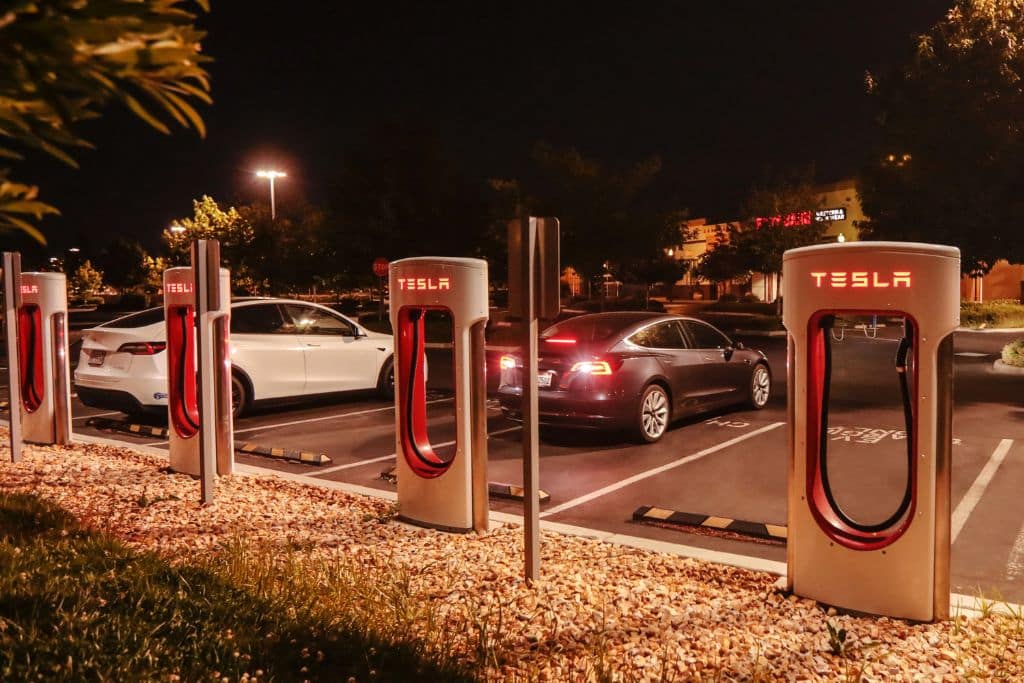
Electric vehicle adoption is accelerating thanks to expanded charging infrastructure and supportive policies. In China, the number of EV charging points exceeded 19.32 million by the end of November, up 52% year‑on‑year, including about 4.63 million public points and 14.7 million private points. The government’s three‑year plan aims to grow the network to 28 million charging points by 2027, helping reduce range anxiety and support both consumer EV use and commercial fleet electrification.
Firing It Up
Renewable heat, which accounted for only 14% of global heat consumption in 2024, is projected to grow by over 40% by 2030, driven by heat pumps, renewable electricity, and bioenergy. Heat pumps account for nearly half of the increase in buildings, while industry relies on bioenergy, though electrification is expected to account for most new growth. Fossil fuels will continue to supply a significant share of heat, and heat-related CO2 emissions are projected to rise modestly without deeper efficiency and decarbonization measures.
Growth is concentrated in regions with supportive policy and infrastructure. China, the EU, and the US are scaling heat pumps through building retrofit programs, while solar thermal contributes for domestic hot water and low-temperature industrial heat. Industrial electrification and biomass adoption for process heat are critical for decarbonizing hard-to-electrify sectors, particularly in manufacturing, food, and chemical industries.
In the EU, the Heat Pump Accelerator Platform, launched in January 2025, coordinates industry, policymakers, and utilities to speed up heat pump deployment, while the Innovation Fund committed over 1 billion euro (US$1.17 billion) to industrial clean heat projects using heat pumps, solar thermal, and bioenergy. In China, the Heat Pump Action Plan and provincial subsidies are expanding deployment in buildings and industry, supported by coal boiler phase-outs that create commercial opportunities for heat pump manufacturers. In India, biomass and waste are increasingly used, and are set to keep growing owing to a very strong adoption push in the small, medium and micro enterprise sector from the Indian government, for industrial process heat in sectors such as sugar and ethanol.
From Trash to Power
Biogas and biomethane production is expected to expand 22-23% by 2030, with biomethane increasingly used in electricity, heat, and transport. The US leads global production, primarily for renewable natural gas (RNG) in transport and industrial use, while Europe scales biomethane for grid injection and industry. China and India are expanding production from smaller bases. While smaller than electricity, biogases are among the fastest-growing renewable energy forms, providing decarbonization options for hard-to-electrify sectors.
Growth reflects both emerging markets and evolving infrastructure. Europe is building biomethane upgrading plants and integrating agriculture and waste feedstocks, while in the US, RNG is increasingly used in heavy-duty transport fleets. Asia is beginning to scale industrial biogas projects, laying the groundwork for commercial deployment beyond small-scale farm digesters.
Renewable gas growth is driven not only by regional production to stabilize growth in local renewable natural gas use but also because of uncertainty in the global supply chain as geopolitical tensions rise. In the US, federal tax credits for renewable natural gas and credits under the Low Carbon Fuel Standard (LCFS) are encouraging investment in production facilities and the transport fuel supply chain, making RNG projects more financially viable. In Europe, Biogas-to-Grid partnerships are linking public funding with private developers to expand injection of upgraded biogas into natural gas grids, supporting both energy transition goals and commercial returns.
Outlook
Global renewable energy development has come a long way in 2025, but there is much further to go for countries to achieve internationally pledged 2030 and 2050 goals, along with charting national plans for policy implementation to advance the renewable energy industry.
As it becomes clearer that global technological advancements remain fueled by private and government funding, navigating through policy bottlenecks in mandating standards, grid-integration and distributed generation for growing capacity, and global collaboration to increase financial flows to amplify technology adoption in industry now holds paramount importance to shape what the next step is going to be.
This story is funded by readers like you
Our non-profit newsroom provides climate coverage free of charge and advertising. Your one-off or monthly donations play a crucial role in supporting our operations, expanding our reach, and maintaining our editorial independence.
About EO | Mission Statement | Impact & Reach | Write for us