

As climate impacts worsen and the Nile Basin’s population heads toward one billion by 2050, the power struggle over the world’s longest river has reached a critical turning point. The full operation of Ethiopia’s Grand Ethiopian Renaissance Dam has shattered Egypt’s historic water hegemony, transforming a regional resource dispute into a high-stakes geopolitical battle over sovereignty, security, and sustainable development.
—

By Robin Waas
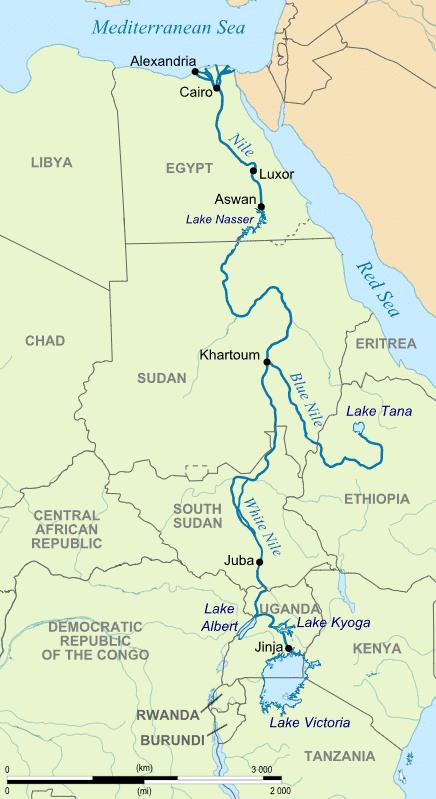
The Nile Basin has a population of 257 million people, while as many as 506 million depend on it directly for water, food, and energy. It is also the site of a persistent geopolitical dispute between Ethiopia’s assertive sustainable development agenda and Egypt’s historic dominance over the Nile’s resources – an expanding conflict that is fundamentally altering the region’s water politics. As climate impacts intensify and the region’s population is projected to surpass 1 billion by 2050, addressing this power struggle and preventing the inequitable distribution of the Nile’s resources is more urgent than ever.
Failure to do so will be “felt acutely in all economic, environmental, and social systems,” according to the Nile Basin Initiative (NBI), a regional intergovernmental partnership launched by the water ministers of the Nile riparian countries. The European Parliament echoes this sentiment, warning that rather than viewing sustainable development as a response to global challenges, governments may begin pursuing sustainability based on their own national threat assessments. The “nationalization of sustainability” may therefore be detrimental to global sustainability outcomes, transforming sustainable development into a geopolitical weapon.
Ethiopia’s Rise
Ethiopia, one of 11 Nile Basin riparian states, is one of the world’s most drought-prone countries and highly vulnerable to climate shocks. Demonstrating its commitment to addressing the multifaceted impacts of climate change, the country completed the 5,150-megawatt, $5 billion Grand Ethiopian Renaissance Dam (GERD) in 2025 – a mega-project that reflects Ethiopia’s desire to lead in sustainable energy development.
Beyond addressing domestic needs, Ethiopia also exports electricity generated by the GERD to Kenya, Djibouti, Sudan, and, more recently, to Tanzania. Prior to its completion, Ethiopia’s electricity export revenues had been growing steadily, from $50 million in 2018 to $101.2 million in 2022. Last month, state-owned Ethiopian Electric Power reported a surge in electricity export revenue to $475.7 million.
Full GERD operations are estimated to increase Ethiopia’s GDP by 2.1% to 3.5% annually and generate roughly $1.2 billion in yearly electricity exports under optimal infrastructural and climatic conditions, which Ethiopia might be able to realize as soon as 10 years from now.
Ethiopia is swiftly establishing itself as a major energy hub in Africa, gaining “certain political bargaining power,” according to Tsegay Tekleselassie, an economist at Wellesley College in Boston. For example, the nation agreed to sell substantial quantities of renewable electricity to Kenya over 25 years, reaching more than 10% of Kenya’s current electricity production capacity. Ethiopian Prime Minister Abiy Ahmed himself has described the GERD as “not merely a hydroelectric project but also a symbol of Ethiopia’s renewed sovereignty and progress, demonstrating the nation’s ability to harness its own natural resources and transform them into lasting development.” For Ethiopia, sustainable development is now directly linked to regional power.
Historic Tensions
The benefits of the GERD extend far beyond Ethiopia. In 2018, researchers calculated that all Eastern Nile countries’ economies would benefit substantially from the GERD’s operation under transboundary cooperation, though those benefits would primarily favor Ethiopia.
Even so, the dam’s operation has faced major regional contention, and “the current level of cooperation is still fragile,” according to the NBI. Although most Nile riparian states now seek sustainable socio-economic development through fair use and shared benefits from Nile Basin water resources, the 1959 Nile Waters Agreement remains the primary international legal framework accepted by Egypt and Sudan for governing their use of Nile waters. Under this agreement, Egypt was allocated 55.5 billion cubic meters and Sudan 18.5 billion cubic meters of the river’s total estimated annual flow of 84 billion cubic meters – accounting for 10 billion cubic meters lost to evaporation and excluding upstream states from formal allocations.
Ethiopia and other upstream countries are increasingly challenging these historic allocations and the colonial distribution of power, instead advocating for the principle of equitable and reasonable use – a concept widely recognized in international water law since the 1997 UN Watercourses Convention.
Tensions escalated when Ethiopia initially announced plans to build the GERD in 2011, prompting negotiations over how to manage it. In 2015, Egypt, Sudan, and Ethiopia signed a Declaration of Principles in Khartoum, where Ethiopia pledged not to inflict “significant harm” on downstream countries. The interpretation of this phrase, however, remains contentious: Egypt views any deficit in its water allocation under the 1959 Nile Waters Agreement as “significant harm,” whereas Ethiopia has never accepted that agreement and therefore does not consider a reduction in Egypt’s water share inherently harmful.
Still, the project proceeded and was ultimately inaugurated in September 2025, a move that Egyptian Foreign Minister Badr Abdelatty deemed “illegal.” He stated on Egypt’s Al-Qahera News that “the Nile River is an international transboundary river, and Ethiopia’s actions regarding the dam violate international law and are not in accordance with its principles.”
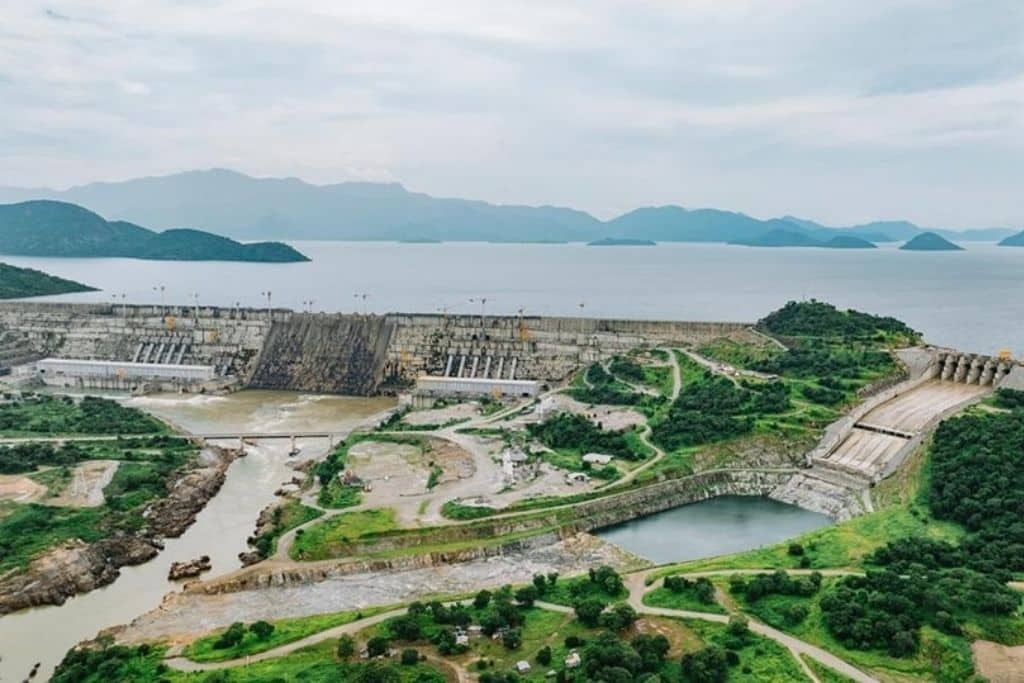
On the dam’s inauguration day, he also wrote to the United Nations Security Council, urging international intervention for Ethiopia to “cease its unlawful unilateral practices in the Nile Basin.” Egypt maintains that the dam constitutes “an existential threat to the rights and interests of the 150 million citizens of the downstream countries, Egypt and Sudan, and consequently jeopardizes regional and international peace and security.” In the same letter, Egypt warned that it would use “its right to take all appropriate measures to defend and protect the existential interests of the Egyptian people” if its concerns were not addressed.
Egypt’s Vulnerability
The same development that increases Ethiopia’s capacity to shape the flow of the Nile, giving it greater economic and political leverage, leaves Egypt with fewer options. Situated downstream of the GERD, Egypt is one of the world’s most arid nations, receiving as little as 15.6 millimeters of rainfall annually. Agriculture accounts for 16.6% of its GDP, while 97% of its population resides in the Nile River Delta. In contrast, Ethiopia receives up to 986 millimeters of rain annually.
Consequently, Egypt depends on the Nile River for 88% of its water needs, making any significant decrease in the Nile’s flow a threat to Egypt’s stability. “Any decrease in Egypt’s water share will lead to a decline in agricultural production, causing huge losses for farmers,” Haj Hussein Abdul Rahman Abu Saddam, a farmer and head of the Egyptian General Farmers’ Syndicate, warned in an interview with Mongabay. “This may lead to more destruction and desertification of agricultural lands, negatively affecting the country’s food security. It will contribute to the decline of agricultural exports.”
To date, there have been no major disruptions to downstream flows due to the GERD’s operation, although Ethiopia confirmed it could reduce annual downstream flows by 8-20 billion cubic meters under full operation, cutting Egypt’s direct water supply by 13% to 32%. Studies also suggest that negative impacts on ecosystems, including the loss of aquatic biodiversity due to changes in water temperature, oxygen levels, and salinity, may propagate downstream.
Adding to the urgency, Egypt’s formal share of 55.5 billion cubic meters of water from the Nile already falls short of demand by 33.75 billion cubic meters, pushing the country toward the extreme water-scarcity threshold of 500 cubic meters per person annually, which it is expected to reach by 2033. With per capita water availability at roughly 570 cubic meters – well below the international standard of 1000 cubic meters – the World Bank recognizes Egypt as a water-scarce country, and the French Institute for International and Strategic Affairs (IRIS) describes it as being in a state of “hyper-dependence” on Nile waters.
By 2050, Egypt is projected to see temperatures rise by 1.8C to 2.9C and rainfall decrease by 5% to 10%. Such changes will intensify aridity and deepen Egypt’s reliance on the Nile to sustain agriculture. This outlook, combined with an increasingly unreliable Nile flow due to the GERD, has already led the Egyptian government to invest billions to address a potential water crisis.
From Political Strain to Military Aggression
After years of failed diplomatic efforts involving the United States and the African Union in mediating roles – which led the United States in 2020 to withhold around $100 million in aid to Ethiopia – talks stalled over the degree of legal enforceability of new agreements and the dam’s management during prolonged droughts. Tsedale Lemma, Editor-in-Chief of the independent Ethiopian publication Addis Standard, noted that Ethiopia fears binding rules governing the GERD could turn into “a de facto permanent allocation treaty” of Nile waters, restricting future hydropower projects.
The political landscapes in Ethiopia and Egypt also leave little room for compromise. Egyptian President Abdel Fattah el-Sisi already faced heavy backlash for mishandling another international dispute with Saudi Arabia, particularly after ceding the islands of Tiran and Sanafir to Saudi Arabia in June 2017. Egyptian military officials condemned the move as a betrayal of Egypt’s territorial claims. Meanwhile, in Ethiopia, around 91% of the GERD’s funding came from the state budget, supplemented by bond sales and voluntary contributions from citizens and communities. This widespread public involvement turned the dam into a symbol of national unity, which became deeply associated with Prime Minister Abiy Ahmed’s popularity.
Egypt’s historic water claims are even codified in Article 44 of its 2014 constitution, which states that “the state commits to protecting the Nile River, maintaining Egypt’s historic rights thereto, rationalizing and maximizing its benefits, and preventing its waste or pollution.” The Nile River is part of Egypt’s national identity. Recent research suggests this widens the gap between the two countries’ societies and foreign policies on the matter, sustaining the geopolitical conflict.
In that vein, Egypt has forged military alliances with Ethiopia’s neighbors, including Eritrea and Somalia in 2023, in an effort to isolate Ethiopia, thereby escalating the situation into a dangerous regional crisis. Former Egyptian diplomat Mohammed Hegazi remarked that “the current situation in the Horn of Africa has created new conditions in which the issue of the dam, while still a central one, is linked to a broader and more important geostrategic situation.” Michael Hanna of the International Crisis Group added that Egypt is leveraging its military strength to pressure Ethiopia and “wants an Ethiopia that either enters an agreement on the dam, collapses internally or suffers a meltdown.”
Ethiopia is bolstering air defenses around the GERD with Russian-made Pantsir systems, Israeli SPYDER surface-to-air missiles, and Ukrainian ST-68UM radar equipment. Although Egypt has not formally announced intentions to strike the dam, a 2013 leak from the Egyptian parliament revealed that some Egyptian politicians advocated bombing the GERD and supporting rebel factions to destabilize Ethiopia – calls that were condemned by both Sudan and Ethiopia.
Egypt’s Trade-Off
This expanding geopolitical clash shows how sustainable development projects may not always be politically neutral and have far-reaching consequences. The Netherlands-based Clingendael Institute, a diplomatic academy focused on international affairs, acknowledges that militaries worldwide are increasingly linked to international disputes over climate change, but also highlights the disproportionately high emissions associated with military equipment. In this case, environmental costs of widespread military action may harm both Egypt and Ethiopia more than it benefits them, accelerating climate impacts and driving climate adaptation investments.
Moreover, as a water-scarce country facing substantial supply gaps, Egypt relies heavily on “virtual water” – water that is captured in water-intensive products such as agriculture, and subsequently imported into the country – to compensate for domestic shortfalls. Opposing upstream development risks undermining the regional economic welfare and political order that supports this trade. In effect, Egypt needs a Nile Basin free of conflict.
In March 2026, Ethiopia announced its intention to build three additional hydropower projects with a combined generating capacity of about 5,700 megawatts and an estimated total cost of $10.5 billion, pushing Egypt to review its stance. Amid a gradually declining role in Africa, Egypt now faces a pivotal trade-off between defending its historic water use and control over the Nile and adapting to a multipolar regime of equitable and reasonable water sharing.
Featured image: NASA Johnson via Flickr.
This story is funded by readers like you
Our non-profit newsroom provides climate coverage free of charge and advertising. Your one-off or monthly donations play a crucial role in supporting our operations, expanding our reach, and maintaining our editorial independence.
About EO | Mission Statement | Impact & Reach | Write for us