
Sign Up
  • Earth.Org Newsletters

    Sign up to our weekly and monthly, easy-to-digest recap of climate news from around the world.

  • This field is for validation purposes and should be left unchanged.
Earth.Org PAST · PRESENT · FUTURE
Environmental News, Data Analysis, Research & Policy Solutions. Read Our Mission Statement

Would Hongkongers entertain the idea of a bike-friendly Hong Kong? A couple of years ago, one writer opined that it would be “unlikely.” This is not an unjustified conclusion given that Hong Kong’s narrow roads and congested car lanes leave little space for bike lanes. Added to that, cyclists would have to navigate through hazardous traffic while inhaling exhaust fumes. Furthermore, the convenience and efficiency of Hong Kong’s public transport system make the prospect of biking less appealing. In part two of our two-part series on Hong Kong’s bike-friendliness, Curtis Lam takes a look at the legitimacy of concerns over promoting the use of bicycles and explores how well Hong Kong is positioned to alleviate them.

Bike-friendliness refers to practices, policies, infrastructures and cultures that promote safe and effective cycling as a mode of daily transportation. It focuses on the overall traffic conditions, facilities, networks and systems that allow cyclists to commute safely alongside other forms of transportation like cars, buses, trams, and trucks.

Since Covid-19, governments have been rethinking their approaches to urban design. Consequently, about 400 cities, states and countries have reallocated spaces for people to cycle and walk more easily, efficiently and safely. Today, this shift is still happening. This is largely due to the realisation of well-evidenced benefits of bike-friendliness for cities, the nature of which can be broadly divided into four different categories: Health benefits, ecological benefits, spatial and mobility benefits, and finally, economic benefits.

Despite the overwhelming evidence supporting the case for bike-friendliness, there still appears to be reluctance to fully embrace its implications on Hong Kong’s roads. Ranking 84th out of 90 cities on “bike-friendliness”, it is clear that it is not really on the government’s agenda for Hong Kong to embrace cycling even as a legitimate mode of transportation. Of course, there are factors that are beyond its control (like weather) but that is arguably only a small part of the equation.

Hongkongers are probably just as uninterested in the idea of cycling becoming a mode of transport but this might not necessarily be due to doubts about the credibility or validity of the evidence on bike-friendliness (given continued interest in cycling as a recreational activity in Hong Kong) but rather reservations about the generalisability of such findings to Hong Kong. They may apply to Europe, the US and other parts of Asia, but will they apply here?

Fair or Not? Hong Kong’s Aversion Toward Bikes

A number of questions have been raised about the utility of bike-friendly infrastructures in Hong Kong. While they are not entirely wrong, it is important to examine carefully what the underlying concerns are and whether those concerns are immovable obstacles or inconveniences that can be remedied. Here, we will try to break down some myths surrounding the (in)feasibility of bike-friendliness in Hong Kong.

1. Hong Kong is too hilly for daily cycling

Most experts suggest that an uphill gradient acceptable for bicycle use should be below 3%. Yet, Hong Kong is known for its extremely mountainous topography. While that may be true, it is arguably only true to a certain extent.

The first (and more obvious) solution to that would be to incentivise the use of e-bikes. Taking up a significant share of the heavy work involved in cycling, e-bikes have been “game-changers” in various parts of Europe, particularly for “less sporty people” and “senior citizens”. Today, e-bikes are banned from most roads in Hong Kong, but with the Transport Department’s recent green light for e-bikes and e-scooters in two areas – Tseung Kwan O and Pak Shek Kok – it seems that the support for their use is growing, both in public and policy circles.

Mechanical elevation systems are another way forward and are used all over Europe and also in parts of South Korea and Japan, despite being notoriously expensive to construct and maintain. Given how much space they take up, there is also literally no room for them in Hong Kong. Despite this downside, they should not necessarily be ruled out if cycling indeed becomes popular in Hong Kong.

There is still at least one more option. In many hilly cities like Lisbon, Brussels, Madrid, and Berlin, apps have been developed to plan and calculate for cyclists the flattest routes possible and thus facilitate cyclists’ navigation experience. Such apps would be very relevant in Hong Kong, and there would be little difficulty introducing them to the city’s roads.

In fact, while Hong Kong’s hilly terrain is no joke, most of the city’s developed areas – 25% of which is the result of reclamation projects – are flat land. In other words, most of the urban areas that Hongkongers use on a day-to-day basis are suitable for cycling. The challenge is whether they can be made bike-friendly.

2. Hong Kong’s roads are too narrow

Given the limited road space Hong Kong is already suffering from, how are we meant to create additional cycling lanes in Hong Kong?

Cycling lanes need not always be “carved out” of roads and pavements do not necessarily need to be “eaten away” to make space for them. For example, bus lanes can be converted into bus-and-bike lanes while simultaneously acting as buffer zones to help maintain traffic flow. This is a very common urban planning strategy in parts of the UK, especially when there are only two lanes.

The concern about narrow roads is not always about the narrowness of the roads themselves. In some parts of the New Territories, cyclists can simply cycle with cars on the same lane. Rather, it is often the speed of the traffic that matters, as it affects the degree to which cyclists are comfortable turning into a busy road or cutting lanes. This is why adjustments to speed limits are often implemented, and they have indeed done great wonders for cyclists, even when there are no dedicated bike lanes. 

Speed adjustments are not new to Hong Kong. Streets near school zones, residential areas, or hospitals have always been subject to such arrangements for the benefit of road users.

James Ockenden, founder and editor of Transit Jam, a local newspaper dedicated to promoting clean, liveable streets and safe traffic in Hong Kong, argues that the problem is not that roads are too narrow but rather that a lot of our road spaces have been taken away by illegal parking. It is obstruction, rather than narrowness, therefore, that makes cycling such an unattractive option in Hong Kong, Ockenden argues. If such inconsiderate behaviour can be properly discouraged and reduced, Hong Kong’s lanes can indeed accommodate bikes.

Engineer Ranty Highwayman wrote on Twitter: “The street is not too narrow, [our] imagination is.”

3. Hong Kong’s poor air quality and weather deters anyone from wanting to cycle in urban areas

It is commonly argued that cycling to work can free individuals “from the confines of germ-infused buses and trains.” However, Hong Kong’s roads are just as detrimental to our lungs. Being a pedestrian is tough enough; imagine being stuck in traffic without anything to protect you the fumes. This is compounded by the fact that Hong Kong’s hot summers and unpredictable rainfall patterns make cycling a precarious mode of transport.

Researchers have admitted this caveat in the past. One study showed that cycling can increase travellers’ exposure to air pollutants (e.g. road dust, exhaust fumes), while another analysis demonstrated that, as cycling is an active form of transport, higher breathing rates (compared to walking or motorcycling) further increase the inhaled concentration of such harmful particles. Surely the cycling experience in Hong Kong would be just as bleak. However, all is not lost. 

Both studies caution urban planners against simplistic solutions like encouraging cyclists to avoid peak hour travel (which is not enough since pollutants do not just disappear with traffic and are usually suspended in those areas even after peak hours), though they agree that there are simple measures that can help mitigate their effects. One example would be to put more effort into cleaning the roads, such as increasing the frequency of wet sweeping.

In the long run, intelligent design is what makes things possible. For example, bike lanes can be separated from main routes by “green belts” composed of specialised plants to limit dust resuspension. This is not only beneficial for air quality but also for cyclist safety.

Unfortunately, there is no perfect way to protect one against unpredictable rainfall and high temperatures in Hong Kong – and nobody would want to go into an office drenched in sweat or rain. This is why advocates of bike-friendliness know that cars and other forms of public transport are indispensable. However, it really only takes a minute to check the weather conditions to see whether cycling is fine for the day – if not, then the bus is always an option.

Very often, riding a bike creates a natural breeze, even during hot summers. When paired with the right clothing (e.g. bike clothing and raincoats) and accessories (e.g. phone mounts and bike umbrellas), cycling can be a lot more bearable than it seems.

You might also like: 6 Biggest Environmental Issues in Hong Kong in 2023

4. Hong Kong’s existing public transport system is already very well-developed

Hong Kong’s public transport infrastructure is commonly regarded as one of the best in the world. This also raises the question of whether it is cost-effective to create additional infrastructure to support harbour crossing for cycles, which would come with significant construction costs.

There are two main responses to these claims. Firstly, the fact that Hong Kong’s transport systems are advanced and efficient does not necessarily mean they cannot be improved. Both the congestion that drivers experience and the serious overcrowding on public transport (like the MTR) on a daily basis remain serious problems. 

Bike-friendly road designs are one of the many possible solutions available. Cycling offers a range of flexibility benefits. For example, cyclists can manoeuvre through traffic like motorcyclists or switch to walking when necessary, unlike tram or bus passengers who must wait indoors. In situations where cycling alone is not possible, commuters can still rely on bicycles to cover the first or last mile to and from transit stations, like bus stops or MTR stations.

Secondly, even if, after careful assessment, policymakers decide that the construction of overhead cycleways, bike bridges, and tunnels to connect both sides of the harbour is too costly both economically and environmentally, it does not render cycling irrelevant.

Dr. Winnie Tang, professor at the University of Hong Kong (HKU), notes that “over half of Hong Kong Island residents (nearly 360,000 people) work on the island, and one-sixth of employees in Hong Kong work in the same district where they reside.” This means that, even without cross-harbour biking infrastructure in place, many Hongkongers may still benefit from cycling.

Urban planners do not have to worry about low bike lane usage rates in Hong Kong. On the topic of cycling infrastructure in Europe, Veronica Penney, climate reporter for the New York Times, wrote: “If you build it, they will bike.” A nice-sounding slogan that is also properly backed up by research. One study conducted by the City University of Hong Kong showed that the presence of cycling paths and facilities is positively associated with both commuting cycling and general cycling. In Hong Kong, the new Tseung Kwan O Cross Bay Link is a perfect illustration of this point.

Adding bike-friendly infrastructure does not imply the need to do away with Hong Kong’s existing public transport systems. Instead, its purpose would be to help alleviate the immense burdens currently placed on public transport by providing an extra mobility option for individuals who want to and can afford to have a bit more flexibility in their travels.

5. Hongkongers have no patience for other road users, let alone cyclists

The numbers palpably testify to this exclusion: Between 1998 and 2017, Hong Kong saw an average annual increase rate in cycling injuries of 5.18%, and by 2017, cyclists were more than two times more likely to be involved in traffic crashes than in 1998. 

Compared to other regions, Hong Kong has one of the highest fatality rates for cycling. Road users are just not well enough educated on how to interact safely with cyclists. Similarly, cyclists who are not so familiar with road usage guidelines might indeed pose a threat to drivers, for example, if they do not know how to signal turns or when they intend to slow down.

Our road systems have been primarily designed to cater to motor vehicles, which has resulted in drivers feeling a sense of entitlement to “own” the road. Unfortunately, this has led to a perception among some that cyclists are intruders rather than legitimate users of public roads, despite the government explicitly acknowledging that “a cycle is regarded as a vehicle.” Consequently, cyclists are frequently expected to yield to drivers, and their safety is often overlooked.

While Hong Kong’s entrenched “bike-averse” culture and bad driving habits may be the hardest to tackle out of all the concerns mentioned thus far, how do we get a whole city to relearn her transport culture? Road safety campaigns have always been here, but how can they be more effective?

It is often said that meaningful and genuine transformation of culture must occur before structures can be changed. However, cultural shifts can also occur as a result of behavioural shifts. This can be achieved by “manipulating” driver biases through micro-adjustments to the way roads are viewed and used, which gradually re-engineer the attitudes and tendencies of road users. For instance, painting eye-catching markings such as zigzag lines at junctions that progressively get narrower to create the illusion of speeding up can prompt drivers to slow down and resist the temptation to run red or amber lights. Such effects have been shown to persist over time, even after the markings are removed.

In fact, many of the desired outcomes can be achieved through simple measures such as adding road signs, changing road markings, implementing speed limits, adjusting traffic light timings, establishing part-time cycling zones (similar to pedestrian schemes), and, in some cases, converting two-way roads into one-way roads. These changes can be made without the need for large sums of money or the mobilisation of hordes of bulldozers or dump trucks to dig up and rebuild all of our roads from scratch.

hong kong bicycle; hong kong bicycle lane; cheung chau island

Adding bike-friendly infrastructure would help alleviate the immense burdens currently placed on public transport by providing an extra mobility option for individuals who want to and can afford to have a bit more flexibility in their travels. Image: Wikimedia Commons.

Promoting Bicycle Urbanism: Just Like Making Friends

As writer Charlie Sorrel puts it: “Bike lanes don’t get really effective unless you build enough of them… Only when there are enough lanes that people can ditch their cars and start commuting by bike do things really change for the better.”

Just like making friends, bike-friendliness needs more than just surface-level popularity to truly take off. What is needed is not simply the popularisation of the idea of bike-friendliness but also a series of strategies and plans to back it up in order for the idea to truly gain proper momentum and crystallise. We can have thousands of followers on social media but we might only consider a select few of them as true friends, because they are the ones who know how to and can actually be there for us when we need them.

Addressing our misconceptions about bike-friendliness does not automatically provide a strong case for incorporating bike-friendly designs into our city, as there are many other concerns and counterarguments that can be made (in particular, ones pertaining to logistics) which are beyond the scope of discussion here. However, it is still possible to notice that some of our worries about cycling as a form of transportation in Hong Kong may have been overstated. Hopefully, this can be a way to revive the conversation about creating a more bike-friendly Hong Kong – it is always better to start somewhere than not at all.

This article is Part 2 of a two-part series on Hong Kong’s bike-friendliness. Check out Part 1: Hong Kong Is Missing Out on ‘Bike-Friendliness’

According to a global survey, Hong Kong is ranked 84th out of 90 cities in terms of “bike-friendliness”. While Hongkongers have not exactly suffered from the failure to encourage cycling as a legitimate form of transport, Hong Kong will likely miss out on many long-term benefits if it continues to be so unfriendly towards bicycles. The time has come for Hong Kong to reconsider its position and give them another chance.

If one were to hit the streets of Hong Kong and ask the locals about their thoughts on Hong Kong becoming a more bike-friendly city, they would probably receive a lot of indifferent or negative responses, such as “It’s not going to work,” or “It’s too complicated for Hong Kong,” or “It’s not something I care enough about.”

It would be unfair to conclude from this speculation that Hongkongers are inherently bike-unfriendly people. It is more likely that they just do not believe Hong Kong currently has the capacity to become more bike-friendly.

While many Hongkongers may not be enthusiastic about the idea of bike lanes, they are certainly interested in improving the city’s existing traffic infrastructure. It is obvious that chronic problems like traffic congestion, severe roadside, and noise pollution are a major concern for many residents. Even if Hongkongers do not think bike-friendly transport infrastructure is the way forward, demand for improvement is still out there.

Urban planners in Hong Kong have tried to improve the city’s traffic infrastructure without having to dig up kilometres of roads and roadside structures. The popularisation of electric vehicles, both private and public, is one example of these efforts. Another aspect is improving walkability, with walkway and pedestrianisation projects being implemented in different parts of the city, albeit with varying degrees of success.

In addition, the Mass Transit Railway (MTR) network continues to have expansion projects lined up, making it possible for more and more residents to be included in a highly connected, city-wide system. The impressive efficiency and quality of the underground system have no doubt alleviated burdens on the overground transportation network.

But while there is momentum in policy and urban planning circles to make Hong Kong a less car-dependent city, the interest in bike lanes so far remains marginalised. Although share bikes have been introduced in certain areas of Hong Kong, they are mostly intended for leisure purposes and are not considered a serious transportation option.

If Hong Kong is committed to becoming a greener city, then the transformation must involve not simply the redesign of motor vehicles, but also that of local infrastructures along with the cultivation of cultures that encourage alternative and diversified transportation means. If Hongkongers agree with this, then why not give bike-friendly design another thought, before we decide to really nip it in the bud?

What Is Bike-Friendliness?

When urban planners, politicians, scientists, or other experts advocate for bike-friendliness, they are not – or at least should not be – simply advocating for “bikeability”. Just because a city is bikeable (cycling is permissible or possible on a road), it does not automatically mean that it is also bike-friendly (people are encouraged to cycle). They are therefore also calling for the “thriving” of cycling in cities.

Cities should be configured to proactively encourage citizens to “make friends with bikes”. This means embracing the option of cycling as a desirable or even essential part of daily life. Bike-friendly cities should also be bikeable cities, but bikeable cities do not necessarily make cycling a preferred mode of transport. But why? Let us briefly examine the benefits of bike-friendliness.

1. Health Benefits

It is argued that bike-friendly urban designs are extremely good for public health because they “simultaneously address multiple public health problems.” Just like any other sport, cycling is an activity that people would happily engage in recreationally, as it helps one build muscle, improve lung health, enhance balance and coordination, and develop navigational skills. 

But there is an even more compelling case for embedding cycling more strongly into our everyday lives. Cycling is a form of active transportation, defined as “a means of getting around that is powered by human energy.” Active transportation presents a convenient way for individuals to meet their physical activity requirements within the context of their daily commute. A systematic review conducted by health professionals in Toronto found that daily cycling, even at moderate intensities (e.g. cycling to and from work once a day), can increase physical fitness levels, reduce the risk of developing chronic diseases such as diabetes and coronary heart disease, and lower the risk of cardiovascular disease and cancer.

Cycling also has important mental health benefits. In 2019, two environmental health researchers at the University of Auckland sought to investigate the reasons why cyclists were the “happiest commuters”. To this end, they identified four reasons: A high degree of commuting control (for example, a relief from the stresses of car commuting due to worries about lateness); a good balance between having sensory stimulation and overload when one interacts with the immediate environment during the commute; the “feel better” effects of exercise in general; and opportunities for social interaction with friends, fellow commuters or the neighbourhood. Other studies reinforce these assertions, as bike commuting has been found to be associated with stress reduction.

2. Ecological Benefits

Bike-friendly designs encourage more bike commutes, which in turn reduce greenhouse gas and air pollution, as most bikes (33g of CO2 emitted per mile on average) do not run on gas unlike other vehicles (280g of CO2 emitted per mile). In short, it is a very environmentally sustainable form of transport.

The carbon footprint of cycling is not zero because of the “fuel” humans have to consume when they have to cycle. But even so, emissions for cycling are still half those of walking, as very often one can just “glide” on a bike without having to constantly pedal. In one study, it was found that the CO2 emissions of cyclists were 84% lower than that of non-cyclists. It is further estimated that cycling is “ten times more important than electric cars for reaching net-zero cities.”

Hong Kong is plagued by serious traffic noise pollution, with many areas experiencing the incessant sounds of honking horns, screeching tires, and revving engines throughout the day and even late at night. Not only does the continued exposure to vehicular noise pollution heighten risks of anxiety, stress, or depression among humans but it also threatens the survival of many species, with serious implications for biodiversity. Encouraging cycling is a fantastic way to reduce noise pollution since they are much quieter than driving a car, which can help lower average traffic noise levels in a specific area.

3. Spatial and Mobility Benefits

Bikes clearly take up less space than cars. A study has shown that the space required for a moving car – including the space occupied by the car and the space needed to maintain a safe distance from other vehicles – is around 28 times that of a moving pedestrian and 14 times that of a moving bike. The fundamental spatial inefficiency of cars is one of the reasons why congestion is challenging to address.

Having more cyclists on the road can reduce the number of cars competing for space, which can improve traffic flow and reduce congestion. In a 2016 video released by PTV Mobility on YouTube, an interesting series of simulations were conducted to determine and compare the times required for 200 people to pass through a single lane using different modes of transportation, including buses, trams, pedestrians, bikes, and cars. The simulations demonstrated that buses could transport all 200 people past the point in half a minute, while bikes took two minutes. Conversely, it took over 4 minutes for a queue of cars (133 cars for 200 people) to pass through the same point, and the queue stretched over 1 kilometre in length.

Of course, the results would vary if other factors were taken into account – and PTV Mobility did run other simulations in consideration of this (including a scenario where bikes would not perform so well). Nevertheless, the simulations support the notion that cars are nowhere as effective as buses, trams and bikes when it comes to traffic flow.

hong kong bicycle; hong kong bicycle lane; Hong Kong island

While there is momentum in policy and urban planning circles to make Hong Kong a less car-dependent city, the interest in bike lanes so far remains marginalised. Image: Wikimedia Commons.

A common argument against bike-friendly road designs is that providing less road space for automobiles – such as by converting a car lane into a bike lane – can lead to decreased traffic flows. When drivers are unable to overtake cyclists, traffic slows down.

However, contrary to popular belief, the addition of well-designed bike lanes can actually improve travel times. Bike lanes are usually paired with buffer lanes that separate cyclists from the main travel lanes. Buffer lanes enable the addition of left- or right-turn pockets, allowing non-turning cars to continue straight without waiting behind vehicles turning into a road, thus maintaining traffic flow.

When considering parking, it becomes even more apparent how much more spatially efficient bikes are in comparison to cars. It is estimated that 10-20 bikes can fit into one parking space.

Hongkongers would certainly have little difficulty imagining how much easier it would be to find parking at shopping malls if there were more bike parking spaces available.

4. Economic Benefits

At a personal level, extensive cycling infrastructure can enable inexpensive travel around cities. It is estimated that the annual costs of cycling can be less than a tenth of that involved in driving a car. However, depending on the city, cycling is not always cheaper compared to public transport. Nevertheless, it is not just travelling costs that are lower for cyclists; given the health benefits mentioned earlier, cycling has been found to reduce individuals’ health costs, too.

It is commonly suggested that retail businesses may be negatively affected if more parking spaces are allocated to bikes at the expense of cars. It may be logical to assume that “public space should be dominated by car parking to attract more ‘high spenders’ to make the retail precinct successful and vibrant.”

In 2010, two researchers from the University of Melbourne, Alison Lee and Alan March, conducted a study to investigate whether such claims were true, analysing the economic impact of bikes compared to cars in a local shopping strip. It turned out that the opposite was true. Although car users did spend more on average per trip to the strip, cyclists made more bike trips. Furthermore, since more bikes could be parked in a given space than cars, the shopping strip was able to attract significantly more customers on bikes. The study found that every square metre of space allocated to bikes generated five times as much revenue as that of cars.

Lee and March concluded that “the traditional role of public space being allocated to car parking in retail environments does not necessarily support the optimal level of economic activity.” 

Bicycle-friendly areas do not stifle retail. Very often, they can boost it.

Why Is Hong Kong Still So Hostile Towards Bikes?

Advocates of bike-friendliness are not urging for the complete elimination of cars. There are certain functions of cars that cannot be replaced by a bike, such as the carrying out of industrial activities or the transportation of elderly, children, and persons with disabilities. It is also impossible to make cycling more common in the case of more long-distance commutes. Rather, advocates are saying that relying solely on automobiles is not the only option for city travel, particularly for short distances. If individuals can cycle or use other alternative modes of transportation, why not do so?

The benefits of bike-friendliness for cities are evident. But it is also evident that Hong Kong is struggling as a city to incorporate such ideas and lessons into the city’s existing transport infrastructure. According to a 2022 global survey, Hong Kong’s “bicycle friendliness” was ranked 84th on a list of 90 cities, as the number of bicycle accidents has only increased over the years.

Exactly Like Friendship: Cycling Is an Experience

Let us return to the hypothetical situation at the start. 

If the surveyed Hongkongers were given the opportunity to elaborate on their pessimism, we would probably find that they were pessimistic not because they found the underlying evidence in favour of bike-friendliness to be untrue or deceptive but rather because they would have serious reservations about whether those findings could be translated to the tricky context of Hong Kong.

So why is Hong Kong still so hostile toward bikes? It might be that most Hongkongers have never experienced the aforementioned benefits of bike-friendliness firsthand in the city. Just like friendship, it is impossible to just tell someone that “making friends is good” and expecting them to believe it without the actual experience of making one. That is why it is hard to imagine how bike-friendliness can make a powerful additional impact on the city simply by preaching.

Furthermore, given how already well-developed Hong Kong’s transport infrastructure is –and how hurried Hongkongers are in general, who has got the time to take things slow with bikes? Who would want to miss out on an extra 20 minutes of sleep in the morning?

Hong Kong may not be missing out on too much now if it continues to be unwilling to make friends with bikes in the short term. But in the long run, Hong Kong might find itself pedalling backward, if it continues to push bikes away.

On the topic of cycling cities, Anna-Karina Reibold wrote for the European Cyclists’ Federation: “First create a vision, then support it.” 

We don’t make friends with the expectation that the friendship will blossom. We make friends because we like them. As we get to know each other better, we will figure out ways to make that friendship work. The same goes for bikes.

This article is Part 1 of a two-part series on Hong Kong’s bike-friendliness. Check out Part 2: Can Hongkongers Rediscover Their Love for Bicycles?

Ten years ago, a giant inflatable duck spent two weeks floating in Hong Kong’s Victoria Harbour and garnered international attention. On June 10, 2023, the iconic duck made its comeback with a twist – it brought an identical twin. Hundreds of people flock to the harbour to see the exhibition, which also explains their disappointment when one of the ducks was deflated due to the sizzling weather. While this issue may seem trivial at first glance, it addresses the dark reality of Hong Kong’s changing climate. 

Extreme Heat Disrupts Hong Kong’s ‘Double Duck’ Exhibition

Inspired by bathtub rubber duck toys, Dutch artist Florentijn Hofman embarked on his international journey of showcasing his giant duck sculpture for the first time in 2007. The exhibited duck floated across cities including Sydney, Osaka, and Amsterdam. 

On May 2, 2013, the rubber duck made its first appearance on Hong Kong waters, attracting an estimated eight million visitors. In June 2023, the ducks returned to Hong Kong to celebrate the 10-year anniversary of their last visit to the city. The public art exhibition ‘Double Ducks’, featuring twin 18-metre (59-feet) inflatable ducks, was unveiled to the public last week.

One of two giant rubber ducks by Dutch artist Florentijn Hofman deflates in Hong Kong’s Victoria Harbour, on June 10, 2023. Photo: Tom Grundy/HKFP.

One of two giant rubber ducks by Dutch artist Florentijn Hofman deflates in Hong Kong’s Victoria Harbour, on June 10, 2023. Photo: Tom Grundy/HKFP.

Much to citizens’ dismay, one of the ducks got deflated a day after its debut due to concerns over the city’s high temperatures. As spectators watched the duck melt into a yellow puddle, one question arose: How hot has Hong Kong become?

Hong Kong’s Changing Climate

As summer begins in the city, citizens are warned almost on a daily basis to seek shelter from the intense heat. Last month, the Hong Kong Observatory (HKO) issued the first “very hot weather” alert of the year after recording a temperature of 33C in some districts. 

Unfortunately, the heat has grown alarmingly familiar to Hong Kong residents. According to the HKO, 2022 is among Hong Kong’s six warmest years since the record began in 1884, with an annual mean temperature of 23.9C, while 2021 tops the charts with 24.6C.

Furthermore, 2022 recorded the most number of days with maximum temperatures of 35C and higher. There were 15 days of maximum temperatures, more than double the second-highest number recorded in 2016.

2022 had the most number of days with temperatures of 35C and higher. Image: Hong Kong Observatory.

2022 had the most number of days with temperatures of 35C and higher. Image: Hong Kong Observatory.

The Effects of the Extreme Heat

Experts predict that the territory will experience climate change not only through accelerating temperatures but also from rising sea levels and destructive typhoons. However, recent data reveals that Hong Kong’s climate is already changing.

A 2018 research warns that the city’s sea level is set to rise anywhere between 0.63-1.07 metres by the end of the current century. 

This is particularly worrying for a densely populated coastal city like Hong Kong. Soaring sea levels have great potential to wreak havoc among low-lying and coastal areas, threatening the livelihoods of nearby citizens through intense floods.

Although Hong Kong is no stranger to chaotic tropical cyclones, the intensity of future typhoons is projected to be unusually stronger. The degree of destruction is likely to exceed that of Typhoon Manghkut in 2018, the most violent typhoon recorded in the city. It left 450 people injured and resulted in a staggering HK$4.6 billion (US$587 million) in economic losses.

How Is Hong Kong Handling the Heat?

The Conference of Parties (COP) of The United Nations Framework Convention of Climate Change (UNFCCC) is held yearly to spark productive conversations about climate change. The last time Hong Kong participated in the annual climate summit was in 2017, when then-environment secretary Wong Kam-sing joined the Chinese delegation at COP23 in Bonn, Germany. 

The most notorious summit was COP21 in 2015, which resulted in the establishment of the Paris Agreement that involves 194 member regions, including China. The Agreement sets out a framework for limiting global warming to below 1.5C or ‘well below 2C’ above pre-industrial levels by the end of the century.

Nonetheless, a 2022 United Nations report found that, despite pledges and commitments from governments around the world to cap global warming, the world is on track to exceed the feared 2C mark by 2030. According to the scientists behind the study, the planet will heat up between 2.1C and 2.9C by the end of the century compared to pre-industrial levels, even though emissions are expected to effectively stop increasing after 2030. 

On the bright side, in the 2021 policy address, the Hong Kong government pledged to allocate HK$240 billion (US$20 billion) over the next 15 to 20 years to alleviate the climate crisis. The city also aims to go carbon neutral before 2050 through several steps, including eliminating the use of coal for daily electricity generation.

Beating the Heat

While all of this sounds promising, having large funds is futile when there is a lack of precise and achievable goals.

Achieving carbon neutrality before 2050 is extremely ambitious, and it should instead be translated into a network of short-term strategies. For example, the government could sequentially focus on assisting different districts’ reduction of electricity consumption. 

Aside from focusing on preventive measures, the territory should also prepare to tackle emergencies. Experts are encouraging the government to have an in-depth assessment of a worst-case scenario during extreme weather. It shall identify areas that are prone to experience the severe effects of climate change and generate feasible solutions accordingly. 

Most importantly, the current administration should be more involved in environmental discussions. Active involvement sparks motivation for its own citizens, prompting collective action. This is especially critical for a city driven by unhealthy consumer habits that yield plastic pollution. 

Of course, environmental actions are not limited to government groups. Ordinary citizens can participate by reducing and segregating their waste, avoiding environmentally unfriendly corporations, and minimising plastic use.

Ironically, the deflated yellow duck in Victoria Harbour serves as a dreadful reminder to us about our plastic footprint – how our mounting waste will eventually hover on sea surfaces. 

Hofman explained that the public exhibition is “not about looking into the past but enjoying the moment together”.

Although we should focus on the present, it is also important to consider the future. From adopting eco-friendly habits to spreading awareness, we have to think about what we can do today to safeguard the possibility of having a greener and better tomorrow.

You might also like: 6 Biggest Environmental Issues in Hong Kong in 2023

“I’ll admit that veggie burgers haven’t always tasted great, but eating a meat substitute just once or twice a week will cut down on the emissions you’re responsible for,” says Bill Gates in his recent bestseller ‘How to Avoid a Climate Disaster’. Gates suggests consuming less livestock as one major action individuals can take to help avoid climate disaster. Animal agriculture contributes to at least 14.5% of the worldwide greenhouse gases emissions. The impacts of climate change will be catastrophic if we do not bring global carbon emissions down to net-zero, and meat substitutes can play an important role in reducing the carbon footprint of the agriculture sector. However, could plant-based meat like Impossible Foods be fundamentally healthy for Hong Kong consumers and the environment?

Sector by sector: where do global greenhouse gas emissions come from?

Sector by sector: where do global greenhouse gas emissions come from? Image: Our World in Data.

What Is Impossible Foods?

Impossible Foods, also known as Impossible, is one of the world’s leading plant-based food and meat providers. The company employs advanced biotechnology to create nutritious food from plants, and was one of the first to accurately replace meat products. Eminent scientists and chefs were hired to recreate the sensory experiences of real meat and precisely determined how plant based meat should be cooked, tasted and handled in production.

Impossible is targeting meat eaters, aiming aiming to put the brakes on climate change through eliminating animal agriculture with meat made from plants that have a significantly lower environmental impact.

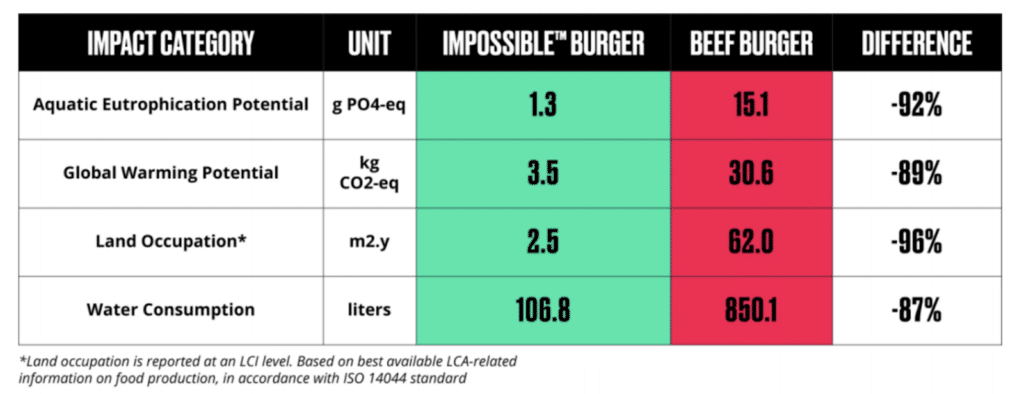
The Impossible Burger generates 91% fewer greenhouse gases, 92% less water, and uses 96% less land than a traditional burger.

Impossible has received financial backing from Google Ventures, The Union Bank of Switzerland, Bill Gates and 43 other investors with a sum of USD $1.4B funding for the firm.

Environmental Life Cycle Analysis: Impossible Burger 2.0. Image: K. Sofi.

However, haematologist – Dr. Shireen Kassam from King’s College Hospital has criticised plant-based meat products, condemning them as “ultra-processed junk food” with “too much sodium” that can lead to health conditions including stroke, and high blood pressure. What’s more, the anti-GMO community and anti-GMO Center for Food Safety have crusaded against Impossible Foods for adopting GMO soybeans, as GMO soy has huge amounts of herbicide glyphosate that is proven to be the cradle of cancer after digesting.

Impossible Foods in Hong Kong

Currently, there are roughly 200 retail stores and 900 restaurants in Hong Kong where Impossible Foods products are readily available for purchasing and ordering. Impossible Burgers, in particularly,  have been incredibly popular. However, we should delve into the underlying drawbacks and potentials of Impossible before it becomes mainstream, right?

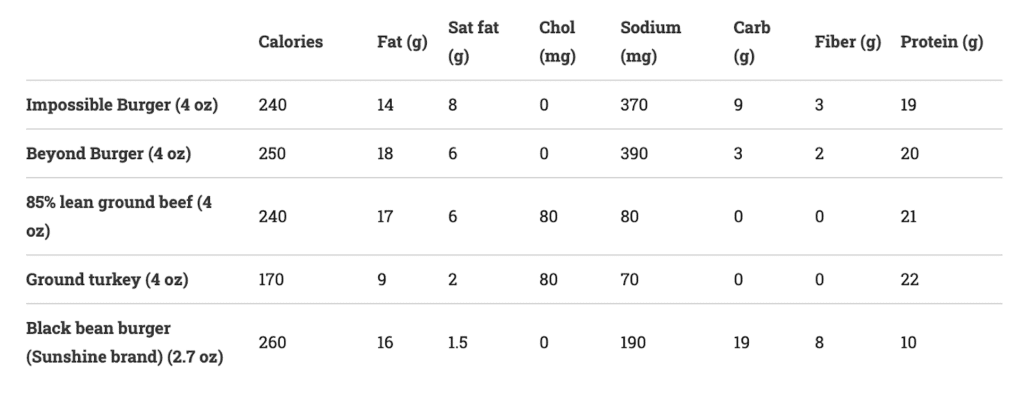
The aforementioned health issues related to Impossible notwithstanding, there is more bad news: Impossible products are heavily processed and therefore, high in saturated fat, albeit less than beef. The Impossible Burger (at 4oz or 113 gram) contains 6 grams saturated fat. To reduce chances of suffering from heart disease, the American Heart Association suggests lowering our saturated fats’ intake to no more than 5-6% of our daily calories.

To elucidate, Hong Kong people are suggested to absorb 1,588 calories a day, which indicates no more than 95.28 calories should come from saturated fat. And that is merely about 10.6 grams of saturated fat that is allowed per day as referred to a Cornell-China-Oxford project on nutrient, health and environment researched by scientists

Conversely, Impossible meat is among the meat substitutes with the highest saturated fat per 4oz according to a health research conducted in Harvard. Thus, if a consumer is very busy with workload or school work, and lacks regular cardiovascular exercise, meatless burgers should not be included in their daily diet.

But why? For a simple calculation, 8oz of meat is normally cooked per burger or found in an Impossible patties package, which is equivalent to a 8g of saturated fat* 2 = 16 grams of saturated fat just for one meal. By exceeding the recommended daily intake frequency, it might possibly give rise to smaller ventricles, poorer heart function and stiffer arteries and more.   

impossible and Beyond Meat

Harvard Health Publishing: Impossible and Beyond: How healthy are these meatless burgers? Image: G, Emily (2019).

You might also like: Adopting a Plant-Based Diet Would Reduce Agricultural Land Use by 3/4

What Is So Special About Impossible Foods?

Nonetheless, this is not the whole picture, Impossible products in particular are very rich in protein, vitamins and minerals. Derived from the root of soy plants, heme, also known as soy leghaemoglobin, was created to make Impossible meat taste exceptionally similar to normal beef. Heme is utilised as colour and flavour addictive, which allow Impossible’s meatless meat to taste and ‘bleed’ exactly like red meat. 

To put it simply, Impossible meat contains approximately 19grams of protein while containing zero cholesterol. Too much cholesterol in our diet can lead to blocked blood vessels and be a breeding ground for stroke and heart problems.

Significantly, Impossible products also contain nutrients such as vitamin B12 and zinc amounts equivalent to or greater than those found in red meat and poultry. This would be ideal for vegetarians since barely relying on their normal diets from plants, vegetarians would find it much harder to receive the same amount of nutrients needed. 

impossible meat patties

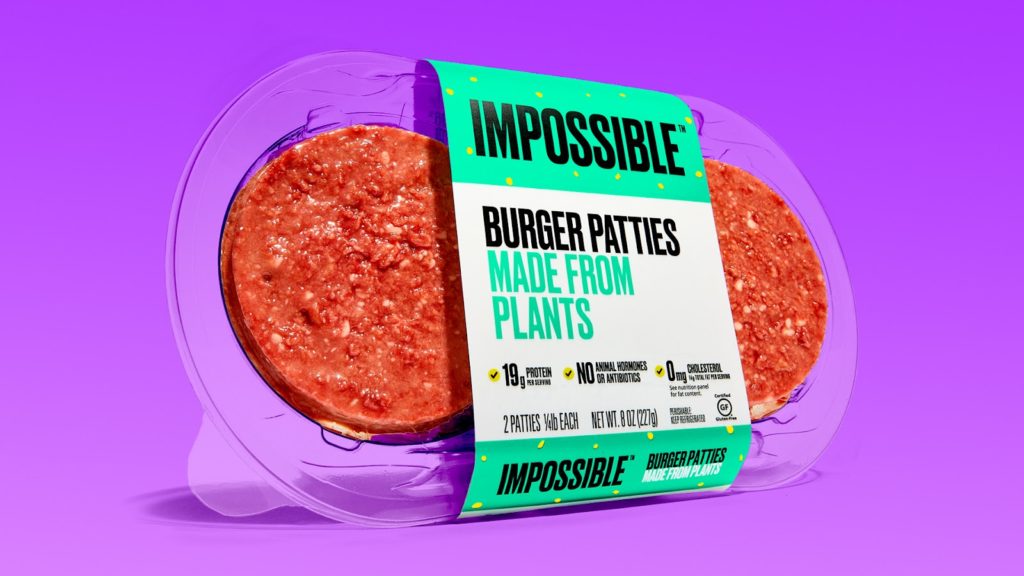
Impossible rolls out plant-based burger patties to more Hong Kong grocery stores. Photo: Impossible Meat.

Impossible Foods’ Environmental Impact 

Although plant-based meat invented by Impossible relies on GMO soy, industrial farming processes including tillage and use of agriculture chemicals can devastate fertile soil and cause it to secrete stored carbon. “Approximately 30% of the one trillion tons of atmospheric carbon originated from destruction of soil,” according to Dr. Mark Hyman in his book “Food Fix: How to Save Our Health, Our Economy, Our Environment, and our Communities.”

Despite the environmental impact of soybean farming, Impossible products have a substantially lower carbon footprint than an equivalent beef burger. An Impossible burger accounts for 15 times fewer GHG emissions, 50 times less fresh water usage and about 18 times less land use. To this end, an estimated 32% of worldwide carbon emission that comes from livestock can be drastically decreased; whereas one-third of fresh water that is supposed to be used for animal production can be used elsewhere, for instance – solving the water scarcity crisis in Qatar

Ideally, the environmental impacts from livestock can only be reduced when more people consume plant-based meat instead of red meat. Since only when the demand of meat drops, suppliers will then slaughter fewer poultry. A study conducted by University of Oxford has proclaimed that when all people diverting from red meat to plant based meat, approximately three quarters of food-related emissions can be brought down, along with the acidifying and eutrophying emissions that could degrade terrestrial and aquatic ecosystems 

Most food in Hong Kong is imported from abroad, and in particular red meat products are responsible for 57% of individual carbon footprints for people in daily Hong Kong’s imports. In 2017, Brazil supplied 30% of Hong Kong’s red meat products, followed by the US with roughly 20% and 5% coming from Australia. 

While it might sound fantastic that our Free Trade Agreement allows us to eliminate tariffs, and give Hongkongers access to so many superior meat choices from countries such as Brazil. But all these comforts make it easy to ignore that we are perpetrating the Amazon’s deforestation, as we make up for one-quarter of 1.64 million tonnes of beef shipping from Brazil according to the Brazil’s Secretariat of Foreign Trade.

Transitioning to a plant-based meat diet may not 100% make us healthier, but it is undeniable that opting for Impossible meat can clamp down on deforestation and global emissions. Since the production of beef-less alternatives has been proven to significantly reduce the use of freshwater, land and GHG emissions, Impossible would be one of the brands that could safeguard our ecosystems from climate change disruption.

You might also like: 10 Surprising Plant-Based Food Facts That Will Blow Your Mind

This year’s most sustainable companies according to Corporate Knights has been released in January. The  annual ranking, now in its 19th year, is based on an assessment of more than 6,000 public companies that report more than US$1 billion in revenues. In the 2023 list, one-fifth of the most sustainable corporations are based in the US and 11% in Canada. Europe still leads the way with 44%, while 22% are located in the Asia Pacific region. 

50 of the World’s Most Sustainable Companies in 2023

  1. Schnitzer Steel Industries Inc (US) – A+
  2. Vestas Wind Systems A/S (Denmark) – A
  3. Brambles Ltd (Australia) – A
  4. Brookfield Renewable Partners LP (Bermuda) – A
  5. Autodesk Inc (US) – A
  6. Evoqua Water Technologies Corp (US) – A
  7. Stantec Inc (Canada) – A-
  8. Schneider Electric SE (France) – A-
  9. Siemens Gamesa Renewable Energy SA (Spain) – A-
  10. Taiwan High Speed Rail Corp (Taiwan) – A-
  11. Dassault Systemes SE (France) – A-
  12. Xinyi Solar Holdings Ltd (China) – A-
  13. Orsted A/S (Denmark) – A-
  14. Sims Ltd (Australia) – A-
  15. Banco do Brasil SA (Brazil) – A-
  16. Rockwool A/S (Denmark) – A-
  17. Johnson Controls International PLC (Ireland) – A-
  18. Chr Hansen Holding A/S (Denmark) – B+
  19. Kone Oyj (Finland) – B+
  20. Cascades Inc (Canada) – B+
  21. Atlantica Sustainable Infrastructure PLC (UK) – B+
  22. McCormick & Company Inc (US) – B+
  23. Novozymes A/S (Denmark) – B+
  24. Iberdrola SA (Spain) – B+
  25. BT Group PLC (UK) – B+
  26. Alphabet Inc (US) – B+
  27. Vitasoy International Holdings Ltd (Hong Kong) – B+
  28. City Developments Ltd (Singapore) – B+
  29. Neste Oyj (Finland) – B+
  30. Ecolab Inc (US) – B+
  31. Kering SA (France) – B
  32. Beijing Enterprises Water Group Ltd (Hong Kong) – B
  33. ASM International NV (Netherlands) – B
  34. StarHub Ltd (Singapore) – B
  35. SunPower Corp (US) – B
  36. Xerox Holdings Corp (US) – B
  37. Telus Corp (Canada) – B
  38. Unilever PLC (UK) – B
  39. HP Inc (US) – B
  40. VMware Inc (US) – B
  41. SAP SE (Germany) – B
  42. BCE Inc (Canada) – B
  43. Coloplast A/S (Denmark) – B
  44. Koninklijke KPN NV (Netherlands) – B
  45. Cogeco Communications Inc (Canada) – B
  46. First Solar Inc (US) – B-
  47. Puma SE (Germany) – B-
  48. Cisco Systems Inc (US) – B-
  49. Atea ASA (Norway) – B-
  50. Konica Minolta Inc (Japan) – B-

You might also like: Top Sustainable Food Packaging Companies to Support

‘Green building’ is an emerging buzzword on the green vernacular list. They drive key energy efficiencies through the integration of green technologies that reduce carbon emissions while simultaneously lowering operational and energy costs in the long-run. With this objective in mind, the hope is that more green buildings will be implemented across Hong Kong in order to facilitate the city’s sustainable development. But does this green dream truly exist, or is it yet another instance of greenwashing, distracting us from our climate reality?


Green buildings have been around for some time now. First conceptualised in the 1960s by American architect Paul Soleri, they were initially romanticised as a combination between architecture and ecology (known as arcology) within a hyper-dense city that would maximise access to shared, cost-effective infrastructural services and reduce waste and environmental pollution. While the concept of arcology has been considered overly idealistic and remains largely hypothetical, the notion of energy-efficient buildings became an appealing concept that allowed the contemporary green building movement to flourish during the 1970s.
With the 1970s energy crisis – caused by the peaking of oil production across major industrial nations (United States, Canada, Germany, etc.) and embargoes from other producers – the Western world faced substantial petroleum shortages and elevated oil prices, generating a worldwide need to be more energy efficient and eco-friendly. One such way was through the reshaping of building practices that would reduce energy output in the long run, a practice that has become increasingly pivotal in our renewed goal towards reducing carbon emissions. Buildings have a huge impact on the environmentaccounting for 39% of global energy emissions, 50% of global material use and the annual use of 42.4 billion tonnes of materials.

Green Buildings in Hong Kong

Take Hong Kong for example. The bustling metropolitan – with over 42,000 private buildings and more than 8,000 government buildings sprawled across the urban landscape – has created a demand for sustainable energy consumption. In Hong Kong, buildings are responsible for consuming a large portion of energy, electricity, water and materials consumption, claiming as much as 90% of the total electricity consumption as well as about 60% of the total carbon dioxide emissions each year. In addition, with a current rate of construction of between 300 and 500 new buildings per year, between 60% and 80% of the buildings that will be in existence in 2050 have already been built. Therefore, addressing the total emissions of both new and existing buildings is therefore critical in the process of decarbonising the building sector.

You might also like: Scientists Solve Desalination Mystery, Opening the Door for Cheap Clean Water Production

In response to this, as part of Hong Kong Environment Bureau’s Climate Action Plan 2030+ – setting a carbon intensity reduction target of 65-70% by 2030 compared to the 2005 level – the city has introduced a set of strict green certification standards designed by the Hong Kong Green Building Council (HKGBC) called BEAM Plus. To attain a BEAM Plus certification (currently owned by more than 1,600 buildings and developmental projects in Hong Kong), building developers must meet a comprehensive set of performance criteria for various sustainability issues ranging from planning and construction to the operation and maintenance of the building. By tackling a building’s overall performance across its entire life cycle, this facilitates a fair and objective assessment that provides wide-ranging transparency.
The standard’s long range of performance criteria also facilitates high versatility and effectiveness, as it is able to capture various aspects of a building’s carbon emissions that are not accounted for in other green building standards. For instance, embodied carbon makes up 30-40% of buildings’ total lifecycle emissions, with the majority emitted during the construction process. For buildings that have not yet been built, all carbon emissions can be identified and possibly reduced. For existing buildings, the opportunity to significantly influence embodied carbon has been lost but the operational carbon emissions can still be minimised through retro-commissioning and retrofitting. Through this criteria, green buildings in Hong Kong are able to tackle many sources of carbon emissions at once.
Critics skeptical towards the standard’s credentials should know that its certification is not limited to Hong Kong alone. Besides the fact it closely resembles the United States’ own set of ratings systems for green buildings known as Leadership in Energy and Environmental Design (LEED) developed by the U.S. Green Building Council, BEAM Plus has already extended to many key geographical regions across the Greater Bay Area, including Macau, Shenzhen, Guangzhou, Shanghai and Beijing. Through this ratings tool, it is estimated that 710 850MWh of electricity is being saved each year – roughly the average annual electricity consumption of 146 000 Hong Kong households – and 15.7 billion litres of fresh and seawater consumption is being avoided annually in Hong Kong. The result is that total estimated yearly carbon emissions will be reduced by 506,350 tonnes, the equivalent of planting 22 million trees.

Examples of Green Buildings in Hong Kong

The prime example of this green certification can be found in Hong Kong’s K11 Atelier King’s Road – part of a string of Hong Kong’s latest urban office redevelopments – located in North Point on Hong Kong Island. Spanning 45,300 square metres of GFA (Gross Floor Area), the greenery-covered exterior comes with 28 floors and exhibition space, as well as an assortment of cafes and other F&B outlets. However, the main attraction of the building is its achievement of being the first building in the world to have achieved all Platinum levels of the WELL Building Standard Pre-certification, Hong Kong BEAM Plus Provisional Certification and the U.S LEED Pre-certification, with reference to relevant United Nations Sustainable Development Goals. To meet the standards of all three is no easy feat.
To achieve this milestone, the K11 building made certain to integrate over 70 sustainability features upon its completion. For instance, the building is adorned with greenery that extends around the building and across the podium of the office block. Combined with the roof, the total greenery spans an area of 6 700m2, which is more than twice the total site area. Through its greenscape, the building is able to sequester 4 tonnes of CO2 per year whilst also reducing the urban heat island effect in the hot and compacted city.
In addition, the K11 building incorporates green technologies that further enhance its sustainability features. For example, the use of low e-glazing – microscopically thin coating that is transparent and reflects heat – within the building provides solar control and good daylight availability, whilst the building’s LED lighting system is connected to daylight sensors – solar-powered detector that is activated only by sunlight – to facilitate further energy saving and ideal circadian lighting. Most notably, K11 Atelier is equipped with Hong Kong’s first and Asia’s largest commercial hybrid 83 kW solar photovoltaic and thermal (PVT) installation on the rooftop (spanning 220 square metres). Through its 138 PVT panels, the building’s PVT system successfully generates electricity for the building’s lift lobby lighting as well as hot water for the showers on certain floors of the building.
What differentiates this from more conventional photovoltaic systems is its overall higher energy efficiency, with an annual renewable energy generation estimated to be 77 000 kWh, which accounts for 1.3% of the total energy use of the K11 Atelier building. As a result of these features, the project achieves over 30% energy savings against the American Society of Heating, Refrigerating and Air-Conditioning Engineers (ASHRAE) Standard – a recognised American-based standards for ventilation system design and acceptable indoor air quality – through its various utilisations of green technology.

You might also like: Rethinking the Future of Green Building and Sustainable Architecture

The Downsides of Green Buildings

So are green buildings worth endorsing? While the standard itself may be quite stringent prior to the building’s construction, Hong Kong has yet to develop follow-up requirements for businesses and industry sectors. For example, while Hong Kong does possess a carbon reduction target, there are no mandatory follow-up requirements for businesses or even by sectors to achieve this overall goal. New World Development – property-owner of K11 – has tried to maintain these sustainable goals through the introduction of its voluntary Sustainable Tenancy Pledge, with K11 encouraging sustainable corporate behaviour with a reward-based system. For instance, as part of CLP Power Hong Kong Ltd.’s Renewable Energy Feed-in Tariff (FiT) scheme, K11 provides free smart metres for store employees to measure their energy consumption within their office space. K11, under New World Development, has also participated in the “New World Sustainability Academy” to provide sustainability-related training and site visits to all business units and employees. Through the academy, employees learn to identify and manage climate-related risks, particularly in key internal departments such as Project Management and Property Management.
However, this voluntary scheme may not be similarly adopted by other real-estate developers, as it would require significant effort to maintain a sustainable pledge and the lack of structure will most likely lead to inconsistency in the quality of sustainability upheld by respective companies.
Furthermore, a study in 2017 conducted by the University of Hong Kong indicated that, when comparing with conventional building projects, there is a 34.06% increase in capital cost in green building projects on average, and the values of green building projects are higher in terms of price, rental cost and premium in market valuation (by 6-8%). This significant price increase may disincentivise real-estate developers from investing in green buildings not only due to already-pre existing high barriers to entry and exorbitant real-estate prices across Hong Kong, but also as a result of the debilitating economic effects of the COVID-19 pandemic.
However, despite the comparatively higher capital cost of green buildings, they can still be profitable through various cost-reduction methods on the operation and construction side. One way to achieve this is through the use of green construction methods such as prefabrication. Prefabrication facilitates the reduction of material use, reduction of construction waste as well as increased savings in commissioning and minor repair costs (which can be as high as 2% of the total building cost in a traditional project), and so on (Lawson et al., 2012). More importantly, prefabrication accelerates up the construction process, which can reduce the financial charge borne by the client (can be 2 to 3% of over the shorter building cycle), increase clients’ profit by starting the business or rental income earlier, and reduce disruption to the locality or existing business that will ultimately contribute to further reduction in costs.
However, precast construction is not a linear process. It is important to further investigate the impact of different levels and approaches of precast construction on time and cost of green projects. Therefore, further investigation is required on various green construction methods and life cycle costing.
In addition, we must continue to examine the long-term environmental and economic benefits as a result of the use of green IoT technology and infrastructure in the long run. As it stands, the development and recognition of green buildings has gained considerable momentum over the last decade: Between 2010 and 2019, more than 1,600 buildings and development projects in Hong Kong were BEAM-certified, bringing the total number of certifications since 1996 to over 3,000.
Prominent existing buildings with a Platinum rating include Hysan Place in Causeway Bay (2013), the Standard Chartered Building in Central (2016), Festival Walk in Kowloon Tong (2017), Taikoo Place in Quarry Bay (2018), as well as the Hong Kong-Zhuhai-Macao Bridge Port at Chek Lap Kok (2019, provisional). Platinum ratings were also awarded to ongoing West Kowloon Cultural District (2016) and Kai Tak Sports Park (2020) developments, respectively. It is also noteworthy that K11 Atelier was funded by the first green loan in Hong Kong under New World Group’s Green Finance Framework, referencing the Green Bond Principles 2018 and Green Loan Principles 2018.
This successful green loan, which received the ‘Green Finance Certificate’ (Pre-issuance) from Hong Kong Quality Assurance Agency (HKQAA), provides an indicator of a strong potential green financing market in real-estate development that will hopefully continue gain traction as investors start to recognise the economic benefits of green buildings.

How to Encourage Wider Adoption of Green Buildings

Ultimately, it is also the government’s responsibility to create a systemic structure in which sustainability standards are consistently upheld post-development. The large number of government-owned properties shows that the government has a large influence on the building sector, with the power to impose requirements on the buildings it controls. These include educational and health facilities, public housing, government offices, and other community buildings.
Addressing carbon emissions from these buildings would make a significant contribution. Only then, will green buildings in Hong Kong be a highly desired form of investment that will be beneficial to the city’s sustainable future in the long-run.

You might also like: 6 Biggest Environmental Issues in Hong Kong in 2023

“The lack of a visible and salient problem when it comes to water is where the city’s problem lies,” write Dr Lina Vyas and Dr Stuti Rawat on World Water Day 2023.

By Dr Lina Vyas and Dr Stuti Rawat

On Wednesday, World Water Day, the United Nations 2023 Water Conference will take place in New York City, 46 years after the first UN Water Conference was held. During this time, Hong Kong has made significant progress in its water sector.

Shing Mun Reservoir, in Hong Kong’s New Territories.

Shing Mun Reservoir, in Hong Kong’s New Territories. File photo: GovHK.

In 1977, Hong Kong residents had less than 91 days of full water supply and until the early 1980s they faced water shortages and water rationing. Today, water in Hong Kong is safe, available around the clock, easily accessible and priced cheaper than comparable cities in the world.

In contrast to the fact that globally 2 billion people are still not able to access safely managed drinking water services, using the phrase “water woes” in conjunction with Hong Kong seems quite a misnomer. However, the lack of a visible and salient problem when it comes to water is where the city’s problem lies.

Although Hong Kong is water insecure in the sense that’s naturally available resources are not adequate for the city’s needs, this is not immediately evident to the city’s residents as Hong Kong has not experienced water scarcity in the last four decades; largely due to the water supply agreements which allow Hong Kong to import close to 60% of its water from the Dongjiang in Guangdong province.

The rest comes from rainwater from local catchments and sea water – which is used for toilet flushing. The lack of water scarcity in Hong Kong creates an “illusion of plenty” and influences consumption. Studies have shown that individuals from regions experiencing water scarcity are much more likely to participate in and support water conserving behaviour as compared to those from non-water scarce contexts.

In addition to context, price also influences consumption. Water in Hong Kong is supplied to residents at tariff rates that have remained unchanged since 1995, even as the cost of water production has more than doubled since then. It is thus hardly surprising that per capita water consumption in Hong Kong has been increasing steadily. In 2020, domestic per capita fresh-water consumption stood at 152.6 litres per day.

handwashing; sanitation

Photo by Burst on Pexels.com.

One consequence of the Covid-19 pandemic is expected to be greater increases in domestic water consumption because of changes in habits such as more frequent hand washing, showering and cleaning.

Vertical farming is a modern farming technology that uses environmentally controlled agricultural technology to make the most of indoor farming techniques and many describe it as “future farming”. This is especially true given that by 2050, a major portion of the world’s population will have moved to cities. In such a setting and with an ever-expanding population, the desire for local food that is both organic and natural will grow, too. Here are 7 vertical farming companies that are paving the way for an agricultural revolution. 

Why Do We Need Vertical Farming?

Vertical farming is an innovative agricultural practice that has the potential of solving the impending food crisis. Instead of growing our crops horizontally, produce is grown in stacked vertical layers. By doing so, crops require less or even no soil at all, and water efficiency is increased at the same time. Vertical farming can guarantee regular produce output and boost crop yields based on its controlled environment including temperature, light, humidity, and artificial intelligence.

This green technology can easily be built into buildings, cities and even shipping containers. It can also produce food closer to its consumers, reducing transportation costs and emissions.

Yet, vertical farming is still a relatively new technology. Maintenance costs of automation and watering processes are sky high, and most farms are limited to leafy greens, salad leaves and herbs based on these costs. Here are some vertical farming companies that are leading the way and helping the sector to expand globally.

You Might Also Like: Ways in Which Vertical Farming Can Benefit Our Environment

Top 7 Vertical Farming Companies

1. Futurae Farms (US)

Yaheya Heikal and Erin James – co-founders of Futurae Farms, a vertical farming company founded in 2021 and based in Los Angeles – are on a mission to find solutions to some of the world’s biggest problems through the use of urban vertical farms. These farms will bring more nutritious and sustainably made fresh foods to people around the world (mainly in urban centres) while helping lower global emissions. After traveling abroad and experiencing first hand the difference in quality of grown vegetables outside the US, Yaheya and Erin saw and tasted the difference in food that had less time from farm to table. The next-generation farming and technology company is now working to create food that is more accessible and nutritious, without sacrificing the environment. “We’re using vertical farms to reduce supply chain issues and mitigate the effects of climate change while ensuring we can feed future generations.” – the founders said. “Climate change is increasingly affecting our ability to produce food using traditional farming methods due to events including flooding, warming climate, wildfires, soil degradation, and desertification. We need to find large-scale alternatives to help supplement food supply.”

2. CubicFarms (Canada)

The origin of the company dates back to 2008, when Jack Benne and his son Leo Benne, both farmers, committed to developing indoor growing technologies to grow fresh produce while minimising their impact on the environment. One such technology is the HydroGreen Grow System, which can grow up to 25 million pounds (11.3 million kilogrammes) of fresh livestock feed every year using just one-tenth of the water needed in traditional livestock feed grown in irrigated fields. This way, they managed to save over 500 million gallons (1.8 billion litres) of fresh water per year – enough to give one glass to every person on the planet. The Canadian company also uses 54% to 62% less energy than typical vertical farms by moving plants according to the light rather than having dedicated lights for each one. 

3. AeroFarms (United Arab Emirates)

Since 2004, AeroFarms implements the latest breakthroughs in indoor vertical farming, artificial intelligence and plant biology to fix our broken food system and improve the way fresh produce is grown and distributed locally and globally. As a sector leader and owner of the world’s largest vertical farm for research and development – located in the Abu Dhabi and completed in the first quarter of 2022, AeroFarms was awarded the inaugural Global SDG Awards celebrating private-sector leadership in the advancement of the United Nations 2030 Agenda. The company partnered up – among others – with US retail giants Whole Foods and Walmart to sell its leafy greens, from baby bok choy and arugula to spinach and micro broccoli.

4. InFarm (Germany)

Founded in Berlin in 2013 by Osnat Michaeli and the brothers Erez and Guy Galonska, InFarm is one of the largest vertical farming companies in Europe. The company uses an innovative technique known as cloud farming – a network of high capacity, self-learning growing centres that improve plant yield, taste, and nutritional value constantly, while further reducing the use of natural resources. With over 1,200 farms in stores and distribution centres, InFarm has partnered with more than 30 major food retailers including German Aldi Süd, Kaufland, and Edeka as well as Amazon Fresh, Marks & Spencer, and Whole Foods Market in Canada, Denmark, France, Germany, Japan, Luxembourg, the Netherlands, the United Kingdom, the United States and Switzerland.

5. Spread (Japan)

One of Asia’s leading vertical farming companies is Spread. Established in 2006 with the vision of “creating a sustainable society where future generations can attain peace of mind”, Spread is commitment to facilitate the mutually beneficial coexistence between conventional agriculture and local communities while reducing food waste and improving productivity. The company is known for its crispy and soft lettuce as well as its sweet strawberries, both of which are sold in more than 4,500 grocery stores across Japan. The innovative vertical farming technique implemented by the company ensures high quality and yield year-round, regardless of weather conditions. Moreover, this method only requires 1% of the water needed to grow food with conventional farming techniques and 30% less food is lost during production.

6. Farm66 (Hong Kong)

Sixth on our list of vertical farming companies is Farm66, one of Hong Kong’s largest state-of-the-art indoor aquaponics farms and in 2016, it was awarded the Technological Achievement Certificate of Merit (HKAI). Since its establishment in 2013, the company has been developing and practising the concept of urban farming. Inside its indoor aquaponics farming eco-system, free of weather impact, birds’ problems, pests and bacteria and huge space requirements, Farm66 grows products such as leafy greens, herbs (basil, dill) and fruits. These are then sold by many local retailers including CitySuper Hong Kong, SOGO and Pacific Coffee. Given its limited space and extremely dense population, Hong Kong is almost totally dependent on imports for its food supply. “Vertical farming is a good solution because vegetables can be planted in cities,” said Gordon Tam – co-founder and CEO – in an interview with Forbes. “We can grow vegetables ourselves so that we don’t have to rely on imports.”

7. iFarm (Finland)

Last but not least on our list of vertical farming companies is the award-winning iFarm, founded in 2017 in Helsinki, Finland. Vertical farms built with the iFarm technology use 90% less water, 75% less fertilisers and zero pesticides. They also save huge amounts of energy by optimising technology and reducing the ‘human factor’ and labor costs. All this allows to grow crops in a sustainable and economic manner all year round. iFarm products, such as leafy greens and different types of vegetables but also fruit such as strawberries, are sold worldwide, from Switzerland and France to Saudi Arabia and India. In 2019, the company was awarded the “Best Social Impact Startup” in Nordic Startup Awards and in 2020, it was named Europe’s Hottest AgFood Tech startup by The Europas.

Research for this article was conducted by Earth.Org research contributor Chloe Lam

You Might Also Like: 10 Leading Sustainable Food Companies to Support

The World Economic Forum has said the climate adaptation market could be worth US$2 trillion per year by 2026 – a great opportunity for the private sector, writes Judy Cheung.

By Judy Cheung

The latest UN climate change conference was meant to focus on translating promises into action – reducing emissions, adapting to global warming, financing such programmes and compensating vulnerable nations for loss and damage.

But world leaders at the 2022 Conference of the Parties to the United Nations Framework Convention on Climate Change (COP27) could not figure out how to achieve all three elements – mitigation, adaptation and finance – even though the conclusion was delayed to the morning of November 20.

Key actions to achieve peak carbon emissions were missing from the final version of the text, as were clear commitments to phase out the use of fossil fuels. Even key provisions for Article 6.4 of the Paris Agreement on a carbon market were removed.

On the other hand, COP27 did advance some areas – a loss and damage fund has been agreed upon to compensate developing countries suffering from climate change. However, the details of how it will work remain vague. Unless these are agreed, it could be reminiscent of the broken promise of US$100-billion climate finance by 2020 made at COP15 in Copenhagen.

Another key outcome of COP27 is the progress made on Article 6.2 of the Paris Agreement to enable bilateral deals on the international transfer of emission units with less oversight from the United Nations. Various countries, including Japan and China, welcomed such a move and expressed interest in taking part in a carbon market under Article 6, besides their domestic offset markets.

Nevertheless, decisions on Article 6.4 about the implementation of an open international emission credit trading market, with the public and private sector taking part, have been deferred to next year. This hinders private investment in carbon-related projects due to the uncertainty about key rules and fewer investment options.

Opportunities for Private Sector

There were more voices at COP27 asking the private sector to step up in areas of technology, innovation and finance. The private sector offers more flexibility and resources in various climate-related projects, while the market has huge potential to channel financing and investments. All the key outcomes set during COP27 come with opportunities for the private sector.

The need for more public-private partnerships to speed up climate-related projects was highlighted during discussions. Policymakers in various jurisdictions are already trying to create investable markets. The US government has announced the Energy Transition Accelerator as a new public-private effort to catalyse private capital to speed up the transition to clean energy in developing countries.

The Africa Carbon Market Initiative was also inaugurated at COP27 to fund African carbon credit projects with high integrity.

Closer to home, in October 2022 the Hong Kong Exchanges and Clearing launched Core Climate, an international voluntary carbon marketplace to connect private capital with climate-related products for carbon credit trading.

It is a sign of a growing regulatory interest in voluntary carbon market development, which provides opportunities for investment in low-carbon projects and for private companies to buy offset credits.

With more funding for climate-related projects, especially those focusing on scaling up adaptation efforts, investors expect adaptation – including the upgrading of electrical grids and weather-resistant building materials – will soon be profitable.

The adaptation industry also covers flood protection infrastructure, nature-based solutions and cyclone early warning systems, as well as financial technology, supply chains, and insurance.

The World Economic Forum has said the adaptation market could be worth US$2 trillion per year by 2026 – a great opportunity for the private sector in terms of business innovation, engagement, financing and investment.

Challenges to Private Sector

With developments come not only new opportunities, but also increasing challenges and risks, particularly greenwashing and climate-related risks of which the private sector should be mindful.

With more and more companies setting a net-zero emission target and labelling themselves as green businesses to attract investors, one of the key messages of COP27 is zero tolerance for net-zero greenwashing. The UN Secretary General set up a High-Level Expert Group to make 10 recommendations on clear standards and criteria, highlighting the importance of integrity, transparency and accountability to avoid any form of greenwashing.

The recommendations include net-zero pledges with stepping-stone targets and concrete plans, public disclosure of data and information on net-zero transition in a way that allows comparison with peers, and establishing credibility through plans based on science and third-party accountability.

The expert group also stresses that city, regional, finance and business net-zero plans must not support a new supply of fossil fuels, and, by 2025, must not contribute to deforestation through their operations and supply chains. Stricter rules and standards are called for to avoid greenwashing and to ensure high-quality credits in the carbon market – which leaves the private sector with plenty to do.

Another challenge to the private sector are the risks posed by extreme weather and the failure to mitigate and adapt to climate change.

Hong Kong climate advocate Judy Cheung at COP27 in Sharm el-Sheikh, Egypt, in November 2022.

Hong Kong climate advocate Judy Cheung at COP27 in Sharm el-Sheikh, Egypt, in November 2022. Photo: Judy Cheung.

Policymakers in jurisdictions such as the European Union and the United States are tightening up rules on climate-related disclosure, requiring more details and wider data coverage, including scope 3 carbon emissions. This creates momentum for stakeholders in embedding such information into decision-making by assessing climate-related risks and companies’ climate resilience.

That indirectly encourages and at the same time challenges the private sector, in enhancing their practices in managing climate-related risks.

This article first appeared on Hong Kong Free Press (HKFP) and is republished here as part of an editorial partnership with Earth.Org.

About the Author:

Judy Cheung is a consultant providing climate change and sustainability-related services to financial institutions. She is also one of the co-founders of Climate Sense, which is a local advocacy group focusing on climate change education. She is focused on green and sustainable finance, sustainable cities and energy transition, which she believes are indispensable for moving towards a low-carbon economy. At the same time, she hopes to support more local young people to take part in climate action and mobilise the momentum of local climate advocacy.

“Experiencing even the ‘tip of the iceberg’ of the consequences brought by the climate crisis may be exactly what global leaders and negotiators need to accelerate the climate agenda,” writes Chin Chin Lam.

By Chin Chin Lam

It is vital to reflect on the progress made at the 2022 Conference of the Parties to the United Nations Framework Convention on Climate Change (COP27), which was hosted in Egypt last November.

COP27 carried an important agenda to actualise previously made climate pledges and to deliver solutions to developing countries on climate adaptation and loss and damage. A historic deal was reached to create a loss and damage fund to offer compensation to the countries most vulnerable to climate change.

But apart from this, the progress made in climate negotiations and actions was disappointing and, frankly, quite underwhelming.

You might also like: Did COP27 Succeed or Fail?

The COP27 venue in the Red Sea resort of Sharm el-Sheikh generated controversial headlines itself, with some people calling it a simulation for participants to experience the real-life situation of food and water scarcity caused by the climate crisis. Others were discontent with some of the very much non-soundproof negotiation rooms, and the poor arrangements of transportation to the venue.

Chin Chin Lam at COP27 in Sharm el-Sheikh, Egypt, in November 2022

Chin Chin Lam at COP27 in Sharm el-Sheikh, Egypt, in November 2022. Photo: Supplied.

As someone who attended the conference last year, I unfortunately agree with the sentiments above, in addition to the lack of general hygiene and quantity of washrooms, especially in the Covid-19 era. However, the difficulties of holding one of the largest two-week international conferences in a developing country must be recognised.

When compared with COP26 host Glasgow, Scotland, the disparities between a developed and developing country host are clear. One must be reminded that the reason for such disparity in hosting the annual COP event extends to why developing countries are suffering so heavily from climate injustices.

Developed countries have contributed the most to the current climate crisis through mass industrialisation, which grew their economies, while developing countries suffer the effects of global industrialisation and stolen resources through historic colonialism. Experiencing even the “tip of the iceberg” of the consequences brought by the climate crisis may be exactly what global leaders and negotiators need to accelerate the climate agenda.

The COPs are two-week conferences where global leaders, delegates and civil society from around the world meet and push forward the Paris Agreement, an international treaty negotiated at COP21 that outlined a commitment to keep the mean global temperature rise below 2 degrees Celsius, and preferably limit the increase to 1.5 degrees, thus reducing the effects of the climate crisis.

An example of parties at COP negotiations going through texts and debating on the wording chosen. Some discussions on a few words can take hours. Photo: Supplied.

An example of parties at COP negotiations going through texts and debating on the wording chosen. Some discussions on a few words can take hours. Photo: Supplied.

Often at negotiations – where some rooms are quiet and comfortable – parties can debate for hours on a single word or phrase to be included in a decision text. The irrelevant, minute details are so focused on, the party representatives can lose their focus of the bigger picture and the real critical demands beyond the walls of their meeting rooms.

Progress is slow, and there is a clear [dis]connection to the outside world and a lack of urgency to help countries which are already suffering devastating impacts due to the climate crisis.

(I am writing “[dis]connection” in the format negotiators use when deciding on how to word agreement texts).

Apart from the lack of urgency, there is also a [dis]connection between the narratives portrayed in the pavilions and through the protests of civil society and those discussed in the negotiation rooms.

At the Pakistan Pavilion – in mourning after devastating floods in August caused the deaths of over 1,700 people and impacted 33 million – the simple yet powerful texts of “The Lost and The Damaged – Pakistan’s Climate Catastrophe” and “What goes on in Pakistan Won’t Stay in Pakistan” provoked grief and heartbreak among many participants of COP.

The Pakistan Pavilion at COP27 in Sharm el-Sheikh, Egypt, in November 2022. Photo: Chin Chin Lam.

The Pakistan Pavilion at COP27 in Sharm el-Sheikh, Egypt, in November 2022. Photo: Chin Chin Lam.

Through various protests and demonstrations at COP27, the cries of civil society echoed throughout the venue. The voices of marginalised indigenous communities, whose livelihoods and cultures are deeply connected to and dependent on nature, were among the loudest last year.

The demands from the next generation were equally roaring, greatly enabled by the first-ever Children and Youth Pavilion at COP27. Yet the urgency of those calls for rapid climate action was not reflected in the negotiation rooms.

As witnessed at COP27 last year – and from personal experience – people are more likely to take real ambitious action while experiencing the impact of the climate crisis first-hand. The plethora of youth climate leaders I met at COP27, including Marciely Ayap Tupari from the Brazilian indigenous community of the Amazon Forest, and Salote Nasalo of Fiji, were determined to lead climate action after witnessing their own homes severely affected by the crisis.

I am also reminded of the record-breaking extreme heat Hong Kong witnessed last summer, sitting in my room without an air-conditioner (to reduce my carbon footprint) suffering from heat exhaustion, and determined to advocate for more temporary heat shelters in Sham Shui Po.

All the while feeling frustrated with the lack of climate adaptation and resilience policy and action in Hong Kong, further amplifying the risks for vulnerable groups – such as residents of subdivided units, the elderly, people experiencing homelessness, or outdoor workers – who are already suffering from the consequences of extreme heat caused by climate change.

Street cleaner in hong kong

A street cleaner. File photo: Lea Mok/HKFP.

Therefore, it is crucial to amplify the voices of civil society at COP, and enable them to have a greater say in high-level negotiations at the conference. This is important to bridge the gap between the currently [dis]connected negotiations and the people who are beyond the walls of the meeting rooms, in hopes of forming more ambitious climate actions and decisions.

There is great power in empathy, a core value of the design-thinking process which is essential to identify the best solutions.

Empathy can be gained through experiencing the consequences of climate change through storytelling, strong imagery or words, and demands echoed by civil society from around the world. It is something that the Pakistan Pavilion, countless protests and youth leaders successfully delivered at COP27, despite most not having a seat at the negotiation tables. The power of people and their efforts must be continued for COP28 next year.

COP28 will be held in Dubai, in the United Arab Emirates, and will conclude the first global stocktake of the Paris Agreement. The global stocktake is a two-year process that happens every five years, and is essential to assess, collectively, the progress of the implementation of the Paris Agreement and address opportunities for enhanced action. COP28 is assumed to be more mitigation focused, as countries review their carbon reduction progress.

Global Day of Action Protest at COP27 in Sharm el-Sheikh, Egypt, on November 12, 2022. Photo: Chin Chin Lam.

Global Day of Action Protest at COP27 in Sharm el-Sheikh, Egypt, on November 12, 2022. Photo: Chin Chin Lam.

Civil society will continue to share stories, make voices heard, and demand global leaders and negotiators not only to better represent marginalised communities already suffering from the climate crisis, but also, to apply pressure for faster and bolder action.

With the success of the first-ever Children and Youth Pavilion at COP27, COP28 should expect the voices of the next generation who are protecting their future to be even louder. This was also reflected by the Minister of Climate Change and Environment of the United Arab Emirates, Ms Mariam bint Mohammed Almheiri, who expressed her desire to expand youth participation in the COP proceedings.

To also bridge the gap between the [dis]connection of Hong Kong to the international climate conference, it is hoped that Hong Kong will officially send delegates, especially youth delegates to participate in next year’s COP28.

Furthermore, it is hoped the city will take much more ambitious climate action to keep the goal of the Paris Agreement – 1.5 degrees – alive, and to ensure that citizens and local communities have the capacity and adequate infrastructure to adapt to the extreme weather events and climate disasters that are already happening.

Featured image by UN (Flickr)

This article first appeared on Hong Kong Free Press (HKFP) and is republished here as part of an editorial partnership with Earth.Org.

About the Author:

Chin Chin Lam is an urban planner and a youth climate advocate who is determined to transform Hong Kong and other cities worldwide into sustainable developments. Her passion extends outside of her professional work, and she is actively involved with several youth-led, professional, and non-governmental organisations such as YOUNGO, the Youth Constituency of the UNFCCC, Hong Kong Institute of Planners, WalkDVRC and CarbonCare InnoLab.

Chin Chin is also the founder of the Community Climate Resilience Concern Group, which advocates for better climate adaptation facilities for residents of inadequate housing, and the founder of social media platform Urban Acupuncture Hong Kong, which aims to push the agenda of sustainable urbanism to the next generation of city shapers.

Subscribe to our newsletters

The best environmental stories of the week and month, handpicked by our Editor. Make sure you're on top of what's new in the climate.

SUBSCRIBE
Instagram @earthorg Follow Us