Earth.Org’s mission is simple: to cut through the noise and provide clear, credible journalism that empowers people to demand change. Read about our best coverage and achievements from the past months and how you can support us.
—
Dear Earth.Org Readers,
Today is the International Day of Climate Action, a critical reminder that we are at a global tipping point. While engineers work on clean energy and policymakers debate treaties, we often forget that the most powerful engine for change is information.
That is why we are appealing to our readers: to sustain the factual, independent journalism that is necessary to turn awareness into action.
The climate crisis is complex, urgent, and often shrouded in misinformation and overwhelming data. As an independent journalistic platform and registered charity, Earth.Org’s mission is simple: to cut through the noise and provide clear, credible journalism that empowers people to demand change.
Without strong, independent environmental journalism, the most urgent stories go untold, and the biggest polluters operate without accountability.
The Journalism Your Contribution Directly Supports
Earth.Org collaborates with dozens of NGO partners, amplifying their voices through our NGO Newswire to provide stories from the frontlines of climate justice and conservation. Meanwhile, our network of professional photographers help us document the crisis through powerful images. And through Kids.Earth.Org, we strive to educate younger generations on the climate crisis, provide material for parents and educators, and work directly with schools from around the world to raise awareness and promote environmental education.
Over recent months, we have covered the rise to power of Donald Trump, and how his administration has dismantled climate protections and reversed climate policy, one step at the time. We have also looked at how social media platforms, energy companies, investment firms, airlines, banks and even philanthropic organizations have backtracked on their environmental pledges to fall in line with Trump’s anti-climate agenda.
We have reported on the impact that rising temperatures and greenhouse gas emissions are having on critical ecosystems such as the world’s coral reefs. And we have showcased exclusive photographic reporting from Mayotte, where rising sea temperatures are resulting in large-scale bleaching.
We remain committed to humanizing the climate crisis. For example, we have looked at how extreme heat is disproportionately affecting people around the world, from women in Ghana to outdoor workers in Hong Kong.
And as the year’s most important climate summit, COP30, approaches, we are delighted to announce that Earth.Org’s Book Reviewer and Author Jan Lee will be on the ground to help us report on the most important developments.
Safeguard Climate Journalism, Keep Earth.Org Free for All
While attracting up to a million viewers each month, only a very small fraction supports us financially. And it is exactly the support of a small circle of donors that enables us to keep Earth.Org freely accessible to anyone who seeks reliable environmental information.
This Earth Day, consider making a one-off or monthly donation. By becoming our Patron, you empower us to invest in long-term, trusted journalism during this critical time. Journalism is expensive, but supporting us needn’t be. For the price of a weekly coffee, you can join us in the fight against greenwashing and climate denialism.
💡How can I contribute to a more sustainable planet?
🗳️ Vote for climate action: Exercise your democratic rights by supporting candidates and policies that prioritize climate change mitigation and environmental protection. Stay informed with Earth.Org’s election coverage.
👣 Reduce your carbon footprint: Make conscious choices to reduce your carbon footprint. Opt for renewable energy sources, conserve energy at home, use public transportation or carpool, and embrace sustainable practices like recycling and composting.
💰 Support environmental organizations: Join forces with organizations like Earth.Org and its NGO partners, dedicated to educating the public on environmental issues and solutions, supporting conservation efforts, holding those responsible accountable, and advocating for effective environmental solutions. Your support can amplify their efforts and drive positive change.
🌱 Embrace sustainable habits: Make sustainable choices in your everyday life. Reduce single-use plastics, choose eco-friendly products, prioritize a plant-based diet and reduce meat consumption, and opt for sustainable fashion and transportation. Small changes can have a big impact.
💬 Be vocal, engage and educate others:Spread awareness about the climate crisis and the importance of environmental stewardship. Engage in conversations, share information, and inspire others to take action. Together, we can create a global movement for a sustainable future.
🪧 Stand with climate activists: Show your support for activists on the frontlines of climate action. Attend peaceful protests, rallies, and marches, or join online campaigns to raise awareness and demand policy changes. By amplifying their voices, you contribute to building a stronger movement for climate justice and a sustainable future.
For more actionable steps, visit our ‘What Can I do?‘ page.
Readers who have spent the past several years distracted by the Covid-19 pandemic, global politics, and everything else might be excused for wondering which Amazon war, exactly, this essay collection refers to. But the pieces within make it clear that the title is a deadly accurate description of the period from 2018-2022: it details both the unprecedented physical assaults as well as the economic, institutional and human harm against the Amazon region, nicknamed the “lungs of the Earth”.
—
The Amazon in Times of War, a compendium that also includes the occasional song lyrics, several excellent photo essays, and the introduction to a documentary film, provides testimony about the times leading up to and during the brutal regime of former Brazilian president Jair Bolsonaro. Many are first-hand accounts, such as the story of an accidental river journey through the Upper Amazon that lays bare the desperate situation of families during the pandemic. Others are a litany of the brazen policy attacks on the Amazon and its people by Bolsonaro and his henchmen.
An introduction explains the facts of the period, later described as “a history of war on the Amazonian peoples which has just entered its most frightening chapter.” This is a history of repeated attempts to commercialize the Amazon for gain, whether through rubber, cattle, or, more recently, soy, leading to massive numbers of deaths and devastating environmental degradations.
From there, the book is divided into three sections. The first includes contemporary accounts of the early part of the Bolsonaro administration, giving lie to any assumption that he had hidden his agenda. In fact, the first essay, published before he took office, explains with terrible prescience the destructive policies the leader was propounding. Another piece records the dramatic rise in assassinations of Indigenous leaders during his first year in power. The “assembly line of destructive policies” directed by the President and enacted by Minister of the Environment Ricardo Salles also introduces a theme that pervades the book: that it is impossible to consider the environmental impact on and importance of the Amazon without talking about the Indigenous peoples of the Amazon.
The second part of the book focuses on the dire situation during the Covid-19 pandemic. Here, we learn how the administration took advantage of the situation to dismantle both environmental and Indigenous protections, with the slogan, “Let the stampede through!” The result was not only a disproportionate impact on Indigenous populations but also a vicious cycle of interrelated environmental and health issues. Local people, their immune systems weakened by the smoke from raging wildfires unleashed by rampant exploitation, were unable to access vaccination programs. They were also cut off from both traditional means of sustenance and the cargo boats that ply the river routes.
However, one meditation on the viral photo of a man from the recently-contacted Zo’é people, carrying his elderly father to get a vaccine despite the lethal policies then in place, calls out the resilience and will to self-determination of people from the region. Meanwhile, the destruction continued: 10,000 square kilometers of forest were lost in 2020, a 34.2% increase compared with the same period in 2019, but fines for illegal logging fell by 50%. (One theme that emerges in various moments throughout the book – unintentionally? – is the vital importance of satellite data in tracking what’s happening in the Amazon.)
Deforestation in the Amazon Rainforest, which is home to 10% of all the wildlife species we know about. Photo: GRID-Arendal/Flickr.
The final section, “Beyond War”, warns against a romanticized image of Indigenous people, which can lead to othering, abandonment, and expropriation. It also points out the long-standing tension between opposing metaphorical concepts of the Amazon: a “green hell” or a “dubious paradise”, where a binary understanding allows only innocence or savagery. Indeed, one essay points out that this is not the first time the Amazon has been subject to re-imaginings and exploitation: following the colonial period, which did not end with Brazil’s independence, “[t]he Amazon became a currency to be exchanged for any form of experiment or intervention that claimed to be productive.”
A chapter about COP26 in Glasgow, Scotland is especially poignant given next month’s “Amazonia” COP30 in the Brazilian city of Belem. “How dare we speak of the planet’s salvation when we exclude from the negotiating table representatives from the countries most affected by the climate crisis?” the author asks. The exclusions in Glasgow included health restrictions, financial restrictions, and a lack of access to Blue Zone; it will be telling to see what has changed in the intervening years.
While the book deals with horrifying subject matter, it ends on a note of cautious optimism: after all, Luiz Inácio Lula da Silva (“Lula”) took office January 1, 2023, ending the “nightmare”. What’s more, last month Bolsonaro was sentenced to 27 years in prison for his 2022 coup plot. Still, his fate is not final, and questions remain about Lula: is he only “half a friend” of the Indigenous peoples, as one Yanomami warrior opined?
It is worth it to read the entire volume. In collections such as this one, what is most important is the focused look it provides at what actually happened over the course of this short period of history. It bears witness to the reality of the destruction. As a popular song re-released in 2020 (“Os Pingo da Chuva,” or “The Raindrops”, by Novos Baianos) states, “When the sky is black / And even the shadows of the clouds are haunting / It is only the reflection of what is happening.”
Our non-profit newsroom provides climate coverage free of charge and advertising. Your one-off or monthly donations play a crucial role in supporting our operations, expanding our reach, and maintaining our editorial independence.
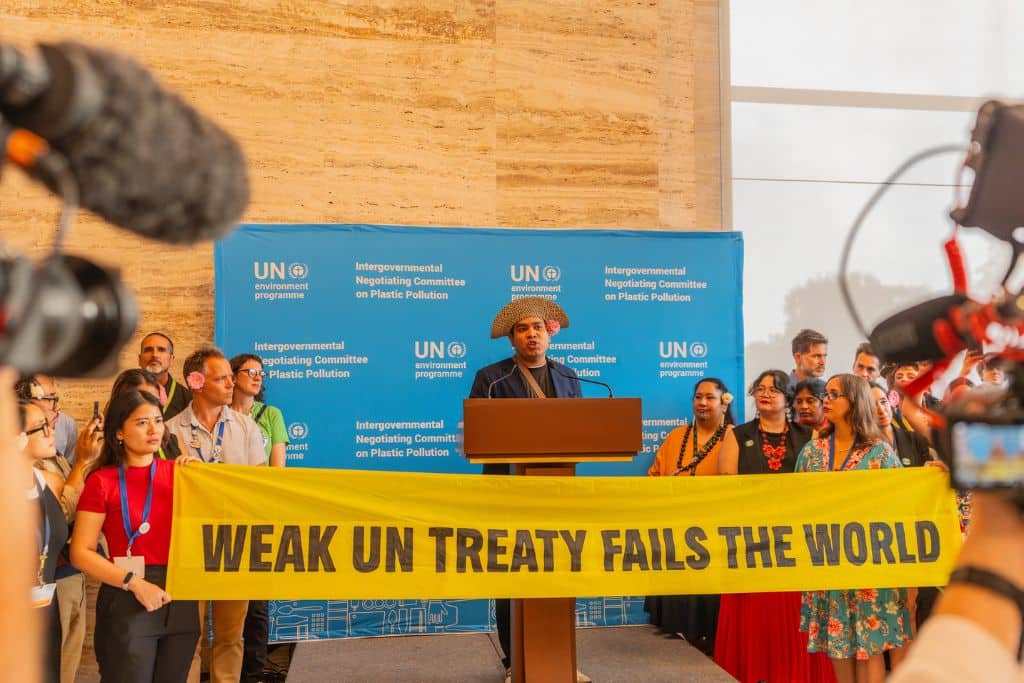
Following the failure to reach consensus on a Global Plastic Treaty in Geneva this August, world-leading marine scientist Richard Thompson OBE from the University of Plymouth discusses where the conversation on plastic pollution can go from here.
—
This is part 1 of a two-part interview with Prof. Richard Thompson. Read part 2.
Professor Richard Thompson OBE has worked on plastic pollution for over 30 years and has advised governments and industry on appropriate policies and interventions to combat this global environmental issue. As a coordinator of the Scientists Coalition for an Effective Plastic Treaty – a collective of over 400 scientists from 65 nations working together to ensure decision makers are informed on the latest plastic pollution research – Thompson advocates for reducing plastic production and international adoption of agreed essentiality, safety and sustainability criteria for unavoidable plastics.
In March 2022, during a UN Environment Assembly, all member states passed Resolution 5/14, which set out a commitment to develop an international legally binding instrument to end plastic pollution. The Intergovernmental Negotiating Committee (INC) was established to develop this instrument, which aims to address the full life cycle of plastic, from production to design and disposal.
Since then, there have been five INC sessions to negotiate the details of this instrument. The extended fifth session (INC5.2) took place in August in Geneva. As a scientist, Thompson’s role is limited to providing evidence and answering questions from member states on the scientific research into the impacts of plastics on the natural environment and human health.
“We are not the negotiators, but we try to make sure that the negotiators from UN member states have accurate information before them,” he told Earth.Org.
He described his role as an “observer”, but one that is necessary to create clarity in muddy waters created by actors who have other motives. The negotiations saw 234 registrations of fossil fuel and chemical industry lobbyists, outnumbering the combined diplomatic delegations of all 27 European Union nations.
Campaigners at the second part of the fifth session of the Intergovernmental Negotiating Committee on plastic pollution, including in the marine environment (INC-5.2) in Geneva, Switzerland. Photo: UNEP via Flickr.
No Treaty Is Better Than a Weak Treaty
Delegates ultimately failed to reach an agreement, and talks were postponed to a later date. The resolution initially aimed at having a treaty by the end of 2024.
“It’s frustrating,” said Thompson. “Member states have clarity on the scale and magnitude of the problem, and they are more engaged with science than they were before. But this hasn’t brought us to where we need to be in terms of agreement on the way forward to address the issue.”
Despite the frustration, Thompson said what matters ultimately is establishing a treaty which is substantial and provides clear guidance: “There’s no point having a treaty that doesn’t have the teeth to do what it’s required.”
Moving forward, delegates face three potential outcomes, according to Thompson.
Option 1: A low-ambition treaty supported by all parties
The first potential outcome is a treaty that lacks appropriate measures to reduce plastic production, and instead places more emphasis on improvements to waste management.
In this scenario, plastic pollution continues to escalate, with the gap between the quantities produced and our ability to manage the associated waste growing larger every year.
Option 2: An ambitious treaty supported by all parties
The second possible outcome is an agreement on an instrument which addresses the whole life cycle of plastic, from design through to production and waste management. This would include measures to reduce plastic production as well as essentiality, safety and sustainability criteria, where only plastic items that bring an essential benefit, are known to be safe, and are more sustainable than at present can continue to be produced. Appropriate testing standards and labelling would support the recognition of more sustainable plastics in national and international trade.
Press conference at the second part of the fifth session of the Intergovernmental Negotiating Committee on plastic pollution, including in the marine environment (INC-5.2) in Geneva, Switzerland. Photo: UNEP via Flickr
Option 3: An ambitious treaty supported by the majority of nations
There is one last possible outcome: the 100-plus member states who support a high ambition treaty could create a separate framework outside of the UN process. This would facilitate extensive international cohesion regarding legislation and could set in place an instrument that other states could join later.
“You’ve got more than 100 nations aligned with something that’s of a suitable ambition. Over time, I think you could persuade others to join because they may well recognize that there are commercial disadvantages by not being part of that grouping,” said Thompson.
Non-Negotiables: Establishing Essentiality, Safety and Sustainability Criteria
Thompson acknowledged that plastic can bring benefits to society, and maintained that an international agreement on plastic pollution should contain essentiality, safety and sustainability criteria.
Essentiality criteria will be crucial in helping us determine which plastic products are essential to society and which are not. Such criteria have been adopted previously at the international scale in the Montreal Protocol, a global agreement to protect the Earth’s ozone layer by phasing out the production and consumption of chemicals that deplete it. At the fourth meeting of the parties to the Montreal Protocol in 1993, Decision IV/25 was agreed, which introduced essentiality criteria. This defines a harmful substance as essential for society if its uses are necessary for health or safety or is critical for the functioning of society, and there are no acceptable alternatives.
A real-world example of a non-essential plastic are microbeads in cosmetic products. They are not necessary for health or safety or critical for the functioning of society and other acceptable alternatives do exist.
“I haven’t heard a single consumer post the ban say they miss not being able to wash their face with millions of plastic beads,” said Thompson.
The Safety and Sustainability Need
Establishing safety criteria is another non-negotiable for Thompson. A report by PlastChem identified that there are over 16,000 types of chemicals found in plastics, with over a quarter known to be hazardous to human health or the environment.
A plastic recycling facility in Greenville, North Carolina. Photo: City of Greenville, North Carolina/Flickr.
Transparency is another requirement. Public information on the use and origin of over 9,000 plastic chemicals is lacking. A lack of rigorous safety testing before a plastic is produced further compounds the issue. Of the 4,200 plastic chemicals known to be hazardous to human health, 3,600 are not regulated internationally, as reported by PlastChem.
Thompson advocates for a reduction in the chemical diversity of plastics and greater transparency on chemical composition to limit health and environmental impacts and increase sustainability.
Featured image: Martina Igini/Earth.Org
This story is funded by readers like you
Our non-profit newsroom provides climate coverage free of charge and advertising. Your one-off or monthly donations play a crucial role in supporting our operations, expanding our reach, and maintaining our editorial independence.
The existing model of managing climate change via tons of carbon dioxide is an outright failure, and should be replaced by financial tools that act directly on corporate (especially fossil fuel) interests: this is the thesis of a grim new book by Jessica F. Green, a political science professor at the University of Toronto. Within these pages, Green sets out the reasons for her conclusions, sheds light on the causes of the problem, and makes recommendations for how to move forward.
—
Existential Politics: Why Global Climate Institutions Are Failing and How to Fix Them is a straightforward volume. In the first chapter, the author states bluntly that “The climate crisis is evidence of an incredible governance failure.” She blames it on a basic conceptual flaw – attempting to “manage tons” of carbon dioxide (CO2) emissions instead of creating policies to “manage assets”. The remainder of the book provides ample evidence to support these points.
Several chapters in the first half of the book detail this history of the failure. This is not new ground, but when described through the lens of “managing tons”, it takes on a different nuance.
Most importantly, the book repeatedly asks the question: does it work? And in almost every case, the answer is negative. Emissions trading schemes and carbon taxes come under fire for the enormous effort and focus placed on them, with little evidence that they are effective; overdependence on anticipated results and leakage to other jurisdictions were among the key problems. At most, the author’s own research shows, ambitious carbon pricing can reduce the growth rate of emissions (and even that by just 0.3%), but not the growth itself.
Indeed, several moments in the chapter focusing on society’s many attempts to reduce emissions in this way are punctuated by a wry refrain: “And yet emissions continue to rise.”
It stings.
Overall, the book takes a hardline stance against offsets, including the projects themselves (afforestation does not work), their quantification (beset by greenwashing, leakage, and the impossibility of data verification), and international dependence on offsets to the exclusion of other tools. It also excoriates voluntary carbon markets, dismisses the European Union’s new Carbon Border Adjustment Mechanism (CBAM), and criticizes the entire concept of “net zero”.
Instead, it is argued in the second half of the book, fundamental financial reform is needed to tackle climate change. This is framed as “a political contest between different kinds of asset owners.” These are fossil assets such as oil and gas, green assets such as renewables, and assets vulnerable to climate change such as agriculture.
While the author acknowledges the existence of other analyses that call for the wholesale destruction of the capitalist system as the only way to address climate change, she finds this unrealistic and instead proposes “radical pragmatism”.
“Global climate governance isn’t working because it is overly focused on the wrong problem,” Green states. And indeed, instead of focusing on carbon dioxide emissions directly, she goes after more fundamental financial and political structures.
The solutions she proposes are institutional reforms which, on the surface, appear to be unrelated to climate change. These include the ramping up of new OECD rules on a corporate minimum tax as a way to address offshoring of corporate profits, and changes to the Investor-State Dispute Settlement (ISDS) system. However, she shows, for example, how tackling income inequality is a vital step towards reducing the staggeringly high emissions of the world’s one percent.
Overall, this book provides a fascinating departure from conventional wisdom on how to address climate change, and delves into areas that many climate specialists are unlikely to be familiar with – it is more concerned with ISDS than CBAM, and argues that the UN Framework Convention on International Tax Cooperation will have a greater impact on the climate than the UN Framework Convention on Climate Change – best known as the UNFCCC.
For those interested in multilateral politics, it is a solid and well-structured book with a well-set-out argument and an absolutely comprehensive set of references that could serve as the reading list for a PhD in the subject. To a certain extent, it suffers from over-summarizing – each section begins with a chapter that summarizes the next several chapters, which are then also summarized at the beginning and end. One wonders if it would have been enough simply to read the first chapter (a summary of the rest of the book).
Additionally, like all political books that deal with present-day issues, it is somewhat hobbled by the fact that current events can overwhelm any attempt to contextualize what might happen next. The book was completed just after Donald Trump took power in the United States, meaning, for example, that analysis of the Biden-era Inflation Reduction Act is hampered by uncertainty as to its future.
However, for anyone seeking to understand the bigger picture around climate politics in the global socioeconomic context, this is a coherent set of facts and recommendations to consider and a lucid outline of what might actually create change.
Our non-profit newsroom provides climate coverage free of charge and advertising. Your one-off or monthly donations play a crucial role in supporting our operations, expanding our reach, and maintaining our editorial independence.
Jane Goodall passed away this week at the age of 91. One of the world’s foremost expert on chimpanzees, she spent her career studying their social behaviour and family interactions and publishing numerous books documenting her decades of experience and scientific studies on our closest relatives. Here are some of our favorite books by Jane Goodall.
—
7 Best Books by Jane Goodall on Nature and Primatology
1. In the Shadow of Man (1971)
One of the earliest and arguably most well-known books by Jane Goodall, In the Shadow of Man details her life and experience among the wild chimpanzees of Gombe in Tanzania between 1960 and 1970. Filled with enthralling and engaging stories about the animals’ behaviour and quirks, the book also acts as scientific research and observation into the psychology and the social hierarchies of our closest living relatives, including the revolutionary discovery of chimpanzee tool making and use. Throughout the pages, Goodall’s personality and humor shine through, offering an insight into her dedication to the study of primatology, as well as the profound connection between humans and chimpanzees.
2. Through a Window: My Thirty Years with the Chimpanzees of Gombe (1990)
While Dr Goodall has published several more books in between, Through A Window can be treated as a follow-up to In the Shadow of Man, in which she recounts her observations and interactions with chimpanzee families over the course of 30 years.
Regarded as one of the most important scientific works ever published, the book examines the various types of relationships within chimpanzee families and groups, from mother-and-child, to how young males mature and take on responsibilities such as food foraging and patrolling. The primatologist also shines a spotlight on a few chimpanzee individuals, allowing readers to feel the personal connection and become invested in the lives of these characters. Goodall paints a vivid picture of the rich lives of chimpanzees, and she ends the book highlighting the ongoing threats including habitat loss and captivity, calling for change.
3. The Book of Hope (2021)
Dr Goodall’s last book is The Book of Hope, where co-author Doughty Abrams discusses her thoughts about the future and the reasons for hope during a dark time which many feel to be hopeless. Over the course of the book, the duo revisits Goodall’s childhood, her first-time encounters with chimpanzees, her experiences with poverty and land degradation, her work as a UN Messenger of Peace, and how finding a spiritual sense of purpose was crucial to her hope and activism.
As the title suggests, the work is filled with optimism and sets a clearly defined map on how one can do their part to exist in a sustainable world, and to create a better future for the planet. In the final chapters, Goodall ties it back to the Codiv-19 pandemic, and how we should not let it district us from the climate and biodiversity crisis, rousing a call to action.
Unlike her other publications, Reason for Hope offers a more intimate and honest insight to the renowned naturalist. The autobiography features less scientific research and analysis, focussing instead on Goodall’s personal philosophy, spirituality and faith. Follow her journey from the backdrop of WWII during her youth to her illuminating adventures in Africa.
There is no shortage of emotional and sentimental stories, whether it is the discovery of cannibalism within chimpanzee communities or the death of her husband following a battle with cancer. But what shines through is Goodall’s perseverance even during the darkest times, and her unwavering belief in caring for the planet and all those who live on it.
Jane Goodall at the Annual Meeting 2019 of the World Economic Forum in Davos, January 22, 2019. Photo: World Economic Forum/Flickr.
5. The Chimpanzee Family Book (1989)
Aside from influential scientific works, Goodall has also helped penned a number of children’s books throughout the years. One of her most notable examples, which received the UNICEF Award for the best children’s book in 1989, is this collection of books educating younger readers about the life and behaviours of chimpanzees.
Simple yet informative, and accompanied by some stunning images, The Chimpanzee Family Book follows a mother chimp and her various unique ties with other members of the family as a way to illustrate to younger readers the complex relationships within a chimpanzee family, and how similar our two species are. The book stands out from previous ones for Goodall’s attempt to highlight the importance of conservation efforts, and her educational take on the causes behind the animal’s dwindling numbers and other endangered species.
6. Pangolina (2021)
One of the best books by Jane Goodall is a thrilling and heartwarming children’s fiction about the plight of the pangolin, an endangered species that has been suffered under illegal wildlife trading and trafficking. The tale is told through the character of Pangolina, a pangolin that was one day trapped and sold as wild game, but was eventually rescued by a young girl.
By giving a voice to Pangolina, young readers are able to learn that animals have feelings and discover the power of empathy for other living creatures, all the while discovering the problems and solutions to wildlife trafficking. Along with Daishu Ma’s beautiful illustrations, Pangolina is an effective and highly informative book for children about endangered animals and conservation.
Jane Goodall speaking at the Milken Institute. Photo: Milken Institute/Flickr.
7. The Chimpanzees of Gombe (1986)
This comprehensive anthropological textbook remains prevalent to this day, and her detailed account and field study on chimpanzees and their distinct personalities solidified Goodall’s reputation as the leading primatologist of the 20th century. The research is packed with in-depth data and analysis of the intricate layers of chimpanzee society, as well as revolutionary behavioural findings from a quarter century’s worth of observations.
Goodall is also renowned for her unconventional practice of naming individuals instead of numbering her study subjects, which adds a deeper, emotional connection for the readers. There is no better text that demonstrates how similar and equally complex the biology, ecology and culture between us and our closest cousins.
Featured image by: UN Photo/Mark Garten via Flickr.
Our non-profit newsroom provides climate coverage free of charge and advertising. Your one-off or monthly donations play a crucial role in supporting our operations, expanding our reach, and maintaining our editorial independence.
Whether you are commuting to work or relaxing in the evening, podcasts are a great way to learn more about the world around you. From environmental science and climate litigation podcasts to investigative podcasts detailing how the climate crisis is already shaping our lives and what we can do about it, these are our latest podcast recommendations.
—
1. Going Wild with Dr. Rae Wynn-Grant
PBS Nature’s Going Wild is returning for a fourth season on April 22 to coincide with Earth Day. On this chart-topping and multi-award-winning show, acclaimed wildlife ecologist and host Dr. Rae Wynn-Grant speaks with nature advocates – ranging from a paleoanthropologist who hunts fossils in conflict zones to a former butterfly technician who saved an endangered species while incarcerated. Each episode features a different nature champion and explores what led them to create change within themselves, their community, and the natural world.
2. Climate Rising
Harvard Business School’s Climate Rising explores how some of the world’s biggest business leaders are approaching the devastating effects of climate change. It unites business and policy experts with HBS faculty to exchange perspectives on the actions businesses are taking, can take, and ought to take in addressing the issue of climate change.
Climate Rising delves into the numerous obstacles and prospects that climate change presents for managers, including choices regarding their business locations, technological innovations, strategic approaches concerning products, marketing, customer interactions, and policies.
3. Real Organic Podcast
Real Organic Podcast is produced by the Real Organic Project, a farmer-led movement dedicated to preserving the integrity of organic food. It cuts through greenwashing to shed light on the forces reshaping organic agriculture. Through in-depth discussions with farmers, scientists, and activists, this series explores the policies, practices, and people working to uphold the integrity of organic agriculture in the face of industrialization.
Secretary-General Ban Ki-moon (second left); Christiana Figueres (left), Executive Secretary of the UN Framework Convention on Climate Change (UNFCCC); Laurent Fabius (second right), Minister for Foreign Affairs of France and President of the UN Climate Change Conference in Paris (COP21) and François Hollande (right), President of France celebrate after the historic adoption of Paris Agreement on climate change. Photo: United Nations Photo/Flickr.
4. Outrage + Optimism
Co-hosted by Christiana Figueres and Tom Rivett-Carnac, who oversaw the landmark Paris Agreement on climate change, and CDP founder, Paul Dickinson, Outrage + Optimism explores the stories behind the headlines on climate change, talking to the change-makers turning challenges into opportunities. They delight in progress, question greenwash and get to grips with the difficult issues – sharing it all with their listeners along the way.
5. NASA’s Curious Universe Podcast
Curious Universe – an official NASA podcast hosted by astrophysicist and head of NASA’s Exoplanets and Stellar Astrophysics Laboratory Padi Boyd and audio producer Jacob Pinter – brings you mind-blowing science and space adventures you won’t find anywhere else.
Explore the cosmos alongside astronauts, scientists, engineers, and other top NASA experts who are achieving remarkable feats in science, space exploration, and aeronautics. Learn something new about the wild and wonderful universe we share. All you need to get started is a little curiosity.
6. A Matter of Degrees
In A Matter of Degrees, Dr. Leah Stokes and Dr. Katharine Wilkinson tell stories about the powerful forces behind climate change — and the tools we have to fix it. With the help of dozens of climate leaders, they tell stories of bold solutions and groundbreaking campaigns, stories of misdeeds and corruption and efforts to stop them, and stories of people doing their best to be a part of the solution.
7. Earth to Humans
This podcast gives more information about global conservation efforts, more research about their impacts and more ways to be an advocate for the planet. An interview series, this podcast features top experts in conservation, wildlife and environmental justice.
Climate Court Voices is a new podcast dedicated to shedding light on pivotal climate litigation battles worldwide and amplifying the voices of those at the forefront of climate justice and environmental activism. Hosted by Earth.Org’s Editor-in-Chief Martina Igini, the podcast features interviews with climate activists and lawyers behind key climate court battles, from the youth-led Montana case to South Korea’s first constitutional claim on climate change.
9. Think Sustainably
Think Sustainably focuses on sustainability and the overall impact of consumption. From waste to wealth, and grids to growth, the show digs into the impact of consumption across all areas of life – it tracks the movements, discoveries and technologies making way for a sustainable future.
While less of a story-driven podcast, there is a lot of information and recent research regarding environmental issues. At only 20-30 minutes, these episodes are perfect for those looking for bite-sized snippets of larger issues.
10. When Science Finds a Way
Wellcome’s acclaimed podcast hosted by Alisha Wainwright explores the human stories behind science in action. The third season, which launched on September 10, includes powerful episodes on early warning systems, exploring how science can help vulnerable communities adapt to escalating climate disasters, as well as on sustainable diets, providing useful tools that guide people towards diets that are healthier and more sustainable, addressing the dual challenge of human health and climate-linked food policy.
11. Yale Climate Connections
Hosted by Dr Anthony Leiserowitz of Yale University, this podcast is a daily two-minute investigative podcast detailing how the climate crisis is already shaping our lives and what we can do about it. From fossil fuels to extreme weather, clean energy to public health, and more, this is your daily dose of climate change reality- and hope.
It seeks to help individuals, corporations, media, NGOs, government agencies, academics, artists, and more learn from each other about constructive “solutions” so many are undertaking to reduce climate-related risks and wasteful energy practices.
12. The Food Fight
In The Food Fight, one of the few food-related environmental podcasts on Earth.Org’s list, Matt Eastland and Lucy Wallace examine the biggest challenges facing the food system, and the innovations and entrepreneurs looking to solve them. Recent episodes look at how coffee waste can power a sustainable future, and whether 3D printing could be the future of food.
13. The Nature Podcast
Produced by Nature Journal, the podcast brings listeners the best stories from the world of science each week. Topics range from astronomy to zoology and highlight the most exciting research from each issue of Nature Journal. Featuring interviews with the scientists behind the results, the podcast provides in-depth analysis from Nature’s journalists and editors.
14. So Hot Right Now
Though this podcast haven’t updated since 2021, it’s still a fantastic resource in understanding how we can survive in the era of climate change. Environmental journalist Lucy Siegle and wildlife filmmaker Tom Mustill spoke to those who have made it their mission to be vocal about how we are laying waste to our beautiful planet, including David Attenborough, former president of Ireland Mary Robinson, UN climate negotiator Christiana Figueres and Native American Veteran and Organizer Krystal Two-Bulls.
This podcast is informal, personal and passionate and will provide you with the tools to communicate about the climate crisis to anyone, be it your dad or the UN.
15. The Climate Briefing
From the Energy, Environment and Resources Programme at Chatham House and hosted by Antony Froggatt and Anna Aberg, The Climate Briefing explores the major issues that shape UN climate negotiations and international climate politics, including the new Global Biodiversity Framework, the climate crisis in South Asia, and outcomes of UN conferences such as COP29.
16. How to Save the Planet
Brought to you by environmental charity Friends of the Earth, How to Save the Planet discusses popular stories from the climate movement and breaks down often-complex issues, like environmental racism, eco-anxiety and fracking. Frank yet inspiring, the podcast, which ran until 2021, explores solutions to the climate crisis, and how anyone can have an impact, big and small.
17. What Could Go Right?
What if instead of being on the brink of disaster, we were on the cusp of a better world? No one can deny the challenges the world faces, from pandemics to climate change to authoritarianism. But pessimism and despair are too easy a response.
Each week on What Could Go Right?, Progress Network Founder Zachary Karabell and Executive Director Emma Varvaloucas convene a diverse panel of experts to discuss the central issues of our era, including sustainability, polarisation, work, and the economy, and make the case for a brighter future. They emerge from their conversations with a counterintuitive but informed take: progress is on its way.
18. Big Closets Small Planet: Michael Schragger
It is a well-known fact that fast fashion and the fashion industry as a whole have a detrimental effect on the environment. This environmental podcast dives into the problems that the industry currently faces and examines the strategies and solutions that we need to take on to transform it. From business leaders and activists to innovators and entrepreneurs, hear from a whole hosts of inspiring people who are trying to implement more sustainable solutions in the fashion world.
19. Climate One
Since 2007, Climate One has been the premier platform for empowering conversations about the climate emergency. Through a weekly podcast, radio show, and in-person events, Climate One from The Commonwealth Club provides a trusted place for in-depth conversations that connect diverse perspectives from across the climate community. The podcast and public radio program can be found on 80 public radio stations across the US, creating opportunities for dialogue and inspiring a more complete understanding of the current crisis.
20. Forces For Nature
In Forces for Nature, eco-podcast producer and host Crystal DiMiceli interviews people working successfully to create a healthier and more humane world, from big-name scientists to a 10-year-old with his own recycling company. The show celebrates people who are doing great things in sustainability, conservation, and animal-related issues. Each episode presents an issue being faced but then quickly pivots from the problem to the effective solution that the guest has found. It leaves the listener with actionable tips that they can do to help.
Jane Goodall. Photo: World Bank Photo Collection/Flickr
21. The Jane Goodall Hopecast
This podcast takes listeners on a one-of-a-kind jourey as they learn from Dr Jane Goodall, a renowned scientist, activist, and storyteller, extraordinary life, hear from changemaking guests from every arena, and become awed by a growing movement sparked by Goodalland fueled by hope.
22. The Climate Pod
The Climate Pod, hosted by Ty Benefiel, is a wide-ranging conversation with leading experts on the politics, economics, activism, culture, science, and social justice issues at the heart of the climate crisis. Hear from guests like Jane Goodall, Katharine Hayhoe, and Paul Krugman.
23. Switched On
Each week, Switched On brings conversations about global commodity markets and the disruptive technologies driving the transition to a low-carbon economy. Dana Perkins sits down with different BloombergNEF analysts to discuss their latest research and unique perspective on the future of energy, transport, agriculture, sustainability and more.
24. Boiling Point
Climate change is battering California. Can the state find a way forward? Every Thursday, award-winning L.A. Times columnist Sammy Roth dives deep with scientists, energy leaders, legislators, activists and journalists who are experts on today’s climate challenges and solutions. They discuss everything from electric cars to renewable energy to the difficulties of phasing out fossil fuels.
25. Living on Earth
As the planet we call home faces a climate emergency, Living on Earth, hosted by Steve Curwood, is your go-to source for the latest coverage of climate change, ecology, and human health.
💡How can I contribute to a more sustainable planet?
🗳️ Vote for climate action: Exercise your democratic rights by supporting candidates and policies that prioritize climate change mitigation and environmental protection. Stay informed with Earth.Org’s election coverage.
👣 Reduce your carbon footprint: Make conscious choices to reduce your carbon footprint. Opt for renewable energy sources, conserve energy at home, use public transportation or carpool, and embrace sustainable practices like recycling and composting.
💰 Support environmental organizations: Join forces with organizations like Earth.Org and its NGO partners, dedicated to educating the public on environmental issues and solutions, supporting conservation efforts, holding those responsible accountable, and advocating for effective environmental solutions. Your support can amplify their efforts and drive positive change.
🌱 Embrace sustainable habits: Make sustainable choices in your everyday life. Reduce single-use plastics, choose eco-friendly products, prioritize a plant-based diet and reduce meat consumption, and opt for sustainable fashion and transportation. Small changes can have a big impact.
💬 Be vocal, engage and educate others:Spread awareness about the climate crisis and the importance of environmental stewardship. Engage in conversations, share information, and inspire others to take action. Together, we can create a global movement for a sustainable future.
🪧 Stand with climate activists: Show your support for activists on the frontlines of climate action. Attend peaceful protests, rallies, and marches, or join online campaigns to raise awareness and demand policy changes. By amplifying their voices, you contribute to building a stronger movement for climate justice and a sustainable future.
For more actionable steps, visit our ‘What Can I do?‘ page.
This story is funded by readers like you
Our non-profit newsroom provides climate coverage free of charge and advertising. Your one-off or monthly donations play a crucial role in supporting our operations, expanding our reach, and maintaining our editorial independence.
Joao Raposeira surveys his wavy rows of grape vines at the Tapada de Coelheiros vineyard in Portugal. “Most people look at this and they think it’s a mess!” he laughs. “But nature is a mess. That’s how it works best.” Raposeira, the winery’s Director of Agriculture and Sustainability, is one of a group of vintners re-examining ancient winemaking methods, but with a new range of advanced tools and an eye on climate resilience.
—
While the carbon footprint of wine’s growth, consumption, and transportation – estimated around 1-2 kg of CO2 per bottle – does not compare to that of aviation or other major emitters, wine “has an incredible social footprint,” according to Tobias Webb, Founder and Executive Director of the Sustainable Wine Roundtable, an independent global platform dedicated to advancing sustainability in the wine industry.
“People regard it reverently. It has the ability to punch above its weight,” he told Earth.Org.
Webb believes that the wine business is in a unique position to showcase a range of best practices that will improve or maintain quality, while reducing environmental impact and retaining soil health for the long term. The Roundtable’s 130 members span the entire wine value chain, including growers and producers, retailers, standards owners, packaging suppliers, and academics.
With these areas in mind, winemakers, distributors and retailers have come together with initiatives to improve labor standards, reduce bottle weight, and bring back traditional agricultural techniques that conserve water and carbon and protect biodiversity.
Centenarian tree with cork bark at the Tapada de Coelheiros vineyard in Alentejo, Portugal, shows history of nine extractions. Photo: Jan Lee.
Portugal’s Approach
A leader in these practices can be found in central Portugal, where the Wines of Alentejo commission both monitors quality of the wines from the region and also offers a voluntary, free-of-charge sustainability program for growers. Its 639 members cover around 60% of the Alentejo wine region, corresponding to more than 13 thousand hectares.
Joao Barroso, the commission’s Director for Sustainable Development, told Earth.Org that climate change is felt in the water-scarce Alentejo region.
“Worldwide, we’ve been witnessing a degradation of the soils due to the chemical revolution of the 1960s, so what we have today is extremely poor soils with low levels of organic matter and little capacity to retain water and nutrients.” This, he explained, required “a change of strategy” for the region.
Fitapreta Vinhos, a winery in Alentejo, Portugal, certified under this program, sustainable practices are rooted in the region’s long history of winemaking. Speaking with Earth.Org, Partner Sandra Sarria said the winery uses a wide range of sustainable methods, including dry farming and cover crops like natural grass or green beans for nitrogen fixation. They only cultivate endemic grape varieties that are naturally suited to the area, and avoid commercial yeast, instead using endemic varieties that are well-adapted to the place.
Sandra Sarria, Partner of the Fitapreta Vinhos, a winery in Alentejo, Portugal. Photo: Jan Lee.
Fitapreta is an agroforestry winery, where instead of clean rows of vines in an open space, viticulture is mixed with cork trees and surrounded by a buffer zone in a method used for centuries. Vineyards planted in this way also serve as fire breaks, an increasingly important concern in the wake of this summer’s record wildfires in the Iberian peninsula.
At the same time, this, along with hedgerows, helps manage airflow and soil moisture content in relatively dry land. “Vineyards are often located next to cities, which is where there is water,” Sarria explained. “But the plants here are more comfortable and the roots go deeper.”
Onsite reservoir provides irrigation for a small percentage of vines at the Tapada de Coelheiros vineyard in Alentejo, Portugal. Photo: Jan Lee.
Soil aeration requires both smaller and larger openings, known as micropores and macropores, which in turn require a specific variety of plant roots to maintain. Vintners deploy their specific plant mix not only depending on their root types but also the flowers, which can attract auxiliary insects that help prevent damage from pest species. At the Tapada de Coelheiros vineyard in Alentejo, Portugal, the insect population is further managed by maintaining bat shelters in the trees and on poles, since one bat can eat half of its bodyweight in pest insects in a single night.
Grapes are grown with cover crops to preserve moisture at the Tapada de Coelheiros vineyard in Alentejo, Portugal. Photo: Jan Lee.
Raposeira follows the keyline water management concept to capture water at the highest possible elevation and comb it outward toward the ridges using gravitational forces. The vineyard also cultivates and manages specific types of vegetation along water lines to gain the benefits of filtration and retention.
Sustainable Wine Around the World
Such techniques are not limited to Europe.
At Abacela winery in Oregon, US, the vines are managed with a minimum of pesticides (using treatments such as organic sulfur spray as an alternative), and significant manual labor. The team manually removes lateral shoots and thins the fruit to control the crop load and maintain optimum production per acre, while shading and leaf-pulling are used to control the canopy and manage sun exposure. Because the vineyard uses no insecticides, many beneficial insects, especially ladybugs, praying mantises and numerous types of bees, thrive in it.
“Shade cloths protect the fruit from heat impact, and protect it from bird damage during harvest,” Greg Jones, CEO of Abacela, told Earth.Org. “It’s one of the things we’re doing now which we didn’t do five years ago, when we weren’t having such high heat extremes.”
To help manage energy requirements, a geothermal system is used to heat and cool the building that houses the tasting room.
Some vineyards are experimenting with biodynamics, which views the farm as a self-sustaining organism. Biodynamic farming even takes into consideration the impact of nighttime illumination on microorganisms. For example, at Fitapreta Vinhos, silica is mixed with cow horn as a substrate, and placed under the soil on nights with a full moon to improve plant health.
Lights are used for night harvesting to maintain freshness. Photo: Jan Lee.
The various approaches are working: during the recent European heatwave, where temperatures soared to a record 46.6C on the Iberian peninsula, their plants “suffered nothing more than a little sunburn,” said Raposeira.
Vineyards are also beginning to see other benefits from these methods. “The next big thing is biodiversity credits,” Joao Barroso told Earth.Org. These are a quantifiable and tradable financial instrument that rewards positive nature and biodiversity outcomes by creating and selling land or ocean-based biodiversity units over a fixed period.
“There is a legend of a Roman who traveled throughout the whole empire, who said that a squirrel could hop from tree to tree all the way from Lisbon to Rome,” Barroso said. “500 years later, much of that is gone, but our forest still has as much ecosystem value as the rainforests of Borneo.”
From Vine to Bottle
Once the grapes are harvested, vintners look for ways to minimize processing waste. In a conventional winery, the first pressing of the grapes is considered the best and high-quality wines can also be made from the second pressing, but the rest is normally discarded. However, because there is still juice remaining in this residue, Fitapreta has developed a technique to create a wine from the third pressing, a popular orange skin contact wine called “Laranja Mecanica” (“Clockwork Orange”).
The management of energy and CO2 emissions is also benefiting from the latest technologies. The Penedes winery, part of Familia Torres in Spain, produces more than 50% of its energy needs through photovoltaic panels and a biomass boiler, and uses hybrid and electric vehicles as well as a solar-powered electric train at its visitor centre. A water regeneration plant, operational since 2016, enables the reuse of nearly half of the treated process water.
While the emissions coming directly from fermentation are not as significant as those from NPK fertilizer, Familia Torres has implemented a capture and reuse program for CO2 generated during wine fermentation, thanks to a pioneering system introduced in 2021.
Wine barrels at Fitapreta Vinhos in Alentejo, Portugal. Photo: Jan Lee.
Once the wine is ready to be bottled, a key focus area is bottle design and weight. According to the Sustainable Wine Roundtable, bottles can make up 25-45% of wine’s carbon footprint. Much of this comes from the energy used to make and transport glass.
A major breakthrough in this area is the Roundtable’s new Bottle Weight Accord. Its signatories, representing major growers and producers around the world, agree to limit the weight of their bottles for still wines to an average of 420 grams across the range by the end of 2026.
In turn, bottle manufacturers such as Verallia are developing ultra lightweight bottles to withstand the rigors of transportation while meeting new weight requirements.
From there, packaging and distribution form the next major challenges. According to International Wineries for Climate Action, 15.9% of carbon emissions among their members come from case goods transportation to distributors and consumers. However, because winemaking is a uniquely fragmented and hyperlocalized industry, it is difficult to implement a single global sustainability standard.
Challenges
“Regions all over the world, particularly in the New World, like California, Chile, and Australia, created sustainability programs, organizing schemes with qualitative and quantitative aspects, helping to improve the performance of producers,” said Barroso.
In light of this, the Sustainable Wine Roundtable has developed a checklist to create consistency for what should be in a local standard – a standard of standards – including labor and working conditions. “A global standard looks like a great idea but what you want is the right local standards,” said Webb.
Labor conditions among vineyard workers shot to the forefront of public attention in January of this year, when the wineries in Italy’s Piedmont region were found to be relying on illegal migrant labor.
Tapada de Coelheiros was the third winery to gain sustainability certification from Wines of Alentejo. Photo: Jan Lee.
According to Webb, issues such as withheld documents, lack of payslips, and lack of accommodation verification persist. “In the past, workers were housed onsite, but now this is impossible, so wineries depend on contractors. We work with many smaller growers to create consistency. In vineyards where there is proper certification to a credible sustainability standard, conditions will usually be much better,” he said.
Retailers are taking note of both the social and environmental aspects of wine sustainability. Some, such as Tesco, have already joined the Sustainable Wine Roundtable, while others create their own requirements.
“Retailers are definitely interested. They’re mindful of their responsibility, and they want a resilient supply chain,” Anne Jones, Development Director of the Regenerative Viticulture Foundation, told Earth.Org. “Retailers sit at that privileged point, the fulcrum between the customer and the producer. They have a lot of power and a lot of responsibility.”
Around 15% of the Tapada de Coelheiros winery’s revenue comes from enotourism. Photo: Jan Lee.
Industry participants have mainly adopted sustainable practices to face the realities of climate change, rather than being driven by consumer demand.
“Being certified sustainable or organic is important for many consumers but not the major driver,” said Greg Jones of Abacela Winery. “Today’s consumers are looking for experiences that bring them knowledge and closer to farming, that the grower is focused on maintaining the ecosystem both within and external to the vineyards.”
Sustainably-certified wines represent 60% of the Alentejo grape-growing area. Photo: Jan Lee.
Given increasing challenges from weather and climate, winemakers are working within their own spheres of influence to address a way forward.
“I can’t change whether a 42C heatwave occurs, and I can’t mitigate it either,” Greg Jones said. “But if I can reduce the overall carbon and synthetic product impacts to the environment in my operation, I can work on that side of the coin, and at the same time try to adapt to things we have no control over. We have to deal with the approaches we can, within the framework we have.”
This story is funded by readers like you
Our non-profit newsroom provides climate coverage free of charge and advertising. Your one-off or monthly donations play a crucial role in supporting our operations, expanding our reach, and maintaining our editorial independence.
“For the first time, the world’s highest court clarified that cooperation on climate change isn’t politics or diplomacy. It is the law,” writes Ye-Eun Uhm, an attorney and professor of international law at Ajou University.
—
By Ye-Eun Uhm
International lawyers have long wrestled with an elusive phrase: climate change is a “common concern” of humankind.
It first appeared in 1988, when the United Nations General Assembly Resolution (43/53) formally declared that climate change threatened all of humanity and had to be addressed collectively. The phrase found its way into the climate treaties that followed, including the UNFCCC and later the Paris Agreement.
For decades, it remained more symbol than substance—diplomatic wallpaper, a polite preamble with little real bite. The International Court of Justice (ICJ) has now breathed new life into it.
From Vague Beginnings to State-Centered Limits
Until recently, the common concern principle was almost entirely – and unambitiously – shaped by states. “Common concern” was mostly code for “let’s cooperate when convenient.” In practice, common concern functioned as a political premise, not a binding ecological or legal standard.
International lawyers also tended to describe the principle as it existed, rather than reimagining its potential. Much of the literature framed “common concern” in terms of state-to-state cooperation, but lacked analysis of its legal consequences or its relevance for non-state actors. Without a clear definition, states fell back on vague duties of cooperation.
What the ICJ Said
In its recent 140-page opinion on states’ obligations in respect of climate change, the ICJ mentioned “common concern” 11 times—and not just in passing.
The court affirmed the phrase as a legal principle with concrete implications. It declared climate change a common concern of humankind and tied it directly to states’ customary obligations, namely the duty to co-operate for the protection of the environment (para 308).
This is a monumental shift. For the first time, the world’s highest court clarified that cooperation on climate change isn’t politics or diplomacy. It is the law.
People watch the live stream of the ICJ advisory opinion delivery outside of the Peace Palace in The Hague on July 23, 2025. Photo: Holland Park Media.
Due Diligence, Not Discretion
The Court also stressed that the duty to cooperate is judged by due diligence. In other words, it is not enough for states to show up at conferences or submit emissions reduction plans that look good on paper. What matters is how they cooperate—whether their actions are diligent and progressive (paras 218 & 280-300).
On Nationally Determined Contributions, the ICJ was blunt: they are not just procedural. They must reflect the highest possible ambition and be collectively capable of meeting the 1.5C target (paras. 237-249). That language gives advocates and negotiators a powerful new lever. Weak pledges can now be called out not only as bad policy but also as a failure of legal duty.
Beyond States: Regulating the Private Sector
In paragraph 95, the court also clarified that states’ obligations extend beyond their own actions to include non-state actors under their jurisdiction or effective control. That means corporations, especially fossil fuel companies and heavy emitters, are now squarely in the frame. If they emit, states are responsible for ensuring that adequate regulations are in place to control those emissions.
What is striking is that the court linked this directly to the UN General Assembly’s description of climate change as a “common concern of mankind”, adding that such a broad scope is particularly apt given the magnitude of the problem. The point is reinforced later, in paragraph 282, where the court stressed that states must adopt “appropriate measures that regulate both public and private operators.”
New Wave of Climate Lawsuits
The other sphere where the principle could prove powerful is civil society, particularly through legal action. Although advisory opinions are not binding, they often set interpretive baselines that ripple through domestic and international law.
By affirming that climate change is a common concern, that states have concrete obligations to cooperate and exercise due diligence, and that these obligations extend to the conduct of non-state actors within their jurisdiction, the ICJ has given lawyers, activists, and ordinary citizens new hooks for litigation.
Common concern always carried more potential. The ICJ has now marked the beginning of that shift. When the UN first acknowledged the concept in 1990, it highlighted the effects across three dimensions: spatial, temporal and social. They stated that climate damage crosses national borders; its effects last for multiple generations; and addressing it requires action from all parts of society – including governments, courts, businesses, those in academia, and the public.
For decades, those broader possibilities were left underdeveloped. By affirming common concern as a legal obligation, the advisory opinion brings those dimensions back into view.
It means lawmakers must legislate not just for their own citizens but also in recognition of shared global duties, especially given the disproportionate climate impacts in developing countries and Small Island Nations. Courts can turn the principle into enforceable standards of cooperation and due diligence. Companies are accountable not only for domestic compliance but also for their contribution to a collective crisis. And at every turn, citizens can press governments and industries to honor obligations under international law.
Taken together, these shifts make clear that while states remain the primary duty-bearers, climate change cannot be addressed by states acting in isolation. Their conduct unfolds in the broader arena of global climate governance—subject to scrutiny and reinforced by parallel action from diverse actors.
Campaigners at the second part of the fifth session of the Intergovernmental Negotiating Committee on plastic pollution, including in the marine environment (INC-5.2) in Geneva, Switzerland. Photo: UNEP via Flickr.
Way Forward
The common concern principle is not confined to climate change. Rather, it is embedded in the Convention on Biological Diversity and can also extend to other transboundary environmental challenges, such as the ongoing plastics treaty negotiations. By defining these matters as common concern, international law gives rise to corresponding obligations that frame how state and non-state actors must respond.
The principle is now the code that defines adequate climate action and recognizes the role of every actor within global governance. The ball is now in our court: to use that guidance to demand greater accountability from those complicit in the climate crisis.
Featured image: UN Photo/ICJ-CIJ/Frank van Beek. Courtesy of the ICJ.
—
About the author: Ye-Eun Uhm is an adjunct professor of international law at Ajou University and a diplomacy associate at Solutions for Our Climate. She is a New York-licensed attorney with an LL.M. and S.J.D. in international environmental law from American University Washington College of Law. Ye-Eun’s career has focused on sustainability, with experience across consulting firms, international organizations, and the nonprofit sector.
This story is funded by readers like you
Our non-profit newsroom provides climate coverage free of charge and advertising. Your one-off or monthly donations play a crucial role in supporting our operations, expanding our reach, and maintaining our editorial independence.
Mayotte’s vast lagoon is bleaching. Heat stress has pushed corals past their limits, while drought and storm damage on land have amplified the shock. This photostory documents what I have seen underwater, connects it to water and forest crises on the island, and outlines what can still be done locally.
—
The first time I saw coral losing its colors was in Fiji. I was diving to capture the raw beauty of the ocean when a reef lit up in fluorescent pinks, acid greens, and electric blues. It was breathtaking – but I did not immediately understand that this explosion of color could be a warning flare. After talking with local guides, I learned that corals, stressed by heat, sometimes glow before they expel their symbiotic algae and starve.
What I admired with fascination was dying. That lesson followed me home and changed how I look at every reef I visit.
Aerial view of bleaching in Mayotte. Photo: Serge Melesan.
Mayotte: A Lagoon in Real Time
Today, I live in Mayotte, in the Indian Ocean. Here, bleaching is not an abstract headline; it is daily life. The lagoon has been warming slowly but steadily. In 2024, the pattern shifted from isolated patches to a broad, silent transformation. At some sites, like in Passe en S, coral cover dropped from 59% to below 30% in just a few months – a brutal decline.
Reefs I knew by heart — vibrant, noisy, crowded with life – turned pale and oddly quiet. They did not just lose color; they lost their function: architecture for fish, food for invertebrates, protection for the coast. It is not only an ecological loss; it is a wound in the landscape, a warning rising from the depths.
A clown fish in a bleached anemone at Tahiti Beach, Mayotte. Photo: Serge Melesan.
How Bleaching Works and How We Measure It
Corals live close to their upper thermal limit. A persistent rise of just 1-2C above seasonal norms can trigger bleaching. Sustained heat – tracked as Degree Heating Weeks (DHW) – pushes them over the edge. At first, corals expel zooxanthellae, turning bone-white. If heat stress eases, some can recover, slowly rebuilding their energy reserves. If it doesn’t, they die.
Managers and scientists pair satellite alerts with in-water loggers to read these thresholds: when DHW accumulates, when night temperatures stop dropping enough for relief, when a “recovery window” closes. That is the invisible story behind the pale reefs we see: a curve on a graph, then a colorless skeleton on the seabed.
An influx of sediment from agricultural and urban areas from Mayotte’s main island into the lagoon is threatening its biodiversity. Photo: Serge Melesan.
Beyond the Reef: A Water Crisis on Land
Heat and drought do not stop at the reef crest. Mayotte’s drinking water depends on rainfall and hillside reservoirs. In recent years, cuts have been scheduled for days at a time; households often turn to bottled water to cope. It is a public-health necessity – and a solid-waste nightmare for a small island where everything runs downhill to the lagoon.
When plastic management systems are overwhelmed, bottles and fragments escape. The same heat that exhausts corals also dries soils and reduces streamflow, lowering reservoir levels and concentrating pollutants. Climate stress is never just one problem at a time; it is a tangle.
A school in Sada destroyed after cyclone Chido devastated the French Indian Ocean archipelago in December 2024. Photo: Serge Melesan.
Chido: The Cyclone that Changed Everything
On 14 December, 2024, Cyclone Chido struck Mayotte – the strongest in decades. Winds topped 200 km/h (124 mph), entire stands of trees fell, slopes collapsed, and roofs tore away. But the most damaging effects were not always visible. When the storm uprooted thousands of trees, it dismantled a natural system: fewer trees meant less humidity, fewer clouds, and less rain.
Where roots once held soil and slowed water, bare ground now sheds sediment in the first heavy shower. That sediment rushes into streams and out to the lagoon, settling on reefs as a brown shroud that blocks light and suffocates already weakened colonies. Storms and heat do not just add up – they multiply each other’s impacts.
Mangroves in Poroani, a village in the commune of Chirongui on Mayotte. Photo: Serge Melesan.
Roots, Forests, and Mangroves: The Island’s Shock Absorbers
Forests and mangroves are Mayotte’s living water infrastructure. On the hills, deep-rooted native trees stabilize soil, sponge rainfall, and release it slowly into streams. In the intertidal zone, mangroves trap sediment and filter nutrients before they reach the reef. Remove these buffers and every downpour becomes a flush.
Mayotte has lost a significant share of forest cover over recent decades; mangrove belts are fragmented in places where pressure is highest. Replanting native species is not cosmetic landscaping — it is watershed protection and coastal defense. In practical terms, that means restoring slopes above sediment-prone bays, protecting remaining mangrove stands, and giving them room to expand.
Why It Matters
Reefs are food, protection, and identity. They support fisheries and tourism, buffer waves during storms, and keep beaches from washing away. When coral dies, fish communities change; catches fall for small-scale fishers who can least afford it. When reefs flatten, waves bite deeper into the coast. When water cuts stretch for days, families make hard choices that ripple into the lagoon via plastic and wastewater.
Climate change can sound abstract until you realize it affects what pours from your tap, what ends up on your table, and the shore you walk with your children.
Aerial view of bleaching in Mayotte. Photo: Serge Melesan.
What Now?
Reduce direct pressure on reefs
Ban anchoring on coral and expand no-take/no-anchor zones in sensitive passes and reef flats. Use mooring buoys and enforce speed and wake limits. Manage fishing effort in the lagoon, where biomass is already under stress, to give recovering corals time to re-house marine life. Comparable community-backed protections elsewhere have enabled real rebounds.
Track heat, act on thresholds
When temperature loggers and DHW alerts cross agreed trigger points, activate temporary measures: guided-only access, stricter mooring rules, “look but don’t touch” protocols for dive centers, and targeted communication so residents and visitors understand why these steps matter.
Rebuild green infrastructure
On eroding slopes, replant native, deep-rooted species (for example, drought-tolerant trees adapted to local soils) and restore riparian buffers so rainwater is slowed, filtered, and absorbed before it reaches the lagoon. Protect and reconnect mangrove stands as first-line filters.
Secure resilient freshwater
Accelerate storage, treatment, and distribution upgrades to reduce reliance on emergency bottled water during cuts. Pair this with local collection, sorting, and recycling systems that prevent plastic leakage in crisis periods. Water security is reef security.
A Mirror for the World
What is happening in Mayotte is not an isolated case. Around the tropics, heat stress has pushed many reefs into bleaching in recent years. On land, drought has tightened its grip from southern Europe to the western United States, forcing rationing, drying rivers, and straining old infrastructure. The details vary, but the pattern is familiar: heat, water stress, extreme weather – and ecosystems caught in the middle. Corals are sentinels because they react quickly and visibly. When they fade, they are telling us something about the water we all share.
Corals in Mayotte. Photo: Serge Melesan.
Final Thoughts
Every dive is a suspended moment. I photograph to keep a record, to document what’s fading — not out of nostalgia, but to make choices visible. Bleaching speaks without noise, but with urgency. Unlike Vegas, what happens in Mayotte doesn’t stay in Mayotte. What bleaches here, what fades, what dies, eventually shows up somewhere else. The lagoon is a mirror. It is time to act while recovery is still possible.
Our non-profit newsroom provides climate coverage free of charge and advertising. Your one-off or monthly donations play a crucial role in supporting our operations, expanding our reach, and maintaining our editorial independence.
The consequences of the growing climate crisis are by no means gender-neutral. Women worldwide, especially in rural and low-income communities, experience the most severe impacts of climate-related disasters and have the fewest resources available to recover. At the same time, women are among the most significant but little-known contributors to climate resilience. Any successful climate strategy must acknowledge this dual reality.
—
Climate change is no longer a distant threat. It is one of the most urgent and far-reaching challenges facing humanity today. Although its impacts are global, they are not equally distributed. The most disadvantaged populations are disproportionally affected by the climate issue, which is actually a threat multiplier that exacerbates already-existing social, economic, and political inequities. Women and girls are among those most affected, especially in underdeveloped nations.
The Gendered Impact of Climate Change
Globally, women make up 70% of the world’s 1.3 billion people living in poverty, according to UN Women. In rural areas of low-income countries, many rely directly on natural resources, such as water, wood and land, for their families’ sustenance and livelihoods. However, rising temperatures, droughts, floods and weather patterns increasingly destabilize these resources. As a result, women must walk further to fetch water, grow less food due to soil degradation, and are often the last to eat in times of food scarcity.
Structural inequalities deepen these impacts. Social norms, gender-based discrimination, and limited access to education, land ownership, financial credit, and healthcare often leave them less equipped to cope with environmental shocks. For example, in the aftermath of climate disasters, women frequently face greater difficulty accessing humanitarian aid, are more exposed to health risks, and experience higher mortality rates. These vulnerabilities are deeply rooted in gender-based discrimination and unequal access to resources, education, and decision-making power.
Women walking in floodwater during the Bangladesh flooding in 2019. Photo: UN Women Asia and the Pacific/Flickr.
Climate Change and Food Security
Agrifood systems employ more than one-third of all working women worldwide, yet their prospects, income, and productivity are limited by ongoing gender disparities.
According to a recent report by the UN Food and Agriculture Organization (FAO), women farmers produce 24% less than males on farms of the same size because they bear a disproportionate amount of unpaid care work and have unequal access to land, credit, training, and technology. In addition to earning over 20% less than men, women in the agricultural sector are more likely to work in unsafe, informal, or subpar circumstances.
Reducing these gender disparities, FAO says, might help 45 million people experience less food poverty and increase global GDP by around $1 trillion. In regions like South Asia, where agrifood systems employ 71% of working women, empowering them through targeted interventions could significantly improve household incomes and resilience.
Addressing these disparities is not only a matter of fairness but also essential for achieving global food security and sustainable development.
As climate disasters intensify, millions are forced to leave their homes. In these contexts, women and girls face heightened risks of violence, exploitation, and limited access to healthcare, yet climate migration policies rarely account for these gender-specific vulnerabilities. Displacement strips many women of access to land, networks, and social protections, deepening their economic and physical insecurity.
Climate Action Needs Women at the Center
Despite these challenges, women are not just passive victims of climate change but powerful agents of adaptation and resilience, having the necessary talents essential to community resilience in rural areas and extensive knowledge of the local ecosystems. They are uniquely positioned to lead adaptation efforts because of their positions as resource managers and carers. Indigenous women, in particular, are often at the forefront of environmental conservation, drawing on ancestral knowledge to safeguard biodiversity and promote sustainability.
Indigenous women of Guatemala’s Polochic valley are feeding their families, growing their businesses and saving more money than ever before, with the help of a joint UN programme that’s empowering rural women. Photo: UN Women/Ryan Brown.
Beyond the farm, women play a pivotal role in the sustainability transition. According to the UN, women drive 70-80% of consumer purchasing decisions, even in higher-income countries. They are more likely to adopt sustainable habits, such as buying eco-friendly products, reducing household waste, and supporting climate-conscious policies. At the policy level, countries with greater female representation in national parliaments are more likely to ratify international environmental agreements and adopt stronger climate action plans.
Yet, women remain underrepresented in climate negotiations and ecological governance. For example, only 33% of delegates at recent UN climate conferences were women, and even fewer held leadership roles.
The Solar Mamas Initiative
A powerful example of women driving climate resilience is the Solar Mamas program by Barefoot College in India. Since 2004, it has been training rural women, many of whom are illiterate or have never left their villages, to become solar engineers.
Throughout the course of six months, Women from across the Global South, including countries in Africa, Asia, and Latin America learn to install, repair, and maintain solar lighting systems. Upon returning home, they bring clean energy to off-grid communities, reducing dependency on fossil fuels and improving the quality of life for thousands of families.
The purpose of the training is to empower the women, many of whom have laboured in agricultural work for most of their lives, to gain a skill more age appropriate, while affording them a new position of respect in their communities. Photo: UN Women/Gaganjit Singh.
The Solar Mamas initiative is especially impactful because it combines climate adaptation, women’s empowerment, and technology access in one model. These women bring renewable energy to remote areas and shift gender norms by becoming respected technical experts in their communities. The initiative illustrates how investing in women’s skills and leadership can produce scalable, community-rooted climate solutions that would otherwise be overlooked.
A solar engineering trainer at Barefoot College in India. Photo: UN Women/Gaganjit Singh.
Unfortunately, women-led climate solutions remain woefully underfunded. According to the UN Development Programme, just 3% of global climate finance is gender-responsive. This undermines equity and hampers the overall effectiveness of climate interventions.
Investing in women’s access to land, education, technology, clean energy, and leadership roles is not just a matter of justice but a climate strategy. Empowering women means finding more inclusive, adaptive, and community-rooted solutions.
Featured image: Karen Toro/Climate Visuals Countdown.
This story is funded by readers like you
Our non-profit newsroom provides climate coverage free of charge and advertising. Your one-off or monthly donations play a crucial role in supporting our operations, expanding our reach, and maintaining our editorial independence.
Boost this article
By donating us $100, $50 or subscribe to Boosting $10/month – we can get this article and others in front of tens of thousands of specially targeted readers. This targeted Boosting – helps us to reach wider audiences – aiming to convince the unconvinced, to inform the uninformed, to enlighten the dogmatic.