From the birth of modern environmentalism in the 1970s to the protectionist trade wars of 2026, the EU-US climate relationship has evolved from a shared mission into a volatile cycle of leadership, retreat, and deep-seated friction.
—
In the 1970s, the US emerged as a global environmental leader. A series of disasters, including the 1969 Cuyahoga River fire and the 1969 Santa Barbara oil spill, galvanized public opinion and made environmental protection a domestic political priority. Building on legislation like the Clean Air Act, the US created the Environmental Protection Agency (EPA) and adopted more legislation such as the Clean Water Act and the Endangered Species Act. At the international level, it also played a central role in shaping environmental governance, ratifying major agreements including the 1972 UN Conference on the Human Environment, the 1973 Convention on International Trade in Endangered Species, and the 1987 Montreal Protocol on Substances that Deplete the Ozone Layer.
In contrast, the European Economic Community, the predecessor of the European Union (EU), initially lagged behind. Without an environmental mandate under the founding 1957 Treaty of Rome, its early actions were limited and often a result of external pressures. Nevertheless, the bloc launched its first Environmental Action Programme in 1973 and adopted the aforementioned agreements largely under US leadership. By the 1990s, however, the EU began asserting itself as a climate leader. Specifically, during Kyoto Protocol negotiations in 1997, the bloc leveraged its “economic and diplomatic arms” to encourage ratification by key states, most notably Russia in 2004. The EU itself committed to the most substantial reductions called for under the protocol. Their leadership reflected the EU’s broader strategy of asserting itself on the international stage and exercising “soft power” by regulating areas such as sustainable development.
Meanwhile, US climate policy grew increasingly inconsistent from the 1990s onwards. Weakened public support and domestic political divisions constrained international commitments, most notably in its failure to ratify the Kyoto Protocol due to intense partisan opposition. The US’ stance limited the effectiveness of global climate governance and widened the transatlantic gap, as the EU pursued more ambitious approaches.
A Fragile Equilibrium
Under president Barack Obama, the US re-engaged in global climate governance, strengthening cooperation with the EU through initiatives like the EU-US Energy Council. Their collaboration contributed to the 2009 Copenhagen Accord and led to the landmark Paris Agreement in 2015, legally binding countries to limit global warming well below 2C above pre-industrial levels. These agreements demonstrated that advancing global climate governance relies heavily on strong transatlantic cooperation.
Donald Trump’s election in 2016 marked a sharp reversal. In 2017, Trump announced its intent to withdraw from the Paris Agreement, undermining global efforts and straining relations with the EU, which deeply regretted the decision. It also revived a “decades-long distrust” of the US, which had previously backed out of the Kyoto Protocol. Domestically, the administration dismantled over 100 environmental regulations, which worsened air and water quality and increased greenhouse emissions.
During Trump’s first presidency, the EU capitalized on reduced US engagement to advance its own agenda. In 2019, it launched the European Green Deal, a comprehensive roadmap to achieve climate neutrality by 2050. Supported by the European Climate Law and initiatives like the “Fit for 55” package, the EU strengthened its emissions reduction targets, benefiting from strong broad cross-party and public support.

The elections of Ursula von der Leyen as President of the European Commission in 2019 and of Joe Biden as the 46th US President in 2021 seemingly revived transatlantic climate cooperation. Biden quickly rejoined the Paris Agreement and re-engaged the US in multilateral climate diplomacy. His administration actively participated in UN climate summits and committed to one of the most ambitious emissions reduction targets of any developed economy. The administration also launched initiatives such as the 2021 Leaders Summit on Climate, showing its efforts to reintegrate into the existing global climate governance framework rather than pursuing a unilateral path. On the other side of the Atlantic, von der Leyen identified climate action and a strengthened transatlantic partnership as core priorities for EU foreign policy going forward.
This renewed alignment partly unfolded amid major crises, including the Covid-19 pandemic and the war in Ukraine, which shifted attention toward economic recovery and energy security. As a result, the 2021-2025 period combined cooperation with growing tensions. Joint initiatives, such as the EU-US Energy Council and Trade and Technology Council, strengthened collaboration, particularly on energy security.
At the same time, frictions emerged around Biden’s flagship Inflation Reduction Act, the single largest investment in climate and clean energy in US history. The $369 billion investment to fight the climate crisis raised European concerns that they would draw investment away from the EU and undermine the Green Deal. These concerns culminated in the Net-Zero Industry Act, a plan to strengthen Europe’s competitiveness “by loosening state aid rules and pouring its own money into projects to offset the impact of some of the measures from the [Inflation Reduction Act] on European firms.”
Despite these tensions, both sides continued to influence each other: the EU ultimately adopted more subsidy-based approaches, while the US showed interest in the bloc’s regulatory tools such as its Carbon Border Adjustment Mechanism, a tool to price carbon in imported goods and a central pillar of the European Green Deal.

Trump 2.0: Governing With ‘Carte Blanche’
Upon returning to office in January 2025, Donald Trump immediately initiated a sweeping rollback of US climate policy. His administration dismantled a broad range of regulations and refocused energy policy on fossil fuels, particularly coal. It also terminated over 400 Inflation Reduction Act grants and weakened environmental protections such as the Endangerment Finding, which since 2009 had provided the legal framework for the EPA to regulate emissions. Presented and openly boasted about by the administration as the “largest deregulation in American history,” the decision has been widely criticized by environmental groups, which called it the most significant setback for US climate policy to date.
The government went as far as instructing the deletion of climate change-dedicated websites and effectively banning words including “climate change”, “green”, “emissions”, and “decarbonization”.

Trump’s anti-climate agenda sent shockwaves far beyond US borders. On his first day in office, he withdrew from the Paris Agreement for a second time. The US was notably absent from last November’s COP30 summit in Brazil – the first time the country lacked official representation since the inaugural COP in 1995. It also disengaged from key institutions such as the UN Framework Convention on Climate Change and the Intergovernmental Panel on Climate Change, and stepped back from climate finance initiatives, including the 2022 Loss and Damage Fund established at COP27 in 2022.
The EU’s Dwindling Climate Ambitions
While the EU has remained formally committed to the green transition, internal and external pressures have significantly slowed its climate ambitions and progress in recent years. Climate-related investments in the EU are stalling after years of growth owing to economic strain. Last year, the European Commission introduced the Omnibus Simplification Package to streamline corporate sustainability rules by reducing reporting requirements and boost Europe’s competitiveness amid economic stagnation.
Externally, diplomatic ties with the US have deteriorated significantly. The Trump administration has repeatedly sought to influence and weaken Europe’s climate and energy ambitions by interfering in European politics to save it from “civilizational erasure,” as stated in the US’s National Security Strategy published in November. Trump has long expressed hostility toward the EU, frequently criticizing its stringent trade and energy policies and claiming it was formed to “screw” the US.
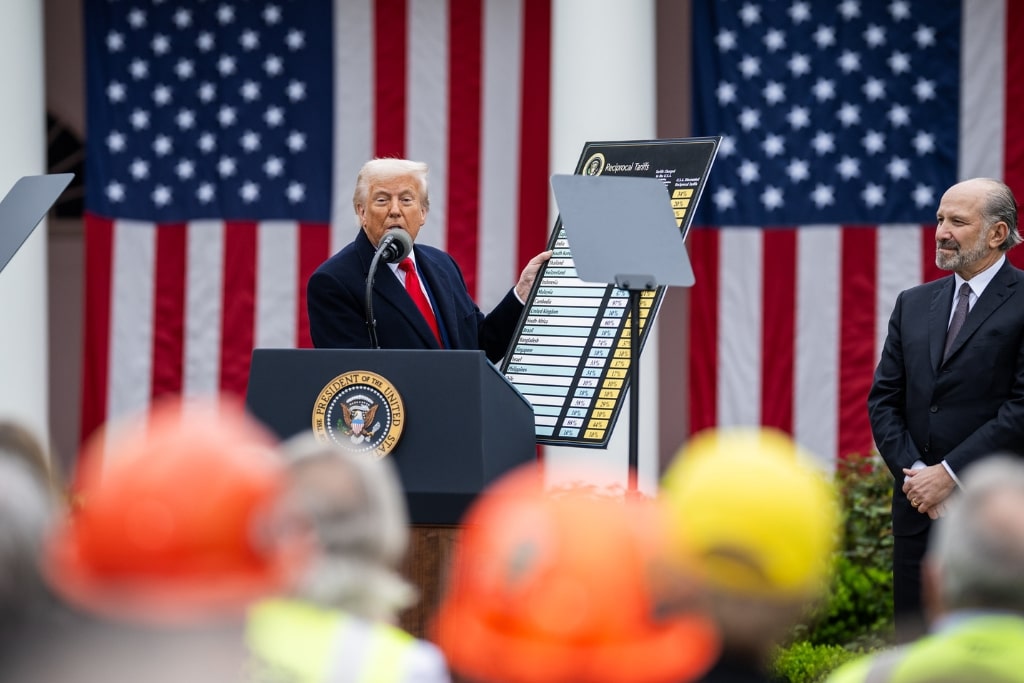
After the US imposed a 20% “blanket tariff” on most EU imports last April and the EU retaliated, both sides reached an agreement which includes a commitment for the EU to import $750 billion worth of US energy by the end of 2028, mainly oil and gas, raising concerns about renewed EU fossil fuel dependence and its climate targets. While the European Parliament has approved the US-EU trade deal, it now enters the final phase of negotiations between the European Commission, the European Parliament and member states, leaving its ultimate impact shrouded in uncertainty.
US influence has also extended to EU regulatory frameworks, with pressure contributing to weakening corporate sustainability laws such as the Corporate Sustainability Due Diligence Directive (CSDDD) and the Corporate Sustainability Reporting Directive (CSRD), two central pillars of the European Green Deal. Interestingly, these laws were already simplified in the EU’s Omnibus Simplification Package. Lobbying efforts from US corporations like oil and gas giant ExxonMobil and banking multinational JPMorgan targeted European governing bodies, while US Ambassador to the EU, Andrew Pulzner, reportedly characterized the CSDDD as “economic suicide” for Europe. This external pressure intensified internal divisions within the EU, resulting in a major split within the European People’s Party, the bloc’s largest political group, and ultimately in the dismissal of key elements of these laws.
Despite these constraints and highly contested backtracking on several fronts, the EU has, in some respect, continued to pursue climate leadership, notably through its long-awaited 2040 climate target. Adopted in March, it commits the bloc to a 90% net reduction in greenhouse gas emissions compared to 1990 levels. In parallel, several member states, including France, Belgium, Spain and Portugal, have recently supported multilateral environmental initiatives such as the UN High Seas Treaty, designed to accelerate global ocean conservation efforts. France played a key diplomatic role in mobilizing countries to ratify the agreement, helping clear the minimum threshold of 60 ratifications required for the treaty to come into force.
What’s Next?
The trajectory of transatlantic climate policy has shifted from a shared mission into a volatile geopolitical tug-of-war. While the 20th century saw the US and Europe trade roles as the primary architect of global environmental governance, the current era is defined by a climate of friction. As Washington pursues a path of aggressive deregulation and fossil fuel expansion under Trump, the EU finds itself at a crossroads: forced to choose between its ambitious 2040 climate mandates and the pragmatic pressures of economic survival and energy security. Ultimately, the success of global efforts like the High Seas Treaty and the Paris Agreement may no longer hinge on a unified transatlantic front, but on whether the EU can maintain its regulatory soft power in the face of an increasingly adversarial American agenda.
Featured image: Wikimedia Commons.
This story is funded by readers like you
Our non-profit newsroom provides climate coverage free of charge and advertising. Your one-off or monthly donations play a crucial role in supporting our operations, expanding our reach, and maintaining our editorial independence.
About EO | Mission Statement | Impact & Reach | Write for us
Earth.Org
Free, non-profit and independent environmental journalism.