
Sign Up
  • Earth.Org Newsletters

    Sign up to our weekly and monthly, easy-to-digest recap of climate news from around the world.

  • This field is for validation purposes and should be left unchanged.
Earth.Org PAST · PRESENT · FUTURE
Environmental News, Data Analysis, Research & Policy Solutions. Read Our Mission Statement

River pollution in Hong Kong represents a huge threat to biodiversity and ecosystems. While water pollution levels are improving, the quality of some watercourses located in rural areas remains low. Examining heavily polluted rivers can help assess the effectiveness of current policies and further enhance the health of Hong Kong rivers. 

Criteria for Measuring River Quality

Despite not being as severe as it was in the past, river pollution in Hong Kong remains a threat to biodiversity and entire ecosystems. Agriculture and industrial activities contribute to the degradation of water bodies, with detrimental consequences on human health and the environment.

Several parameters dictate the pollution level of a water body, including pH, dissolved oxygen, E. coli bacteria, biochemical oxygen demand, suspended solids, phosphorus, and nitrogen. These parameters influence the Water Quality Index (WQI) and the Water Quality Objectives (WQO), both of which are used to quantitatively and qualitatively assess river health. 

river pollution in hong kong; River Water Quality Monitoring in Hong Kong River Water - Our Invaluable Asset In Hong Kong, there are hundreds of rivers, streams and open nullahs. They are finite resources having different beneficial uses: such as supply to reservoirs, irrigation, preservation of aquatic life, recreation and passage of storm water to the sea. The EPD has a comprehensive river water quality monitoring programme in Hong Kong since 1986, which covers 82 stations at 30 main rivers and streams running through urban areas. The monitoring involves conducting field measurements and collecting water samples for laboratory analyses of over 50 physico-chemical and biological parameters, including organics, nutrients, metals and E. coli bacteria, serving the following purposes: evaluate the pollution status of rivers; monitor long-term changes in river water quality; provide scientific basis for planning water pollution control strategies; assess compliance with the Water Quality Objectives (WQOs); and compile Water Quality Index (WQI) to reflect the overall state and trend of the health of rivers. River Water - Our Invaluable Asset Water Quality Index (WQI) for Rivers

Water Quality Index. Source: Hong Kong Environmental Protection Department (HKEPD)

river pollution in hong kong; Water Quality Objectives (WQOs) for marine waters of Hong Kong

Water Quality Objectives. Source: Hong Kong Environmental Protection Department (HKEPD 

The lower the WQO compliance rate (0-100%) and the worse the WQI grade (Very Bad to Excellent), the more contaminated the water body. Contaminated water can lead to prolific water-borne diseases including cholera, diarrhoea, and typhoid. In the latest Annual River Water Quality Report, issued in 2021, Hong Kong river quality was satisfactory, with a compliance rate of 86%. 81% of the river monitoring stations were graded as ‘good’ or ‘excellent’ and only 9% were graded as ‘bad’ or ‘very bad’.

However, unorthodox parameters such as antibiotics and microplastics are often overlooked. Several studies, including Deng et al. (2018), Wu et al. (2020), and Tsang et al. (2020), claim that river antibiotic and microplastic levels are just as important to reduce bacterial-resistant populations and biomagnification. This could worsen as the demand for freshwater resources increases under growing population pressure and economic expansion.

To further improve river quality and keep pollution at a minimum, the government has implemented numerous policies. In this article, we evaluate current river pollution policies and suggest strategies to promote a more river-friendly culture and enhance antibiotic regulations and microplastic monitoring. 

Are Current Policies Effective In Tackling River Pollution in Hong Kong?

1. Expanding Sewage Infrastructure

The Environmental Protection Department (HKEPD) and the Hong Kong Drainage Services Department (HKDSD) have developed a sewage infrastructure system across the territory. Untreated human sewage contains numerous pathogens that cause water-borne diseases and is one of the primary sources of low river water quality. A total of 8 sewerage master plans – design plans of sewage systems – were implemented in 1995 and are regularly reviewed to ensure that the water quality isn’t further altered by increasing population and development. However, there are three key issues related to the sewage master plan. 

The first problem is that rural areas are not being prioritised enough. An example of this can be observed in Tuen Mun, Hong Kong’s westernmost district in the New Territories. Despite being reviewed under the sewerage master plan, there is evidence that rivers in that area still suffer from sewage discharges. In 2021, the monitoring station upstream of Tuen Mun River had a low WQI due to sewage from rural areas. Some might argue that the high urban population outweighs the need of the rural population. Nevertheless, due to rural communities being closer to and dependable on rivers, treatment and monitoring sewerage in rural areas should be prioritised.

Secondly, faulty sewage facilities can harm river systems. Gomes & Wai (2020) point out that, despite the presence of sewerages, rivers in Kam Tin – an area in Hong Kong’s New Territories – were polluted from sewer accidents and breaches. Causes for such breaches may include power outages, intrusion of tree roots in opened cracks, and outdated pipeline systems. This result is consistent with the HKEPD river report, which found that the overall WQO compliance rate in 2021 was 38%, as compared with 21% in 1991. As a result, constant maintenance should be conducted to decrease conduit problems. 

The third and final issue is the cost factor. In addition to the building and operating costs, sewage infrastructure may need additional maintenance and cleaning costs when grease and oil often coming from nearby restaurants in rural areas, enter the system. Such deposits may decrease the sewer’s capacity, resulting in a reduced flow of wastewater. Therefore, the HKEPD and HKDSD ought to cooperate with other stakeholders such as restaurants and country dwellers to reduce sewage at the source.

2. Controlling Livestock Waste

The Livestock Waste Control Scheme under the Waste Disposal Ordinance prohibits the discharge of untreated livestock waste and faeces and sets up prohibition areas for livestock rearing. These regulations could decrease foul odour, suspended solids, and eutrophication in river courses, which are important habitats for aquatic life. 

However, the malpractice of agricultural farmers could be a challenge. To reduce environmental adherence costs, pig and chicken farmers may illegally dump livestock waste into nearby rivers, despite the scheme providing sufficient treatment facilities. This claim is supported since rivers in North Districts and Yuen Long are among the worst in Hong Kong, likely due to the fact that most pig and chicken farms are in northwest New Territories. Livestock waste not only includes antibiotics, but also e. coli, ammonia and nitrogen, which makes illegal dumping detrimental to water quality particularly in individual sections of major watercourses. 

Apart from farmer malpractice, the livestock waste control scheme contains strict guidelines that may not always be feasible. For instance, the soakaway system – a series of channels, screens and pits designed to manage wastewater on-site – will often require long planning and financial investment from farmers, leading to hardships, especially for small-scale farms or family-owned businesses. While the strictness of the scheme can be considered necessary, farmers will likely continue to find loopholes if proper financial assistance and constant monitoring from the government are left unchecked. 

You might also like: Causes of Water Pollution And How We Can Reduce It

Policy Suggestions to Reduce River Pollution

1. Promote A River-Friendly Culture

A river-friendly culture can contribute to wastewater reduction. The relatively new term refers to the public interaction with rivers for leisure, enjoyment, and connection with nature. Since the river pollution in Hong Kong is improving, there is a paradigm shift from avoiding to embracing natural rivers. Indeed, rivers can be thought of as a recreational and educational resource instead of a ‘no-go zone’. For successful implementation, it is worth considering various strategies for different rivers, including safety precautions for heavy rain and flooding as well as large-scale infrastructure projects such as the 2006 Yuen Long Bypass Floodway and the revitalisation of Tai Wai Nullah in Sha Tin, which is currently under planning and design. 

The revitalisation of waterways may help promote a more river-friendly culture. The Tsui Ping River in Hong Kong’s Kwun Tong district is a great example of this. Tsui Ping River is set to be revitalised with riverside walkways, footbridges, wetlands, and floating platforms by 2024. The project, which involves the cooperation of multiple government departments such as DSD, EPD, and the Buildings Department, is a great step forward in shaping a more sustainable city and provides an integrated and multi-faceted approach toward river-friendly cultures. Moreover, the proposed wetland and greenery could improve the thermal environment plagued by surrounding highways and skyscrapers.

2. Set a Consumption Standard for Livestock Antibiotics

Antibiotics are drugs that help prevent and treat infections caused by bacteria. It comes without saying that the fewer antibiotics are used on livestock, the fewer end up in rivers. 

Even though antibiotics decrease bacterial infections in livestock such as pigs and chickens, over-consumption causes them to lose their effectiveness over time, giving rise to antibiotic-resistant bacteria. Residues may also run off into rivers through livestock wastewater, disrupting fluvial microbial ecosystems. 

The livestock waste control scheme only focuses on the overall control and treatment of livestock waste but does not specify the limit of antibiotics consumption. High levels of antibiotics such as sulfamethoxazole, sulfadimidine and ofloxacin were detected in some of the most polluted Hong Kong rivers, such as the Yuen Long River and the Kam Tin River. Therefore, similar to the WQO, the government should impose a standard use of antibiotics to reduce pollution at the source.

3. Introducing Microplastics as a WQO Parameter

Under review of the outdated WQO, microplastic concentration can be included as a parameter. With the mass use of single-use plastics in Hong Kong, the risk of microplastic contamination is apparent. 

Microplastics are microscopic fragments resulting from the breakdown of plastics. Common examples include materials such as glitter, microbeads and fragments from larger pieces of plastic debris, as well as from items of clothing. Not only do high concentrations of microplastics lead to biomagnification in aquatic life, ultimately risking public health, but they can also cause stress on wastewater treatment facilities as most are unable to effectively remove all microplastics from wastewater. Therefore, it is important to include parameters like microplastics in WQO to make the assessment of river pollution in Hong Kong more comprehensive and reliable.

An intelligent network management system can be used as a blueprint for introducing microplastics as a WQO parameter. This system focuses on data collection, analysing microplastic particles from water samples and prioritising rivers with high microplastic concentrations. An intelligent network could also use pressure management to reduce the use of non-biodegradable cleaning products, as well as the re-provisioning of water mains such as the upgrade of nearby wastewater treatment facilities that can treat microplastics. 

Although such measures are difficult and time-consuming to implement, finding ways to reduce microplastics in rivers could reduce the overall amount of microplastics transported to the ocean. 

You might aslo like: China’s Refusal to Take Back Food Containers Exposes Hong Kong’s Broken Plastic Waste Management System

Final Thoughts

This article aims to raise awareness and provide new perspectives to the current river pollution problems in Hong Kong.

Undoubtedly, the policies and ordinances in place have significantly improved river pollution in Hong Kong. The government’s expansion of sewage infrastructure has reduced the amount of sewage and wastewater entering rivers and the Livestock Waste Control Scheme provides stringent guidelines for waste disposal in nearby rivers.

However, updated technology, a push to reduce farmer malpractice and illegal dumping, as well as the prioritisation of certain pollutants are equally necessary to maintain effective sewage systems. 

Policy suggestions include promoting a friendly river culture under revitalisation projects to integrate the public with the environment, setting a livestock consumption limit for antibiotics to reduce bacterial-resistant population, and including new parameters to the outdated WQO such as microplastics to safeguard wildlife and public health. 

You might also like: 6 Biggest Environmental Issues in Hong Kong in 2023

With fast fashion on the rise, discarded garments are filling landfills at an alarming rate. In 2018, more than 300 tons of textile waste were tossed out every day in Hong Kong landfills. Globally, the fashion industry accounts for 10% of annual carbon emissions. Fashion brands are now scrambling to promote sustainability and ethical practices in their operations. Here are 13 ethical and sustainable Hong Kong fashion brands. 

15 Sustainable and Ethical Fashion Brands in Hong Kong

1. Basics for Basics

Established by Kayla Wong, Basics for Basics is driven to minimise fashion’s carbon footprint, using surplus fabrics and organic cotton to create simple essentials ranging from graphic T-shirts, Sunday dresses and tank tops to hoodies and sweaters.

To ensure fair trade, the brand is also enhanced with a volunteer rewards program supported by Hands On Hong Kong.

2. Kitdo

Pioneered by Hong Kong-based stylist Denise Ho who has been in the sustainable fashion scene for the past 8 years, Kitdo aims to provide chic and functional solutions to restyle one’s existing wardrobe pieces, rather than participating in the cycle of waste creation and compulsive buying. The first restyling accessories label of its kind, Kitdo is an innovative and consciously-produced styling piece made with lightweight aluminium and strong magnet inserts. Plated with a waterless coating, namely PVD, the beautifully designed accessory is crafted individually with the CNC machine process.

sustainable fashion hong kong; kitdo; denise ho

Restyling a babydoll dress into the peek-a-boo top. Photo by: @kitdo_official

“The average person only wears 10-20% of their wardrobe,” explains Denise Ho, Kitdo Founder. “As a stylist, on set we use safety pins, tape and clips to get the right look out of the clothes on shoot, but these tools can easily ruin the fabric – particularly safety pins. It got me thinking about an alternative that also truly represents my ultimate vision of sustainable fashion. Kitdo expands your restyling options by creating new textures and shapes without putting holes in your clothes. It truly pushes the unlimited imagination of what’s possible with your wardrobe.”

3. Paper Shades

Launched by sibling entrepreneurs James and Madi Chu in 2018, Paper Shades is an eyewear label that designs and manufactures customisable sunglasses from durable and sturdy recycled paper. The UV 400 lenses are paired with biodegradable frames and adjustable arms, available in a variety of designs to suit all face shapes and occasions. 

paper shades

Photo by: Paper Shades

4. The R Collective

Born from Hong Kong-based charity Redress, The R Collective advocates for a circular fashion system and does so by upcycling waste materials- excess fibres, fabrics and fasteners- sourced from luxury fashion brands across the globe and then morphing them into versatile quality garments for women. Through rescuing fabrics, the brand has potentially reduced the emission of over 34 000 kilograms of carbon dioxide equivalent and 65 500 yards of fabric.

The collective donates 25% of its profits back to Redress as part of their engagement with environmental fundraising activities. 

5. Vestiaire Collective

The global resale platform Vestiaire Collective also champions the notion of circular fashion but in a different way. Through facilitating the buying and selling of second-hand designer brand items, the platform extends the average lifespan of clothing by nine months, reducing the carbon, waste and water footprint of each item by 20-30%. That way, consumers may give their wardrobe a second life by purchasing vintage luxury goods whilst simultaneously getting rid of their own items!

6. The Hula

With a similar mission to extend the life of well-crafted pieces, the online marketplace The Hula sells an edit of pre-owned authenticated designer clothing and accessories. According to founder Sarah Fung, a minimum of 5% of net profits go to partnered charities spanning environmental to human trafficking NGOs, and members are also given the chance to donate at time of purchase. The marketplace currently has a showroom in Wong Chuk Hang.

the hula

Photo by: The Hula

7. PYE

Helmed by Hong Kong businesswoman Dee Poon, dress shirt specialist PYE produces classic men apparel with a sustainable fashion seed-to-shirt philosophy. From farming their own cotton in Xinjiang, spinning the yarn with Extra Long Staple cotton, to cutting and sewing their patterns, the brand offers an eco-conscious alternative to typical formal attire. Without compromising on aesthetics, PYE has reduced its water and energy consumption by 57 and 43% respectively over the last decade.

8. Angus Tsui

Dedicated to bridging high fashion with environmental sustainability, the eponymous fashion brand Angus Tsui is known for its futuristic and experimental designs. Many of its collections upcycle textile waste while applying zero-waste and eco-printing techniques. The designer has previously joined hands with H&M to create upcycled uniforms and accessories using sustainable processes.

9. Classics Anew

If you’re looking for vintage clothing, Classics Anew is your cup of tea. Founded in 2014, the brand gives the traditional Qipao a contemporary twist by blending materials such as organic cotton, linen and denim materials with classic Chinese elements like mandarin collars and buttons. Apart from their retail store in Central, qipao-making workshops are regularly held at their showroom in Hung Hom. 

classics anew

Photo by: Classics Anew

You might also like: 10 Stunning Fast Fashion Waste Statistics

10. Net Sustain

Curated by Net-a-Porter, Net Sustain allows one to purchase clothing, shoes and jewellery products that support human, animal and environmental well-being.  Every item on the platform aligns with at least one of their eight key attributes: locally made, craft and community, considered materials, considered processes, considered ingredients, reducing waste, animal welfare, and vegan. 

11. Holenga

Traversing beyond the apparel landscape, Holenga crafts cruelty-free lifestyle accessories, including passport holders, luggage tags and customisable mugs. To curb waste, the company prints-to-order as customers purchase their wares. In particular, their award-winning signature ECO Can Plus- made of corn with zero plastic yielded- is biodegradable and heat-resistant. 

12. Good Days Activewear

Good Days was born during the COVID-19 outbreak in 2020 and centres itself around sustainable practices and values- be that the materials that go into the products or the labour that goes into producing the goods. It uses a range of recycled fabrics, including recycled polyester, nylon and cotton blends. It also creates fabrics using recycled plastic bottles, fishing nets and nylon carpets, all of which would otherwise end up in a landfill.

sustainable fashion brands hong kong

Photo by: Good Days Activewear

By collectively turning the spotlight on ethical businesses, we challenge the status quo of manufacturing practices. These Hong Kong sustainable and ethical fashion brands are changing the industry for the better; hopefully, the demand from consumers will drive a global industry-wide push to become more mindful of their practices. 

13. Vipop

Launched by Venezuelan natives Lenia Pérez and Fabiana González, Vipop sources conscious resort-wear and swimwear from small label and well-known designers in Latin America and Europe. They strictly only work with brands that have eco-friendliness and fair trade at the forefront.

From vegan materials and carbon-neutral manufacturing to supporting local hand makers and seamstresses in the countries the clothes are made in, their ethically made vibrant evening gowns, bikinis, and coord sets make you look like you just stepped off a sunbathed cobblestone street in Colombia. Vipop’s boutique Artezano is in the Soho district located right on the famous Graham Street which also houses an adorable café and Mediterranean grocery store.

You might also like: 16 Most Sustainable Fashion Brands to Support in 2022

Hazards facing the local dolphin population have one common feature – they are all consequences of human activity. And in Hong Kong, many of them converge in the waters off Lantau – historically the stomping grounds of these marine mammals. 

If Hong Kong had a charismatic megafauna, it would be the Chinese white dolphin. These playful marine mammals were the mascot of the city’s Handover from British to Chinese rule – their smiling faces a welcome distraction from collective existential crisis – and have been the focus of concerted conservation efforts for more than two decades.

But despite those efforts, the existential crisis is now theirs: Chinese white dolphin abundance has fallen in Hong Kong waters by almost 80 per cent over the past 18 years, according to Agricultural, Fisheries and Conservation Department (AFCD) data.

dolphins; pink dolphins; pink dolphin; hong kong pink dolphin

A Chinese white dolphin near the Hong Kong-Zhuhau-Macao Bridge while it was under construction. File Photo: WWF.

Ignorant of maritime borders, Hong Kong’s dolphins are part of a wider Pearl River Delta population of around 2,000 – thought to be the largest group of Chinese white dolphins left in the world. This offers little cause for celebration; Sousa chinensis is considered “vulnerable” on the International Union for Conservation of Nature’s Red List of Threatened Species, meaning that it is “considered to be facing a high risk of extinction in the wild.”

“The situation is critical,” Doris Woo, the cetacean conservation project manager at WWF-Hong Kong told HKFP. “They have already reached their minimum viable population size,” Woo said. “If their numbers drop below 2,000, it will be very hard for them to go up again.”

The animals – also known as Indo-Pacific humpback dolphins, or pink dolphins for the blush appearance they acquire as adults – live in shallow coastal areas across Asia; according to WWF they were first recorded in local waters in the 1600s.

dolphins; pink dolphins; pink dolphin; hong kong pink dolphin

Construction of the Hong Kong-Zhuhai-Macao Bridge. File Photo: GovHK.

Today, though, the NGO has identified seven critical threats in those waters: habitat loss and degradation from development and construction; fewer fish to feed on because of illegal fishing and unsustainable fishing practices; underwater noise disturbance from construction and boat traffic; the risk of being struck by marine vessels; toxins and pollutants from industrial and agricultural run-off; drowning after becoming entangled in fishing nets; and rising sea levels, which in turn lead to greater loss of habitat.

These hazards have one common feature – they are all consequences of human activity. And in Hong Kong, many of them converge in the waters off Lantau – historically the stomping grounds of these marine mammals, at least until recent development projects redrew the map.

Hostile Habitat

“As Hong Kong marine construction activities have increased in the last two decades, Hong Kong has become a stressful habitat for dolphins to live in,” Lindsay Porter, a marine biologist and senior research scientist at research organisation SEAMAR, told HKFP.

As a result, dolphins either move away, outside of the zone covered by long-term census monitoring, or “anthropogenic activities cause ‘un-natural’ mortality and suppress reproduction,” Porter said, adding that both factors could be at play.

dolphins; pink dolphins; pink dolphin; hong kong pink dolphin

A Chinese white dolphin. File photo: GovHK.

“As has been stated by various independent sources since the early 1990s… the population of dolphins that resides within the Pearl River Estuary is in decline,” said Porter, explaining that “what we see in Hong Kong is the easternmost edge of that population.”

The long-term census monitoring mentioned by Porter has been an AFCD initiative for more than two decades, observing and collecting data on Hong Kong’s dolphins and Indo-Pacific finless porpoises according to the same metrics since 2003.

Measured in abundance – a population estimate reached after analysing data collected by the Hong Kong Cetacean Research Project (HKCRP), which conducts the monitoring for the AFCD – there were just 40 dolphins in Hong Kong in 2021. That marks an increase from 2018, when the estimate was 32, a record low, but a huge drop from 188 dolphins in 2003.

The AFCD acknowledged that the decline was linked to government-led development schemes. “A drop in CWD abundance was noted in recent years and the drop coincided with major infrastructural projects such as the Third Runway System project,” a spokesperson from the department told HKFP.

“Reclamation and marine construction works would inevitably bring about ecological impact and disturbance to nearby waters and affect marine species such as CWDs. One of the methods for CWDs to cope with the negative effects posed by these infrastructural projects is to avoid using the affected area temporarily,” the AFCD spokesperson said.

Coastal construction projects destroy habitats and disrupt the availability of prey. They are also incredibly noisy. “During construction activities, the underwater noise levels are intense,” Porter said. Loud subaquatic conditions can hamper dolphins’ ability to communicate, navigate, locate prey and avoid danger.

At worst, “extremely loud noises can kill dolphins,” Porter said.

dolphins; pink dolphins; pink dolphin; hong kong pink dolphin

The reclamation site of Hong Kong airport’s third runway project. Photo: Supplied.

“Some construction projects last for 10 years or more, so the dolphins are subject to intense noise at almost every moment of the day and night if the construction site operates 24/7, as many do,” she added.

You might also like: Why Endangered Dolphins Are On the Rise

‘No Apparent Signs of Recovery’

Indeed, the most recent monitoring report, submitted to the AFCD in July, paints a damning picture. “In the past decade, dolphin occurrence in the North Lantau region has greatly diminished… with no apparent signs of recovery owing to the consecutive implementation of major reclamation and coastal development works,” it notes.

“Continuous and alarming declines in dolphin usage were observed within the Brothers Marine Park and the Sha Chau and Lung Kwu Chau Marine Park.”

dolphins; pink dolphins; pink dolphin; hong kong pink dolphin

The Brothers Marine Park. Photo: GovHK.

The former was designated off the coast of north Lantau in 2016 in an attempt to atone for permanent habitat loss caused by construction of the city’s section of the Hong Kong-Zhuhai-Macao Bridge (HZMB), as set out in its Environmental Impact Assessment (EIA) report.

When the Brothers Marine Park became official, an AFCD spokesperson called it “an important Chinese white dolphin habitat” – and indeed it had been. However, HKCRP data showed dolphin usage of the area experienced “a dramatic decline” since 2011 – the year construction of the bridge began. Between 2015 and 2021, HKCRP recorded “zero dolphin density” in the marine park.

“Although dolphin usage was expected to recover after the completion of most marine works associated with HZMB construction and the establishment of the [Brothers Marine Park] in December 2016, their occurrence around the Brothers Islands remains extremely rare in recent years,” HKCRP said.

dolphins; pink dolphins; pink dolphin; hong kong pink dolphin

Chinese white dolphin and calf. Photo: Hong Kong Dolphin Conservation Society.

As for Sha Chau and Lung Kwu Chau Marine Park, also in the waters north of Lantau, HKCRP said there has been an “alarming decline” in dolphin usage since 2013, which “raises serious concerns because this area has long been considered important dolphin habitat in Hong Kong.”

Marine Park Mitigation

Data collected from acoustic monitoring in the two marine parks in north Lantau waters underlined what HKCRP researchers had observed. “This suggests that the continuing construction activities in waters adjacent to the marine parks (e.g. the 3RS project and the Tung Chung New Town Development reclamation project) are having noticeable impacts on dolphin occurrence within the protected waters… even over a fairly short period of time,” the monitoring report read.

dolphins; pink dolphins; pink dolphin; hong kong pink dolphin

The third runway began operation on July 8, 2022. Photo: Airport Authority Hong Kong.

“3RS” is shorthand for the third runway at Hong Kong International Airport, part of a controversial HK$141.5 billion project that opened in July as the city’s aviation industry was languishing under strict Covid-19 travel restrictions. The additional runway angered environmental advocates, who believed the EIA failed to fully evaluate the impact of the project.

Two activists took their grievances to the High Court to try and prevent the Airport Authority from breaking ground. Their legal challenge was rejected and construction began in 2016.

Included in the conditions of the Environmental Permit for the third runway was the designation of another marine park, “as compensation for the seabed habitat and open waters habitat loss associated with the land formation for the 3RS Project.”

This one would measure 2,400 hectares and “would protect and conserve the marine environment around the HKIA from various anthropogenic threats such as sewage discharge, seabed dredging, dumping, coastal reclamation and destructive fishing.”

dolphins; pink dolphins; pink dolphin; hong kong pink dolphin

Conservationists Doris Woo (left) and Viena Mak. Photo: Kelly Ho/HKFP.

Currently still in the proposal stage, the North Lantau Marine Park, as it is expected to be called, would connect Sha Chau and Lung Kwu Chau Marine Park and Brothers Marine Park. Where this park will differ from existing protected areas is that AFCD will establish “SMART goals” –  specific, measurable, achievable, relevant, and time-bound objectives that will help assess how well Chinese white dolphin conservation is going.

“This is a very good approach to manage the effectiveness of all the protected areas,” WWF’s Woo said. Such parameters should help identify any “change in the dolphin’s abundance, density and how they use the area after the designation of the protected area.”

But before the North Lantau Marine Park can be designated, the construction of a 45-kilometre subsea gas pipeline connecting Black Point Power Station in Yuen Long with a liquefied natural gas terminal in waters to the east of the Soko Islands, south of Lantau, must be completed. It will run “parallel and within” the western boundary of the proposed marine park and pass to the west of the South Lantau Marine Park, according to the EIA.

dolphins; pink dolphins; pink dolphin; hong kong pink dolphin

Black Point Power Station in Yuen Long, in Hong Kong. File photo: Minghong/Wikicommons.

The LNG terminal is being constructed as part of Hong Kong’s efforts to reduce carbon reliance and safeguard long-term energy security. In August, CLP Power told investors that while the post-trenching work for the pipeline was nearly finished, the “laying of rock protection works continues.” The terminal is expected to enter commercial operation next year.

You might also like: The Importance of Land Reclamation in Hong Kong and its Impacts

Population Migration

Responding to a question from lawmaker Kwok Wai-Keung last month, the Secretary for Environment and Ecology Tse Chin-wan said that as “major infrastructure projects near Lantau waters progressively come to completion, there is the possibility that the dolphin number would gradually increase in the next few years and occurrence would become more frequent” – tacit acknowledgement that these projects played a role in keeping the cetaceans away.

Tse was referring specifically to the waters of the recently established South Lantau Marine Park, an area of 2,067 hectares around the Soko Islands that was designated in June as compensation for yet another construction project: the Integrated Waste Management Facilities – essentially a giant incinerator – at Shek Kwu Chau.

dolphins; pink dolphins; pink dolphin; hong kong pink dolphin

Construction work on an artificial island near Shek Kwu Chau in 2021. Photo: Kelly Ho/HKFP.

Historically an important habitat for finless porpoises and, to a lesser extent, Chinese white dolphins, HKCRP noted “low to moderate dolphin densities” in central south Lantau waters around Shek Kwu Chau, according to its most recent report, which was completed before the marine park was established.

WWF and HKCRP have raised the urgent need to protect the waters around south and southwest Lantau, noting the migration of dolphin populations since north Lantau waters essentially became a massive and ongoing construction site. Even with mitigation measures beyond marine parks written into EIAs for each project, the hope that dolphins might quickly return to a recently hostile environment appears to be little more than a fantasy.

“Unfortunately, we still haven’t seen any sign of recovery in numbers in impacted regions, especially in north Lantau, where there was the bridge, the artificial island, the third runway, and also reclamation areas close to Tung Chung,” Woo said.

‘Disturbed for Over a Decade’

Porter noted the importance of marine parks to Chinese white dolphin conservation, calling habitat protection “the cornerstone of every management plan for coastal marine species that have a restricted range, strong societal structure and localised prey resources.” However, marine parks alone will not bring the cetaceans back.

“Once a marine development is completed, there is an opportunity for the habitat to stabilise, stressors are removed and dolphins and their prey may settle into the altered habitat. The issue in Hong Kong over the last few years is that mega projects have overlapped in both area and timing and the dolphins’ habitat has been in a disturbed state for over a decade,” Porter said.

dolphins; pink dolphins; pink dolphin; hong kong pink dolphin

Lantau Tomorrow Vision. Photo: GovHK.

Porter also took issue with Tse’s suggestion that such construction projects were coming to an end. In his inaugural Policy Address delivered in October, Chief Executive John Lee signalled his administration’s commitment to perhaps Hong Kong’s biggest development plan to date – Lantau Tomorrow Vision. This centres around massive land reclamation to build a series of artificial islands in Lantau’s eastern waters, which, Woo of WWF said would “definitely mean a loss of habitat for finless porpoise.”

Additionally, Woo said that reclamation “will result in water pollution and noise pollution,” which cannot be effectively contained within the footprint of the reclaimed area.

“Even outside Hong Kong there are a lot of large-scale works happening, such as the Shenzhen-Zhongshan Bridge,” Woo added. “The mainland side is equally busy.”

Porter agreed. “We are very far away from there being a cessation of projects in the waters that dolphin and porpoise rely on,” she said.

Featured image: Flickr

This article was originally published on Hong Kong Free Press, written by Mercedes Hutton, and is republished here as part of an editorial partnership with Earth.Org.

In Hong Kong, there is growing research pointing to the disproportionate impacts of climate change on women. However, women’s voices continue to be marginalised and men continue to have the final say over climate policies. If Hong Kong wants to achieve gender and climate justice, decision-making processes need to be more gender-inclusive. But to do so, the city will have to recognise that gender inequality cannot be achieved merely through legislation but also through cultural shifts in how we conceive leadership. This involves challenging taboos and stereotypes that have acted as barriers to women’s ability to become leaders in Hong Kong.

On March 8, the world celebrated its 111th International Women’s Day, a day commemorating the cultural, political and socio-economic achievements of women. Like most parts of the world, Hong Kong has been a celebrant of the occasion. Building on global momentum, March has been an exciting month for organisations, charities and rights groups in Hong Kong to bring attention to issues like gender equality and reproductive rights, as well as to use the opportunity to promote awareness about violence against women in the city, following a recent study which found that almost 40% of Hong Kong women experienced sexual abuse in 2021.

Recognising that gender inequality is no trivial issue in Hong Kong, there is a growing awareness that citizens need to work together to actively protect and support women from all kinds of injustices. What reflections can the environmental sector make?

Women and Climate Change

The impacts of climate change on women are already well documented in the research literature. Take air pollution as an example. Air pollution is found to be a huge risk factor for breast cancer. High levels of exposure to pollutants, toxins and smoke can disrupt women’s menstrual cycles (e.g. early or late periods), which can have long-term impacts on reproductive health. For pregnant women, the risks are even higher. On top of the aforementioned threats, they are more likely to suffer from cardiac and respiratory disease and other mental health problems. Pregnancies may also be affected, as poor air quality has been found to lead to premature births and low birth weight. These can pose further health risks to mothers.

So not only are women being negatively impacted by climate change, but they are also disproportionately affected, as many of the health risks mentioned above do not apply to men. However, because of existing gender inequalities in society, the climate crisis has led to more women facing increased domestic violence, sexual intimidation, human trafficking and rape because of changing economic circumstances and agricultural practices, especially in developing countries.

In fact, many have described climate change as a “double injustice” to women. As a 2014 paper published by CARE International, a leading humanitarian organisation explains, not only are women disproportionately affected by climate change, but they also lack the resources, options and opportunities to overturn these inequalities. Men have a larger carbon footprint than women, yet climate action policies rarely acknowledge these gender differences.

Are women disproportionately affected by climate change in Hong Kong? While the city remains under-researched as a context, there is a growing body of research suggesting so. Studies have already shown that women in Hong Kong are more sensitive to extreme weather conditions than men. For example, consecutive hot nights can bring a 6% higher risk of death for women, because they tend to have a higher proportion of body fat, which makes them more susceptible to heat and weakens their ability to recover. Hong Kong also has a dreadful air pollution problem, as most pollutant concentration levels still fall short of WHO goals. While the impacts of climate change on local pregnancies are relatively unexamined, the replicability of findings from other contexts to that of Hong Kong is likely high.

Climate Inequality is More Than Just A Number

There’s no question that data and science have all pointed to the disproportionate impacts of climate change on women – climate change reinforces gender inequality. But numbers can be misleading and unhelpful.

Apart from the fact that inequalities can often go unquantified, attempts to quantify inequality through metrics are always reductionist. Take domestic violence against women in Hong Kong as an example. According to a survey conducted by the Hong Kong Women’s Coalition of Equal Opportunities earlier this year, it found that almost 40% of women had experienced sexual violence in the past year. But a statistic like this says nothing about the true impacts of domestic violence. A single experience is great enough to create a cascade of consequences: from contracting sexually transmitted infections to long-lasting emotional problems, broken family relationships or long-term barriers in employment, all of which can never be expressed fully through a simple mathematical equation.

By the same token, the unique effects of climate change on women in Hong Kong can never be quantified in a way that will do justice to their gravity. They will always be omitted from the larger picture. As climate change becomes a bigger issue in Hong Kong, inequalities may only widen. Just because women in Hong Kong may be more resilient and better prepared for future risks today, does not mean that women’s bodies deserve to be continually put to the test.

The question is not why these inequalities have persisted – the reasons are crystal clear – but why it is so hard to disrupt them. To understand why women find it so difficult to effect change on a macro level, it is important to consider constraints to women’s abilities to spearhead Hong Kong’s justice movements.

hong kong female representatiion

The headquarters of the Legislative Council of Hong Kong.

The Marginalisation of the Female Body in Hong Kong’s Decision-making Circles

When it comes to decision-making in policy, women are completely outnumbered by men in Hong Kong. For example, female representation in the Legislative Council (LegCo) has never exceeded 20% in its two centuries of history, which is far below the global average of 26% (as of 2020). Most women engaged in climate-related work in Hong Kong reside in non-governmental organisations. Although they may occasionally have an opportunity to express their views in public consultations, they nevertheless do not have sufficient influence in the final stages of policy decisions. As a result, most policy decisions in Hong Kong, whether related to the climate or not, continue to remain in the hands of men who pay scarce attention to the importance of gender. 

As a result, the female body is marginalised in climate policy. As Inger Andersen, Executive Director of the United Nations Environment Programme (UNEP), argues, “male-dominated teams will [only] come up with male-dominated solutions”. There is still a tremendous legislative incapacity to recognise the existential impacts of climate change on women: climate change does not only “make life more difficult”; it can put their lives at risk. In the powerful words of Itumeleng Komanyane, International Programme Manager at Sonke Gender Justice in South Africa, “If [male policymakers] don’t understand gender, how can they pass anything progressive regarding women’s rights and empowerment?”

Given the dangers of not having enough female voices in decision-making, the case for more women in positions of decision-making should be clear. But this understanding has not been translated into  support for women to take up leadership roles in Hong Kong. Why is Hong Kong’s “double injustice” so hard to tackle?

Hong Kong’s Gender Inequalities in Leadership is a Cultural Problem

Hong Kong’s gender problem is more than just an institutional problem. Even if there are no structures that explicitly prohibit women from seeking certain advancement opportunities, women can still be disadvantaged culturally. 

In a detailed study conducted at The Women’s Foundation (TWF) in 2015, Marya Saidi found that gender stereotypes remain very prevalent in Hong Kong. They are further exacerbated by media representations, which lead to harmful portrayals of women and men and promote unhealthy perceptions, attitudes and behaviours.

The troublesome consequences of gender stereotypes on women’s career and leadership prospects have been helpfully highlighted by two comprehensive survey-based studies. One was conducted by TWF in 2011 and a more recent one was conducted by the Chinese University of Hong Kong and released by the Equal Opportunities Commission (EOC) in 2020. Although there is no law that bans women from becoming leaders, the gender stereotypes in Hong Kong can have equally strong inhibitory effects. They can be considered in two dimensions:

  • Obstacles to taking up senior roles

According to the TWF survey, almost 30% of women did not wish to be very successful in their careers, because of family obligations such as housework and looking after children. The existence of a “work-family trade-off” for women has yet to be proven, and a trade-off need not exist in the first place if both mothers and fathers are equally involved in domestic responsibilities. Yet, the fact that these tasks are often considered “mainly for women” has unfortunately led to women being more reluctant to develop their careers and reach for leadership positions. It is also not very helpful when more than a fifth of women’s partners do not want their spouses to be successful in their careers for these reasons.

  • Difficulties in staying as leaders

But just because some women rise to become leaders does not mean they are free from gender stereotypes. Women leaders continue to be “expected to take good care of their families regardless of their leadership roles”. For men, this is not an expectation but a bonus.

Often, the social expectations placed on women are also contradictory. In Hong Kong, women are expected to embody “feminine” traits of being empathetic and compassionate. In contrast, leadership qualities are often associated with “masculine” qualities of being dominant and assertive. The issue here is not role incongruity, i.e., a mismatch between their “nature” and their “jobs”, but the problematic assumption that women and men need to act “according to their gender”. When women cannot be seen as “good leaders” and “good women” at the same time, their desire to stay on as leaders can decrease drastically.

Gender Inequality in Hong Kong’s Green Sector

To what extent are these findings applicable to the environmental sector? While gender gaps are evident in Hong Kong’s male-dominated industries like finance, engineering or construction, gender gaps also exist within the so-called “socially responsible” and “purpose-driven” sectors (such as the sustainability or green sectors). While the social sector is perhaps one of Hong Kong’s most gender-balanced sectors (more than 40% are women), employment figures do not paint the full picture.

A series of interviews with sustainability professionals in Hong Kong and other parts of Asia conducted by Robin Hicks and Aditi Tandon from Eco-Business showed that in the green sector, women were not given the same respect as their fellow male counterparts. Many found their opinions frequently doubted and undermined, and people often did not know how to manage situations when a woman was in charge. Maggie Lee, currently Asia Pacific Regional Lead for Global Seafood Traceability for WWF, recalling an instance where she felt patronised by a director-level person when he commented on her “youthfulness” – and by implication, inexperience – shared that she would turn her camera off when speaking to top-level officials to avoid condescension. When women are not taken seriously, they are severely hampered in their ability to succeed, like attracting funding that is essential to much of their work.

Women are also subject to many other forms of leadership inequalities such as unexplainable pay gaps and unwanted public attention regarding their body shape, appearances and personal relationships. Together, they hinder women’s social and economic advancement and impede Hong Kong’s journey to becoming a more equal and inclusive society. With regard to climate change, this prevents women from being able to determine what is most important to protect and support themselves as they continue to disproportionately shoulder the impacts of climate-related injustices.

gender and climate justice

Photo credit: Mongkhonsawat Luengvorapant/Oxfam (CC BY-NC-ND 2.0)

Hong Kong’s Climate Justice Must Begin with Gender

As shown, it is clear that climate change and gender inequality are interrelated. Their effects compound one another: women are more vulnerable to changing environmental conditions; at the same time, the silencing of women’s voices will only exacerbate Hong Kong’s climate change problems. While legislation has been a key promoter of gender equality in many domains of life in Hong Kong, these structural developments have not been enough to remove some of the city’s deep-rooted discrimination and stereotypes. They can be extremely harmful and are the main reason why women continue to experience frustration in their efforts to make a change. 

Women are the building blocks of society; in Hong Kong, they account for more than half of the total population. When they suffer, society suffers with them. Hence, as Sonalie Figueras, Founder and Editor-in-Chief of Green Queen asks, “without lifting women up, what chance do we have of creating a fairer, kinder, greener world?”

Thus, Karen Ho, Head of Corporate and Community Sustainability at WWF-Hong Kong, urges Hong Kong needs to really realise and harness the value that women bring to society. The diversity that women bring, along with the unique traits that they offer, enrich organisations and businesses as they offer new perspectives, foster healthier communicative practices within the workplace and help develop more sustainable practices. Relating to climate change, having more women in decision-making positions allows a more inclusive approach to policy. Decisions can therefore be better informed.

The lesson is not that Hong Kong needs to “inject more femininity” into organisations, but that we need to discard those harmful gender labels that specify what a “man” or a “woman” is (not) supposed to be or do. When there is more representation at the senior level, men can also learn from their female colleagues and be encouraged to adopt traits that they believe are not “masculine”.

In fact, since COVID-19, there has been growing interest for organisations to embrace an “androgynous” style of leadership, which emphasises the need to blend these two traditionally diametrically opposed categories. In practice, leadership styles are adopted within organisations based not on who the leader is, but on what works best to support all employees and members.

Overall, Hong Kong needs to be a more receptive society. As David Smith, associate professor at the John Hopkins Carey Business School puts it bluntly, we need “more listening” and “less mansplaining”. For women to be able to speak for themselves, men, having historically been in positions of power, need to be responsive to the concerns of women and pay careful attention to their own practices so as to not let their own egos get in the way of others’ successes.

It is also crucial that gender inequality in Hong Kong is not simply used to reproduce pitiful and patronising narratives about women. Instead, inequality should be seen as an “artefact of absurdity” that can propel all actors in society to start interrogating their own worldviews, values, assumptions and habits to help create a new world.

There is no guarantee that achieving gender equality will lead to climate justice in Hong Kong. Many other inequalities and injustices (along the lines of skin colour, class, religion, age etc.) need to be addressed. Given the challenges of fighting climate change, having more diversity in leadership positions does not mean we will immediately make wiser decisions about our climate and environment – education will have to play a huge part. But if Hongkongers are determined to fight injustice, we must be open to new ideas and solutions – as the saying goes, two heads are better than one. Inviting more people to contribute would be a simple but good start.

You might also like: How the Climate Justice Movement Could Solve Global Gender Inequalities

More waste, less recycling. Hong Kong has been dealing with a serious waste issue for years and the problem seems to get worse year by year. While per capita trash disposal rates have been growing at a rapid pace, the recycling rate has steadily decreased. In August 2021, the Hong Kong Legislative Council passed the long-awaited Waste Charging Scheme: it is hoped that this move will help reduce per capita waste disposal by up to 45% and increase recycling rate by 55% at the same time. Since the new scheme will not start until 2023, let’s take a look at some of the most successful recycling strategies and waste management solutions in cities and countries around the world. 

It took nearly two decades for the Hong Kong Legislative Council to pass the city’s first waste disposal bill. The move aims to counteract the massive waste problem that the city is facing. Indeed, waste production rates across the territory have been steadily increasing over the last decades, and especially during the pandemic the city has seen a rapid surge in trash generation, as the use of single-use items such as masks and take-out plastic containers has skyrocketed. Even though the new scheme is a good step towards the right direction, more needs to be done in order to reverse the dangerous path that Hong Kong’s waste problem is taking. 

While we wait to see what effect the new waste charging scheme will have on the territory, we thought it would be a good idea to explore some of the world’s most successful strategies that cities or entire countries have adopted in recent years to decrease municipal waste production and improve its management.   

1. The EU Directive on Single-Use Plastics

Enacted in July 2021, the Single-Use Plastic Directive promotes the transition to a circular economy by banning the use of single-use plastics across all countries of the European Union, including cutleries, plates, cotton buds, straws, and balloon sticks. The Directive also aims at reducing the use of certain types of single-use plastics through Extended Producer Responsibility (EPR) schemes: these require companies producing packaging such as wrappers, wipes, and tobacco products, to cover the costs for its collection, sorting, and recycling after use. Member States must also restrict the use of food and beverage packaging from the catering and takeaway services. Lastly, the Directive introduced stringent rules regarding plastic bottles production and collection, setting specific standards for the design of bottles and containers so that they are easier to recycle as well as for the labelling on them, which has to indicate the product’s environmental impact as well as clear and concise instructions on how to properly dispose it.

waste management solutions The EU Single-Use Plastic Directive. Source: Europeworld

Hong Kong’s waste management solutions are also based on a Producer Responsibility Scheme (PRS) and includes mandatory ordinances such as the Plastic Shopping Bag Charging Scheme, which was fully implemented in 2015, as well as PRS on Waste Electrical and Electronic Equipment, a scheme that as launched three years later, which forces suppliers of electrical products such as air-conditioners, refrigerators, washing machines, televisions, and computers to pay recycling levies as well as providing recycling labels when distributing electrical equipment. Furthermore, in July 2021, the Environmental Protection Department (EPD) launched a public consultation on the Scheme on the Regulation of Disposable Plastic Tableware inspired by the recent action taken by the EU, mainland China, and Australia and proposed a stricter regulation of disposable EPS tableware, a ban on the provision of disposable plastic tableware for dine-in services, along with straws, plates and cutlery for takeaway services. The move is surely a step in the right direction. However, the current scheme does not provide concrete targets and it is not sure if and when such policies will be enforced.

waste management solutions Source: The Environmental Protection Department.  

You might also like: The Hong Kong Waste Charging Scheme is a Good First Step, But More is Needed

2. The Deposit Refund Scheme

Several North American states, south Australia, as well as 10 European countries have so far implemented a Deposit Refund System (DRS), one of the few extremely effective waste management solutions to incentivise consumers to recycle beverage bottles, mainly but not limited to plastic bottles. The scheme has proved to be successful in increasing these countries’ recycling rates, sometimes even bringing them up to almost 100%. Successful examples are countries such as Germany, which has reached an outstanding 98.4% of total return rate since the implementation of the scheme, and Norway, where 97% of all plastic bottles are recycled.  

The system is straight forward: when purchasing certain bottles, consumers pay a deposit, which is reimbursed once the empty bottle is returned to a retail outlet. In Germany, for example, the deposit usually ranges between €0.08 and €0.25. “One-way” plastic bottles are in the higher price range, while the deposit for reusable glass and plastic bottles usually does not exceed  €0.15. The difference in price is a strategic way to encourage people to return especially these environmentally damaging plastics: indeed, having paid a higher deposit for non-reusable bottles, the consumer is particularly incentivised to bring it back once empty. Furthermore, making plastic bottles pricier is also a way to make them less attractive products to buy altogether.

You might also like: How Waste Management in Germany is Changing the Game

Even though results differ in every country, DRS is undoubtedly a successful waste management solution and can have an overwhelmingly positive impact on waste production. They are proving to be particularly efficient in reducing littering generation, increasing bottle recycling as well as helping industries and consumers to develop a more responsible and sustainable mindset, in line with the polluter-pays principle such scheme is based on. 

waste management solutions Countries that have a Deposit Refund Scheme (DFS). Source: Statista.

3. San Francisco’s Zero Waste Approach

In recent years, many US cities started implementing policies to recycle and compost more to help tackle the massive waste problem that the country is facing. At the forefront of what is now known as the “zero waste movement” is one of California’s most populous cities, San Francisco. In 2009, the city passed an ordinance requiring all residents and businesses to sort their waste into recyclables, compostables and landfill trash, making it the first American city to make composting mandatory. When one thinks of recycling, materials such as plastic and glass usually come to mind. However, organic matter can be recycled, too: yard trimmings, food scraps and other types of organic waste can be composted and turned into extremely valuable fertiliser for the soil. Waste management solutions such as this process can be highly beneficial for the environment, as it helps drastically reduce carbon emissions into the atmosphere, improve the soil’s health as well as mitigate the harsh impact of droughts on the land. 

Considering that almost one third of the food produced for human consumption, nearly 1.3 billion tonnes goes to waste every year worldwide. Composting would have massive benefits and it would ultimately contribute to cutting down on the overall trash. Food waste is a big issue in Hong Kong, too. According to Feeding Hong Kong, over 3,600 tonnes of food waste are sent to landfill every day here. Introducing large-scale composting facilities such as the one in San Francisco would help divert this huge amount of food waste away from Hong Kong’s oversaturated landfills, which would then be reused to create enormous amounts of nutrient-rich fertiliser. Indeed, in the case of San Francisco, the introduction of compost, along with other waste regulation policies, financial incentives, and extensive multilingual outreach to residents and businesses, allowed the city to divert more than 80% of all discarded waste from landfills, making huge steps towards its goal to become the world’s first zero-waste.

Cutting out the use of single-use plastics, regulating the disposal of bottles, incentivising waste sorting and promoting compost are all great approaches to waste management solutions. However, for the waste problem there is no silver bullet. That is why it is of utmost importance that, according to its own resources and needs, each country starts taking action to solve the huge problem that waste is for the environment. Nations must find  the right approach and must consequently implement policies to reduce the amount of trash produced and efficiently deal with its management.

Featured image by: Wikimedia Commons

You might also like: 13 Biggest Environmental Problems Of 2022

Read on for a list of 17 vegan and vegetarian restaurants that have been sustaining and satisfying the veggies lovers of Hong Kong. 

Many meat eaters struggle to believe that it is easy to thrive on a plant-based diet in Hong Kong. As a city renowned for its many Michelin-starred restaurants, good food is a priority for most Hongkongers. This requirement is not limited to the omnivorous community. Hong Kong boasts a wealth of exclusively vegetarian and vegan restaurants. While some of the more traditional restaurants are still coming to terms with the distinction between vegan and vegetarian, most places now offer some meat-free options. Hong Kong is also the birthplace of the Green Monday initiative, which has greatly increased the public’s awareness around plant-based eating. With the ever-growing popularity of plant-based substitutes, it is now possible to eat entirely plant-based meals without sacrificing any of the dishes you’ve always loved. Here are 20 vegan and vegetarian restaurants that have been sustaining and satisfying the veggies lovers of Hong Kong.

The 17 Vegan and Vegetarian Restaurants in Hong Kong

1. Green Common/Kind Kitchen

First on our list of vegetarian and vegan restaurants in Hong Kong is Green Common. As part of the Green Monday initiative, Green Common is a plant-based grocery shop and cafe. Most of their dishes include plant-based meats, and are a mixture between eastern and western. Kind Kitchen by Green Common is located in Nan Fung Place and is Green Common’s full-service cafe. Both restaurants serve entirely vegan food, although the grocery shops contain some vegetarian products.

Location: Various locations throughout Hong Kong

Hours: Mon-Sun from 11:30-21:30

2. Hemingways

Located in Discovery Bay, Hemingways provides a relaxed bar and grill environment that is entirely vegan (even the drinks menu indicates which drinks are vegan-friendly). From pizza to buddha bowls, the wide and varied menu has something for everyone. 

Location: Shop G09, G/F, D’Deck, DB Plaza, Discovery Bay

Contact: +852 2987 8804

Hours: Mon-Fri from 12:00 – 00:00, Sat-Sun from 12:00-2:00

3. Ahimsa

Ahimsa serves up a vegetarian, all-you-can-eat, Chinese-buffet during lunch and dinner hours. The dishes that contain eggs and milk are clearly labelled, making it a vegan-friendly option too. The locations throughout Hong Kong serve similar dishes, although there is more variety in dishes during dinner time. The Central location also offers a new al la carte menu.

Location: Various locations across Hong Kong    

Hours: Mon-Sun from 11:30-16:00 and 18:00-22:00

You might also like: How Veganism Can Help Ease the World’s Land Use Crisis

4. LockCha Tea House

This traditional Chinese tea house offers vegans and vegetarians the opportunity to partake in a classic Cantonese cuisine, dim sum. Situated in Hong Kong Park, LockCha offers a tranquil escape from the city’s commotion. Each customer must order their own pot of tea, but with a tea menu that is thrice the length of the food menu, this is easily done.

Location: G/F, The K.S. Lo Gallery, Hong Kong Park, Admiralty 

Contact: +852 2801 7177

Hours: Mon – Sun, from 10 am – 8 pm

5. Veda

Located inside the Ovolo Central, Veda is Hong Kong’s first vegetarian hotel restaurant. The menu celebrates both eastern and western cuisines and is, according to the restaurant, “a menu that is meant to be shared.” 

Location: Ovolo Central, 2 Arbuthnot Road, Central

Contact: +852 3755 3067

Hours: Hours: Sun – Thurs from 06:30 – 23:00, and Fri – Sat from 06:30 – 24:00

6. Treehouse

Serving up a variety of salad bowls, burgers and flatbread wraps, Treehouse is a great option for a quick lunch. Made from fresh organic products, the wraps and bowls are customisable, which ensures something for everyone. Treehouse aims to be sustainable and ethical, without compromising taste. 

Location: Shop 1, H Code, 45 Pottinger Street, Central

Contact: +852 3791 2277

Hours: Mon-Sun from 10:30-21:30

7. Confusion Plant-Based Kitchen

A firm favourite among the Hong Kong vegan community, Confusion aims to reduce the confusion around plant-based diets and sustainability in general. Their ethical approach, not only towards the food they serve, but also their staff’s wages and working conditions, sets an example for restaurants everywhere. Confusion’s menu is ever-changing, but always includes a blend of eastern and western foods. 

Location: G/F, 103 Jervois Street, Sheung Wan

Contact: +852 2563 3699

Hours: Mon-Sat from 10:30-16:00 and 18:00-20:30

8. OVOCafe

OVOCafe not only aims to delight the vegetarian palate, but also to promote a greener lifestyle through their innovative approach to food. The cafe serves mostly vegetarian food with a large selection of coffee beans.

Location: 1 Wanchai Road, Wanchai

Contact: +852 2527 6011

Hours: Mon-Sun from 11:30-22:00

9. Veggie SF

With every surface covered in 1950s American memorabilia, the interior of Veggie SF is quirky to say the least. This non-conventional approach is not limited to their interior design; the completely vegetarian menu offers an eclectic range of dishes, with no one particular cuisine favoured. Vegan options are clearly labelled.

Location: 10/F, 11 Stanley Street Hong Kong Central

Contact: +852 3902 3902

Hours: Mon-Sat from 12:00-14:00 and 18:00-21:00

10. Mirror & Vegan Concept

Mirror & Vegan Concept proves that plant-based Italian cuisine is possible. With a menu filled with pastas and risottos, this quaint restaurant delivers delicious vegan food without comprising any of the traditional Italian flavours.

Location: 9/F, 118 Queen’s Road Central, Central

Contact: +852 28680810

Hours: Mon – Sat from 11:30 – 17:00 and 18:00 – 21:30 (closed Sundays)

11. Miss Lee

This cosy restaurant offers contemporary vegetarian Chinese food. Miss Lee caters to a range of dietary concerns, with dairy-free, vegan and gluten-free options available. Miss Lee also has a deli-counter that serves on-the-go options throughout the day. 

Location: G/F, The Wellington, 198 Wellington Street, Central

Contact: +852 2881 1811

Hours: Mon – Sun from 12:00-22:00

12. Chi Lin Vegetarian

Escape the hustle and bustle of the city with a walk through the tranquil gardens of Nan Lian, and enjoy a Buddhist meal at the vegetarian restaurant managed by the Chi Lin Nunnery. Set behind a waterfall, the restaurant serves beautifully presented Chinese dishes that are more flavourful than typical temple food.

Location: Long Men Lou, Nan Lian Garden, 60 Fung Tak Road, Diamond Hill, 

Contact: +852 3658 9388

Hours: Mon – Fri from 12:00 pm – 9:00 pm, Sat from 11:30 am – 9:00 pm

13. Isoya Japanese Restaurant

Isoya offers vegetarian forms of many favourite Japanese classics and dishes can be altered to suit a vegan diet. 

Location: 9/F, 83 Wan Chai Road, Wan Chai

Contact: +852 5500 8812

Hours: Mon – Sat 12:00 pm – 2:30 pm, 6:00 pm – 11:00 pm

14. Thai Vegetarian Food

For a taste of authentic Thai, head over to Thai Vegetarian Food. The Buddhist Thai restaurant serves traditional dishes that are bursting with flavour and fragrance. 

Location: G/F, 28 Nam Kok Road, Kowloon City

Contact: +852 6153 7421

Hours: Wed – Mon from 12:00-15:00 and 18:00-22:00 (closed Tuesdays)

15. Big Dill

If ever you’re in the mood for some vegan comfort food, Big Dill is your port of call. Tucked inside Espresso Martini, Big Dill recreates an American diner feel, with an entirely vegan menu. All of the patties and sauces are made in-house, offering a refreshing alternative for vegans in need of a fast food fix.

Location: Inside Espresso Martini Bar, 123-125 Third Street, Sai Ying Pun

Contact: +852 5270 6777

Hours: Tues – Sun 12:00 – 22:00  (closed Mondays)

16. The Recipe

Tucked away on the ground floor of Legend Tower in Kwun Tong, this hidden gem serves up delicious and affordable rice-sets and cart noodles. The friendly atmosphere and wholesome food make this small restaurant very popular during lunch hours.

Location: Shop 57, G/F, Legend Tower, E Plaza, 7 Shing Yip Street

Hours: Mon-Sat from 12:00-21:00

17. Three Virtues Vegetarian

Three Virtues Vegetarian offers diners the old school, Chinese banquet hall experience. The extensive menu features various vegetarian Chinese dishes. While vegan options are not clearly marked, it is easy enough to deduce what contains milk/dairy. 

Location: 1/F, 395 King’s Rd, North Point; G/F & 4/F, JD Mall, 233-239 Nathan Road, Jordan

Contact: +852 28561333 (North Point);+853 36221888 (Jordan)

Hours: Mon-Sun from 11:00-23:00

These are just some of the vegetarian and vegan restaurants in Hong Kong. With all this choice, it is now easier than ever to make the switch to a plant-based diet

You might also like: From Food Waste to Food Wise: Solutions for Food Waste in Hong Kong

A recent study gives fresh insights into the value of restoring oyster reefs to protect the coastal wetlands by investigating the ecosystem around abandoned traditional oyster farms in Hong Kong’s Deep Bay. 

Deep Bay, one of the most important wetlands in southern China, is located on the north-western border of Hong Kong and Shenzhen in the heart of the rapidly developing Greater Bay Area. The bay is also home to a traditional oyster farming industry that goes back 700 years and is listed as Hong Kong’s intangible cultural heritage. More than 37,000 birds visit the wetland each year, and the territory is identified as a priority area for joint efforts for protection and conservation by regional governments. 

In a recent study, scientists from The University of Hong Kong and The Nature Conservancy (TNC) discovered greater biodiversity in Deep Bay’s abandoned oyster farms compared to neighbouring mudflats. The research paper published in Frontiers in Marine Science in May 2022 quantified some of the ecosystem benefits of both natural oyster reefs and traditional oyster farming methods and compared the areas with nearby mudflats.

You might also like: The Benefits And Challenges of Protecting Oyster Reefs in Hong Kong

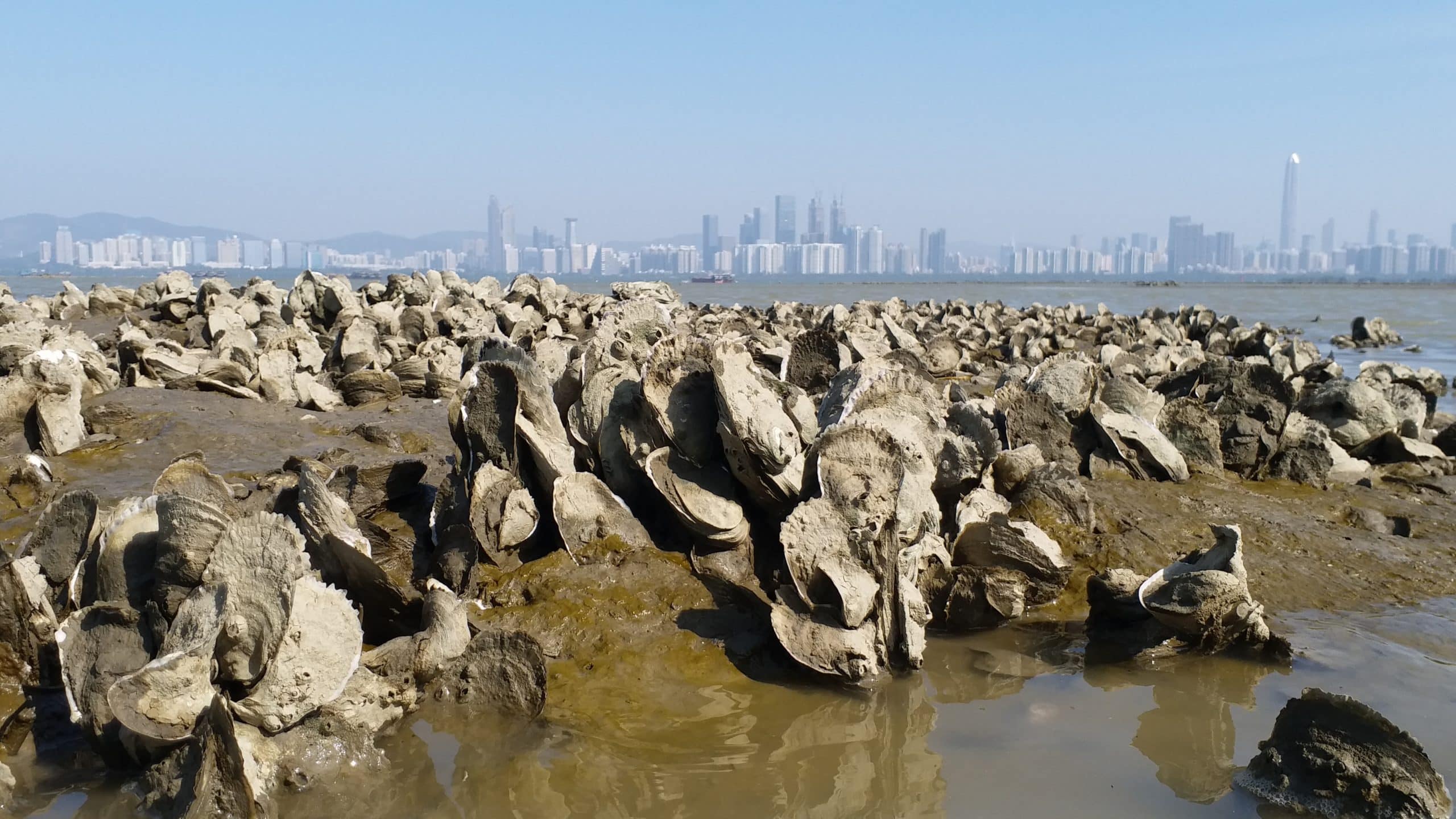
oyster farms

Abandoned oyster farm in Hong Kong. Photo: Tom Chan.

Hidden Habitat That Supports Ecosystems

Focusing on abandoned oyster farms near the mouth of Ha Pak Nai Stream in Deep Bay, scientists researched the potential ecological benefits of traditional “benthic” oyster farming techniques in the Pearl River Delta and how that could inform work to restore Hong Kong’s oyster reefs and benthic ecosystems.

Derived from the Greek word benthos – which stands for ‘the depth of the sea’ – the benthic ecosystem comprises the many organisms that make their home on or close to the seafloor and the shallow water habitats such as the marshes and mudflats along estuarine coasts. 

Oyster reefs are historically a vital estuarine habitat providing multiple ecosystem functions and services. However, humans have over-harvested native oyster reefs worldwide, with an estimated habitat loss of 85%. Along many coastlines, native species of oysters and their reefs are functionally extinct.

People started cultivating oysters in the Pearl River Delta during the Song Dynasty (960–1279 AD) and continued as the harvest of natural oyster reefs declined. In the mudflats of Deep Bay, oyster farmers have nurtured magallana hongkongensis – the Hong Kong oyster – for centuries. Once an inexpensive food eaten by almost everyone, the shells were also an essential source of lime used in the construction and agriculture industry in the region.

The traditional method of oyster farming involved placing hard substrate materials such as rocks, concrete tiles, oyster shells, and posts in the soft mud to promote the settlement of oyster larvae. This approach is similar to the technique of using an artificial substrate that TNC practices in its oyster reef restoration projects in Hong Kong, Australia, and the US

By providing hard substrate among soft sediment mudflats, these traditional oyster farms provided a habitat for native oysters and other species. However, in recent decades, oyster aquaculture in the region has declined and what remains now is the method of using rope-suspended raft culture techniques that enhance production.

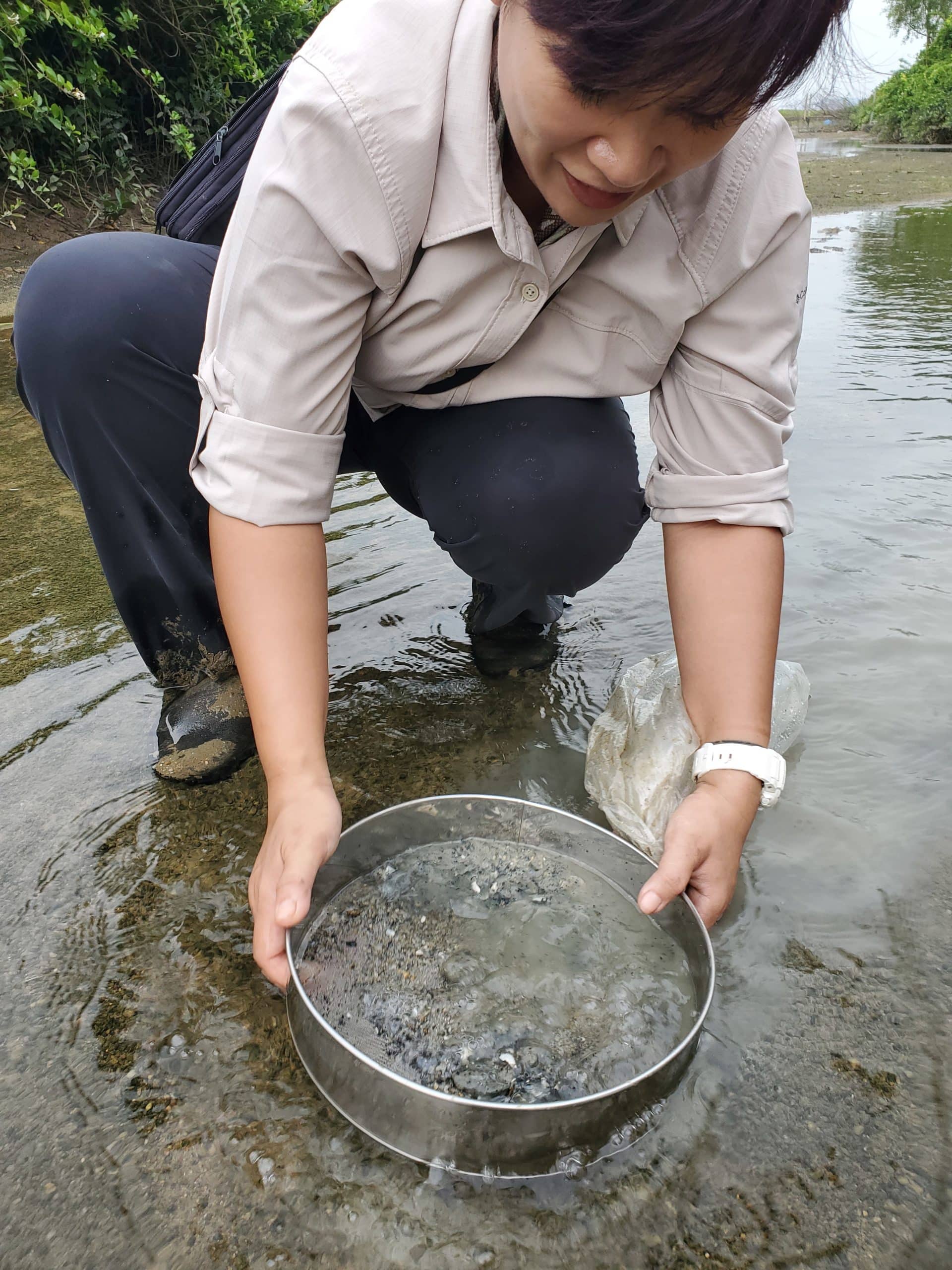
Oyster Farms

TNC staff sifting through the mud to collect samples for the lab. Photo: Pak Nai (TNC).

Vibrant Life on the Seabed

The University of Hong Kong (HKU) and TNC researchers found that the abandoned oyster farms provided habitats for a rich diversity of fauna and were home to 61 species compared to 26 species found in the surrounding mudflats. In particular, the numbers of epifauna species such as crustaceans and molluscs were six and 18 times greater, respectively, in the abandoned farms compared to the mudflats. 

Wildlife and birds are attracted to the wetland areas due to increased food availability by directly feeding on the cultured species or other estuary critters, from the tiny one-millimetre, micro-benthic invertebrates to rare marine worms, molluscs and mussels, crabs, and other crustacea.

The higher densities of crustaceans and worms provide essential sources of food for fish and birds such as waders, gulls, terns, egrets, the endangered black-faced spoonbill, and the vulnerable Saunder’s gull.

The nooks and crannies of the former farms and the build-up of old empty shells substantially increased the biodiversity and biomass of organisms around them. Scientific analysis also showed the abundance of species in Deep Bay’s abandoned farms is comparable to natural oyster reefs in the national marine park in Jiangsu Province, further north on the Chinese coast.

While oyster farms do not provide the same level of complexity as natural oyster reefs, they illustrate the potential for regenerative aquaculture to enhance the diversity and abundance of species by providing structures that resemble natural oyster reefs on previously structureless mudflats.

Learning From the Past and Nature

The long history of oyster farming in the Pearl River Delta means that not only have native oyster populations been prevented from functional extinction in the region, but the habitats left behind may also have provided us with the key to cost-effective local reef restoration. 

“In many ways, through the traditional oyster farming method of building hard structures on the mudflats, Hong Kong oyster farmers are one of the first restoration practitioners as they maintained and brought back wild oysters and reefs where they would have otherwise completely disappeared,” said TNC Senior Conservation Program Manager Marine Thomas.

Could traditional farms be revitalised to complement restoration and showcase an example of ‘restorative aquaculture’? While seafood, lime, and even pearls were the original products of traditional oyster aquaculture in the Guangdong region, revitalising the farms may offer the potential for creating shared value by facilitating and sustaining biodiversity and future ecosystem services.

Further research could inform ecologically conscious aquaculture techniques. For conservationists and scientists working to protect our coastlines, Hong Kong’s abandoned oyster farms may also show new ways to speed up reef restoration and enhance the rebuilding of native oyster populations. 

You might also like: 6 Biggest Environmental Issues in Hong Kong in 2022

Hong Kong has been dealing with a monumental waste problem for years and plastic pollution is getting out of control. The city’s beaches and waterways are drowning in plastic and nearly 6,000 marine species are now considered endangered. Mainland China’s recent refusal to recycle Hong Kong’s food containers amid its fifth wave of the coronavirus pandemic exposed the underlying issues of the city’s waste management. Unsustainable packaging habits, low public awareness, and a worrisome lack of adequate recycling facilities are some of the causes of a waste management crisis. Hong Kong needs to come up with a plan to deal with its plastic waste before it is too late. 

Why Are Hong Kong’s Streets Flooded with Plastic Containers?

The fifth wave of the coronavirus pandemic in Hong Kong that began in the first weeks of 2022 saw the city overwhelmed by a myriad of problems. Amid growing criticisms of flip-flopping pandemic measures and low vaccination rates, plastic waste became one of the biggest problems to emerge in the city. The issue arose after mainland China declared they would not take back styrofoam food containers that Hong Kong relies so much upon to import its fresh food supplies. Mainland wholesale markets, which typically receive most of the city’s containers back to reuse them, justified the decision by raising concerns over elevated risks of contracting the virus from the boxes. In a matter of days, hundreds of containers quickly started to accumulate outside of wet markets and supermarkets. During the Chinese New Year, Hong Kong’s environmental group Missing Link- Polyfoam Recycling Scheme finally publicly denounced the situation. 

Styrofoam is a popular brand name for polystyrene, a petroleum-based plastic commonly used to store and transport food supplies. While it is very cheap, extremely light (it is made of 95% air), and good for insulation, styrofoam is also incredibly challenging to recycle, mainly because of the large size of the boxes and because these are often contaminated and covered in tape. The cleaning and decontamination process represents a burden and brings logistics and recycling costs up.

Together with other small recycling organisations, the government-funded organisation started handling the containers that piled up across the city. However, with limited capacities and resources to deal with such a big amount of waste – growing by an estimated one tonne a day – and with little help from the Environmental Protection Department (EPD), boxes kept piling up. A clear sign that plastic waste management in Hong Kong needs stronger reforms. Let’s take a look at how the city has been dealing with plastic waste up until now.

You might also like: 6 Biggest Environmental Issues in Hong Kong in 2022

Hong Kong’s Plastic Problem

For years, Hong Kong has been dealing with a massive waste problem, and the plastic pollution issue is at a crisis point. In 2020, plastics made up 21% of the city’s total municipal solid waste (MSW), accounting for the third-largest share of MSW after food waste and paper. In the same year, Hong Kong also experienced a 27% increase in locally recycled plastics, a promising sign that some of the new measures implemented by the government, such as the Plastic Recycling Pilot Scheme, are working. Yet, plastic waste is still a huge concern for the city: its beaches and waterways are drowning in plastic, and microplastic levels in the sea are 40% higher than the global average. According to estimates,  more than 5,000 pieces of microplastic can be found in every square metre of sea. Many factors contribute to Hong Kong’s plastic problem, from the city’s unsustainable packaging habits and low public awareness of the dangers of plastic pollution to a lack of adequate recycling facilities.

plastic waste

Figure 1: Composition of Municipal Solid Waste disposed of at landfills in Hong Kong in 2019 and 2020. Image: GovHK

The problem with styrofoam boxes has also been going on for years. In 2017, 30,400 tonnes of such containers were disposed of at landfills. Two years later, the amount of styrofoam waste grew to 49 tonnes, or about 0.4% of the total plastic trash accumulated in the city in 2019. Currently, Hong Kong lacks a large-scale commercial operation on styrofoam recycling and the only existing styrofoam recycling programme – a project supported under the Environment and Conservation Fund (ECF) – is getting overwhelmed by the number of containers that have been piling up in the past few months. For years, Hong Kong has dealt with accumulating waste by exporting a large portion across the border yearly. In 2016, the city exported nearly 1.78 million tonnes of recycled plastic waste to China, most than any other country in the world.

plactic waste, plastic exports

Figure 2: Top 10 Plastic Exporters to Mainland China, 2016. Image: Our World in Data.

The EPD has been striving to encourage the public and different sectors to reduce the use of single-use plastic items, especially styrofoam products with various publicity and education efforts aimed at promoting the use of more environmentally friendly substitutes. And yet, as statistics show, Hong Kong is still far from solving the plastic problem.

You might also like: What Are the Consequences of China’s Import Ban on Global Plastic Waste?

What is Next for Hong Kong in the Race to Solve its Plastic Waste Problem?

In August 2021, the Hong Kong Legislative Council passed the long-awaited Waste Charging Scheme: it is hoped that this move will help reduce per capita waste disposal by up to 45% and increase the recycling rate by 55% at the same time. However, the new scheme will not start until 2023, delaying hopes that the waste crisis will be solved any time soon. 

In the meantime, Hong Kong should look at how other countries are dealing with their trash to find new ways to reduce plastic waste in the city. A good example is Macao: in January 2021, the government banned all imports and trading of disposable takeaway boxes, bowls, cups, and dishes made out of styrofoam. Similarly, in 2021 the European Union banned the use of single-use plastics across all countries, a very important step in the transition to a circular economy. While a ban on plastic cutlery at restaurants is planned for Hong Kong, this will only come into force in 2025: too late according to many environmental groups who strongly believe that faster action is needed. Taiwan’s transition from garbage island to recycling leader is another example of a success story that could serve as a lesson for Hong Kong. The government introduced a new plastic waste management framework that encourages citizens and manufacturers to adopt practices that result in less trash generated. Finally, to facilitate the recycling of beverage bottles, Hong Kong should look at the Deposit Refund Scheme (DRS), a very effective scheme implemented by governments worldwide, from Australia and North America to several countries in Europe.

Featured Image courtesy of Missing Link- Polyfoam Recycling Scheme

You might also like: The Hong Kong Waste Charging Scheme is a Good First Step, But More is Needed

Climate change and public health are interconnected; as climate-related health problems proliferate across the world, healthcare systems around the world are faced with unprecedented challenges. The problems in Hong Kong’s collapsing healthcare system today serve as a perfect lesson for the world; not only do we need to put more effort into building up the resilience of citizens, but we also need to go beyond resilience to change the very social and climate conditions that affect our public health. This article argues that governments need to put health at the centre of social and climate action.

Given the overwhelming scientific evidence today that points to the health impacts of climate change, health policy agendas around the globe are now beginning to realise how big of a public health threat climate change is to humanity. It is understandable, therefore, that health emerged as a key topic in the COP26 discussions. The COP26 Health Programme was established to “prioritise health and equity in the international climate movement and sustainable development agenda.” Within the programme, an Adaptation Research Alliance (ARA) was created to “catalyse and scale investment in action-oriented research and innovation for adaptation that strengthens resilience in communities most vulnerable to climate change.”

It is also common to find research illustrating how the health effects of climate change are worse for developing countries. However, this has unhelpfully reinforced a kind of “developed-country complacency syndrome”: able to escape the worst effects of climate change, many developed countries do not feel like they need to do much.

Hong Kong also suffers from this syndrome. With an impressive score of 0.949 on the Human Development Index (HDI), Hong Kong’s standard of living is ranked 4th in the world. Many Hongkongers really do not have to worry about the effects of climate change in this city. Although Hong Kong is experiencing stronger and stronger typhoons and record-high temperatures are broken almost every year, most people are relatively unaffected.

But one need not have experience of something as serious as the destruction of their home to feel the health effects of climate change. In fact, they do impact our everyday lives, albeit subtly.

The Everyday Effects of Climate Change on Hong Kong Public Health

In Hong Kong, for every increase of 1C above 29C, hospitalisation rate increases by almost 5% and mortality by almost 2% –  which amounts to approximately 1,000 more deaths per year. This is because temperature rise indicates rising greenhouse gas emissions and these gases have significant impacts on cardiovascular (relating to the heart), respiratory (relating to lungs), and integumentary (relating to the skin) health. During the hot summers, many people feel dizzy too.

Climate change is also facilitating the spread of communicable (infectious) diseases in Hong Kong. Changing rainfall patterns have been conducive to the transmission of vector-borne diseases such as dengue fever, hand, foot and mouth disease (HFMD), and malaria.

Rising temperatures can also affect mental health. According to a study, they can be “direct or indirect, short-term or long-term, … or even transmitted to later generations”. Consequences also vary in severity, ranging from “milder” symptoms of distress to more serious clinical disorders such as depression or even suicide. In fact, haze events (such as smoggy days) are already enough to increase mortality risk by almost 3 per cent in Hong Kong; for those with existing mental disorders, the effects are far worse.

However, while everyone is affected, certain social groups are disproportionately more affected than others.

The Health Inequalities of Climate Change in Hong Kong

As a report published by the Institute of Health Equity of the Chinese University of Hong Kong (CUHK IHE) finds, economic inequality is a huge determinant of health inequality in Hong Kong. With a striking Gini coefficient of 0.539, Hong Kong is in the top 10 in the world in terms of income inequality. As Hong Kong’s temperatures rise, the city ’s poorest suffer the most. Unable to afford quality housing, many live in terribly conditioned subdivided flats with poor air quality, hygiene and suffocating temperatures. These living spaces have also become breeding grounds for diseases as mosquitoes are found swarming them all the time.

More than 30% of Hong Kong’s elderly live in poverty; with the pandemic still in force, this figure has likely risen. Without a stable source of income and surging house prices, many have become “cardboard grannies and grandpas” with nowhere but a cardboard box to live in. Deprived of a decent environment to live in and without anyone to be looked after by, they are most vulnerable.

But these health inequalities only show half of the picture. For instance, while hospitalisation rates may be a useful indication of the severity of health problems, it fails to account for the fact that there are people who have health problems but do not/are not able to go to hospital. This is evident within ethnic minority communities, as cultural and linguistic barriers (on top of financial barriers) often hinder their ability to access local healthcare services.

climate change and public health Image by: Hong Kong Hospital Authority

A Collapsing Hong Kong Healthcare System

Despite ranking 8th globally on the World Index of Healthcare Innovation, Hong Kong’s healthcare measurement in the “Quality” category has been labelled “poor”, as it suffers from overcrowding and a serious deficit of healthcare workers. According to local think tank Our Hong Kong Foundation (OHKF), there are less than two doctors for every 1,000 people, a statistic significantly below the Organisation for Economic Co-operation and Development (OECD) average of 3.5 and lagging way behind regional rival Singapore (2.5). Hong Kong’s healthcare expenditure levels are also low in comparison with OECD countries: total health expenditure as a percentage of GDP is around 7% (2% points below OECD average). 

The OHKF has described Hong Kong’s healthcare system as “hanging on a rope stretched too thin”. The reasons show that such a claim is far from an exaggeration:

  • Undesirable working environment

There is an increase in the attrition rate of doctors and nurses in recent years, partly because of growing emigration out of the city. As perceptions of job precarity grow (for work-related, economic and political reasons), the manpower within the healthcare sector faces more uncertainty than ever.

  • Hong Kong’s rapidly ageing population

On one hand, this is a testament to the fact that Hong Kong has the world’s longest life expectancy of 85 years. On the other, it is projected that the proportion of citizens in Hong Kong older than 65 will be 27% by 2033 and a staggering 37% by 2066. Co-Director of PolyU’s Institute of Active Ageing under the Faculty of Health and Social Sciences Professor Teresa Tsien believes that, as people live longer, “the chances of dependency on medical, welfare and other services will be greater.”

Climate change will make things more complicated. More people today, young and old, require medical attention. Even if the number of medical staff continues to increase, it may still struggle to keep up with the rate of increase of vulnerable people in Hong Kong.

  • Public-private disparities in healthcare provision: a vicious cycle

Hong Kong has a dual public-private healthcare system. However, their disparities are great. The number of doctors in private and public hospitals is approximately the same – but public hospitals provide services to 90% of in-patients in Hong Kong. It is predicted that more doctors in the public sector will “defect” to the private sector because of better pay, working hours, and conditions. With decreased manpower, the workload of those who remain in the public sector will only increase, and this will lead to even longer waiting times. This creates a vicious cycle.

  • Curative over primary care in Hong Kong

Hong Kong’s public healthcare focus is weighted significantly towards curative care, which is mainly concerned with curing and rehabilitating patients. In the case of climate health, curative approaches are certainly important, but they only cure the “symptoms” and not the “disease”, i.e. climate change itself.

Although the WHO describes primary care as being “the first level of contact of individuals, the family and the community with the national health system” and therefore fundamental to any healthcare system, Hong Kong’s primary care remains inadequately provided. Most providers are private (70% of market share) and are accessed exclusively by the rich. In contrast, there are only 73 public clinics that provide primary care to a population of 7.5 million; they also tend to be underfunded. Although vouchers have been introduced to support access, a lack of publicity has deemed the programme quite ineffective

It is no surprise that Hong Kong’s curative-oriented healthcare system is collapsing. So what can be done?

Mentality Shifts Needed for Hong Kong’s Healthcare System

Today, global health policy discourses are realising the need to build “climate-resilient health systems” that can “anticipate, prepare for, and respond to hazardous events, trends, or disturbances related to climate”.

In Hong Kong, health policy discourses have recognised the need to go beyond curative approaches towards preventive and promotive approaches. For example, public health academic Emily Chan argues that the government should devote more resources to enhancing Hong Kong’s risk reduction, preparedness response and recovery abilities, which involves workforce training and promoting public health literacy in light of growing climate-induced weather events in Hong Kong.

Government and non-governmental bodies have also stepped up efforts to foster public resilience. The Hong Kong Observatory’s “MyObservatory” mobile app, for example, allows citizens to access live weather information so that they can be better prepared for weather events. Another example can be found in the development of the Hong Kong Air Quality Health Index (HK AQHI) app by the Environment Protection Department (EPD), which provides citizens with live information about air quality when they travel.

But Hong Kong’s healthcare challenges are not simply issues of manpower and literacy. Even though the government has encouraged a lot more public-private partnerships (PPPs) to improve quality and efficiency, they only upgrade Hong Kong’s “defensive capabilities”. Professor Veronika Schoeb at the Department of Rehabilitation Sciences at PolyU argues, “healthcare practitioners have only minimal control over health-related social issues such as education, work environment, or housing.” As a result, the underlying social determinants of public health remain unconsidered. In framing action only in terms of keeping pace with the rate of climate change (which is common around the world), it seems as if we are only trying to “delay the inevitable”.

Hence, healthcare systems need to be more active in other areas of policy. For Hong Kong, public health should be at the centre of different forms of social justice – which includes climate justice.

climate change and public health Image by: GovHK

A Climate-Sensitive Healthcare System

The COP26 Special Report on Climate Change and Health provides useful suggestions for within-sector and cross-sector developments that may be appropriate for Hong Kong.

Within-sector developments

  • Increase accessibility to primary care

Apart from curative care, the best healthcare systems in the world have a robust primary healthcare infrastructure. Beyond expanding the capacity of hospitals or upgrading medical equipment, Hong Kong needs to diversify its healthcare services beyond curative care. It can learn from countries such as Canada and Finland in expanding and strengthening primary care services. The benefits are profound: as the OECD argues in a report published in 2020, Realising the Potential of Primary Care, “[p]rimary health care can save lives and money while levelling the playing field to achieve more equal access to medical treatment”.

  • Improve professional engagement within the community

For healthcare services to be used wisely, community engagement, which is found to be quite poor in recent years (because of politics and the pandemic), is important. The majority of community engagement today are organised by non-governmental organisations. Taking a backseat, the government has failed to create a coherent vision and provide appropriate support to these programmes. This might also explain Hong Kong’s poor health literacy.

A way to foster engagement is to increase involvement of health professionals, who often command more respect from the public (than the government) “to communicate the health risks of climate change, and to promote policies that protect public health from climate impacts”. Actions can be as simple as providing educational materials to patients or visiting vulnerable households. On a larger scale, health talks and forums can be organised within communities.

  • Improve coordination between health services

Hong Kong’s healthcare sector is often also criticised for its lack of coordination: services are often set up only reactively, resulting in a lot of redundancy. To improve governance within the healthcare sector, communication is important. A starting point, for example, is to develop health data harmonisation, which involves data sharing between health departments. This can improve the efficiency and quality of services by making the whole process a lot smoother for both the staff and the patient.

Cross-sector developments

While within-sector changes are important, they are insufficient. As we have seen, (climate) health is very much socially determined. This is why the COP26 Special Report resolutely argues that we need to “include health in all policies”. Hence, in the words of IHE CUHK, “[t]he government should work with other sectors, including academia, social care and healthcare, professional bodies, businesses, charities and voluntary organisations, in developing policies across the board to mitigate the social determinants of [climate] health inequalities.”

Hong Kong needs a constructive approach to climate change-related public health. Apart from enhancing health resilience, how can we make our city a greener and more liveable place?

  • Urban planning and transport

It is good to know that concepts of liveability are being recognised in Hong Kong’s newest Clean Air Plan 2035 and are increasingly connected to health and wellbeing. For example, the government has been trying to promote a low-carbon transport infrastructure by installing roadside air quality detectors and financially incentivising the use of electrical vehicles and public transport.

However, housing has been overlooked in the plans. As we have seen, the government needs to improve the living conditions of public housing in many areas such as by installing or updating their cooling and ventilation systems. To ensure continued accountability, assessment tools such as the Hong Kong Green Building Council’s BEAM Plus New Buildings should be actively employed to crucially ensure that future construction projects are “human-centric”, green, and practical.

Furthermore, according to a report by local think tank Civic Exchange, urban development is not just about infrastructural improvement but also about discovering their “vibrancy”. In a densely populated city like Hong Kong, this is not going to be easy. But as the authors Carine Lai and Antonio Da Roza show, vibrancy need not be about developing extravagant spaces such as shopping malls (which are also energy-intensive) but can also be achieved through the creation of accessible, green, open and user-friendly spaces for public activities such as street hawking and performance. As such, they can be enjoyable spaces – as the evidence shows, they are also opportunities for enhancing mental and physical health – without necessarily being environmentally damaging.

  • The power sector needs to consult the medical sector more

In line with global discourses on sustainability, talk of green and just transitions to renewable energy in Hong Kong have grown. However, discussions have primarily framed relevant strategies of decarbonisation or energy diversification only in economic or environmental terms, where public health is only of secondary importance.

Hong Kong’s climate action needs to be “people-centred”. The medical sector should be a bigger stakeholder in Hong Kong’s power discussions, so that future decisions and investments can be improved: they should consider not only the scarcity of natural resources – that humans can only exploit so much of – but also the potential health ramifications of such initiatives.

  • Transform climate education

Finally, to sustain climate action, climate education needs to be transformed. Apart from learning about the adverse health effects associated with climate change so that people can protect themselves better, the education system should focus on cultivating sustainable mindsets and lifestyles that will enable future generations to imagine different pathways to a healthier Hong Kong.

Overcoming Hong Kong’s Healthcare Crisis: Lessons for the World

Hong Kong has all the expertise and resources it needs to make those changes possible – it has access to a remarkable pool of professional talent that not every country can boast of. However, Hong Kong’s poor management of the healthcare sector and its failure to situate health issues within climate discussions (and vice versa) are lessons that healthcare systems around the world can draw on.

The COP was created in 1992 with the noble aim of creating a globally coordinated strategy to tackle climate change and governments around the world will continue to bear this in mind and harness the opportunities provided by COP26 to develop more cross-regional collaborations to help improve public health around the world together.

Featured image by: Shutterstock

Textile and clothing recycling has the potential to alleviate fast fashion problems and absorb some of its impact on the environment. In Hong Kong, the Research Institute for Textiles and Apparel (HKRITA) has developed a revolutionary technique to turn old garments into brand-new clothing, and both the H&M Foundation and the Hong Kong government are betting on it. However, the lengthy process and the discouraging figures related to global fashion waste are making experts and environmentalists question the real impact of such technology. 

With a market value of US$3,000 billion, the fashion industry accounts for 2% of the world’s Gross Domestic Product (GDP). The sector, which has grown at an unprecedented pace over the past few decades, sees the US and China as its undisputed leaders. The latter currently accounts for the largest fashion market and e-commerce sector in the world and is the leading exporter of apparel worldwide, besides dominating the ranking for retail purchasing worldwide.

In 2020, the average Chinese consumer spent around RMB$1,645 (approximately US$260) on clothes and footwear. However, it is US consumers who purchase most items. On average, a US consumer is estimated to buy one item of clothing per week or 53 garments per year. Along with other nine countries – India, Japan, Germany, the United Kingdom, Russia, France, Italy, and Brazil – China and the US account for three-quarters of all clothes sold each year worldwide. 

fast fashion problems

Image: Common Objective

The explosion in consumption and the rising purchasing rates of consumers are the root of the planet’s environmental crisis and the main drivers of fast fashion problems and the climate crisis. In recent years, new regulatory frameworks from governments worldwide as well as the pressure from increasingly environmentally conscious consumers have pushed fashion and e-commerce companies to put sustainability at the top of their agenda, developing strategies to achieve carbon neutrality and other green goals and thus reducing the devastating environmental impact of the fashion industry. Indeed, from the manufacturing and shipping of clothes to the vast amount of clothes thrown away every year – 26 million tons in China alone – the environmental cost of fashion is huge and accounts for approximately 10% of global carbon emissions.

You might also like: Fast Fashion: Its Detrimental Effect on the Environment

Some of the world’s largest clothing retailers have launched eco-friendly fashion lines and have adopted other strategies with the aim of showcasing developments in sustainable fashion. One of them is the Swedish multinational H&M. The world’s second largest global clothing retailer – known for its affordable fast-fashion clothing – started non-profit H&M Foundation in 2014 to improve humanitarian and environmental issues within the fashion industry. It was initiated – as the Foundation states on its website – “to co-create, fund and share solutions for the world’s most urgent challenges” and “help safeguard the welfare of humanity” by promoting a “planet positive fashion future”. One of its core projects is promoting innovative technologies to recycle clothes.

The most prominent and successful example comes from the foundation’s partnership with the Hong Kong Research Institute of Textiles and Apparel (HKRITA), the world’s first facility to turn recycled fabrics into new clothes. 

Hong Kong’s clothing industry is one of the most important manufacturing sectors, with a total of 490 establishments and nearly 3,000 workers as of 2020. Apart from production, the city is big on sourcing clothing, from fabrics procurement and clothing design to sales, marketing, and quality control. The nearly 13,000 garment companies across the territory helped turn Hong Kong into the 12th largest exporter of clothing worldwide. In recent years, the city has also emerged as a research and development (R&D) and commercialisation hub for sustainable fashion technologies, with the partnership between HKRITA and H&M Foundation leading the way. 

One of the most innovative projects brought on by HKRITA is the Green Machine’, an innovative hydrothermal separation treatment that can recycle blend textiles into new clean and wearable fibres without any quality loss. Requiring only heat and very little biodegradable green chemical, the method assures that no secondary pollution is created during the recycling process.

Fashion brand Monki was the first to release a sustainable collection with recycled textile materials created by the Green Machine. First tested in Hong Kong, this technology has now scaled up in Indonesia and H&M Foundation bets that it could eventually solve some of the industry’s biggest environmental problems. For this reason, it has invested millions of dollars in HKRITA. Along with the financial support of the Innovation and Technology Fund of the Hong Kong SAR, this money is helping finance a four-year project that aims at discovering and developing other groundbreaking sustainable recycling technologies as well as scaling up the hydrothermal system.

HKRITA also developed another system that does more than just recycle clothes. The award-winning Garment to Garment (G2G) Recycling System is a mini-scale, environmentally-friendly production line that recycles post-consumer garments into new ones adopting a mechanical treatment that does not require any water or chemical. The partnership with the H&M Foundation brought this system one step forward, by installing it in community spaces such as retail shops to showcase the garment recycling process to the public and most importantly to educate consumers on the immense value of clothes and the importance of recycling them. The “Looop” – the retail model of the G2G Recycling System – was first installed in one of H&M’s stores in Stockholm, Sweden, in 2020.

There are, however, some downsides to this brand new technology. First, it takes approximately three days for the Looop recycling system to turn a garment into a new piece of clothing the size of a child’s t-shirt. Business Insider argues that it would take almost 50,000 years for the Looop recycling system to recycle just one week worth of waste from the fashion market. Furthermore, even though not many materials and products are required to turn old textiles into clothes, the lengthy process is also inevitably requiring huge amounts of energy. But the experts’ main issue is that the commitment of big fast-fashion retailers to recycling and other sustainable initiatives does not solve the core problems of what the retailer is promoting in the first place: fast fashion.

Even though the promising partnership could lead to a revolution of textile recycling techniques in the long run, behind it there is still a company that promotes overconsumption in the first place. Additionally, environmentalists argue other issues such as child labour and poor working conditions typically associated with the fast fashion market would also not be solved.

What HKRITA’s small-scale retail model is doing in terms of promoting recycling and educating consumers on its importance is certainly a first step in the right direction and fast-fashion brands jumping on the sustainability wagon is great news. However, the main issue remains: there is simply too much clothing. Unless societies shift away from overconsumption and fast fashion retailers make room for smaller, more sustainable brands that produce more durable clothing with better fabrics, the fashion industry will not cease to damage the environment.

Featured image: H&M Foundation

You might also like: 6 Biggest Environmental Issues in Hong Kong in 2023

Subscribe to our newsletters

The best environmental stories of the week and month, handpicked by our Editor. Make sure you're on top of what's new in the climate.

SUBSCRIBE
Instagram @earthorg Follow Us