Ocean plastic pollution is no news. Millions of tons of plastic enter our oceans every year and more than 5 trillion pieces are already floating in waterways all over the world. In Hong Kong, the plastic pollution issue is at a crisis point. The city’s beaches and waterways are drowning in plastic, endangering the over 6,000 marine species that populate them. However, Australian-born Angus Harris and his wife Ellen Ogren might have found a way to clean the waterways in Hong Kong, and all it takes is four tiny red boats.
—
Marine plastic pollution is growing rampant. Of the over 300 million tons of plastic produced in just one year, at least 14 million tons end up in the ocean. This not only endangers marine species, but also compromises the food chain and puts the health of 3 billion people that rely on seafood at risk. Researchers estimate that, on average, every person ingests 50,000 pieces of microplastics.
Hong Kong’s Heavily Polluted Waterways
In Hong Kong, the situation is worrisome. The city’s sea is being swamped by plastic pollution and microplastic levels are 40% higher than the global average, with more than 5,000 pieces per square metre. The problem, experts believe, lies in Hong Kong’s unsustainable packaging habits, the lack of adequate plastic recycling facilities, and scarce public opinion’s awareness of the urgency of the climate crisis. In a city where more than 5 million plastic bottles are thrown away every day and a staggering 46 million single-use plastics are disposed of weekly, it is no surprise that Hong Kong’s waterways are so polluted. However, not enough people understand the huge threat of heavily polluted waterways to human health and to the health of our planet.
Established in 2019 by retired sailors Angus Harris and his wife Ellen Ogren, the non-profit Clean Waterways Initiative has massively improved the situation of Hong Kong’s waterways, significantly decreasing the pollution levels in the city’s trash hotspots of Aberdeen and Victoria Harbour. The original idea of the couple and the partnership with HSBC allowed the programme to collect more than 76,000 plastic bottles, 28,000 aluminium cans, and a total of 43 tonnes of landfill waste in less than two years.
The work is entirely done by four small solar-powered boats that can “efficiently collect, sort and unload trash” from Hong Kong’s waterways without generating emission output. By using electric engines, the Initiative was able to cut 16 tonnes of CO2 emissions per boat annually. The four vessels – Solar Explorer, Aqua Explorer, Harbour Explorer, and Wayfoong Explorer – operate 7 days a week and 24 hours a day in Hong Kong’s Victoria and Aberdeen Harbours to collect litter before it makes its way to the open sea. They have been designed to be able to move easily in the traffic of the port and collect all sorts of trash, from bulky to tiny items, and up to 2,500 litres of floating plastic per load. In addition, the on-board sorting deck allows for the sorting of collected waste for recycling and landfill.
Besides fighting plastic pollution and protecting over 6,000 local marine species, the Initiative aims at educating public opinion and raising awareness among the local community and younger generations about the trash disposal and the dangers of plastic pollution. They do this by partnering up with other non-profit organisations and schools to host educational tours, workshops, and talks to spread knowledge around the 4 R’s: Reduce, Rethink, Reuse and Recycle. Educational activities like these are, according to Ogren, a “fundamental part of tackling plastic pollution as an issue”.
On paper, 2021 was a notable year for those fighting Hong Kong illegal wildlife trade, with a historic amendment of the local Organised and Serious Crimes Ordinance (OSCO) and the effects of COVID-19 becoming increasingly visible. However, the data shows that wildlife trafficking has not slowed down, and that the new powers from the OSCO bill amendment have not yet been applied. What will the future hold for this hub of wildlife crime?
—
On September 23, 2021, Hong Kong customs identified its largest-ever smuggling bust with a value of HKD $210 million. Mixed with luxury items, shark fins, and other goods destined for mainland China, the shark fins accounted for over 52% of the total value of goods.
This seizure came one month after a landmark amendment of the Organised and Serious Crimes Ordinance (OSCO) to include wildlife crime, previously reserved for offences of theft, import and export, and money laundering. This meant that authorities are granted greater power to investigate and prosecute illegal wildlife trafficking criminals.
At a Wildlife Task Force meeting in November, in response to a question on if there were any new cases under consideration thanks to the OSCO amendment – including September’s high-value and high-volume seizure – the Agricultural, Fisheries and Conservation Department (AFCD) replied in the negative.
In reaching out for a separate statement, the department confirmed that “as of today (January 20, 2022), the powers of OSCO have not been invoked in enforcement cases handled by the AFCD” but that “the AFCD will stay alert for wildlife trafficking cases where the powers of OSCO can potentially be invoked and ensure that the use of OSCO powers is well justified.” In a separate email, the AFCD also added that they “maintain close contact with the Customs and Excise Department (C&E Department) and Hong Kong Police Force (HKPF) for possible joint investigation if needed.”
“Now, if I’m trying to understand if wildlife crime is an important aspect of organised cross border smuggling, and I make a seizure at a warehouse where 52% of the value of the goods that I’m seizing come from the wildlife product, that to me would be a good indicator that there is a significant incentive for the wildlife component to be […] looked into a bit more,” says Sam Inglis, the Wildlife Programme Manager of the ADM Foundation.
In other words, now that the OSCO bill has been passed, will its powers be applied?
Nearly 10 tonnes of fins were taken from some 15,000 sharks, as part of a record HK$210 million (US$27 million) seizure on September 23, 2021. Photo: Katherine Cheng.
Hong Kong: An Illegal Wildlife Trade Hub
2021 was notable for those fighting Hong Kong’s wildlife trafficking. Experts and proponents had been pushing for the OSCO bill amendment for eight years, making its passage a historic moment. In addition, an ivory trade ban came into effect on December 31, right before the year came to a close.
Wildlife crime is well-known for the difficulties that face authorities, and Hong Kong is notorious as a hub for smuggled goods.As a gateway to mainland China and a historical transportation hub with a throughput of approximately 20 million containersevery year, it is known as a bottleneck for illegal wildlife trade routes.
Some of the biggest challenges to stymieing this activity are the many data gaps that pertain to underground crime and the cross-border nature of its movement across different jurisdictions.
Recent Events
As COVID-19 spread across the world, authorities saw an initial global dip in wildlife trafficking as travel plummeted. Experts also noticed a shift towards online trade and suspect that numbers may bounce back – or even increase – as the pandemic and its restrictions ease.
In Hong Kong, despite the global disruption of COVID-19 on transportation routes and increased awareness about the dangers of zoonotic diseases, the data shows that Hong Kong illegal wildlife trade has kept up a sustained flow despite these external circumstances.
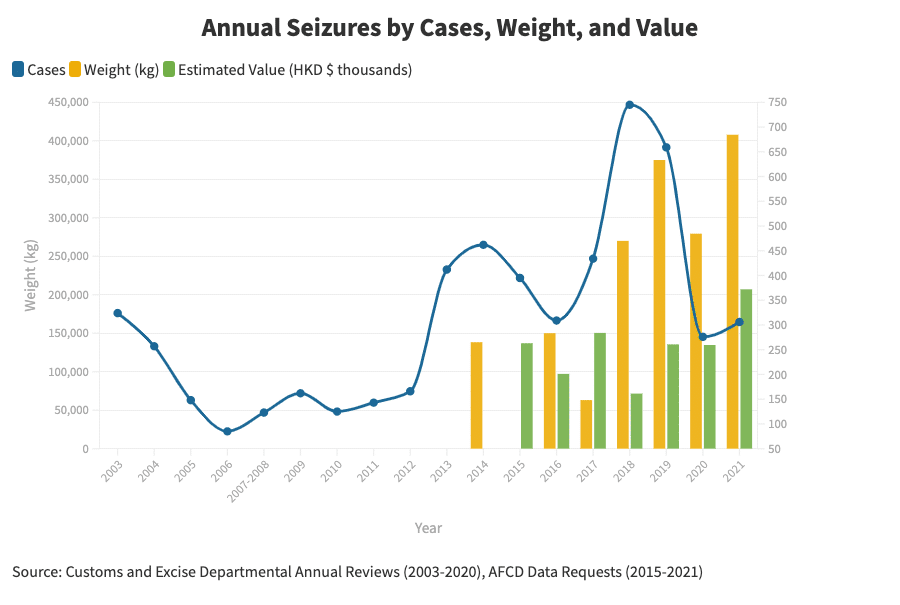
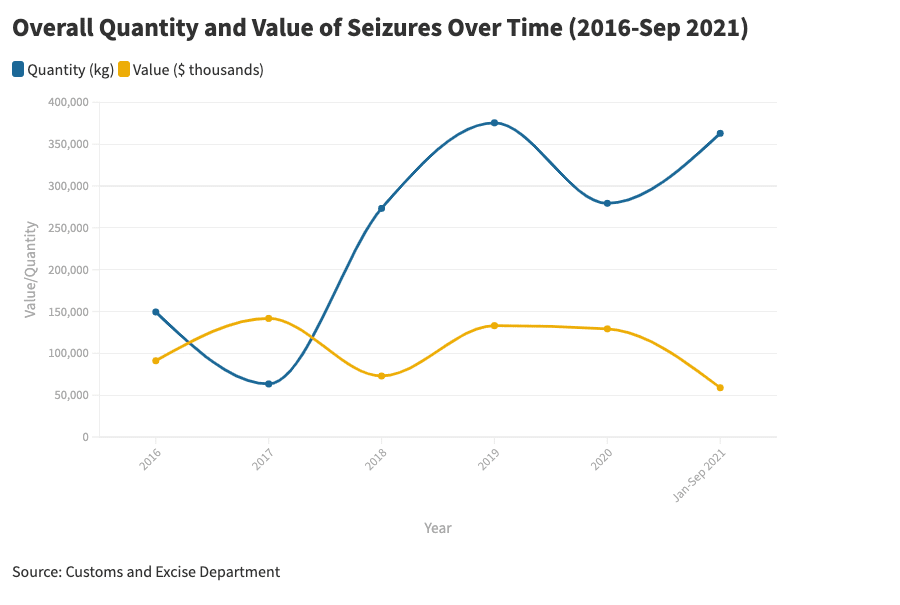
The C&E Departmental annual reviews show that though the number of seizure cases decreased by 53.57% between 2021 and 2019, the difference between the total weight of seized goods actually increased by 8.47% from 376,000 kg to 407,860 kg in this same period.
Experts and authorities noticed a shift towards a pattern of larger shipments by containers over the past two years, as air travel and individual travellers decreased with COVID-19 restrictions and smugglers consolidated shipments at greater risk.
However, experts also noted that it is difficult to provide definitive explanations in cases of wildlife crime. With many factors simultaneously at play, changes in seizure data may also reflect a myriad of changes in surveillance frequency and tactics, enforcement capacities, or even chance.
With the available data and estimates of possible trends, it seems that even a global pandemic has not been able to slow down trafficking – in which case, what can we expect moving forward?
Annual Seizures by Cases and Weight
Even though the number of cases dropped in 2020 and 2021, the total weight and estimated value of seized goods actually increased in 2021.
Challenges Moving Forward
Legal procedures are slow moving, and it will take time for the OSCO bill’s change to yield results. In Hong Kong, it is typical for a case to take a year from the point the charges are laid until it is tried. With a backlog of cases given the arrests, Christie Wong, the Wildlife Crime Court Case Monitor of ADM Foundation, expects that the process may take longer.
Barrister and animal-welfare legislation expert Amanda Whitfort from the University of Hong Kong anticipates to see an impact about 12 months after the amendment. “If we don’t start to see them within 18 months, I would be questioning whether it’s being used properly and critiquing some of the decisions that are being made.”
In envisioning the possible ways forward of implementing the OSCO bill, Whitfort and Inglis outlined possible steps such as incorporating training for AFCD staff on the bill’s implications; increasing collaboration between governmental departments for the different divisions to each bring their own strengths; having the C&E Department and/or HKPF lead the change with their existing expertise in tackling related crime.
“The proof is in the pudding as to whether they actually do apply all of those powers,” says Inglis. “They finally have a pretty big sledgehammer.”
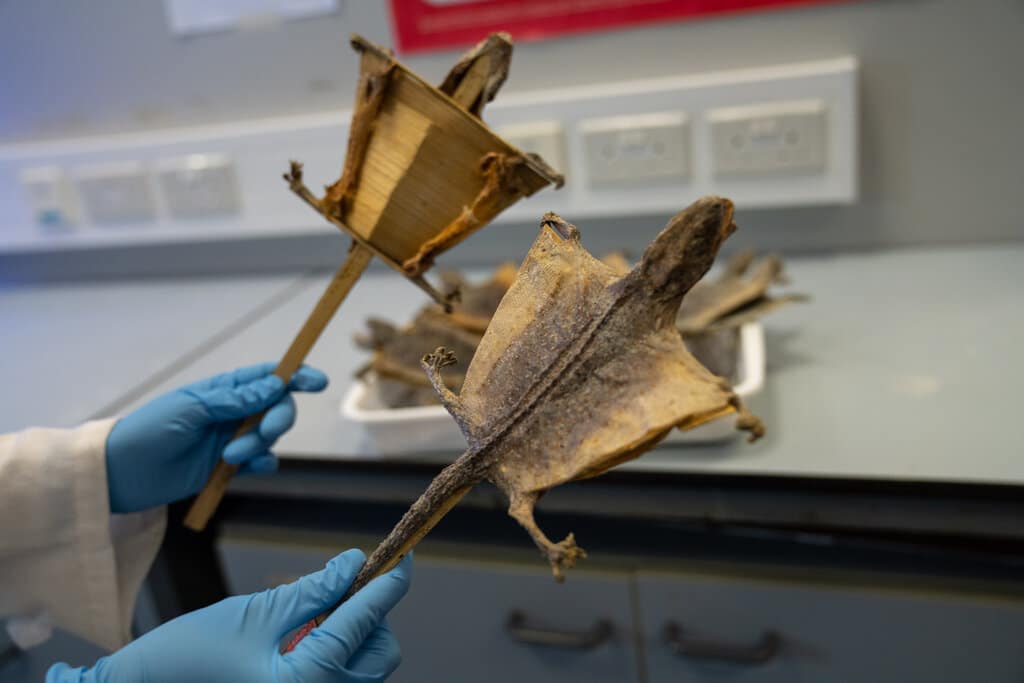
Conservation lab at the University of Hong Kong. Photo: Katherine Cheng.
Moving Forward
Truly uncovering the wildlife trafficking pipeline entails changes at all levels.
One example of a group addressing the different aspects of wildlife crime is the Conservation Forensics lab at the University of Hong Kong.
Drawing from a combination of biological science and forensic analyses techniques, the lab supports enforcement efforts in stopping wildlife crime. Using a variety of different tools, they address questions such as identifying what species are involved in trade, origin location of trafficked species, and discerning between captive and wild animals.
From enabling customs officers to identify shark fin and other ocean life through phone apps to using genetics and stable isotope technology to map out species and determine their status of wild-caught or captive-bred, it covers areas of biology, social science, machine learning, and more. The lab’s goal is to use existing tools and apply them to a new context to help solve the issue of wildlife trade.
“I feel like we’re on the brink of something, like big things are gonna happen,” says Tracey-Leigh Prigge, Lab Manager at the University of Hong Kong’s Conservation Forensics Lab and a member of the Society for Wildlife Forensic Sciences Technical Working Group.
With the introduction of the OSCO bill, researchers of the lab are hopeful that there will be an increased recognition of the need for the evidence, data and expertise that the scientific community can provide in order to secure heavier prosecutions.
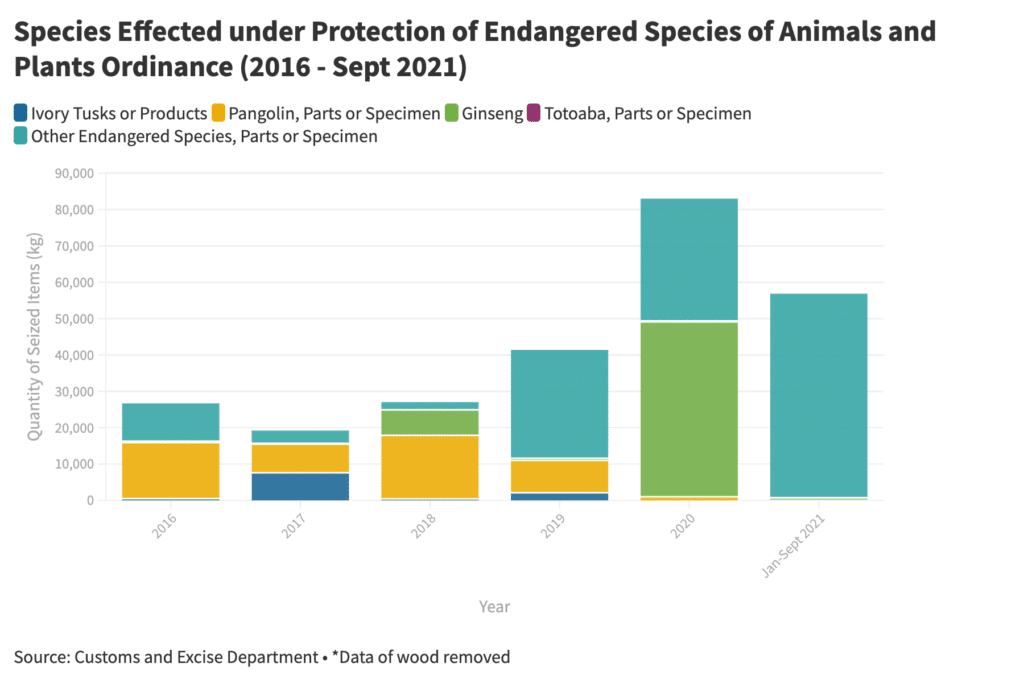
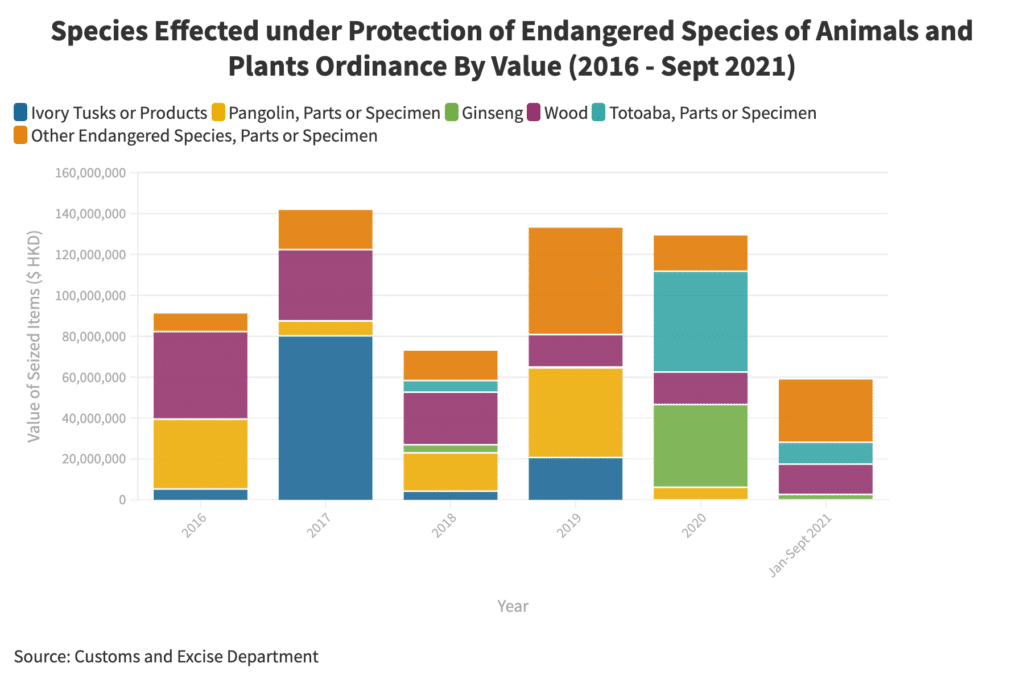
In the above infographics, the quantity of “Other Endangered Species” have been significant in the past three years, nearly tripling in three quarters of 2021 compared to 2019.
“I think the main thing that has changed now with the pandemic is that it’s more at the forefront of people’s minds. Consumers are more aware of the risk of zoonotic disease when they’re purchasing wildlife as an exotic pet or luxury cuisine,” says Astrid Andersson, a conservation biologist at the University of Hong Kong and a National Geographic explorer. “And hopefully, governments also have it higher on their priority list. So regulating legal wildlife trade and cracking down on wildlife trafficking, has now become more of a priority.”
As global restrictions from COVID-19 continue to ease and the potential implementation from the OSCO bill amendment approaches, the future of Hong Kong illegal wildlife trade hangs in the balance.
“Remember, with wild species, once they’re gone, they’re gone,” says Whitfort. “And unfortunately, there’s a historical view that animals and plants are not as important as the things that we make, which of course, if COVID has taught us anything, it has taught us that that view is complete nonsense.
The natural world is the most important thing. And the natural world is what is going to see us through or finish us off. And not taking this kind of crime seriously, is at the peril of humans.”
Featured image: Mr. Nelson Chi-Fai Wong (Divisional Commander of Marine Enforcement), Herman Siu-Fai Lui (Divisional Commander of the Special Investigation Division), Mark Wai-Kwan Woo (Head of Syndicate Crimes Investigation Bureau), and Dr. Roger Ho Lee (Endangered Species Protection Officer) pose for a photo for the press in front of the largest seizure ever reported at the Customs and Excise Department of Tsing Yi, Hong Kong on October 7, 2021. Photo: Katherine Cheng
Airport Authority Hong Kong has set out a plan to meet net zero emissions by 2050, including deploying a fully electric vehicle fleet on the ground and funding new green technologies.
—
Hong Kong International Airport, the world’s busiest cargo gateway and one of the busiest passenger airports, has pledged to achieve net zero emissions by 2050, with electric vehicles as the key to decarbonisation.
The Airport Authority Hong Kong (AAHK) aims to cut absolute carbon emissions by 55% by 2035 compared to 2018 levels, a benchmark that is similar to the one set by London’s Heathrow Airport, which is working towards to achieve carbon neutrality by mid-2030s.
“Our target is net zero instead of neutrality so it’s quite clear to us that we will try not to pursue any offset at all, in particular for the midpoint of 2035,” said Peter Lee, general manager of sustainability at Hong Kong airport. “In terms of the 2050 ultimate target, I think we need to wait and see what technology is coming,” Lee added.
The aviation industry currently accounts for only 2.5% of the global carbon emissions. However, with the projected growth trends, the sector’s emissions set to climb despite dropping to much lower levels during 2020 due to the COVID-19 pandemic. Decarbonising will be instrumental to help nations and territories, including Hong Kong, to limit global warming under 1.5C above pre-industrials and to avoid a climate catastrophe.
To meet the 2035 target, AAHK has set out roadmaps to reduce direct emissions at the airport as well as indirect emissions such as electricity consumption in a drafted carbon management action plan. For direct emission reduction, the airport will be electrifying all airside vehicles including tow trucks, container-loading and passenger-steps vehicles by the end of the decade, making the switch towards more renewable diesel, and more than doubling the amount of airfield charging stations. Currently, a only fifth of the ground service fleet is electric.
The airport will also install LED lighting and smart technology to better control energy efficiency and use for equipment such as air-conditioning, as well as develop new energy management solutions, to tackle indirect emissions.
AAHK plans to introduce a Business Partner Carbon Support Programme that will include a USD$2.56m (HKD$20m) Green Innovation and Technology Fund, to support the development and testing of new technologies to help meet the 2050 net zero target. While the airport already features fuelling infrastructure to support the use of sustainable aviation fuel (SAF), the fund could help scale up decarbonisation measures in aircrafts and at the airport.
“Innovation, capacity building and collaboration hold the key to achieving the Net-Zero Carbon target,” Lee adds. “We are pleased to see the positive response from our business partners in support of decarbonisation. With the collaborative effort of the airport community, we are fully committed to achieving this Net-Zero Carbon target in pursuit of our pledge to make HKIA the world’s greenest airport.”
As young climate activists congregate around the world to mobilise climate action, Hong Kong’s youth are also urging the local government to take more ambitious action to curb the climate crisis. Nominated by CarbonCare InnoLab, six Hong Kong youth delegates to COP26 have published a petition and shared their thoughts with Secretary for the Environment Wong kam-sing regarding the city’s climate change policies. The delegates share their experience at the recent COP26 in Glasgow, pointing out lessons Hong Kong can apply to accelerate the transition to net zero.
—
The global climate crisis has seen youth from around the world mobilise movements, take part in school strikes, and advocate for ambitious actions to curb the ongoing climate crisis. Climate activists such as Greta Thunberg and Mitzi Jonelle Tan are taking it upon themselves to urge world business leaders and governments to limit global warming to 1.5C pre-industrial levels, believing “the power is in us, not the leaders.”
In Hong Kong, the environment and climate have never been front and centre in the socio-economic agenda, but the city’s COP26 youth delegates are trying to change this.
Nominated by CarbonCare InnoLab, Hermia Chan, Mark Cheung, Ryan Fung, Blaire Ho, Ho Wai-fun and Priscilla Lin attended COP26, the UN climate summit, in Glasgow earlier in November. They were joined by four more delegates representing other Hong Kong-based political organisations and nonprofits.
Hong Kong Needs More Ambitious Climate Change Policies
Earlier in October, the six youth delegates published a petition urging the Hong Kong government to take more ambitious climate change policies and actions. The document began with an overview of why the city needs more ambitious climate change policies and ended with the delegates’ five key demands. Among other factors, the key demands included a call for the government to declare a climate emergency, to reach net zero emissions by the 2040s or sooner, and to increase the proportion of renewable energy in the energy portfolio to 20% by 2030.
Before their departure to Glasgow, the delegates spoke to Secretary for the Environment Wong Kam Sing. Wong was open to the delegate’s opinions and asked for their suggestions on how to achieve carbon neutrality before 2050.
“Wong shared what he was proud of about Hong Kong’s climate mitigation and adaptation activities so far… he emphasised Hong Kong’s climate adaptation expertise, explaining that our experts are advising other Asian cities on strategies such as how to mitigate the urban heat island effect,” said Chan, one of the aforementioned Hong Kong youth delegates.
Although the delegates agree with the Environment Secretary that flooding is the most significant risk to Hong Kong citizens, they believe more action on other aspects of climate change policies should be taken. For instance, they would like to see more detailed plans and a concrete timeline regarding how the government will increase the availability of renewable energy and implement a carbon trading scheme. Chan adds, “The thing with climate change is that we don’t have time to waste. Do we have time to wait for the best model? Will the best model ever even exist?”
Attending COP for the first time this year, the delegates did not have a specific agenda, intending only to observe and learn about climate initiatives that can be applied to Hong Kong. The delegates’ observer passes allowed them to sit in on panels happening in different ‘zones’, however, they expressed a desire to more actively participate and take part in negotiations.
“Observer passes limit us to only being able to ‘observe’ and not actually submit questions during most events,” explained Chan. She also commented that because
Hong Kong is not a ‘Party to the Convention’ at COP26, the city’s role at the summit was somewhat ambiguous. “The ambiguity made it difficult for us to apply for a ‘Party Badge’, which would mean more opportunities for more meaningful participation.”
Hong Kong’s delegates took part in various youth events at COP26, including speaking at the ‘Asian Youth Dialogue on Carbon Neutrality’ event at Korea’s Pavilion. These panels were attended by youths as well as representatives from different countries and organisations, a platform that allowed youth delegates’ voices to be heard. However, the delegates have reservations about whether their opinions would be taken seriously, or whether youth opportunities at COP26 is a form of ‘youthwashing’ or tokenism.
“During some of the negotiations, some youths limited themselves to note taking although they have the right to voice their opinions. I’m not sure whether they chose to do this or were asked to take more passive roles,” Chan said.
When asked what lessons Hong Kong can learn from countries and stakeholders at COP26, the delegates highlighted human rights considerations and green construction as two important factors.
Listening to Indigenous tribes speak about how some climate mitigation policies affected their rights, the delegates felt Hong Kong needs to put human rights at the forefront of climate policy. Similar to many other countries, Hong Kong’s Climate Action Plan 2050 focuses on how to decarbonise sectors through measures such as transitioning to electric vehicles and waste reduction, whereas the effects our environmental footprint have on other areas around the globe are rarely considered. The delegates believe that as a city that imports most of our goods, we should also consider how the production processes of these goods are adversely affecting the livelihoods of citizens in the producing countries.
Secondly, the delegates think the Norwegian city of Oslo’s green construction practices can be adapted to Hong Kong’s construction industry. Globally, building and construction are responsible for 39% of emissions. And in Hong Kong, construction sites are often considered a nuisance by citizens because of the noise and dust pollution it generates.
Hong Kong may be able to take inspiration from Oslo’s zero emissions construction sites. Oslo’s first zero–emission construction site was pioneered in 2019. Powered by electricity, the machinery used on ‘Olav V’s gate’ emitted less noise and air pollution. Using electricity instead of fossil fuels saved 35,000 litres of diesel and 92,500 kg of carbon emissions. The Norwegian government also took a strategic move to incentivise the industry to switch to electric machinery by awarding public tenders for construction work to developers using zeroemission machinery. While Hong Kong’s current policies focus on adapting existing buildings to make them greener, the delegates believe that “greening the buildings industry” should start from cleaning up the construction phase.
Going forward, the delegates will continue to push for having their five demands met by the Hong Kong government. “We hope to continue our conversations with [Secretary] Wong and be able to share Hong Kong’s more ambitious climate change policies at next year’s COP”, Chan concludes. “We also hope to work on climate advocacy with more youths in Hong Kong. As we all deserve to be heard,“ Chan’s fellow delegate Blaire Ho added.
Many climate activists and environmental organisations claim COP26 was a failure because governments failed to agree on important pledges, such as phasing out coal. Despite this, it is enlightening to hear the ambitions of Hong Kong’s youth’s delegates, who are determined to accelerate the city’s journey to carbon neutrality before 2050.
Of all the environmental issues, food waste is among the most ridiculous; we waste energy and resources to make food we don’t eat and the decaying food end up releasing potent greenhouse gas into the atmosphere. Despite the government’s effort to employ new biotechnology and initiate elaborate food campaigns, modest improvements were made. To nip food waste in the bud, it is us – the consumers – who have the ultimate power. Here are some solutions for food waste in Hong Kong.
—
Korean barbecue to dim sum, fine dining restaurants to “dai pai dongs”; the streets of Hong Kong are teeming with food options. While the price of food is famously inexpensive, this blooming food culture comes with a hefty cost – 3,600 tonnes to be exact. That is how much food we send to Hong Kong landfills every day.
What Is Food Waste?
Any food that goes uneaten is food waste, but this isn’t limited to the food scraps or half-eaten meals we leave at dinner. From producers to handlers to consumers, some food is lost at every step – think discoloured or irregularly shaped fruits being thrown out at supermarkets or perishables that spoil during transportation.
While the majority of food waste is unnecessary (see image), some – like bones and eggshells – are inevitable.
Why Is Food Waste a Problem?
We are wasting a lot of energy to produce food that we don’t eat. It takes valuable energy and resources to grow, harvest, transport, and package food products. Currently, food waste makes up the largest fraction (40%) of our daily municipal solid waste, with household, commercial and industrial food waste as the main sources. Most notably, edible food is wasted while one in five people in Hong Kong struggle with food security.
Food Waste and the Environment
Food waste is compostable and recyclable. Yet, most of them are mixed with general solid waste and are sent to landfills. This is a problem because:
The city has been struggling to keep its rubbish under the lid; we have already cycled through thirteen landfill sites and the three that are currently running will soon reach their capacity. Disposing food waste in the landfills is putting an unnecessary strain to our saturating landfills.
Decomposing food in the landfill releases methane gas – a potent greenhouse gas, which has a much stronger heat-trapping ability than carbon dioxide.
Odour and leachate from rotting food generate environmental nuisance that may require additional mitigation steps.
Seven years ago, the Environment Bureau released a food waste plan for Hong Kong, with the aim to reduce 40% of food waste going to landfills – from 3,600 tonnes to 2,160 tonnes – by 2022; fast forward to now, only 7% reduction has been achieved. Although the progression is slower than we’d like, we are taking strides towards the right direction. Here are a few highlights of our current strategies and solutions for food waste:
Raising public awareness: As part of the plan, the government had set up the Food Wise Campaign in 2013. Since their launch, they have held various competitions and workshops to educate and promote food waste reduction.
Pros
What can be improved?
Mobilising multiple sectors, like NGOs and education institutions to raise public awareness of food waste.
Changing the mindset around food tackles the issue at its source; everyone consumes food and therefore has the power to make a difference.
Increase promotions to restaurants and food vendors. In a report that surveyed 198 vendors from 18 markets across Hong Kong, 66% did not participate in Food Wise because they were not aware of the campaign or unsure as to how to take part in it.
Food donation: donating perfectly edible food to those in need. With the mission to reduce food waste and feed charities, NGOs like Feeding HK have been rescuing food and redistributing it to charities such as senior centres, crisis centres, and food banks.
Pros
What can be improved?
Rescuing surplus food and donating it to where it’s needed.
The number of food waste from the commercial and industrial sector has gone up 40% in the last decade. More collaborations with this sector can improve the redistribution of excess food.
Food waste treatment technologies: Gomixer, a raw garbage disposal machine, turns food waste into liquid waste that can be disposed directly through the sewage system. Reducing the amount of food waste entering our landfills. Currently, Festival Walk – a Swire property-owned shopping centre – uses the Gomixer at their food courts.
Pros
What can be improved?
Diverting food waste from landfills
Reduce greenhouse gas emission
Surplus electricity is exported to the grid. When running in full capacity, O·Park1 can generate enough electricity for 3,000 households.
O·Park1 can only handle 200 tonnes – less than 6% – of food waste we produce each day.
Fortunately, O·Park2 construction is underway and is expected to treat 300 tonnes per day starting 2023.
O·Park1, a waste-to-energy food recycling plant, uses microorganisms like bacteria to digest food waste and turn it into energy; the plant is self-sufficient and therefore does not require additional energy to operate.
The Glasgow Climate Pact, which was adopted at the COP26 UN climate conference in November 2021, sees signatory countries increase climate ambition and action from the Paris Agreement in 2015, and sets out new rules to reduce greenhouse gas emissions including phasing down coal and a global carbon market.
—
It’s been over five years since the signing of the Paris Agreement, the world’s first comprehensive climate deal adopted in 2015, where 189 countries reached a global consensus to limit global warming to below 1.5C or ‘well below 2C’ above pre-industrial levels by the end of the century.
The Paris Agreement also required all parties to report on emissions and efforts towards climate change mitigation, and have their Nationally Determined Contributions (NDCs) updated every five years. Due to the COVID-19 pandemic, the review was pushed back to November 2021 as part of the COP26 UN climate summit in Glasgow, UK.
Following two-weeks of climate negotiations and talks, nearly 200 countries and nations have agreed to adopt the Glasgow Climate Pact on November 13, saying the deal would keep the 1.5C goal alive and hopes of averting a climate catastrophe. A number of countries had hoped for much more ambitious climate goals in the outcome of COP26, including the UK, the summit’s host nation, who aimed to “consign coal to history”, but many simply settled on successfully making some progress from the Paris Pact with an imperfect deal.
But what is in the Glasgow Climate Pact?
Coal and Fossil Fuels
The Glasgow Climate Pact is the first global agreement to explicitly include parties pledging to reduce the use of fossil fuels, specifically “accelerating efforts towards the phase-down of unabated coal power and inefficient fossil fuel subsidies”. Unbated coal power refers to power plants that do not use technology for carbon capturing, though the phrase “inefficient” fossil fuels subsidies was not clearly defined in the final text.
The vague and relatively ambiguous wording can be attributed to pressure coming from China and India to water down the language on their commitment to eliminating coal, with the US playing a role in accepting that weaker position. The two countries pushed to “phase down” coal instead of “phasing out”, a stance which all 197 countries eventually agreed upon, albeit with some disappointment.
Coal is the dirtiest fossil fuel and is the biggest source of greenhouse gases emissions today where the world generated 14.36 billion tons of emissions in 2019 from coal alone. Scientists agree that the world must quit coal completely in order to avoid the worst impacts of climate change.
The Glasgow pact however, provides no specific timeline in phasing down coal nor inefficient fossil fuel subsidies.
Under the Glasgow Climate Pact, countries have agreed to improve, “revisit and strengthen” their 2030 national climate targets by the end 2022, shortening the review to two years instead of another five years as originally set out in the Paris Agreement. Current updated climate pledges now put the world on track for between a 2.5C and 2.7C of global warming, which still far exceeds the goal of capping global temperature increase to at least under 2C.
Climate Debt and Finance
The pact points out that rich countries have missed their 2020 target in providing USD$100bn a year to help developing countries adapt to climate change and transition towards net-zero, and “urges developed country Parties to at least double their collective provision of climate finance for adaptation to developing country Parties from 2019 levels by 2025.” This would mean that climate finance could reach up to around $40bn annually.
Providing “loss and damage” funds, meaning compensation for the climate damages in developing countries caused by historical emitters and rich countries, was also mentioned for the first time. But under the Glasgow Pact, countries have only agreed to start a “dialogue” about funding a new organisation, providing “technical assistance” to help avoid and address the consequences of climate change.
Carbon Markets
One of the more successful outcomes from the Glasgow Climate Pact is the fact parties managed to set down rules of a global carbon market. Countries can trade carbon offset credits representing emission cuts by others under the so-called Article 6. A robust carbon market could potentially generate trillions of dollars that will hopefully go towards funding projects to protect forests and renewable energy projects.
Article 6 sets down measures to ensure credits are not twice-counted under national emissions targets, but “bilateral trades between countries would not be taxed to help fund climate adaptation”, a measure that developing countries originally demanded. Instead, the agreement included a voluntary commitment for countries to contribute to this adaptation fund.
Countries have also agreed to place a cut-off date of carbon credits issued before 2013 to prevent huge amounts of old credits from flooding the market and encourage purchases instead of new emissions cuts.
Deals Outside of the Glasgow Pact
During COP26, a number of multilateral pledges made were not covered in the Glasgow Climate Pact. This includes more than 100 countries committing to end deforestation by 2030, over 100 nations including the US and the EU promising to collectively reduce methane emissions by 30% from 2020 levels by the end of the decade, as well as the US and China unveiling a joint declaration to work together to tackle ‘existential’ climate crisis.
Hong Kong’s new Climate Action Plan 2050 outlines a comprehensive decarbonisation vision for the next few decades. However, the plan overlooks the importance of climate education in Hong Kong. What opportunities do schools and educators have to support Hong Kong’s decarbonisation despite its marginal role within the plan? What lessons from psychology can we learn to promote climate messages in the classroom more effectively?
—
On October 8 2021, the Hong Kong Government unveiled its new Climate Action Plan 2050, setting out an ambitious vision for decarbonising Hong Kong and combating climate change, which includes achieving net-zero electricity generation, promoting energy-saving buildings, popularising green transport and encouraging waste reduction.
These goals indicate the government’s recognition that tackling climate change in Hong Kong effectively requires simple mitigatory measures but also fundamental changes in how we interact with the environment in the long run. As Secretary for the Environment Mr Wong Kam-sing says, the extent to which Hong Kong will be able to achieve its goal of carbon neutrality will heavily depend on the participation of local actors, in particular their willingness to support and take advantage of “green” developments in the city.
One can immediately notice the centrality of the industrial sectors within the strategies. Their strong incorporation positively represents an understanding from the government that it is essential that we “greenify” everything: our homes and workplaces, our transport systems and options and our food and so on; that we “greenify” the means to which we conduct our day-to-day activities within the city. To facilitate this industrial “greenification”, the plan emphasises interdisciplinary collaboration between sectors and regions, the development of a green finance infrastructure and innovation and technological development, in hopes that we may summon the brightest minds to come and solve Hong Kong’s climate crisis.
However, the new policies have overlooked a key ingredient to effective climate action: education. While the policy documents do mention the importance of education and professional training, they appear to only play a peripheral role.
Why Has Climate Education in Hong Kong Been Ineffective?
Within the plan, the government describes two objectives for education: “capacity building” and “enriching learning content”. With regard to the former, the government wishes to “nurture talent … [and enhance] cooperation and exchange among universities and tertiary institutions … [to allow] teachers and students [to] equip themselves with up-to-date and relevant professional knowledge and skills”. With regard to the latter, the government believes that the “[strengthening of] learning materials and [the provision of] diversified learning experiences [can] enhance students’ awareness … [and therefore] promote low-carbon transformation”.
These two objectives are highly interdependent. Hong Kong’s decarbonisation, in the long run, cannot be possible without nurturing “green” expertise; a greener workforce will be key to expanding Hong Kong’s green economy. Yet, we cannot just have “technicians” reduce our carbon footprint for us; citizens should also actively lower their footprint through their actions and habits.
Despite such understanding, the overall plan appears to prioritise the former objective significantly over the latter. The key aim of the plan seems to be to “change technology first”: by first creating the “green” system, we can then “insert” our citizens into this new system.
This passive logic raises questions: if citizens are only “spoon-fed” changes, they may not be able to develop the proactiveness needed to help the system evolve through time. For example, if the government wishes to popularise electric vehicles but does not encourage citizens to be conscious about their carbon footprint when travelling around the city, then the number of vehicles on the road may not decrease and congestion problems may persist. When there is uncertainty, they may not adapt; when there is an opportunity, they may not rise.
It is not the curriculum per se that is the problem; climate education in Hong Kong has always emphasised the importance of climate awareness and personal responsibility. It is the way in which the curriculum is being taught that is perhaps hindering the effectiveness of climate education in cultivating citizens capable of identifying and willing to implement their own solutions.
One of the major barriers to effective climate action globally relates to the perceived distal nature of climate change. This is also the case in Hong Kong. As a survey conducted by the Hong Kong Public Opinion Research Institute (HKPORI) and commissioned by Civic Exchange in 2020 showed, most Hongkongers do not see climate change as an immediate threat and therefore do not feel an urgent need to act for the planet. So what has been ineffective about climate education today?
The ineffectiveness of climate education stems not from its lack thereof in Hong Kong, but from a lazy assumption about education itself: that action naturally follows knowledge. Learners, upon receiving information about climate change, are assumed to immediately recognise the significance of climate change and naturally acquire the motivation to transform themselves and the world.
As a result, education systems around the world have often only done the bare minimum. Topics related to climate change appear only as a chapter in a textbook to be briefly touched upon. These “information campaigns” often leave students with abundant knowledge but not the will to convert what they have learnt into meaningful action. As founder of Outdoor Wildlife Learning Hong Kong Dr. Xoni Ma points out, “everyone realises the issue” but “not everyone goes green”. Even when schools organise awareness-raising activities, they are often held as stand-alone events, thus failing to cultivate genuine low-carbon and sustainable lifestyles in the long run because they have not been encouraged to do so within their educational settings.
So how can climate education more effectively foster climate agency in Hong Kong, “the capacity to positively influence the collective future through transformative change”?
Changing Climate Education: From Fear to Power, Knowledge to Responsibility
A growing line of research in climate change activism and education has been in “climate psychology”. Climate psychology studies how human psychology and other behavioural tendencies can galvanise or impede collective action for the environment. Understanding climate psychology allows us to improve our methods of teaching about climate change in the classroom.
It is increasingly recognised today that pathways to transformative climate action are rarely initiated only through the presentation of objective facts and figures, but also through attention to the emotions of students that “attest to their underlying care, concern and connection to the natural world”. While more educators are aware of the importance of emotions that may be provoked through powerful stories of crises (e.g., the devastating impacts of typhoons on Hong Kong) and remarkable actions taken by particular individuals, not all kinds of emotional appeals are effective, however. Widely believed that fear necessarily drives action, educators have often relied on dystopian images to “threaten” or “guilt-trip” students into action.
These manipulative tactics rarely succeed. Firstly, as discussed, if climate change is seen only as a distant issue, then it is hard to generate a sense of existential fear great enough to spur “life-saving” action. Secondly, these fearmongering or blameful tactics may only alienate rather than unite. As Norwegian climate psychologist Per Espen Stoknes suggests in an interview, feelings of fear, guilt and doom do not necessarily enhance the willingness to change but only turn people away from these messages because they do not want to feel bad. As a result, there is no individual action and there is no collective action.
To overcome this misconception properly, many like Stoknes argue that positive messages may actually be psychologically more effective. When students believe that they can actually make a difference and realise we are “all in this together”, they may be better motivated to do their part for the environment. Compared to negative messages, positive messages are more effective tools in affirming individuals in their ability to enact change.
What is important to climate education today, hence, is to instil in students a sense of confidence in their own ability to make a difference. Even within the limited physical confines of the average Hong Kong classroom, this is still possible. Students are no longer simply fed a list of what comprises a “low-carbon” or “sustainable” lifestyle or society, but are empowered by the realisation that their actions crucially shape the future, and are therefore emboldened to explore the possibilities of action beyond the classroom.
Without a genuine realisation of the importance of action and responsibility towards our environment, climate action cannot be sustainable. Take the recent implementation of the Municipal Solid Waste charge as an example. This scheme may discourage wastefulness by promoting a passive financial disincentive to polluters; but in the long term, as Dr Winnie Tang from the University of Hong Kong argues, citizens will need to be able to recognise their active responsibility and ability to do more in protecting the environment without government “orders”. To complement waste reduction policies, she says, citizens should consider practices of “upcycling” – transforming unwanted products into new ones.
To sustain environmental behaviour in the long run, it is therefore useful to help students understand why changes are worth pursuing. One way is to promote what social psychologists refer to as “attitude inoculation”. Attitude inoculation refers to the process whereby students are exposed to counterarguments (e.g. climate change denialism) and then encouraged to reflect and develop their own responses. This mode of education may be more effective and sustainable in bringing about behavioural changes, not because students have been “policed” into making these changes, but because they will have intellectually convinced themselves about their decisions and actions. Such a process is open-ended not because it expects no answer, but because it recognises the diversity of ways to act as a responsible individual.
It is not knowledge but attitude that is at the centre of climate education. For example, the plan outlines comprehensive guidelines for promoting energy-saving buildings in Hong Kong. Climate education is thus not necessarily about understanding complex concepts such as retro-fitting and retro-commissioning, but about inviting people to think about what they can do in the present to support these goals. For instance, how can we save energy at home without having to keep our air-conditioners on all day during the hot summer? What are some natural ventilation tricks?
Challenges and Opportunities for Climate Education in Hong Kong
It is, however, not easy to implement such an ambitious and open-ended form of climate education in Hong Kong. According to a study in 2017, many teachers still believe that climate consciousness should be assessed through examinations and assignments. Climate change education is often still seen merely as an academic endeavour rather than a meaningful means to social change.
Furthermore, climate education is taught only as a small part of subject curricula. In primary school, climate education is only a small part of the General Studies syllabus; in early secondary school, climate change is only briefly discussed in the Liberal Studies curriculum. While the Education Bureau (EDB) hopes that the curricula can help students realise the effects of climate change on Hong Kong and promote action, there are very few opportunities for students to engage in discussions about climate change at school.
Indeed, especially since the COVID-19 pandemic, we have seen a rise in the number of young climate activists in Hong Kong and a reassuring increase in school involvement in city-wide initiatives that promote climate awareness through the Hong Kong government’s Environmental and Conservation Fund (ECF). Student-led environmental projects have proliferated in recent years as well. However, because of the demands of academic work and because they contribute little to exam grades, it is hard to lengthen the duration or expand the scale of these activities. Meaningful changes within school communities are therefore often hard to bring about.
But interestingly, the “academic constraints” also reveal opportunities for climate education: because the possibilities for climate action are endless and because there exists no “ultimate solution” ever known to man, climate action can be a personal and creative enterprise. Climate education and action need not be confined to a set curriculum or assigned a specific time of day to take place but can be actualised within the ordinary workings of school life, where students and staff all cultivate environmentally friendly and sustainable habits and practices. Climate action need not be complicated; they start with simple habits in life.
Lantau Tomorrow Vision is not the best option to tackle Hong Kong’s housing issue. Considering its long construction time and concomitant environmental impacts, it is worthwhile to explore other development strategies, such as redeveloping brownfields, to increase land supply.
—
In her second policy address, Hong Kong’s Chief Executive, Carrie Lam announced Lantau Tomorrow Vision, a large-scale reclamation project to build a 1,700 hectare-island off the east coast of Lantau Island. This is one of eighteen feasible options released by the Land Supply Task Force in 2018 and is the one the government is most adamant about to tackle land shortage. Reclamation has been the preferred way to increase land supply in Hong Kong – most of the new towns of Shatin, Tseung Kwan O, Tuen Mun, and Tung Chung sit on reclaimed land, accounting for 25% of developed areas – however, one of such scale is unprecedented.
Lantau Tomorrow Vision Leaflet. Source: GovHK
With the motto: “creating a quality and sustainable living and working environment for the Hong Kong People”, Lantau Tomorrow Vision is presented as the panacea to the city’s housing woes. Upon completion, this artificial island could accommodate up to 400,000 residential units, with 70% – 280,000 units – reserved for public housing, accounting entirely for the housing shortfall. As of this year, there are 253,000 applicants on the waiting list for public housing, with an average waiting time of 5.8 years. From these numbers, Lantau Tomorrow Vision could be the silver bullet to Hong Kong’s housing shortage, but how “quality” would the living environment be? According to the government website, the project provides up to 40,000 housing units, with the average household size of 2.8, this would draw 1.12 million people to the island – or a density of 65,882 people per square kilometres – making it more populated than Kwun Tong, the densest district in Hong Kong, with a population density of 59,000 people per square kilometres. Is a congested urban environment the ideal model for “quality living” as the government claims?
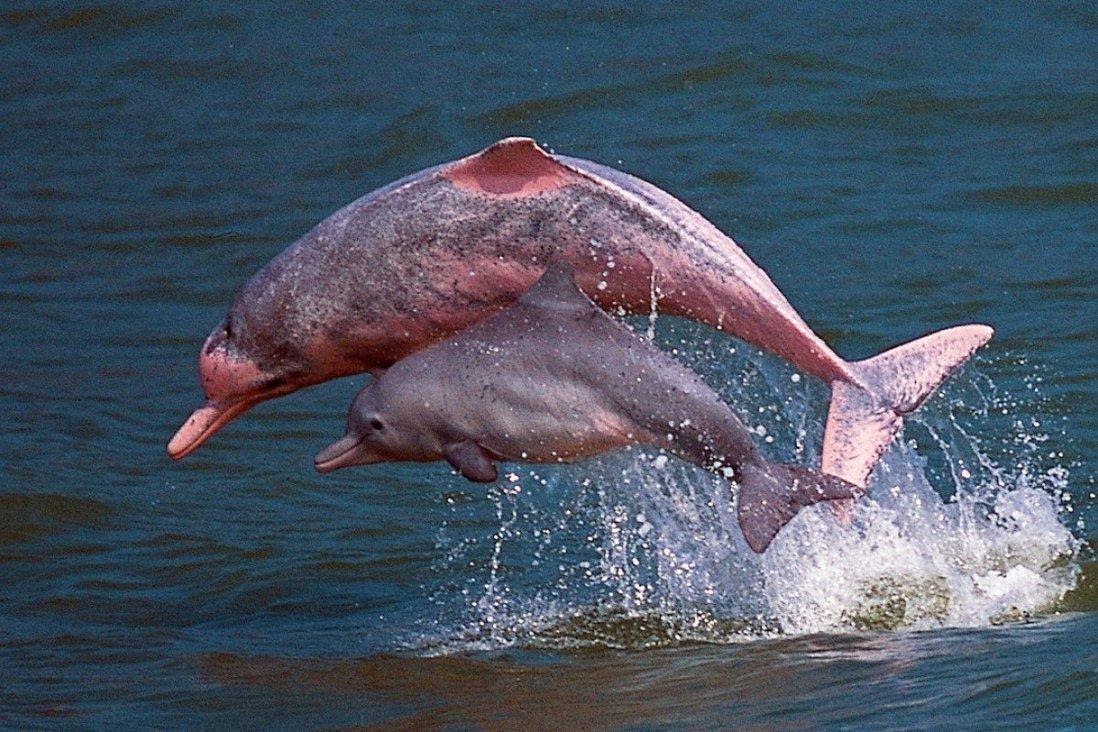
As part of the “sustainability” goals, Lantau Tomorrow Vision would set up a $1 billion Lantau Conservation Fund to improve the rural environment on Lantau. One of its main targets is to explore practical means to compensate for habitat lost due to the project; this is mainly to quell oppositions from green groups and Chinese White Dolphin activists – highlighting Hong Kong’s “develop first, conserve later” mentality – as previous compensation efforts have proven this mindset unrealistic. During the construction of the Hong Kong – Zhuhai – Macau bridge, the government set up marine parks to protect the dolphins in the area, but it was all in vain; the number of CWDs continued to plummet throughout the project, from 80 in 2012 – around the commencement of the project – to a record low of 32 at the end of its construction in 2018. “Compensation measures are useless”, said Taison Chang, chairman of the Hong Kong’s Dolphin Conservation society, “There were no dolphins going there. What is the value of a marine park when no dolphins appear there?”
White dolphins near Lantau Island. Image: AFP
Lastly, it takes a substantial amount of fill material to build an island. To source adequate material for Lantau Tomorrow Vision, the government development bureau is prioritising inert construction waste – generated from local construction work – to supply half the fill material needed for the project, and the remaining would be covered by marine sand from China. However, the department’s assertion on having adequate material is called into question, since previous reclamation projects mainly relied on marine sand for filling – only 10% of the 650 hectares highway was obtained from local construction reserves. Over 90 million cubic metres of fill material had to be transported from China.
Even if the department’s claim was true and the city had enough fill material to supply 50% of the material for Lantau Tomorrow Vision, delivering half-an-island worth of marine sand from China would create a large carbon footprint. According to an NGO The Green Earth, the 1,700-hectare Lantau Tomorrow Vision could require over 260 million cubic metres to fill. To provide some context, a typical dump truck holds 10 cubic metres, meaning 26 million truck-load of fill material would be needed!
Indeed, housing is a dire problem that demands action from the Hong Kong government, but is reclaiming the only way? Chan Kim Ching, a researcher at the Liber Research Community, thinks not. Liber Research Community studies brownfields – previously developed lands that are now neglected – on its redevelopment potential. The group found multiple brownfield sites across Hong Kong and among which, 380 hectares could be used for housing development. “This is enough land to provide 95,000 public housing flats, equivalent to the city’s supply of public housing in the past six years,” reported the group. Although it does not measure up to the 1,700 hectares of the Lantau Tomorrow Vision, it shows that there is more than one way to increase land supply for housing.
The biggest advantage of redeveloping on brownfields over reclaiming is that they require significantly less time. Most of the sites come with connections to vital infrastructure (drainage, electricity, transport etc.), greatly reducing the time needed for development; in comparison to building an artificial island where all the infrastructure must also be built from scratch. According to the government’s projection, the first residential population intake is in 2032. With the peaking and ageing population, Hong Kong people cannot afford another decade with the housing crisis, especially when there are quicker alternatives.
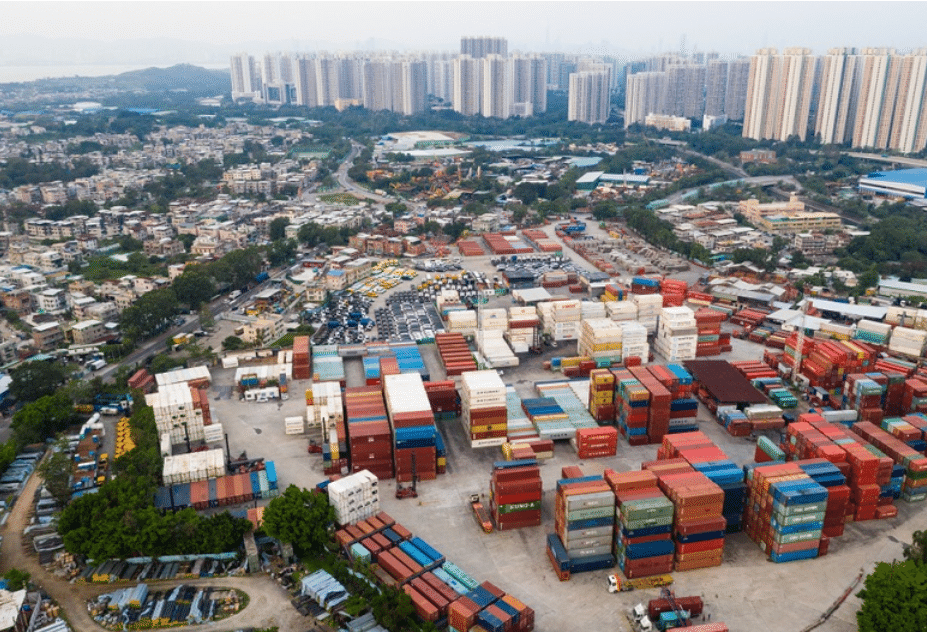
A brownfield site in Hong Kong. Source: Our HK Foundation
Another benefit of redeveloping is the improvement of existing land resources. Brownfields are an eyesore to the urban landscape. They are occupied by industrial operations such as container yards, vehicle parking, and covered warehouses, which are often incompatible to its surrounding area. Depending on usage, they also harbour contaminants such as petroleum, metals, and solvents, posing safety hazards to the environment. Redeveloping serves the double benefit of cleaning up the urban environment and addressing housing demands.
Although Lantau Tomorrow Vision could increase land supply for housing in Hong Kong, it is not the only viable option. Considering its long construction time and concomitant environmental impacts, it is worthwhile to explore other development strategies, such as redeveloping brownfields, to tackle the housing crisis.
Hong Kong has missed 14 out of the 20 Aichi Biodiversity Targets that are intended to curb biodiversity loss and the destruction of nature, according to a new report.
—
Hong Kong has only partially achieved six out of the 20 Aichi Biodiversity Targets as local conservation groups call for comprehensive conservation policies and mainstream biodiversity in the government agenda.
The assessment comes amid the UN Biodiversity Conference (COP15), taking place virtually between October 11-24 where governments meet and review their respective progresses, and to discuss policies regarding capacity building and resource mobilisation.
Using data and insights against a set of indicators developed by a cross-sectoral panel of over 40 local biodiversity and conservation experts, the report says that Hong Kong has been mostly successful in its protected area network, which currently covers about 40% of total land area, as well as the progressive regeneration of forest ecosystems.
The creation of Hong Kong’s first Biodiversity Strategy and Action Plan (BSAP) is said to be a significant first step in developing a policy instrument, as stated in the CBD framework, and the number of complaints reporting on unauthorised activities in rural areas has increased about two-thirds, highlighting greater public awareness and support for conservation.
However, the study points out that Hong Kong has not mainstream biodiversity in the government agenda, either in policy or legislation, allowing other development plans to take priority, increasing the threats to local wildlife species and habitats.
The Deep Bay Wetlands, which are recognised as a Wetland of International Importance, have been increasingly threatened by land development in the surrounding Mai Po area as part of the Greater Bay Area development plan. The Chinese White Dolphin population in Lantau waters have nearly halved over the past decade due to coastal reclamation projects while the population of Eastern Cattle Egret have declined by two-thirds, likely as a result of the loss in farmlands.
Though the Hong Kong Legislative Council did manage to pass the long-awaited bill treating wildlife trafficking as a serious crime in August 2021, the report says Hong Kong’s weak management in wildlife trading, especially when it comes to live and dried marine species for seafood, undermines the sustainability of biodiversity beyond our boundaries.
“We must recognise and respond to the breadth of issues covered by the CBD. Conservation lies not only in the hands of the environmental authorities and environmental NGOs, but also with other bureaux, works departments, and the private sector,” said Woo Ming Chuan, Deputy Director of HKBWS. “A whole-of-government approach and the engagement of all sectors and stakeholders are needed to address systemic gaps to properly integrate biodiversity conservation into Hong Kong’s development process as the CBD requires.”
The report and HKBWS says there’s an urgent need to establish a comprehensive biodiversity conservation policy framework that puts meeting the CBD responsibilities at the core. Incorporating the best lessons learnt from China’s implementation of the Ecological Red Line, ecological security and other environmental policies could also be key in laying the groundwork for Hong Kong’s conservation efforts and measures to protect the city’s biodiversity and natural ecosystems.
Featured image by: Jessica Wong/Hong Kong Bird Watching Society
The Hong Kong Legislative Council recently passed the city’s first and long-awaited waste disposal bill, 16 years after it was first proposed. The proposed Hong Kong Waste Charging Scheme would mean that its residents will soon have to pay a tax on the garbage they generate. Will this move be enough to tackle its waste problem or is it too little, too late?
—
Hong Kong is known to be a city of glitz and glamour but its uglier and less talked about facet is its monumental waste problem. Its seven million residents have been steadily generating more trash since 1991, according to figures released by the Environmental Protection Department. In 2019, 5.67 million tonnes of municipal solid waste (MSW) were disposed of at landfills. At the same time, less is being recycled each year: in the same year, only 29% of MSW was recycled, down from 30% in 2018. Hong Kong has already filled up and closed down 13 landfills, and its remaining three landfills, which cover the same size as 379 football fields, are overflowing.
Introducing the Waste Charging Scheme
The government’s latest move as part of its Waste Blueprint for Hong Kong 2035 is to push for a waste charging scheme, which it hopes will reduce per capita waste disposal by up to 45% and increase the recycling rate by 55%. The Waste Disposal (Charging for Municipal Solid Waste) (Amendment) Bill, which was tabled in November 2018 and passed on 26 August 2021 after delay, will see the average household paying anywhere between HKD$33 and $55 a month to throw out their trash in 11 types of designated trash bags that vary in size. Each litre of trash will cost roughly $0.11, with a 100 litre bag costing $11; and large items that do not fit in the trash bags costing $11 per item for disposal. Trash bags and labels will initially be distributed for free, before becoming widely available across 4,000 sites including supermarkets, gas stations, and convenience stores. Those who violate the law will be charged a $1,500 fine.
While the scheme will not launch until 2023, giving the government another 18 months for preparatory work like launching publicity and educational campaigns, preparing various sectors of the community, and strengthening recycling infrastructure, we might foresee that Hong Kong will follow in the footsteps of Seoul and Taipei, which had both implemented their waste charging schemes more than 20 years ago. Both schemes have been hugely successful.
In Taipei, since launching their “pay as you throw” scheme in 2000, waste generation has fallen 31%; from 1.26 kg per person per day in 1997 to 0.87 kg in 2015. Landfill use decreased by 98% while recycling has increased from 2 to 57%. Similarly, Seoul’s waste charging scheme led to a 17.8% reduction in waste generation within a year in 1995. These schemes are all premised on the “polluter pays” principle, an environmental law tenet which requires those who create pollution to bear the costs of managing it to prevent environmental damage. Those who pollute more are charged more, thereby creating economic incentives to reduce waste.
A waste charging scheme is undoubtedly an environmental victory for Hong Kong. The last major levy on plastic shopping bags has reduced the use of plastic bags by 90%, showing the potential of a tax on garbage. However, a study by Alzamora and Barros published in Waste Management in 2020 found that the effectiveness of a waste management system depends, at least in part, on advances in environmental education and users’ participation.
Cleaners have already raised their concern that individuals might opt to dispose of their garbage on the street, which would increase their workload. There are other loopholes as well: Cleaning Workers Union organiser Leung Tze-yan expressed that irresponsible disposal will likely be severe in tong laus (pre-war tenement block) that are without refuse collection services, as well as in public housing with multiple flats on the same floor where it is difficult, if not impossible, to determine who did or did not use the designated trash bags. It will therefore be imperative for the government to educate the public on Hong Kong’s waste problem and why waste reduction is important for everyone to partake in, in order to create a strong buy-in to this new scheme.
Leung’s comment raises a further issue of tax regressiveness: while a $10 monthly subsidy will be offered to those receiving social security, this would still amount to a $23 to $45 charge, which is substantial for the onein five Hongkongers living below the poverty line. These individuals may not have the option to shop plastic-free or to live a low-waste lifestyle, especially given that over 80% of stocked goods in supermarkets are wrapped in plastic and nearly half of which are wrapped by the supermarkets themselves.
Alongside stronger protections and generous subsidies for vulnerable groups in its new scheme, the government should encourage supermarkets to reduce their use of plastic, and restaurants to look at environmentally-friendly alternatives to plastic takeaway containers, making it easier and more accessible for the everyday person to minimise their waste.
Recycling also ought to play a bigger role in Hong Kong’s waste management scheme. In Taiwan for example, recyclables are collected for free, encouraging residents to buy recyclable packaging and separate recyclables from general waste. Food waste is also separated. An investigation conducted by HK01 in 2020 found that the majority of plastic bottles placed in recycling bins at 14 public and private housing estates were sent to landfill. It’s clear that Hong Kong requires a better recycling infrastructure to be put in place.
Most importantly, the materials of which the designated trash bags are made should be eco-friendly and sustainable. Compostable or biodegradable trash bags are no better than plastic when sent to landfills, as according to the Environmental Protection Agency, landfills do not “present the conditions in which complete decomposition will occur within one year”.
All in all, though much more needs to be fleshed out to ensure the success of the new waste charging scheme – implementing a tax on garbage can be a good first step towards making Hong Kong greener.
Boost this article
By donating us $100, $50 or subscribe to Boosting $10/month – we can get this article and others in front of tens of thousands of specially targeted readers. This targeted Boosting – helps us to reach wider audiences – aiming to convince the unconvinced, to inform the uninformed, to enlighten the dogmatic.